To save content items to your account,
please confirm that you agree to abide by our usage policies.
If this is the first time you use this feature, you will be asked to authorise Cambridge Core to connect with your account.
Find out more about saving content to .
To save content items to your Kindle, first ensure no-reply@cambridge.org
is added to your Approved Personal Document E-mail List under your Personal Document Settings
on the Manage Your Content and Devices page of your Amazon account. Then enter the ‘name’ part
of your Kindle email address below.
Find out more about saving to your Kindle.
Note you can select to save to either the @free.kindle.com or @kindle.com variations.
‘@free.kindle.com’ emails are free but can only be saved to your device when it is connected to wi-fi.
‘@kindle.com’ emails can be delivered even when you are not connected to wi-fi, but note that service fees apply.
Chapter 4 presents how diaspora elites and parties mobilised following the 2003 intervention and occupation of Iraq through top-down state-building. It traces how they manoeuvred to take advantage of the United States-led coalition and insert themselves in the corridors of power. It charts their involvement throughout Iraq’s political process from the Iraqi Governing Council to the transitional Administrative Law, Iraq’s first democratic elections in 2005, and beyond. It emphasises their transnational recruitment and role in building an ethno-sectarian governance system that would indelibly cast the die for the modern state of Iraq and its future politics. This chapter also discusses how elite diasporas also worked outside the structures of power, and the challenges of confronting an ethno-sectarian system in Iraq. It also highlights how diaspora initiatives in certain sectors were able to influence state practices by working transnationally through professional associations and transnational networks. Finally, it explores the agency of Iraq’s non-Muslim minorities and their transnational mobilisations towards the country, as they’ve attempted to protect their communities and heritage in Iraq and maintain their links to the country, albeit in limited ways.
Chapter 6 provides an analysis of the impact of diasporic state-building and its legacy for Iraq, asking what kind of state the diaspora helped to build. Analysing the effects of elite and civil society mobilisation shows how the legacy of diasporic state-building is still felt today and how it has shaped the relationship between state and society in significant ways. This chapter also briefly explores differences in diasporic mobilisation for state-building over time between the United Kingdom and Sweden. With each political period during Iraq’s nascent democracy, opportunities shifted and were reinforced by homeland political dynamics. Charting diasporic state-building over time underscores the patterns and trends that have emerged within the diasporic transnational field to reveal the hegemonic identities, actors, and movements being shaped between Iraq and the diaspora. This two-way transnational flow not only creates attachments, allegiances and loyalties but also has significant implications for the future of the Iraqi state and the Iraqi nation. Finally, the chapter briefly explores the transnationalism of second-generation Iraqis and their commitment to Iraq. It investigates the effects of events in Iraq on their identities and senses of belonging, as well as political transnationalism towards the country.
The last inquisition tribunal established in the Spanish empire was founded in Cartagena de las Indias, in Colombia, in 1610. It appears that Spanish inquisitors in Cartagena prosecuted and executed far fewer people than their counterparts in Mexico City and Lima, though in contrast to those cities’ archives Cartagena’s records have been curtailed by adverse weather conditions, termites (comejénes), and the destruction of the city in 1697 by the French corsair, Baron of Pointis. As a result, few inquisition trials have survived in their entirety; we primarily know about Cartagena’s prosecutions through the case summaries that inquisitors periodically sent to the inquisition leadership in Madrid. This chapter presents an overview of the crimes, victims, and power dynamics that characterized Cartagena’s Inquisition. It highlights the ways in which the pageantry of public celebrations, the secrecy of the tribunal’s inner workings, and local and metropolitan politics affected rivalries and alliances in the region, and thereby influenced inquisitorial decisions.
The first of the three topics that occupied censors across the regimes was ‘religion’, which predominantly meant Catholicism. This chapter traces examples of self- and bureaucratic censorship under the Ancien Régime, when the king was in power through divine right, through the Revolution, where plays criticizing the Church exploded, and onto the Empire and the Restoration, both of which had an uneasy relationship with biblical and Catholic material for the theatre, especially on secondary stages like the Vaudeville. Generally, the larger the role the Catholic Church played at the time, the more difficult the representation of religious material became. However, when such material did make it to the boards, lateral censorship meant that religion could quickly act as an ersatz vehicle to discuss the ruling regime. Religion was an even tricker subject as reactions were far from homogenous: context was key, and whilst a play might be acceptable to one audience, another could boil over into violence in its quest to promote or silence specific worldviews.
The final and concluding chapter reflects on diasporic state-building, drawing out the implications for how this transforms our understanding of state-building under military intervention. It critiques the limitations of diasporic state-building when approached through Western military and developmental interventions and their Euro-centric positionality. The chapter discusses how the optic of diasporic state-building allows us to witness transformations in how we conceive the nation-state and transnational civil society, since diasporas are constitutive actors transforming homelands states and societies in significant and contradictory ways, which can simultaneously bolster and undermine the state. Diasporic state-building also sheds light on transformations in our understanding of concepts such as citizenship, belonging, and nationhood in a globalised world when the nation-state is unshackled from state boundaries and occupies a transnational space. Finally, the chapter ends with the significance of diasporic state-building, when we consider the persistence of conflicts and migrations and the emergence of new diasporas. It offers probing questions for future research for exploring diasporic state-building of other global diasporas in other non-Western contexts.
The kingdom of Alania was the most powerful polity in the medieval North Caucasus. It contained strategic mountain passes across the Caucasus mountains, as well as urban centres larger than any in contemporary Rus'. Its kings retained power from the mid-ninth to the late eleventh centuries, intermarried with the ruling families of Georgia and Byzantium, and led armies that terrorised the South Caucasus. In this, the first book to explore the subject in the English language, Latham-Sprinkle sheds light on how the kings of Alania came to embody 'the power of the foreign' – the status which accrued to individuals who could access the material and spiritual products of distant lands – thus rendering the development of a state structure unnecessary. Challenging existing narratives that centre elites and the state, Latham-Sprinkle provides an important contribution to the historiography of medieval state formation, Christianisation, and transregional connection. This title is part of the Flip it Open programme and may also be available open access. Check our website Cambridge Core for details.
Widening the perspective offered by the traditional canon, this history reveals the poetry of Italy between 1200 and 1600 as a site of plurality of genre, form and even language, including not just written texts but also those presented in performance. Within this inclusive framing, poetry's content, its cultural and geographical contexts and its material media of transmission are given equal weight. Decentring major figures and their texts while recognising their broad influence, the innovative theoretical and methodological framework complements the variety and liveliness of poetic activity on the Italian peninsula over four centuries, from the first manuscript experiments in verse through to sophisticated print productions and elaborate performance media. Offering original, multidisciplinary insights into current debates and discoveries, this history enlarges the scope of what we understand Italian premodern poetry to be.
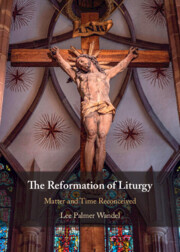
Why were sixteenth-century Europeans willing to risk their lives to attack 'mere matter' - images, lamps, altars, vestments? The most influential medieval liturgical commentary, William Durand's Rationale divinorum officiorum, offers an answer. Reading Durand to excavate the meaning of churches, altars, vestments, this book reveals the stunning scope of Reformation reconceptualization of worship, time, and matter. For Durand, liturgy was an ongoing praxis in which Scripture and Creation were in constant dialogue, leading to an ever-richer understanding of divine revelation. In attacking the made world - what human beings had fashioned from prime matter - Protestants sundered Creation from the liturgy and fundamentally changed how liturgy was understood, and what both Protestants and Catholics held the relationship between divine revelation and matter to be. Altars and vestments became 'objects' to which human beings gave meaning. As the sixteenth century redefined liturgy as a verbal practice, time, matter, and worship were realigned.
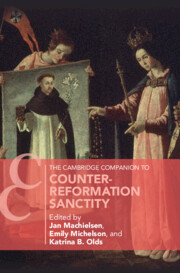
This groundbreaking Companion explores how Counter-Reformation sanctity reshaped religious identities, sacred traditions, and devotional practices that transformed Catholicism into the first global religion. Offering a fresh perspective on early modern Catholicism, it moves beyond traditional debates about Reformation and Reform and presents sanctity as the defining lens through which to view the period's transformative changes. By examining the lives, representations, and global impact of saints, the Companion demonstrates how sanctity countered the Protestant challenge and also transformed the very fabric of Catholicism between 1500 and 1750. Organized into four thematic sections – models of sanctity, the creation and contestation of sanctity, the representation of saints, and everyday interactions with saints – the volume also provides insight into the role of holiness during this pivotal period in Church history. Connecting history, theology, art history, and material culture, this interdisciplinary Companion serves as an indispensable resource for scholars and students seeking a comprehensive understanding of early modern Catholicism's influence on European and global history.
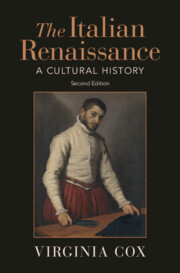
The extraordinary creative energy of Renaissance Italy lies at the root of modern Western culture. In this magisterial study, Virginia Cox offers a fresh vision of this iconic moment in cultural history. Her lucid and absorbing book explores key artistic, literary and intellectual developments, as well as histories of food and fashion, map-making, exploration and anatomy. Alongside towering figures from Petrarch and Boccaccio to Leonardo, Machiavelli, and Isabella d'Este, Cox unveils lesser-known Renaissance protagonists including printers, travel writers, actresses, courtesans, explorers-even celebrity chefs. This extensively revised and expanded edition includes an incisive overview of Italy's relationship with the European and non-European worlds, embracing ethnic and religious diversity within Italy, the global dissemination and hybridization of Italian Renaissance culture, and Italian global encounters, including Jesuit missions to Asia. Pulling together the latest scholarship with original research and insight, Cox's book speaks both to general readers and specialists in the field.
Chapter 5 layers in investigation of notions of empire and longevity, examined here through the lens of more mundane and pervasive structures—its streets and public highways—to reckon with the attenuated and amalgamated temporalities that these infrastructures construct through the accumulation of large- and small-scale acts of maintenance and repair and the referencing of those interventions by milestone monuments in the extra-urban landscape.
This chapter explains the origins of the Estates General, in practice from the 1484 meeting, and how deputies were chosen, how the meetings of the Estate General operated, and why kings convoked them in its 1560, 1561, 1576, 1588–1589, and 1614 meetings. It also explains the differences between the Estates General and meetings of provincial estates and bailiwick assemblies.
This introduction begins by explaining the role of consumers and consumption in both pre-industrial and modern economies, with particular emphasis on the decisive role of the peasantry. The book is framed within a paradigm shift that recognises medieval peasants as key agents of social and economic change. This chapter provides a state-of-the-art review of the connection between consumption, material culture, and living standards in scholarship, identifying gaps and unanswered questions that this book seeks to address. It also highlights the significance of food-related possessions in the material culture of ordinary people, the region under analysis (the Kingdom of Valencia), and the sources under examination (probate inventories, public auction records, and others). The introduction concludes with a general outline of the book’s four parts and presents the central argument: that peasant decision-making as consumers during the later Middle Ages had a positive impact on the overall economic development of a leading Mediterranean polity – thus revealing the power of peasant consumers.
Chapter 6 digs deeper into the textual conventions deployed in many of the monumental inscriptions set up on restored structures. In particular, it points to how they responded to and influenced the experience of the inexorable degradation of time through a rhetoric of ruin and fragmentation that both naturalized and justified the form or extent of rebuilding and in late antiquity shifted to increasingly vivid, sensorially affective forms.
While French political discourse in the late Middle Ages had been based on ancient Roman ideas that government existed for the common good (le bien public, or la chose publique, a French translation of the Latin res publica), these ideas began to evolve in the 1570s. Although references to the common good continued to be used right up to the French Revolution, they were gradually overtaken by a focus on the good of the State (le bien de l’État). James B. Collins demonstrates how this evolution in language existed at every social level from the peasant village up to the royal court. By analyzing the language used in scores of local, regional and national lists of grievances presented to provincial estates and the Estates-General, Collins demonstrates how the growth was as much a bottom-up process as a top-down enforcement of royal power.