To save content items to your account,
please confirm that you agree to abide by our usage policies.
If this is the first time you use this feature, you will be asked to authorise Cambridge Core to connect with your account.
Find out more about saving content to .
To save content items to your Kindle, first ensure no-reply@cambridge.org
is added to your Approved Personal Document E-mail List under your Personal Document Settings
on the Manage Your Content and Devices page of your Amazon account. Then enter the ‘name’ part
of your Kindle email address below.
Find out more about saving to your Kindle.
Note you can select to save to either the @free.kindle.com or @kindle.com variations.
‘@free.kindle.com’ emails are free but can only be saved to your device when it is connected to wi-fi.
‘@kindle.com’ emails can be delivered even when you are not connected to wi-fi, but note that service fees apply.
Knowledge of the Arandora Star is no longer limited to members of the UK's historic Italian community but is shared by a much larger constituency thanks to the greater accessibility of historical documents relating to the sinking of the ship, and to the substantial volume of new creative work inspired by it. This article examines this expansion of historical memory by following two discrete but entangled strands. The first follows the construction of the Arandora Star archive, starting from the author's chance personal encounter with a photograph. The second involves a close reading of Francine Stock's A Foreign Country (1999) and Caterina Soffici's Nessuno può fermarmi (2017), two novels that explore how people outside the historic Italian community recognise their implication in the sinking and its aftermath. Both foreground the intergenerational and transnational transmission of difficult memory and the ways in which the Arandora Star functions as an unstable point of historical knowledge and ethical judgement.
During the Second World War, Germans, Austrians and Italians living in Great Britain were designated as ‘enemy aliens’ and consequently interned. The worsening situation on the continent in May and June 1940 stirred up hysteria that spies and saboteurs could be amongst the Germans and Austrians. Mass arrests started in May 1940, and Italians were soon caught up in the detentions when Mussolini declared war on 10 June, thus filling internment camps to capacity. Canada and Australia agreed to take some of the ‘most dangerous characters’, facilitating the most controversial aspect of internment – deportation – which led to the ultimate tragedy when the SS Arandora Star was torpedoed and sunk on 2 July 1940. Building on previous scholarship that focuses on either German or Italian internment, this article examines both government policy towards and the internee experience of these two groups on an equal footing, thus furthering integration of the Italian narrative within internment historiography.
This paper critically reviews and examines the available data concerning Italians embarked on the SS Arandora Star on 30 June 1940. It encompasses their fate on 2 July when the ship was sunk, their subsequent journeys and the sources used to verify the conclusions. The principal aim is to establish, as far as is possible, the precise number, correct names and other details of those who were embarked on the ship. A fully validated ‘Embarkation Listing’ is published here for the first time.
This article progresses Second World War historiography of ‘enemy alien’ internment, especially of the SS Arandora Star, sunk in 1940 with a high loss of Italian civilian lives. Employing a new paradigm, that of the deathscape, defined as a topography of death and the practices that surround it, this investigation recontextualises Arandora Star remembrance in Scotland. Ambiguous loss, complicated grieving, disenfranchisements in mourning and absences in multiple layers of the deathscape form overarching themes that are explored in parallel to emotional-affective memory. The previously neglected study of individual memorialisation, both private and ‘official’, provides an important primary source in the fragmented materiality of the deathscape, allowing fresh insight on both cultural manifestations and political context. As the material and cultural apex of the deathscape, the Italian Cloister Garden and Arandora Star Memorial in Glasgow, created by Archbishop Mario Conti in 2011, are evaluated through the lenses of leadership, identity and heritage activism.
Within British-Italian history of the Second World War, there are several questions surrounding the sinking of the SS Arandora Star, on 2 July 1940, which still remain problematic. Nevertheless, this tragedy continues to play a prominent role in the heritage and memories of the Anglo-Italian communities in the UK. This article focuses on the experiences and memories of the Arandora Star from the perspective of members of the Italian community in the North-East of England. Oral histories of Italian civilian internees who were embarked onto the ocean liner were collected via qualitative interviews with descendants of victims and survivors. This article contributes to raising awareness of Arandora scholarship by articulating how memories were interpreted retrospectively and transmitted down generations. Informing the debate on the purpose of misremembering in oral history, this article sheds light on the events and their imaginary reconstruction.
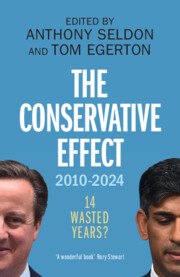
After fourteen years of Conservative government, we rightly ask what changed for the better or worse during this prolonged period of power? The country experienced significant challenges including austerity, Brexit and Covid: did they militate against the government's making more lasting impact? Bringing together some of the leading authorities in the field, this book examines the impact of Conservative rule on a wide range of economic, social, foreign and governmental areas. Anthony Seldon, Tom Egerton and their team uncover the ultimate 'Conservative effect' on the United Kingdom. With powerful insights and fresh perspectives, this is an intriguing study for anyone seeking to understand the full scope of the Conservative government's influence on our nation. Drawing the immediate lessons from the last fourteen years will be pivotal if the country is to rejuvenate and flourish in the future.
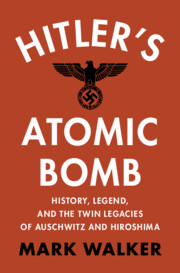
Who were the German scientists who worked on atomic bombs during World War II for Hitler's regime? How did they justify themselves afterwards? Examining the global influence of the German uranium project and postwar reactions to the scientists involved, Mark Walker explores the narratives surrounding 'Hitler's bomb'. The global impacts of this project were cataclysmic. Credible reports of German developments spurred the American Manhattan Project, the nuclear attacks on Hiroshima and Nagasaki, and in turn the Soviet efforts. After the war these scientists' work was overshadowed by the twin shocks of Auschwitz and Hiroshima. Hitler's Atomic Bomb sheds light on the postwar criticism and subsequent rehabilitation of the German scientists, including the controversial legend of Werner Heisenberg and Carl Friedrich von Weizsäcker's visit to occupied Copenhagen in 1941. This scientifically accurate but non-technical history examines the impact of German efforts to harness nuclear fission, and the surrounding debates and legends.
When Otto Hahn, Werner Heisenberg, and Carl Friedrich von Weizsäcker returned to Germany from Farm Hall, they needed to justify their wartime work on uranium without appearing to have betrayed the German war effort. Hahn was aided by his Nobel Prize and his presidency of the Max Planck Society. Hahn used his prestige to systematically defend German science and repress its nazification, contributions to the war effort, and participation in war crimes. Heisenberg and Weizsacker helped create the legend of Copenhagen: they had supposedly traveled to occupied Denmark in order to persuade Niels Bohr to help them forestall all nuclear weapons. This legend was popularized by the author Robert Jungk, but denied, at least privately, by Bohr. When the West German chancellor Konrad Adenauer and his Defense Minister Franz Josef Strauss suggested that the Federal Republic should have its own nuclear weapons, Hahn, Heisenberg, and Weizsäcker joined fifteen other prominent German scientists to issue the Göttingen Declaration, rejecting West German nuclear weapons and refusing to participate in the development of such weapons. Weizsäcker subsequently refined his stance on nuclear weapons.
When Germany invaded Poland, German officials set up a research project into the possible military uses of uranium fission. A nuclear reactor, what the Germans called a “uranium machine,” needed a moderator to slow down neutrons. Water, heavy water, and pure carbon in the form of graphite were all considered, but water would need uranium in which the percentage of isotope 235 is increased, and it did not appear feasible for German industry to produce graphite with sufficient purity. Paul Harteck and his collaborator Wilhelm Groth first tried to separate the uranium isotopes with a separation tube. When this failed, the two physical chemists turned to centrifuges. Scientists in Berlin, Heidelberg, and Leipzig began experiments on the behavior of materials when bombarded with neutrons and on model nuclear reactors. At first the materials needed were scarce but Germany captured the Norsk Hydro in Norway, the largest heavy water producer in the world, and the defeat of Belgium brought with it tons of uranium compounds. From the start of the war through to the autumn of 1941, this research had low priority and made modest progress. At this stage of the war, powerful new weapons did not appear needed.
By the time Walther Gerlach took over the uranium project in late 1943, it was clear that Germany could not build atomic bombs before the end of the war, which was now going very badly for Germany. Work continued under Paul Harteck on isotope separation and heavy water production. Small but steady improvements were made with the centrifuges, but only very small samples with low levels of uranium 235 enrichment were ever achieved. Heavy water production failed, despite great efforts. The work on model nuclear reactors continued, culminating in a final experiment using a lattice of uranium cubes immersed in heavy water. This came close but fell short of achieving a self-sustaining nuclear fission chain reaction. During this period the scientists were focused first and foremost on the survival of themselves and their families. Both Gerlach and Werner Heisenberg sought to facilitate this by continuing to suggest to powerful members of the Nazi elite that their research might lead to an unexpected breakthrough and win the war.
At the end of the war ten German scientists were interned in a country house named Farm Hall in Britain. With one exception, all had worked on the wartime research project on the economic and military applications of nuclear fission. There were microphones hidden in the walls and the Germans’ conversations were recorded, excerpted, translated, and transcribed, including in particular their reactions to the surprising and shocking news of Hiroshima. The Germans discussed four basic questions among themselves: Did they know how to build an atomic bomb? Could the Germans have built these weapons? Did the Germans try to make atomic bombs? Had they been Nazis?
The author of this book, Mark Walker, interacted with two of the main protagonists, Carl Friedrich von Weizsäcker and Robert Jungk, without initially understanding that he had thereby become himself a historical actor in the very history he was writing.
Did Werner Heisenberg and Carl Friedrich von Weizsäcker compromise with the Nazis? The story begins with Albert Einstein, who became a target for conservative physicists like Philipp Lenard and Johannes Stark who could not follow Einstein’s physics, and the early Nazi Party that rejected Einstein as a Jew as well as his pacifism and internationalism. When Hitler came to power, Lenard and Stark gained great influence. Stark in particular tried to accumulate power but steadily lost influence through conflicts with other Nazis. When Stark’s nemesis, the theoretical physicist Arnold Sommerfeld, was going to retire and be succeeded by Werner Heisenberg, Stark launched a vicious attack on Heisenberg in the SS newspaper. Heisenberg appealed to SS Leader Heinrich Himmler and thanks to support from the aeronautical engineer Ludwig Prandtl was eventually rehabilitated by the SS. The established physics community then launched a counterattack against the “Aryan Physics” of Lenard and Stark, which included writing Einstein out of the history of relativity theory. This was arguably Heisenberg’s greatest compromise with Nazism.
In the late 1930s scientists were puzzled by the mysterious behavior of uranium when bombarded by neutrons. Several different research groups were working on these questions, including two German chemists, Otto Hahn and Fritz Strassmann, and an Austrian, “non-Aryan” physicist, Lise Meitner. When Germany absorbed Austria in 1938, Meitner fled to Scandinavia. However, their collaboration continued, culminating in Hahn and Strassmann’s discovery that uranium had been split and, together with her nephew Otto Frisch, Meitner’s theoretical explanation of what came to be called nuclear fission. Scientists in many countries immediately began studying this phenomenon and publishing their results. By the time these publications were stopped by censors or self-censorship, it was clear that one rare isotope of uranium, 235, was easily fissionable, while the common isotope 238 could absorb a neutron and transmute into a fissionable transuranic element. This was the basis for wartime research projects on atomic bombs.