To save content items to your account,
please confirm that you agree to abide by our usage policies.
If this is the first time you use this feature, you will be asked to authorise Cambridge Core to connect with your account.
Find out more about saving content to .
To save content items to your Kindle, first ensure no-reply@cambridge.org
is added to your Approved Personal Document E-mail List under your Personal Document Settings
on the Manage Your Content and Devices page of your Amazon account. Then enter the ‘name’ part
of your Kindle email address below.
Find out more about saving to your Kindle.
Note you can select to save to either the @free.kindle.com or @kindle.com variations.
‘@free.kindle.com’ emails are free but can only be saved to your device when it is connected to wi-fi.
‘@kindle.com’ emails can be delivered even when you are not connected to wi-fi, but note that service fees apply.
Chapter 2 addresses the divisive issue of ‘environmental determinism’ and provides a critical consideration of models and approaches such as site catchment analysis, behavioural ecology, carrying capacity and niche construction theory. It considers when determinism is and is not valid and how to use models as an effective framework in both economic and cultural contexts.
Chapter 6 deals with how the microscopic study of phytoliths starch grains has revolutionised our understanding of archaeobotany in (sub)tropical regions as well has how these techniques might add further to research in other environments.
Chapter 1 considers the origins and development of economic approaches to archaeology paying particular attention to the Cambridge ‘palaeoeconomy’ school of the 1960s and 70s. It draws out the key achievements and legacies of that time as well addressing post-processual criticism.
This article presents evidence for the shifting economic networks and cultural relationships between the Jovel Valley of highland Chiapas, and the Gulf Coast lowlands. In particular, we examine material culture of Gulf Coast origin or influence at the hilltop monumental centre of Moxviquil during the Late Classic (ad 600–900) and Early Postclassic (ad 900–1250) periods. These artifacts include a fine orange cylindrical pedestal vase, two examples of ‘portable sculpture’, two anthropomorphic incense burner lids and a whistle (ocarina) in the shape of a kneeling woman. The patterns of curation and disposal of these objects at Moxviquil suggests differences in the way that Gulf Coast-referencing objects were incorporated into social memory and ritual behaviour.
Gender in the European Neolithic has seen little debate, despite major scholarly interest in identity and social relationships. This article considers how gender operated in the Linearbandkeramik (LBK, c. 5500–5000 cal. bc), the first farming culture of central Europe. A new theoretical approach is developed from the philosophy of Deleuze and Guattari, and the feminist philosopher Braidotti, proposing that how difference and variation are conceived is an important element in how identity is experienced and performed. The concept of ‘difference-within-itself’ is introduced and applied to an assemblage of c. 2350 burials from the LBK via correspondence analysis. The results of this analysis are combined with variation in daily activities and health between male-sexed bodies and female-sexed bodies to argue that differences between males and females shaped lifeways in the LBK, providing different and varied ways of participating in social life. It is concluded that there was diversity and fluidity in female identities, while male identities had more limited possibilities and were subject to further social constraints. The implications of these gendered differences for models of LBK social organization are then considered.
The Trypillia megasites of the Ukrainian forest steppe formed the largest fourth-millennium bc sites in Eurasia and possibly the world. Discovered in the 1960s, the megasites have so far resisted all attempts at an understanding of their social structure and dynamics. Multi-disciplinary investigations of the Nebelivka megasite by an Anglo-Ukrainian research project brought a focus on three research questions: (1) what was the essence of megasite lifeways? (2) can we call the megasites early cities? and (3) what were their origins? The first question is approached through a summary of Project findings on Nebelivka and the subsequent modelling of three different scenarios for what transpired to be a different kind of site from our expectations. The second question uses a relational approach to urbanism to show that megasites were so different from other coeval settlements that they could justifiably be termed ‘cities'. The third question turns to the origins of sites that were indeed larger and earlier than the supposed first cities of Mesopotamia and whose development indicates that there were at least two pathways to early urbanism in Eurasia.
Tubular pottery comprises certain peculiar artifacts that were produced by late Holocene complex hunter-gatherer societies in southeastern South America for unknown purposes. Some authors have related them to mortuary behaviour which has also been suggested by historical sources, while others have considered domestic use. In this paper, the technical, compositional and functional properties of these artifacts are explored in order to contrast both hypotheses, given an example of how technical analysis allows the identification of special pottery within archeological contexts. This analysis includes a study of the fabrics involved using low and high magnification, thin sections, Scanning Electron Microscopy, Energy Dispersive X-ray Spectroscopy, Mössbauer Spectroscopy, Laser Induced Breakdown Spectroscopy and fatty acid profiles. The results show that these tubular artifacts are not fit structurally for utilitarian purposes and show no evidence of domestic use. Based on these results and on historical data, it can be postulated that they were used as part of mortuary rituals, thus becoming part of the select global group of pottery manufactured exclusively for mortuary purposes.
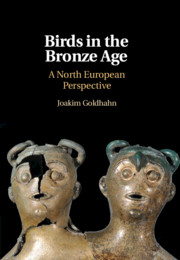
This book provides new insights into the relationship between humans and birds in Northern Europe during the Bronze Age. Joakim Goldhahn argues that birds had a central role in Bronze Age society and imagination, as reflected in legends, myths, rituals, and cosmologies. Goldhahn offers a new theoretical model for understanding the intricate relationship between humans and birds during this period. He explores traces of birds found in a range of archaeological context, including settlements and burials, and analyzes depictions of birds on bronze artefacts and figurines, rock art, and ritual paraphernalia. He demonstrates how birds were used in divinations, and provides the oldest evidence of omens taken from gastric contents of birds - extispicy - ever found in Europe.
The Early Bronze Age (EBA) of the southern Levant was the first period in which many sites became fortified. This process reached its climax during the latter part of the period (namely Early Bronze III). Until recently, most scholars saw this phenomenon as an indication that the period was characterized by a high level of organized conflict. The following article analyses the fortifications of eight EBA sites, as well as other markers of warfare, and argues that the period's fortifications were not as tactically efficient as they seem. Furthermore, other markers of war are generally missing. It seems that the period's fortifications were built mainly to demonstrate a town's might and power while deterring potential attackers. Taking into account the rise of social complexity during the period, they were also used to consolidate the society through the construction process and possibly to control movement and serve as a boundary marker. Incipient leaders, who planned and coordinated the construction, used possible threats and the construction process to aggrandize themselves as being the ‘protectors’ of the settlement.
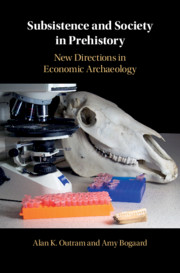
Over the last thirty years, new scientific techniques have revolutionised our understanding of prehistoric economies. They enable a sound comprehension of human diet and subsistence in different environments, which is an essential framework for appreciating the rich tapestry of past human cultural variation. This volume first considers the origins of economic approaches in archaeology and the theoretical debates surrounding issues such as 'environmental determinism'. Using globally diverse examples, Alan K. Outram and Amy Bogaard critically investigate the best way to integrate newer lines of evidence such as ancient genetics, stable isotope analysis, organic residue chemistry and starch and phytolith studies with long-established forms of archaeobotanical and zooarchaeological data. Two case study chapters, on early Neolithic farming in Europe, and the origins of domestic horses and pastoralism in Central Asia, illustrate the benefit of a multi-proxy approach and how economic considerations feed into broader social and cultural questions.
Miniature human figurines have inspired many theoretical advances in archaeological literature, centred around universal human reactions to the material affect of their form. However, confirmation that ancient audiences had such reactions to figurines can be difficult to access in the archaeological record. Egyptian shabtis, a type of funerary figurine, allow such reactions to be accessed by the archaeologist due to their widespread use throughout a long period of Egyptian history and their continuing popularity in other cultures since ancient times: evidence consists of a broad range of textual, artistic and archaeological data from many different cultures over a period of roughly 4000 years. This evidence confirms not only that ancient Egyptian craftsmen responded to and sought to maximize the material affect of the shabtis, but that a significant part of the human response to miniature human figurines is indeed conditioned by their material qualities, independent of the figurines’ original religious function and the cultural background of the viewer.
Phillip Tobias once dated the earliest Bushmen to about 40,000 years ago, though recent findings at several sites trace the origin of symbolic culture in southern Africa to more than twice that figure. What this means in terms of either the origins of language or the relation between the earliest symbolism and living populations is, of course, open to debate. A clear solution to such a debate would also dissolve any difference between what in southern Africa are known as the Middle Stone Age and the Later Stone Age. Archaeological findings such as those of early rock art give a better clue to Bushman prehistory. These can be dated to at least 25,500 BCE, although again the connection with people called ‘Bushmen’ today is far from certain. This chapter will explore these and other issues, as well outline the discoveries of contemporary archaeology. The latter include Iron Age migrations into Bushman territories and possible connections with hunter-gatherer groups in eastern Africa.
The Naro (formerly spelled Nharo) are the main group I worked with, from 1974 onwards. They are also the group studied by Mathias Guenther. I say ‘Central’, ‘Northern’ or unique in reference to their linguistic classification. Naro is a Khoe or ‘Central’ language, but two recent genetic studies have shown that it is highly likely that their original language was, like Ju/’hoan, a Kx’a or ‘Northern’ one. The question here is: how can this transition be explained? The answer lies in a number of factors almost all exclusive to hunter-gatherer societies: minimal material culture, very small communities, universal kinship and extreme multilingualism. These are seen in light of details that unite Naro with their northern neighbours, the Ju/’hoansi: (1) xaro (hxaro) exchange, (2) kamasi (Ju/’hoan) or kamane (Naro) exchange of bride or childbirth gifts, (3) the naming system and (4) the use of certain Kx’a kin terms rather than Khoe ones in Naro. In ancient times tiny groups speaking a Kx’a language became ‘the Naro’ that we know today. This has implications for understanding the prehistory of hunter-gatherers more generally.
Other linguistically ‘Central’ groups include the ‘River Bushmen’ of the Okavango Delta. Their existence tests the limits of the idea of ‘hunter-gatherers’, as they are fishermen as well as hunter-gatherers. Their fishing lifestyle has had profound effects on the their existence, as has the impact of tourism in their ancestral lands. A major ethnography on these groups was competed by ‘Doc’ Heinz in the 1970s. I borrowed this and took detailed notes on it in 1982. But very sadly, Heinz was murdered in the year 2000, and his manuscript was lost. However, my student Michael Taylor did his PhD on River Bushmen, also completed in 2000. He now works for the World Food Program, but his thesis sheds new light on the recent history of these groups. I aim to cover such issues in the present chapter.