To save content items to your account,
please confirm that you agree to abide by our usage policies.
If this is the first time you use this feature, you will be asked to authorise Cambridge Core to connect with your account.
Find out more about saving content to .
To save content items to your Kindle, first ensure no-reply@cambridge.org
is added to your Approved Personal Document E-mail List under your Personal Document Settings
on the Manage Your Content and Devices page of your Amazon account. Then enter the ‘name’ part
of your Kindle email address below.
Find out more about saving to your Kindle.
Note you can select to save to either the @free.kindle.com or @kindle.com variations.
‘@free.kindle.com’ emails are free but can only be saved to your device when it is connected to wi-fi.
‘@kindle.com’ emails can be delivered even when you are not connected to wi-fi, but note that service fees apply.
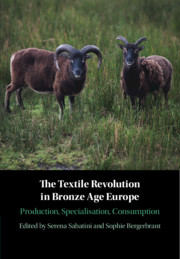
Textile production and the introduction of wool and woolen textiles represented a great revolution in Bronze Age Europe at the dawn of the second millennium BC. The available contemporary written sources from the Mediterranean and Near East suggest that textile production had a strong impact on the cultural, social, and economic life. In most parts of continental Europe, however, archaeological material alone can help us understand the details relating to textile production and its wider importance to early societies. This book provides new insights on patterns of production, specialization, and consumption of textiles in Europe throughout the Bronze Age. Assembling a diverse array of studies on various aspect of the textile production and economy, the essays, specially written for this volume, provide a wide range of scientific data as well as archaeological evidence. They also show the great potential of examining early textile production through the use of innovative methodologies and diverse perspectives.
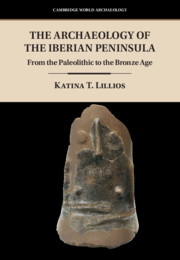
In this book, Katina Lillios provides an up-to-date synthesis of the rich histories of the peoples who lived on the Iberian Peninsula between 1,400,000 (the Paleolithic) and 3,500 years ago (the Bronze Age) as revealed in their art, burials, tools, and monuments. She highlights the exciting new discoveries on the Peninsula, including the evidence for some of the earliest hominins in Europe, Neanderthal art, interbreeding between Neanderthals and modern humans, and relationships to peoples living in North Africa, the Mediterranean, and Western Europe. This is the first book to relate the ancient history of the Peninsula to broader debates in anthropology and archaeology. Amply illustrated and written in an accessible style, it will be of interest to archaeologists and students of prehistoric Spain and Portugal.
Prevalent as bird imagery is in the ritual traditions of eastern North America, the bony remains of birds are relatively sparse in archaeological deposits and when present are typically viewed as subsistence remains. A first-millennium ad civic-ceremonial centre on the northern Gulf Coast of Florida contains large pits with bird bones amid abundant fish bone and other taxa. The avian remains are dominated by elements of juvenile white ibises, birds that were taken from offshore rookeries at the time of summer solstices. The pits into which they were deposited were emplaced on a relict dune with solstice orientations. The timing and siting of solstice feasts at this particular centre invites discussion of world-renewal rituality and the significance of birds in not only the timing of these events but also possibly as agents of balance and rejuvenation.
To remain in place in the immediate aftermath of the ninth-century Maya collapse, Maya groups employed various resilient strategies. In the absence of divine rulers, groups needed to renegotiate their forms of political authority and to reconsider the legitimizing role of religious institutions. This kind of negotiation happened first at the local level, where individual communities developed varied political and ideological solutions. At the community of Actuncan, located in the lower Mopan River valley of Belize, reorganization took place within the remains of a monumental urban centre built 1000 years before by the site's early rulers. I report on the changing configuration and use of Actuncan's urban landscape during the process of reorganization. These modifications included the construction of a new centre for political gatherings, the dismantling of old administrative buildings constructed by holy lords and the reuse of the site's oldest ritual space. These developments split the city into distinct civic and ritual zones, paralleling the adoption of a new shared rule divorced from cosmological underpinnings. This case study provides an example of how broader societal resilience relies on adaptation at the local level.
Technology has been a central theme in archaeological discussion. Different approaches have been developed in order to understand and better explain the processes that lead to the production of objects and things. The anthropology of technology has been one such effort, with its focus on technological style and the chaîne opératoire. In this paper we argue that, despite their many contributions, these approaches tend to isolate the process of production, as well as to see it as the imposition of culture over nature. Instead, we propose a relational approach to technology, one that considers the multiple participants in the social actions involved, stressing the affective qualities of the different entities participating in the process of making. We focus this discussion on the production process of rock art in North Central Chile by Diaguita communities (c. ad 1000–c. 1540), arguing that making petroglyphs was a central activity that aimed at the balancing of the world and its participants, creating a mediating space that facilitated connectedness between the multiple members of the Diaguita world, humans and other-than-humans.
In his most recent book, James Scott presents us with a ‘deep history’ of the alluvial lowlands of Mesopotamia, from early domestications in the Neolithic to the emergence and consolidation of early states. Although the focus lies on Mesopotamia in these periods, Scott delves into the beginnings of the human use of fire in the Palaeolithic and draws on comparative developments in Southeast Asia, Egypt, Greece, Rome and elsewhere. He poses large questions: Why did people move into densely packed villages—‘Neolithic multispecies resettlement camps’—accompanied by the plants and animals they domesticated, but also by an exponentially increased disease load and a substantial portion of drudgery? Why did states emerge when they did, despite the fact that the main ecological and demographic conditions were present millennia earlier? What accounts for the fragility of these early states, and why do our standard histories obscure that fact? Guiding themes are ecological and demographic, but also draw explicit attention to the unintended consequences of human actions. Indeed, reflections on the Anthropocene underpin the book's arguments, and, like many others who write on this topic, Scott is motivated by deep-seated concerns about the sorry ecological state of our contemporary world and connections to long-term effects of human activity.
The fact that 10 notable scholars have taken the time to examine my book Against the Grain and provide thoughtful commentary is a form of flattery of which I am acutely conscious and very grateful. This would be the case even if their comments had ben totally damning! I braced myself for the onslaught of a phalanx of archaeologists justifiably indignant that a rank amateur should even dare trespass on their turf. When invited to reply to such a symposium convened by the CAJ, the thought crossed my mind that I was being brought to the symposium in the same spirit as the Romans ‘invited’ the Christians to the Coliseum. Happily, while there are gashes, bruises and perhaps a life-threatening wound or two, much of my argument seems to have come through the encounter. One or two of the commentators, I understand, believe they left me for dead!
In Against the Grain, James Scott has produced an admirably broad and sweeping account of state origins. He takes humans’ first use of fire as his starting point and works his way toward states by way of the transition to settled agricultural life in the Neolithic. The intended audience would seem to be primarily the general public, for whom Scott's goals are ‘condensing the best knowledge we have … and then suggesting what it implies’ (p. xii). It is clearly, however, an audience more professionally concerned with state origins that he has in mind when he says ‘…these implications … are meant to be provocations … intended to stimulate further reflection and research’ (p. xiii), and his book provides plenty of fuel for such stimulation.
This paper examines how monuments with ‘local’ idiosyncrasies are key in processes of place-making and how, through persistence, such places can engage in supra-local and even ‘global’ dynamics. Departing from a detailed revision of its context, materiality and iconography, we show how a remarkable Iberian ‘warrior’ stela brings together the geo-strategic potential of a unique site, located literally between the Mediterranean and the Atlantic worlds, the century-long dialogue between shared and local identities and the power of connectivity of inexorable global processes. Previous approaches to Iberian late prehistoric stelae have had problems in developing bottom-up, theoretically informed and empirically sound approaches to their simultaneously local and supra-local character. The remarkable site of Almargen provides the opportunity to explore this issue. Located in Lands of Antequera (Málaga), a region with a strong tradition of landscape-making through monuments going back to the Late Neolithic, the Almargen ‘warrior’ stela serves us to explore the notion of ‘glocalization’, which embodies persistent local engagements with material culture, sites and landscapes on the one hand, and their connections with wider regional and even ‘global’ worlds on the other.
In both public and professional accounts of the grand sweep of human history, a few questions recurrently beg for attention. How did technology—broadly understood to encompass everything from control of fire to domestication of food sources, to craft manufacture, to communication and transportation—transform human life? How did social complexity come into being: e.g. classes, formal institutions and the state? Why did some ancient societies invest so much effort in corporate constructions such as pyramids, temples and other monumental architecture? What were the effects of warfare and disease on the human condition? And why did the early societies of so many regions cycle between eras of concentrated power and its apparent dissolution?
In responding to Scott's Against the Grain, my goal is not to write a book review. I take it as unnecessary to point out all the details that Scott, a historical anthropologist of South East Asia, got wrong about ancient history and archaeology. Instead, I want to take seriously Scott's own hope that his book would be read as a provocation and, in doing so, work through some of its larger problems and its potential.
Asking the public to question the assumption that our current systems of governance and food production represent the apex of an evolutionary trajectory is timely and well warranted.
Against the Grain is both a wide-ranging voyage of discovery and a regionally focused study of the trajectory of agriculture from its earliest appearance until historical times, coupled with discussion of the mechanisms that maintained early states. For Scott, the state is a fragile entity (pp. 21, 23, 118, 125) based on the production of grain, along with water transport, city walls, tax collection, specialized administrators, monumental centres, kings, social hierarchy, filth, epidemic disease and an insatiable demand for enslaved labour. With such a definition, there is a little hope that the societies of Eurasian pastoral nomads can be seen as anything other than ‘barbarians’ living outside the laws and hierarchies of agricultural states. It is these Eurasian nomadic pastoralists and their relations with the state that will form the focus of this commentary.
Southeast Asia is a paradox to Western scholars. Few are familiar with its history, yet Southeast Asia has been a veritable intellectual resource extraction zone for twentieth- and twenty-first-century social thought: imagined communities, galactic polities, agricultural involution and the moral economy of peasants all emanate from work done in Southeast Asia. The region's archaeological record is equally paradoxical: late Pleistocene ‘Hobbit’ hominins disrupt models of human origins, the world's largest Buddhist monument of Borobudur now sits in a wholly Muslim land mass in central Java, and the world's largest premodern city of Angkor is located in Cambodia, a country that remains resolutely rural. So we should not be surprised that Scott's Against the Grain: A deep history of the earliest states draws from a career in Southeast Asian studies to study human history (the entire Anthropocene). This essay concentrates on how Scott believes early Mesopotamian states became legible.
James C. Scott's Against the Grain has immense relevance for how archaeologists view the dynamics of early states and complex polities. In this volume, Scott—already established as a leading theorist of states and statecraft (e.g. Scott 1997; 2009)—brings his analytic power and capacity to turn a phrase to bear on the topic of the ‘earliest states’.
Cultivars domesticated and organized people. Cereal grain-growing agriculturists—at least those lucky enough to live in floodplains—exploited others in order to sustain themselves. From such preconditions, states were born, the organizational fragilities of which routinely led to their dissolution, and to other sorts of social forms in peripheral locations. This is James Scott's Against the Grain in a nutshell.
Against the Grain is an approachable book that explores the world of the earliest states, found in Mesopotamia. It is framed by the rationale that a study of the state's deep history might give us insight into contemporary concerns via an understanding of the deep causal links between sedentism, agriculture and state control.
It seems almost preordained that James Scott, a scholar who moves with profound agility between the worlds of anthropology and political science, should eventually work his way onto the intellectual terrain of the barbarian. Barbarians play a foundational role in the formation of both disciplines, populating both anthropology's ‘savage slot’ (Trouillot 2003) and political science's prelapsarian ‘state of nature’ (Palmeri 2016). In Scott's most recent book, Against the Grain, the barbarians who helped to shape the world's earliest states play a variety of consequential roles. They are at once the forces of resistance to centralizing power, the refugees seeking respite from sovereignty's infringements and the brigands of the borderlands who provide the slave labour and mercenaries that prop up the fragile state.