To save content items to your account,
please confirm that you agree to abide by our usage policies.
If this is the first time you use this feature, you will be asked to authorise Cambridge Core to connect with your account.
Find out more about saving content to .
To save content items to your Kindle, first ensure no-reply@cambridge.org
is added to your Approved Personal Document E-mail List under your Personal Document Settings
on the Manage Your Content and Devices page of your Amazon account. Then enter the ‘name’ part
of your Kindle email address below.
Find out more about saving to your Kindle.
Note you can select to save to either the @free.kindle.com or @kindle.com variations.
‘@free.kindle.com’ emails are free but can only be saved to your device when it is connected to wi-fi.
‘@kindle.com’ emails can be delivered even when you are not connected to wi-fi, but note that service fees apply.
Chapter 6, “The Slave,” delves into the lives of the different types of slaves in Aztec society and their relationships with their owners. It looks at their daily rounds and life cycles, emphasizing essentials such as food preparation and cloth production. It furthermore takes stock of the ultimate good and ill fortunes of slaves in this society.
Chapter 2, “The Priest,” places the Aztec priesthood in the context of the Aztec religious hierarchy, temples and other priestly structures, and ceremonial activities. Focusing on priestly activities in the city-state of Texcoco, it looks at the priests’ daily activities and life cycles, and takes them in and out of trouble by discussing their major problems and attendant solutions.
Chapter 9, “Judgment Day,” treats of crimes and punishments in Aztec society as they pertained to people of different social stations and stages of life. It logically moves into processes of adjudication with courts and judges, examines two actual cases, and considers the role of palaces in the formal legal system.
It must have come as an incredible shock. Despite the forebodings of Tenochtitlan’s supreme ruler, Motecuhzoma Xocoyotzin, the strange-looking people with their odd and intimidating animals and unusual, powerful weapons marched along the causeway and into their sacred and impregnable city. Not only that, throngs of enemy Tlaxcallans marched right in too! Something was terribly wrong.
Chapter 1, “The Emperor,” traces the life of the Aztec king and emperor Ahuitzotl (r. 1486–1502) in the context of Aztec political history. It examines palace life, royal daily rounds, and life cycles, and considers the direst problems facing the royals and the ways they coped with their most persistent dilemmas.
The literary, historical, and linguistic confluence that characterized the Irish Sea region in the pre-modern period is reflected in the interdisciplinarity of these new research essays, centered on the literatures, languages, and histories of the Irish-Sea communities of the Middle Ages, much of which is still evoked in contemporary culture. The contributors to this collection dive deep into the rich historical record, heroic literature, and story lore of the medieval communities ringing the Irish Sea, with case studies that encompass Manx, Irish, Scandinavian, Welsh, and English traditions. Manannán, the famous travelling Celtic divinity who supposedly claimed the Isle of Man as his home, mingles here with his mythical, legendary, and historical neighbors, whose impact on our image and understanding of the pre-modern cultures of the Northern Atlantic has persisted down through the centuries.
Archaeologists working in northwest Europe have long remarked on the sheer quantity and standardisation of objects unearthed from the Roman period, especially compared with earlier eras. What was the historical significance of this boom in standardised objects? With a wide and ever-changing spectrum of innovative objects and styles to choose from, to what extent did the choices made by people in the past really matter? To answer these questions, this book sheds new light on the make-up of late Iron Age and early Roman ‘objectscapes’, through an examination of the circulation and selections of thousands of standardised pots, brooches, and other objects, with emphasis on funerary repertoires, c. 100 bc–ad 100. Breaking with the national frameworks that inform artefact research in much ‘provincial’ Roman archaeology, the book tests the idea that marked increases in the movement of people and objects fostered pan-regional culture(s) and transformed societies. Using a rich database of cemeteries and settlements spanning a swathe of northwest Europe, including southern Britannia, Gallia Belgica, and Germania Inferior, the study extensively applies multivariate statistics (such as Correspondence Analysis) to examine the roles of objects in an ever-changing and richly complex cultural milieu.
Thomas Wijck’s painted alchemical laboratories were celebrated in his day as "artful" and "ingenious." They fell into obscurity along with their subject, as alchemy came to be viewed as an occult art or a fool’s errand. But these unusual pictures challenge our understanding of early modern alchemy-and of the deeper relationship between chemical workshops and the artists who represented them. The work of artists, like the work of alchemists, contained intellectual-creative and manual-material aspects. Both alchemists and artists claimed a special status owing to their creative powers. Wijck’s formation of an artistic and professional identity around alchemical themes reveals his desire to explore this curious territory, and ultimately to demonstrate art’s superior claims to knowledge and mastery over nature. This book explores one artist’s transformation of alchemy and its materials into a reputation for virtuosity-and what his work can teach us about the experimental early modern world.
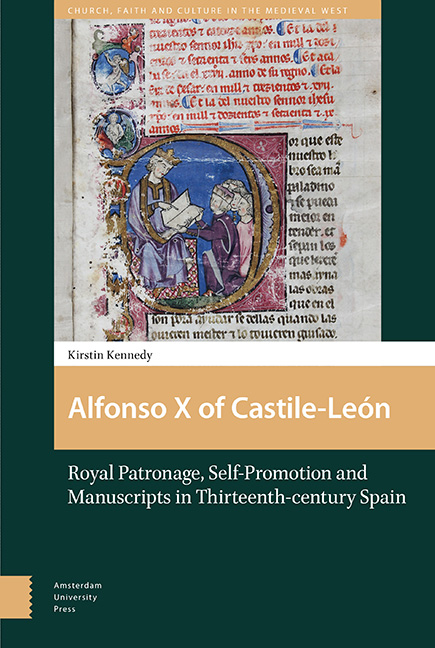
Alfonso X 'the Learned' of Castile (1252–1284) was praised in his lifetime as a king who devoted himself to discovering all worldly and divine knowledge. He commissioned chronicles and law codes and composed poems to the Virgin Mary, he gathered together Jewish scholars to translate works of Arab astrology and astronomy, and he founded a university of Latin and Arabic studies at Seville. Moreover, according to his nephew Juan Manuel, Alfonso was careful to ensure that 'he had leisure to look into things he wanted for himself'. The level of his personal involvement in this literary activity marks him out as an exceptional patron in any period. However, Alfonso's relationship with the arts also had much in common with that of other thirteenth-century European royal patrons, among them his first cousin, Louis IX of France. Like his contemporaries, he relentlessly used literary works as a vehicle to promote his royal status and advance his claim to the imperial crown. His motivation for the foundation of the university at Seville was arguably political rather than educational, and instead of promoting institutional learning during his reign, Alfonso preferred to direct the messages about his kingship in the lavish manuscripts he patronized to a restricted, courtly audience. Yet such was the interest of the works he commissioned, that those who could obtain copies did so, even if these were still incomplete drafts. Three codices traditionally held to have been copied for Alfonso in fact show how this learning reserved for the few began to filter out beyond the Learned King's immediate circle.
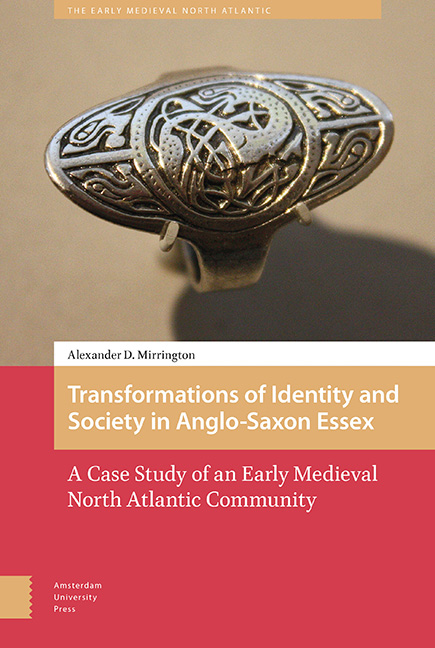
Transformations of Identity and Society in Anglo-Saxon Essex: A Case Study of an Early Medieval North Atlantic Community presents the results of a comprehensive archaeological study of early medieval Essex (c.AD 400–1066). This region provides an important case study for examining coastal societies of north-western Europe. Drawing on a wealth of new data, the author demonstrates the profound influence of maritime contacts on changing expressions of cultural affiliation. It is argued that this Continental orientation reflects Essex’s longterm engagement with the emergent, dynamic North Sea network. The wide chronological focus and inclusive dataset enables long-term socio-economic continuity and transformation to be revealed. These include major new insights into the construction of group identity in Essex between the 5th and 11th centuries and the identification of several previously unknown sites of exchange. The presentation also includes the first full archaeological study of Essex under ‘Viking’ rule.
In The Enlightenment’s Animals Nathaniel Wolloch takes a broad view of changing conceptions of animals in European culture during the long eighteenth century. Combining discussions of intellectual history, the history of science, the history of historiography, the history of economic thought, and, not least, art history, this book describes how animals were discussed and conceived in different intellectual and artistic contexts underwent a dramatic shift during this period. While in the seventeenth century and the first half of the eighteenth century the main focus was on the sensory and cognitive characteristics of animals, during the late Enlightenment a new outlook emerged, emphasizing their conception as economic resources. Focusing particularly on seventeenth-century Dutch culture, and on the Scottish Enlightenment, Wolloch discusses developments in other countries as well, presenting a new look at a topic of increasing importance in modern scholarship.
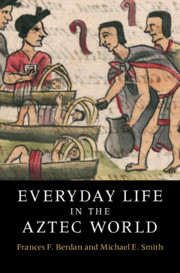
In Everyday Life in the Aztec World, Frances Berdan and Michael E. Smith offer a view into the lives of real people, doing very human things, in the unique cultural world of Aztec central Mexico. The first section focuses on people from an array of social classes - the emperor, a priest, a feather worker, a merchant, a farmer, and a slave - who interacted in the economic, social and religious realms of the Aztec world. In the second section, the authors examine four important life events where the lives of these and others intersected: the birth and naming of a child, market day, a day at court, and a battle. Through the microscopic views of individual types of lives, and interweaving of those lives into the broader Aztec world, Berdan and Smith recreate everyday life in the final years of the Aztec Empire.
Heterarchical or hierarchical? Egalitarian or unequal? Segmented or complex? Tribe, chiefdom, middle range? All these questions have been vividly discussed in an effort to reconstruct Bronze Age society within a wider area of central Europe. The extensive spectrum of published literature offers varied and often contradictory theoretical models, but we still know very little about the organization of particular social units, especially in the context of settlements. The morphological, technological and spatial analysis of movable and immovable sources from the fortified settlement in Spišský Štvrtok contributes in many respects to solution of the discussed problem in the northeastern Carpathian region. In the case of the Spišský Štvrtok locality, we can interpret the degree of social complexity on the basis of qualitative and quantitative parameters of material culture, evidence of production activities and their specialization level in correlation with spatial distribution of intra-site activity areas. Moreover, the detected tendencies are independently confirmed by the morpho-typological differences between gold and bronze artefacts contained in hoards, by architectonic details and by the presence of regular ritual activities. The achieved results thus indicate possible horizontal and vertical ranking, which was adapted to the local community.
In this paper, we discuss observations from fieldwork in northern Kenya which revealed solid evidence for a vital ongoing rock art tradition among warriors of Samburu—lmurran. They make rock art during their lives as warriors, typically between the ages of 15 and 30, when they live away from their villages, herding cattle and thus representing a specific ‘community of practice’. Our findings reveal that Samburu rock art is made predominantly as a leisure occupation, while camping in shelters, as part of activities also involving the preparation of food. Typical images include domestic animals, humans (both men and women) and occasionally wild animals such as elephants and rhinos. Each age-set and new generation of lmurran is inspired by previous artwork, but they also change the tradition slightly by adding new elements, such as the recent tradition of writing letters and names close to the images. We conclude that even though rock art as such is not part of any ritual or ceremonial setting, it plays an important role as an inter-generational visual culture that transfers a common ongoing cultural engendered warrior identity through time.