To save content items to your account,
please confirm that you agree to abide by our usage policies.
If this is the first time you use this feature, you will be asked to authorise Cambridge Core to connect with your account.
Find out more about saving content to .
To save content items to your Kindle, first ensure no-reply@cambridge.org
is added to your Approved Personal Document E-mail List under your Personal Document Settings
on the Manage Your Content and Devices page of your Amazon account. Then enter the ‘name’ part
of your Kindle email address below.
Find out more about saving to your Kindle.
Note you can select to save to either the @free.kindle.com or @kindle.com variations.
‘@free.kindle.com’ emails are free but can only be saved to your device when it is connected to wi-fi.
‘@kindle.com’ emails can be delivered even when you are not connected to wi-fi, but note that service fees apply.
Forgetting, and having recourse to unremembering the past, is useful for different populations. The modern world has provided a range of examples, but the effectiveness of short-term amnesia has not always been highlighted in archaeological scholarship. In this article, a case study from the Roman-period Netherlands highlights that the significance of memory-making in the past may have been overstated. Especially among those societies living under imperial rule, forgetting played an important role, one that calls for more critical focus and understanding. The utilization of cross-cultural and historical examples provides the background for a close analysis of the remains from a single graveyard. The study brings out the repeated amnesiac changes that indigenous groups underwent to adapt themselves to the continuing fact of occupation.
This article examines a frequently overlooked aspect of cuneiform writing in Egypt: the materiality and technology involved in the production of cuneiform tablets, with a particular focus on the process of tablet firing. It is argued that firing was an integral part of tablet production that required learning and practice by the Amarna scribes. The successful firing of tablets to temperatures around 800°C is attributed to the robust and longstanding tradition of tablet manufacture in Mesopotamia, Anatolia, northern Syria and Hazor. In contrast, the lower firing temperatures observed in tablets from Egypt, Alašiya and much of the Levant are associated with the production and firing of cuneiform tablets as a recent technological innovation that required thorough mastery.
This paper explores the evolving landscape of comparative research between ancient Egypt and China, focusing on various aspects such as culture, writing systems, political economy, and motivations behind these comparisons done in China and international environments. Embedded with the historical context, motivations and methodologies of scholars engaged in this comparative endeavour, the authors suggest that such research is linked to modern China's intellectual history and global engagement. It discusses potential motivations, including economic factors, national agenda and interdisciplinary integration. The authors also raise the need for more deliberate theorizations of Egypt–China comparisons, emphasizing the importance of greater reflexivity and inclusivity in shaping the trajectory of comparative studies. Overall, the document sheds light on the complexities, motivations and potential impacts of Egypt–China comparative research, highlighting its relevance in understanding both historical civilizations and contemporary global dynamics.
The examination of funerary landscapes in ancient Egypt has traditionally encountered challenges in establishing comprehensive perspectives that could facilitate the formulation of theories explaining the paradigms governing the creation and evolution of these spaces. Indeed, in recent decades, with the advent of new methodological and epistemological approaches, certain foundational principles explaining the placement of necropolises, the organization of tombs and the symbolism inherent to these environments have been called into question. This article seeks to introduce a fresh perspective on the Egyptian funerary landscape and its role in shaping cosmogonic narratives, establishing sacred spaces and contributing to the cultural transmission of these elements. Employing a methodological framework rooted in emerging fields of study like cognitive archaeology, fractal geometry and a reexamination of Egyptian protoculture, we aim to provide a novel understanding of this landscape. Given the evidence we have presented, it has become necessary to articulate a new concept that crystallizes these innovative viewpoints and offers a fresh interpretive framework for the study of landscape archaeology, not only within Egyptology but also in the broader realm of archaeology as a whole.
Behavioural studies suggest that awareness of one's mortality, known as mortality salience, enhances the inclination to respond positively to prevailing societal values, fostering an adherence to social practices, for example, the treatment of the dead. Nevertheless, when acceptance of these societal values wanes, there is an increased motivation for their modification. This results in a series of subtle changes that eventually reshape the entire set of practices that define a community's social identity. This paper delves into the impact of mortality salience on the emergence, maintenance, and evolution of mortuary practices in south and west Messenia during the Middle Helladic and Late Helladic periods (c. 2050/2000 bce to 1200/1190 bce). This analysis explores how individuals addressed their mortality salience by adjusting their proximal (e.g. practices) and distal (e.g. ideology) defences. Moreover, it incorporates the notion of the ‘taming of the terror’, suggesting that individuals may adopt new practices as a strategy to manage or alleviate the fear associated with mortality. The analysis explores the introduction of new practices, providing valuable insights into how people navigate and comprehend the existential challenges brought about by the recognition of their mortality.
Provenance has been one of the major scientific applications in archaeology for a hundred years. The 'Golden Age' began in the 1950s, when large programmes were initiated focussing on bronzes, ceramics, and lithics. However, these had varying impact, ranging from wide acceptance to outright rejection. This Element reviews some of these programmes, mainly in Eurasia and North America, focussing on how the complexity of the material, and the effects of human behaviour, can impact on such studies. The conclusion is that provenance studies of lithic materials and obsidian are likely to be reliable, but those on ceramics and metals are increasingly complicated, especially in the light of mixing and recycling. An alternative is suggested, which focusses more on using scientific studies to understand the relationship between human selectivity and processing and the wider resources available, rather than on the simple question of 'where does this object come from'.
Infrared spectroscopy is the study of the interaction between infrared radiation and matter. Its application to the characterization of archaeological sedimentary contexts has produced invaluable insights into the archaeological record and past human activities. This Element aims at providing a practical guide to infrared spectroscopy of archaeological sediments and their contents taken as a dynamic system, in which the different components observed today are the result of multiple formation processes that took place over long timescales. After laying out the history and fundamentals of the discipline, the author proposes a step-by-step methodological framework, both in the field and the laboratory, and guides the reader in the interpretation of infrared spectra of the main components of archaeological sediments with the aid of selected case studies. This title is also available as Open Access on Cambridge Core.
The last 20 years have seen growing attention in Scandinavian archaeology towards the study of the Iron Age household. The aim of this paper is to challenge the conceptions of what the household is and argue for the potential in approaching households as heterogenous, emergent assemblages, with an untapped potential in diachronic and spatial studies. Inherent in the vast archaeological record of the Scandinavian Iron Age is a capacity for broader perspectives to explore household processes’ duration and change. Drawing on theoretical insights from the Communities of Practice (COP) framework and assemblage-based thinking, the paper accentuates the household as a key arena for learning, knowledge and identity formation and a heterogeneous unit bound up in changing spheres of interaction. Household practices, or the shared repertoire of households, represent analytical mechanisms that allow for the study of variation, continuity and recalibration, thus providing essential entry points to studies of social processes.
While increased focus in recent decades has been paid to conceptions of time in archaeological interpretation, comparably less attention has been afforded to the way in which we ourselves conceive of time in the construction of chronologies to periodize the past. In this paper, I focus on the tripartite chronology utilized by scholars of the Precolumbian Maya as a case study to explore the potential of a critical approach to archaeological chronologies and periodizations. By examining the chronology's origins and the intellectual histories which underpin it, I demonstrate that the issues at stake are more than questions of temporal accuracy but, rather, matters of reflexivity. Through a process of ‘sublimation’, problematic assumptions and mentalities upon which periodizations were originally constructed are obscured in contemporary usage, leading to the perpetuation of outdated tropes and a conceptual path dependency in narratives of the past. Conversely, appreciating the arbitrary nature of chronological demarcations and treating such frameworks as negotiable and open to revision is a powerful tool in opening up new interpretive possibilities to the narration of the past.
The landscape of heritage on the African continent is the product of neoliberal economic and social interventions from the 1980s–2000s: the prevalence and influence of heritage NGOs; aid for cultural programmes contingent on government reforms; the use of national heritage policies and projects to signal ready capital; experiments in custodianship and private enterprise that balance conservation with consumerism; and so on. This Element synthesises literature from anthropology, archaeology, history, and geography to describe a significant period of heritage policy and discourse on the African continent – its historical situation, on-the-ground realities, and continuing legacies in the era of sustainable development and climate crises.
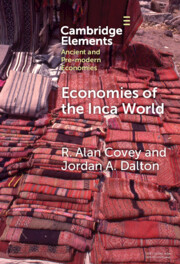
The Inca Empire (c. 1400–1532) was the largest Indigenous state to develop in the Americas, spanning the extraordinarily rich landscapes of the central Andes. Scholarly approaches to Inca-era economies initially drew on Spanish colonial documents that emphasized royal resource monopolies, labor tribute, and kin-based land tenure. Anthropologists in recent decades have emphasized local economic self-sufficiency and the role of reciprocity in Inca economics. This Element adds to the existing literature by reviewing recent archaeological research in the Inca capital region and different provinces. The material evidence and documents indicate considerable variation in the development and implementation of Inca political economy, reflecting an array of local economic practices that were tailored to different Andean environments. Although Inca economic development downplayed interregional trade, emerging evidence indicates the existence of more specialized trading practices in Inca peripheral regions, some of which persisted under imperial rule.
Zoroastrians are one of Iran's religious minorities, who managed to survive pressures and adversities during many centuries after the rise of Islam. Despite threats and dangers, this minority always tried to resist the pressures and maintain their identity and social cohesion with some measures. Aqda Cave is one of the examples of material culture left by the Zoroastrians, which can be very helpful for a better understanding of the preservation of their identity and social cohesion over time, a heritage that, based on the assessment of social values, can be effective in the sense of identity, sense of place and sense of belonging of this community. The presentation and preservation of this cultural heritage with the help of Zoroastrians will provide a foundation to acknowledge their rights and construct a respectful character for this minority group. Consequently, the preservation of this heritage could be an attempt to respect cultural diversity, heritage rights and equity as the factors of inclusive social development and world peace.
This Element addresses the study and documentation of objects made from the durable materials of animal bodies, including bone, antler, ivory, and keratinous tissues. This category of artifacts is common across cultures and regions, yet often escapes close study. The Element aims to be a guide to understanding and documenting worked animal objects for those without a background in zooarchaeology or experience with such artifacts. This Element provides a means of identifying and distinguishing animal materials by emphasizing the value of caution and making full documentation of all observations. Using illustrations and descriptions to help researchers understand the structure of these materials, the volume introduces the terminology and diagnostic factors that differentiate animal materials. It also outlines the techniques craftspeople used to modify animal materials in the past. Finally, this Element presents recording strategies for individuals wishing to study assemblages from archaeological excavations.
This Element highlights the employment within archaeology of classification methods developed in the field of chemometrics, artificial intelligence, and Bayesian statistics. These run in both high- and low-dimensional environments and often have better results than traditional methods. Instead of a theoretical approach, it provides examples of how to apply these methods to real data using lithic and ceramic archaeological materials as case studies. A detailed explanation of how to process data in R (The R Project for Statistical Computing), as well as the respective code, are also provided in this Element.
Provides a multi-scalar synthesis of Nordic Bronze Age economies (1800/1700–500 BCE) that is organized around six sections: an introduction to the Nordic Bronze Age, macro-economic perspectives, defining local communities, economic interaction, conflict and alliances, political formations, and encountering Europe. Despite a unifying material culture, the Bronze Age of Scandinavia was complex and multi- layered with constantly shifting and changing networks of competitors and partners. The social structure in this highly mobile and dynamic macroregional setting was affected by subsistence economies based on agropastoralism, maritime sectors, the production of elaborate metal wealth, trade in a wide range of goods, as well as raiding and warfare. For this reason, the focus of this book is on the integration and interaction of subsistence and political economies in a comparative analyses between different local constellations within the macro-economic setting of prehistoric Europe. This title is also available as Open Access on Cambridge Core
This Element explores the origins, current state, and future of the archaeological study of identity. A floruit of scholarship in the late 20th century introduced identity as a driving force in society, and archaeologists sought expressions of gender, status, ethnicity, and more in the material remains of the past. A robust consensus emerged about identity and its characteristics: dynamic; contested; context driven; performative; polyvalent; intersectional. From the early 2000s identity studies were challenged by new theories of materiality and ontology on the one hand, and by an influx of new data from bioarchaeology on the other. Yet identity studies have proven remarkably enduring. Through European case studies from prehistory to the present, this Element charts identity's evolving place in anthropological archaeology.
Ancient Maya Economies synthesizes the state of the art across seven components: geographical and historical background, ritual economy, households, specialization, exchange, political economies, and future directions. Other Elements case studies use many of the same components, making it easy to compare and contrast ancient Maya economies with systems of production and consumption in other parts of the world. The time is right for this Elements case because knowledge of ancient Maya economies has undergone a revolution in the last few decades, resulting in a complex panorama of new economic information. Aerial laser scanning has revealed higher amounts of intensive agriculture and research on the ground has turned up better evidence for marketplaces. Maya economies feature specialized production, trade of both bulk goods and luxury goods, close integration with ritual and religion, and a carnival parade of political economies.