To save content items to your account,
please confirm that you agree to abide by our usage policies.
If this is the first time you use this feature, you will be asked to authorise Cambridge Core to connect with your account.
Find out more about saving content to .
To save content items to your Kindle, first ensure no-reply@cambridge.org
is added to your Approved Personal Document E-mail List under your Personal Document Settings
on the Manage Your Content and Devices page of your Amazon account. Then enter the ‘name’ part
of your Kindle email address below.
Find out more about saving to your Kindle.
Note you can select to save to either the @free.kindle.com or @kindle.com variations.
‘@free.kindle.com’ emails are free but can only be saved to your device when it is connected to wi-fi.
‘@kindle.com’ emails can be delivered even when you are not connected to wi-fi, but note that service fees apply.
The archaeology of Anglo-Saxon swords conveys the regard in which they were held. They are found primarily in contexts with a marked ritual flavour: bodies of water such as rivers, streams and bogs; and burials, both inhumations and cremations. Individual parts of swords do occur as stray finds, particularly hilt, scabbard and harness fittings that were more prone to loss; but these too played a role in ritualised behaviour, buried singly in graves and, most spectacularly, amassed together in the Staffordshire Hoard. The ways in which swords were treated both during and at the end of their ‘lives’ are of immense value to understanding contemporary perceptions of these weapons. This chapter focuses primarily on swords in funerary contexts, based upon a sample of inhumation burials from sites across England, and parts of Scandinavia for comparison. The sites were selected from existing burial studies that provide a good chronological and geographical spread, together with some newer sites with available records (see Map 1). To some extent the sample was dictated by the distribution of sword burials, which concentrate in certain regions. In England during the furnished burial period (fifth to late seventh centuries), they occur primarily south and east of a line between the River Severn and the Wash, with a concentration in Kent; and after a hiatus they recur in graves during a limited northerly revival of furnished burial in the ninth to tenth centuries, possibly in response to Scandinavian incursions. In Scandinavia, sword burials occur throughout the early medieval period, and in Sweden focus particularly around the easterly Mälar region and on Gotland; in Denmark, on the Baltic island of Bornholm; and in Norway, in various central and southern regions. These chronological and regional idiosyncrasies have a bearing on how the evidence can be analysed and interpreted.
Perceptions of Swords in Early Medieval Archaeology
One aspect of archaeological swords stands out as remarkable: their condition. Many appear to be worn, modified or refurbished, indicating that they had been ‘curated’, or deliberately retained, maintained and kept relevant by their owners. These weapons had presumably ‘lived’ long ‘lives’, generating intricate biographies and social networks, travelling from home to home as heirlooms, gifts, spoils or other forms of transaction. While archaeologists have certainly noted the existence of ‘old’ swords, a cohesive study of the phenomenon has yet to take place.
Depictions of human faces and rice-crop images found at the Jiangjunya rock-art site in Lianyungang City, Jiangsu Province, China, reveal entangling relationships between spiritual and economic aspects. Drawing on the relational ecology model and animist ontology theory, the author provides an analysis of the Jiangjunya rock art in its economic, social, spiritual and historical contexts, proposing that prehistoric farmers along China's east coast perceived rice plants as relating to persons. Rice was conceptualized not in utilitarian terms as a means of subsistence (used and consumed by humans) but rather as subjects capable of action. The human masks of Jiangjunya hence suggest a personhood for rice, rather than representing humans or anthropomorphic gods. Furthermore, the history of the Jiangjunya rock-art site corresponds with the history of local economics. The relational ontologies might have transformed gradually from human–animal interactions in the Late Palaeolithic and Early Neolithic periods to human–plant interactions in Late Neolithic societies. The author concludes that the art site was possibly treated as a mnemonic maintaining interpersonal and intersubjective relationships across thousands of years.
Diplomatic relations between the 18th-dynasty Egyptian court and the polities of the Aegean Bronze Age are gaining increasing scholarly attention. The work conducted so far on chronological synchronization has established a relatively firm base for further discussions on social relations. The role of the prestige objects arriving from the Aegean to Egypt has not received the same attention. This is partly because our knowledge of these objects is restricted to Egyptian visual representations in tombs of the officials and not the imported objects per se. This paper will discuss the transformative capacities of Egyptian decorum in regards to the foreign prestige objects of the Aegean provenance arriving in the Egyptian 18th-dynasty court. We first have to understand the iconographical phenomena of transference, hybridization and creativity in Egyptian visual culture, and only then may we attempt to read any historical reality behind them. These transformative representational processes are crucial for the understanding of the reception and the memory of the Aegean objects.
Poverty in ancient Egypt remains a rarely-studied subject. For decades Egyptologists have focused their attention mainly on the so-called ‘elite’, while the poor, their housing, their possessions, their diet, or their cultural values, remain largely in the shadows. Although they are much less visible archaeologically, they were much more numerous than the wealthy. Despite these circumstances, ancient Egypt provides a good starting point for discussing how to approach poverty during antiquity, as there are archaeological and textual records that can shed light on this complex issue. This article aims to stimulate reflection on the issue of poverty in the Nile valley and how it can be explored. It seeks also to add nuance to the idea of a strict dichotomy opposing the poor to the elite. In so doing, this paper will present discussion of the definition of poverty.
During the Early-Middle Bronze Age, a new package of technological knowledge, including high-fired ‘proto-porcelain’ products and specialized ‘dragon’ kilns, entered Lingnan in South China from neighbouring cultures. This enabled the first local production of proto-porcelain in Bronze Age communities of Guangdong province that later became concentrated in ceramic workshops in the Dongjiang valley. Through a holistic approach towards ceramic production and consumption that integrates elements of functionalist and social perspectives, this study will explore the technological and socio-political conditions underlying the value creation and consequent social usage of proto-porcelain. It will be argued that proto-porcelain was a suitable medium for the simultaneous expression of different social roles that might have included its use as serving ware in community rituals as well as its involvement in politico-economic strategies of elite groups.
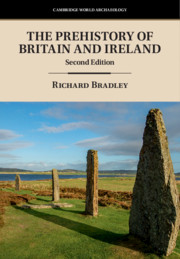
Sited at the furthest limits of the Neolithic revolution and standing at the confluence of the two great sea routes of prehistory, Britain and Ireland are distinct from continental Europe for much of the prehistoric sequence. In this landmark study, Richard Bradley offers an interpretation of the unique archaeological record of these islands. Highlighting the achievements of its inhabitants, Bradley surveys the entire archaeological sequence over a 5,000 year period, from the last hunter-gatherers and the adoption of agriculture in the Neolithic period, to the discovery of Britain and Ireland by travellers from the Mediterranean during the later pre-Roman Iron Age. His study places special emphasis on landscapes, settlements, monuments, and ritual practices. This edition has been thoroughly revised and updated. The text takes account of recent developments in archaeological science, such as isotopic analyses of human and animal bone, recovery of ancient DNA, and more subtle and precise methods of radiocarbon dating.