To save content items to your account,
please confirm that you agree to abide by our usage policies.
If this is the first time you use this feature, you will be asked to authorise Cambridge Core to connect with your account.
Find out more about saving content to .
To save content items to your Kindle, first ensure no-reply@cambridge.org
is added to your Approved Personal Document E-mail List under your Personal Document Settings
on the Manage Your Content and Devices page of your Amazon account. Then enter the ‘name’ part
of your Kindle email address below.
Find out more about saving to your Kindle.
Note you can select to save to either the @free.kindle.com or @kindle.com variations.
‘@free.kindle.com’ emails are free but can only be saved to your device when it is connected to wi-fi.
‘@kindle.com’ emails can be delivered even when you are not connected to wi-fi, but note that service fees apply.
Integral to the fabric of human technology, knots have shaped survival strategies since their first invention. As the ties that bind, their evolution and diversity have afforded human cultural change and expression. This study examines knotting traditions over time and space. We analyse a sample of 338 knots from 86 ethnographically or archaeologically documented societies over 12 millennia. Utilizing a novel approach that combines knot theory with computational string matching, we show that knotted structures can be precisely represented and compared across cultures. This methodology reveals a staple set of knots that occur cross-culturally, and our analysis offers insights into their cultural transmission and the reasons behind their ubiquity. We discuss knots in the context of cultural evolution, illustrating how the ethnographic and archaeological records suggest considerable know-how in knot-tying across societies spanning from the deep past to contemporary times. The study also highlights the potential of this methodology to extend beyond knots, proposing its applicability to a broader range of string and fibre technologies.
Exploring and using remote segments of complex karst systems represents the incorporation of one of the wildest and most demanding natural environments into the cultural fabric of Neolithic-Chalcolithic village-based communities in the Levant. The unique preservation of an early fifth-millennium bce activity phase in Har Sifsof Cave in northern Israel allows for a detailed investigation of an early case of human interaction with the deep underground in this region. The study of archaeological assemblages, environmental and speleological data and spatial distribution of cultural remains form the basis for interpreting the activity inside the cave in the context of fertility cults. The rituals conducted in Har Sifsof Cave revolve around the agricultural cycle of cereal grains and include the interment of multiple individuals, some of whom were buried in remote cul-de-sac passages. The emergence of complex caves as favourable off-settlement arenas dedicated to ritual activity during the later stages of Neolithization marks a conscious effort of ‘domestication’ of these unique wildscapes, while sowing the seeds for the enduring connection observed in later Levantine societies between mortuary rituals, fertility and the underground.
Marine plastic pollution is an issue that threatens most places around the world, including the remote and unique Galapagos archipelago. We used the archaeological framework of object itineraries as part of a story-writing workshop to explore perceptions of marine plastic litter (MPL) by students from two schools in Puerto Ayora, Santa Cruz. Their stories, adopting an archaeological approach to plastic litter as artefacts, told the itinerary of MPL collected on Galapagos shores. We also analysed surveys evaluating their self-reported knowledge, pro-environmental behaviours (PEBs) and perceptions of the issue of MPL before and after the workshop. Our findings showed good awareness of MPL origins and impacts, reflecting the specific pathways of litter reaching this Pacific archipelago from mainland South America, regional marine activities including fishing in and around the Galapagos Marine Reserve, and local sources, although those are thought to be limited. Yet the lack of focus on solutions in the stories and the emphasis on recycling PEBs suggest more targeted activities are needed to address the need of complementary solutions and to place more emphasis on reducing plastic use.
Earlier objects are frequently identified in later contexts, though rarely form the focus of discussion. This paper presents 34 sites where earlier Bronze Age metalwork has been found in later Bronze Age contexts in southern Britain, including hoards and non-hoard contexts. These ‘out-of-time’ objects follow complex trajectories and can inform us about the potential ways past societies conceived their own pasts, especially when contextualized in broader integrated landscapes. Out-of-time objects might be deposited singly or within hoards to reinforce community boundaries and legitimize links with past communities. The form, wear and treatment of these objects pre-deposition (e.g. curation and/or deformation) as well as the places in which they were buried represent indicators of prehistoric processes of commemoration and/or forgetting.
Marks and figurative representations have been recognized as crucial socio-cognitive components that contributed to the transition from foraging to farming of the Neolithic in southwest Asia, during a period in which communities adopted novel social interactions and economic strategies. This article investigates image production and the trajectories tied to the creation of visual codes. We show that since the early Neolithic phases (c. 9700–6600 cal. bc) societies in southwest Asia engaged with specific symbols and created narrative and operational semasiographies, intended to serve as key communicative devices that functioned as community ties and contributed to social interaction across distant groups.
Forgetting, and having recourse to unremembering the past, is useful for different populations. The modern world has provided a range of examples, but the effectiveness of short-term amnesia has not always been highlighted in archaeological scholarship. In this article, a case study from the Roman-period Netherlands highlights that the significance of memory-making in the past may have been overstated. Especially among those societies living under imperial rule, forgetting played an important role, one that calls for more critical focus and understanding. The utilization of cross-cultural and historical examples provides the background for a close analysis of the remains from a single graveyard. The study brings out the repeated amnesiac changes that indigenous groups underwent to adapt themselves to the continuing fact of occupation.
This article examines a frequently overlooked aspect of cuneiform writing in Egypt: the materiality and technology involved in the production of cuneiform tablets, with a particular focus on the process of tablet firing. It is argued that firing was an integral part of tablet production that required learning and practice by the Amarna scribes. The successful firing of tablets to temperatures around 800°C is attributed to the robust and longstanding tradition of tablet manufacture in Mesopotamia, Anatolia, northern Syria and Hazor. In contrast, the lower firing temperatures observed in tablets from Egypt, Alašiya and much of the Levant are associated with the production and firing of cuneiform tablets as a recent technological innovation that required thorough mastery.
This paper explores the evolving landscape of comparative research between ancient Egypt and China, focusing on various aspects such as culture, writing systems, political economy, and motivations behind these comparisons done in China and international environments. Embedded with the historical context, motivations and methodologies of scholars engaged in this comparative endeavour, the authors suggest that such research is linked to modern China's intellectual history and global engagement. It discusses potential motivations, including economic factors, national agenda and interdisciplinary integration. The authors also raise the need for more deliberate theorizations of Egypt–China comparisons, emphasizing the importance of greater reflexivity and inclusivity in shaping the trajectory of comparative studies. Overall, the document sheds light on the complexities, motivations and potential impacts of Egypt–China comparative research, highlighting its relevance in understanding both historical civilizations and contemporary global dynamics.
The examination of funerary landscapes in ancient Egypt has traditionally encountered challenges in establishing comprehensive perspectives that could facilitate the formulation of theories explaining the paradigms governing the creation and evolution of these spaces. Indeed, in recent decades, with the advent of new methodological and epistemological approaches, certain foundational principles explaining the placement of necropolises, the organization of tombs and the symbolism inherent to these environments have been called into question. This article seeks to introduce a fresh perspective on the Egyptian funerary landscape and its role in shaping cosmogonic narratives, establishing sacred spaces and contributing to the cultural transmission of these elements. Employing a methodological framework rooted in emerging fields of study like cognitive archaeology, fractal geometry and a reexamination of Egyptian protoculture, we aim to provide a novel understanding of this landscape. Given the evidence we have presented, it has become necessary to articulate a new concept that crystallizes these innovative viewpoints and offers a fresh interpretive framework for the study of landscape archaeology, not only within Egyptology but also in the broader realm of archaeology as a whole.
Behavioural studies suggest that awareness of one's mortality, known as mortality salience, enhances the inclination to respond positively to prevailing societal values, fostering an adherence to social practices, for example, the treatment of the dead. Nevertheless, when acceptance of these societal values wanes, there is an increased motivation for their modification. This results in a series of subtle changes that eventually reshape the entire set of practices that define a community's social identity. This paper delves into the impact of mortality salience on the emergence, maintenance, and evolution of mortuary practices in south and west Messenia during the Middle Helladic and Late Helladic periods (c. 2050/2000 bce to 1200/1190 bce). This analysis explores how individuals addressed their mortality salience by adjusting their proximal (e.g. practices) and distal (e.g. ideology) defences. Moreover, it incorporates the notion of the ‘taming of the terror’, suggesting that individuals may adopt new practices as a strategy to manage or alleviate the fear associated with mortality. The analysis explores the introduction of new practices, providing valuable insights into how people navigate and comprehend the existential challenges brought about by the recognition of their mortality.
The last 20 years have seen growing attention in Scandinavian archaeology towards the study of the Iron Age household. The aim of this paper is to challenge the conceptions of what the household is and argue for the potential in approaching households as heterogenous, emergent assemblages, with an untapped potential in diachronic and spatial studies. Inherent in the vast archaeological record of the Scandinavian Iron Age is a capacity for broader perspectives to explore household processes’ duration and change. Drawing on theoretical insights from the Communities of Practice (COP) framework and assemblage-based thinking, the paper accentuates the household as a key arena for learning, knowledge and identity formation and a heterogeneous unit bound up in changing spheres of interaction. Household practices, or the shared repertoire of households, represent analytical mechanisms that allow for the study of variation, continuity and recalibration, thus providing essential entry points to studies of social processes.
While increased focus in recent decades has been paid to conceptions of time in archaeological interpretation, comparably less attention has been afforded to the way in which we ourselves conceive of time in the construction of chronologies to periodize the past. In this paper, I focus on the tripartite chronology utilized by scholars of the Precolumbian Maya as a case study to explore the potential of a critical approach to archaeological chronologies and periodizations. By examining the chronology's origins and the intellectual histories which underpin it, I demonstrate that the issues at stake are more than questions of temporal accuracy but, rather, matters of reflexivity. Through a process of ‘sublimation’, problematic assumptions and mentalities upon which periodizations were originally constructed are obscured in contemporary usage, leading to the perpetuation of outdated tropes and a conceptual path dependency in narratives of the past. Conversely, appreciating the arbitrary nature of chronological demarcations and treating such frameworks as negotiable and open to revision is a powerful tool in opening up new interpretive possibilities to the narration of the past.
Zoroastrians are one of Iran's religious minorities, who managed to survive pressures and adversities during many centuries after the rise of Islam. Despite threats and dangers, this minority always tried to resist the pressures and maintain their identity and social cohesion with some measures. Aqda Cave is one of the examples of material culture left by the Zoroastrians, which can be very helpful for a better understanding of the preservation of their identity and social cohesion over time, a heritage that, based on the assessment of social values, can be effective in the sense of identity, sense of place and sense of belonging of this community. The presentation and preservation of this cultural heritage with the help of Zoroastrians will provide a foundation to acknowledge their rights and construct a respectful character for this minority group. Consequently, the preservation of this heritage could be an attempt to respect cultural diversity, heritage rights and equity as the factors of inclusive social development and world peace.
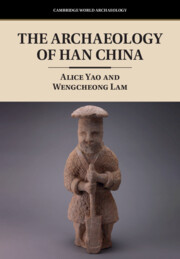
The Han Dynasty, which ruled from 202 BCE to 212 CE, is often taken as a reference point and model for Chinese identity and tradition. Covering a geographical expanse comparable to that of the People's Republic of China, it is foundational to understanding Chinese culture and politics, past and present. This volume offers an up-to-date overview of the archaeology of the Han Empire. Alice Yao and Wengcheong Lam study the period via an interdisciplinary approach that combines textual and archaeological evidence. Exploring the dynamics of empire building in East Asia, Yao and Lam draw on recent archaeological discoveries to recast Western Han imperialism as a series of contingent material projects, including the organization of spatial orders, foodways, and the expansion of communication and ritual activities. They also demonstrate how the archaeology of everyday life offers insights into the impact of social change, and how people negotiated their identities and cultural affiliations as individuals and imperial subordinates.
summarizes how key concepts like tianxia (All-under-Heaven) and jiaohua (assimilation) have been traced throughout to illustrate conditions leading to the formation of collective identities. This chapter offers closing thoughts on the entangled relationship between empire and ethnicity and ways to reanimate studies of ethnicity outside the standard idiom of biology.