To save content items to your account,
please confirm that you agree to abide by our usage policies.
If this is the first time you use this feature, you will be asked to authorise Cambridge Core to connect with your account.
Find out more about saving content to .
To save content items to your Kindle, first ensure no-reply@cambridge.org
is added to your Approved Personal Document E-mail List under your Personal Document Settings
on the Manage Your Content and Devices page of your Amazon account. Then enter the ‘name’ part
of your Kindle email address below.
Find out more about saving to your Kindle.
Note you can select to save to either the @free.kindle.com or @kindle.com variations.
‘@free.kindle.com’ emails are free but can only be saved to your device when it is connected to wi-fi.
‘@kindle.com’ emails can be delivered even when you are not connected to wi-fi, but note that service fees apply.
European ideas about unicorns spread across the world in the colonial era. In South Africa, hunts for that creature, and indigenous rock paintings of it, were commonplace. The aim was proof from ‘terra incognita’, often with the possibility of claiming a reward. There has, however, been little consideration of the independent, local creature onto which the unicorn was transposed. During cross-cultural engagements, foreign beliefs in the mythical unicorn and a desire for evidence of its natural history intermixed to an extraordinary degree with local beliefs in a one-horned animal. For over two centuries, colonists and researchers alike failed to realize that the local creature, by chance, resembled the European unicorn. A new synthesis of southern African ethnography, history and the writings of early travellers, missionaries and colonial politicians provides unambiguous evidence that one-horned creatures obtained in local beliefs before the arrival of colonists. Moreover, it shows that these creatures are depicted in South African rock art, and that they are a manifestation of San (Bushman) rain-animals. By ignoring relevant beliefs and images, previous scholars have failed to acknowledge that the South African unicorn was, apart from its four legs and single horn, a creature wholly different from the European one.
Tell sites are central to archaeological interpretation in many world regions due to their lengthy sequences of stratified deposits. However, the cultural choices that create architectural remnants and associated materials are more poorly understood, as are the ways that previous layers situate the living community above. This article calls for agentive understandings of tell-formation processes through examination of archaeological sites in Burkina Faso, West Africa. We argue that tells here formed through strong cultural beliefs of co-residence between the living and ancestral communities. Drawing on data from excavation and cross-section profiles exposed by road construction, we provide evidence that architectural remnants were actively created and preserved in rituals related to the making and veneration of ancestors. Particular places in tells were used for new construction (often with foundation ritual deposits) only after the active memory of the individual faded from the living community, resulting in a slow (at least 80–100 years) stratification process. Through variations on these core ritual processes, dynamic multi-temporal social groups reinvented themselves over 1500 years through eras of inequity, egalitarian revolution and the Black Death pandemic.
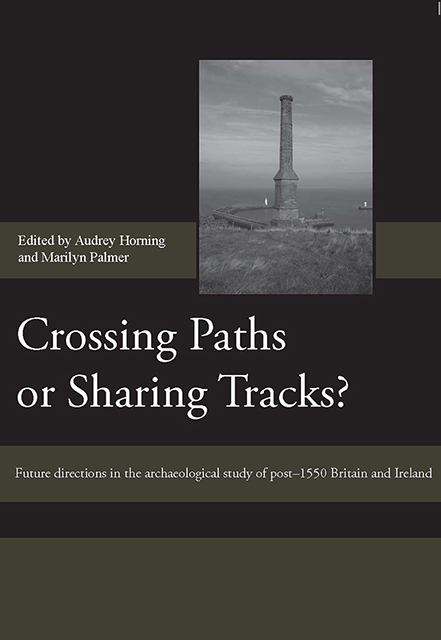
Brings together over thirty of the leading scholars in Post Medieval archaeology and examines how this relatively new discipline has developed and where it is going.
The paper explores and compares the ways in which Neolithic heritage in Greece and Turkey—two archaeologically and historically influential cases—has been used at the level of the state and the diverse meanings, values and histories ascribed to it by local communities and public discourse. Using four very representative examples as case studies, including the World Heritage sites of Çatalhöyük and Göbekli Tepe in Turkey as well as Dimini and Dispilio in Greece, the paper demonstrates how Neolithic spaces are used by different agents to install a certain image of history and to form a collective memory, but also to emphasize difference and discontinuity. The main aim is to explore the relationship between heritage, space and history. Special emphasis is placed on the politics of history or historiography and identity at all levels and on the placement of the debates into a larger historical and discursive context.
This work aims to apply the theories of new materialities to the study of the material culture of the Formoso stilt village, a pre-colonial settlement from the ninth–tenth centuries ad, located in the Baixada Maranhense. Appliqués of the pottery bowls at this archaeological site present cosmological information regarding the transformation or metamorphosis of bodies, aspects that are fertile for the discussion of shamanism in the lowlands of South America, especially the Amazon. Classic concepts of anthropological ethnography applied to archaeology are used, contributing to the discussion on the diversity of ways to manufacture the body in the Amazon in its easternmost portion, such as that of the Master of Animals, a supernatural entity metamorphosed by the shaman and who could also have been part of the cosmology of the lake peoples of Maranhão, Brazil. Two artifacts depicting beings that have their feet turned backwards may be associated with the Curupira, thus evidencing a long-lasting history of this supernatural being that was recorded both in colonial documentation and in indigenous ethnography.
This paper provides a framework to highlight the entanglement of discovery and historiography based on the example of the rock-relief figure of Karabel (Turkey), a pivotal monument to recognize the Hittites and the biblical past. I lay out the common narrative of the re-discovery's story that resemble a hagiography, and I put it into perspective with critiques from post-colonial studies. Due to the ongoing damage at the figure of Karabel, I hypothesize that the one-sided role of the monument in the story of the re-discovery of the Hittites by western scholars is insufficient to avoid the radical rejection of the Karabel relief by some people. This article is theory-in-practice: it highlights some pitfalls and tells a story with more diversity, open thought, and considerations beyond traditional narratives of power in passéist oriental archaeology.
Architectural reuse was common in ancient Egypt. Modern interpretations of this practice, particularly in royal contexts, usually ascribe it either a practical or ideological function, only rarely considering it possible that different motivations were involved. This type of approach is particularly true for the reuse of Old Kingdom blocks by the Middle Kingdom king Amenemhat I in his pyramid at Lisht, a case often classified as solely utilitarian. However, an approach that prioritizes not only the ancient Egyptian worldview and royal ideology, but also how this case of reuse fits into cross-cultural considerations of monumentality, demonstrates the necessity to look at this practice more holistically. This study focuses in particular on the possibility that the transportation of reused materials by Amenemhat I was a spectacle of construction used to showcase the king's legitimacy and authority at the start of a new dynasty.
This paper describes the chaîne opératoire of earthen architecture relating to buildings and thermal structures at the Neolithic site of Kleitos 2 in Kozani. It provides a material-based approach to the variable processes involved in construction as a practice of community involvement. The chaîne opératoire, adapted based on a refined concept of technology, is employed here as a key analytical tool. This paper tackles questions relating to the social scale of the construction processes concerned, specialization in construction, and the participation and collaboration of the builders. By choosing to focus on a local-scale analysis of a single site, we were able to develop a detailed framework that includes all the steps involved in manufacturing the earthen features, from the decision-making processes to questions of spatial allocation, the acquisition and processing of materials and construction practices, together with their subsequent use and end-life. The aim of this paper is to recognize construction processes as a social event involving cooperation and social performativity, which fosters and reaffirms social interactions, obligations and entanglements, shedding light on the dynamics of the society in question.
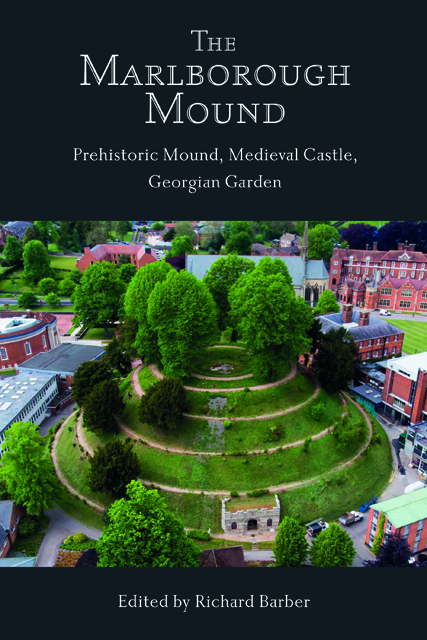
The Marlborough Mound has recently been recognised as one of the most important monuments in the group around Stonehenge. It was also a medieval castle and a feature in a major seventeenth century garden. This is the first comprehensive history of this extraordinary site.
In at least 400 European caves such as Lascaux, Chauvet and Altamira, Upper Palaeolithic Homo sapiens groups drew, painted and engraved non-figurative signs from at least ~42,000 bp and figurative images (notably animals) from at least 37,000 bp. Since their discovery ~150 years ago, the purpose or meaning of European Upper Palaeolithic non-figurative signs has eluded researchers. Despite this, specialists assume that they were notational in some way. Using a database of images spanning the European Upper Palaeolithic, we suggest how three of the most frequently occurring signs—the line <|>, the dot <•>, and the <Y>—functioned as units of communication. We demonstrate that when found in close association with images of animals the line <|> and dot <•> constitute numbers denoting months, and form constituent parts of a local phenological/meteorological calendar beginning in spring and recording time from this point in lunar months. We also demonstrate that the <Y> sign, one of the most frequently occurring signs in Palaeolithic non-figurative art, has the meaning <To Give Birth>. The position of the <Y> within a sequence of marks denotes month of parturition, an ordinal representation of number in contrast to the cardinal representation used in tallies. Our data indicate that the purpose of this system of associating animals with calendar information was to record and convey seasonal behavioural information about specific prey taxa in the geographical regions of concern. We suggest a specific way in which the pairing of numbers with animal subjects constituted a complete unit of meaning—a notational system combined with its subject—that provides us with a specific insight into what one set of notational marks means. It gives us our first specific reading of European Upper Palaeolithic communication, the first known writing in the history of Homo sapiens.
The abundance of obsidian at the Pottery Neolithic Wadi Rabah culture (7600/500–6800 cal. bp) settlement of Hagoshrim IV in northern Israel, the rich repertoire of stamp seals, and imported chlorite vessels at the site, as well as the presence of skilled obsidian knappers, indicate intensive trade. Reviewing the archaeological data, we propose that the obsidian discovered at Hagoshrim IV and at other Wadi Rabah sites of the southern Levant reflects one of the earliest forms of a kin-based direct trade. Kin-based direct trade partnerships revolve around the migration of family members from the source area of the goods to areas in which the goods are highly valued to form trading communities and act as agents to receive them. We further propose that Hagoshrim acted as a possible trading community, interacting with the Wadi Rabah settlements of northern Israel and that the transition in the source of the obsidian from mainly central Anatolian sources (in the Pre-Pottery Neolithic period) to mainly Eastern Anatolian sources (in the Pottery Neolithic period) is connected with changes occurring at the source areas of the obsidian, possibly the rise of the Halaf cultural complex in the northern Levant c. 7900 cal. bp. All these indicate that the Wadi Rabah culture was well integrated in the expanding interaction sphere of the Middle and Late Halafian.
This paper unpacks the cognitive processes potentially involved in comprehending funerary ‘models’ from ancient Egypt. These objects comprise small scenes, usually made of wood, which have been found in burial chambers of pharaonic-era tombs. After considering the fittingness of the term ‘model’, the paper illustrates how a cognitive approach might better help us understand the purported functionality of these objects than has hitherto been the case. This approach, grounded in distributed cognition, draws on semiotics, figurative thought and communication theory and considers the priorities of both the theoretical sender and the theoretical receiver. The perspective of the sender comprises what could actually be built, given the confines of material, size, space and budget. The perspective of the receiver is tied to the factors that guarantee intelligibility, such as cultural primaries, medial awareness and aesthetic priming. It is argued that many of the cognitive processes driving comprehension may be based on transfer processes transcending culture and aesthetics, such as metonymy and metaphor, which occur both in the linguistic and the visual modality. In this way, we can ground discussions of model production and use in more fine-grained theoretical and methodological frameworks and achieve new insights into the communicative power of these objects.
The recent discovery of animal carvings in the Early Bronze Age burial cairn at Dunchraigaig (Kilmartin Glen, Scotland) prompts a re-evaluation of current knowledge of rock art in Britain. The deer and other quadrupeds represented in the monument are the first unambiguous depictions of prehistoric animals of prehistoric date in Scotland, and among the earliest identified in Britain and Ireland. This contrasts with the well-known abstract carvings of rock art in this region, characterized by cup-marks and cup-and-rings. The discovery also reinforces the special character of Kilmartin Glen as one of the most original and remarkable Neolithic–Bronze Age landscapes of monumentality and rock art in Britain. This article describes the process of authenticating the Dunchraigaig carvings as part of the Scotland's Rock Art Project (ScRAP) and discusses their implications for our understanding of prehistoric rock art in Scotland, Britain and Atlantic Europe more widely.
Archaeological investigations have documented an ideological and occupied frontier in the Lower Tagali Valley along the southern margins of the Highlands of Papua New Guinea. Open-area excavations document two types of house structure associated with Huli occupation of the Lower Tagali Valley landscape, a women's house (wandia) and a lodge and ceremonial complex associated with a bachelor cult (ibagiyaanda). Excavation revealed the complete floor plan of the women's house site and multiple structural elements of the ceremonial complex. Radiocarbon dating provides a chronology for both sites that accords with genealogical histories for the colonization of this landscape by Huli during the early nineteenth century, or approximately eight generations ago. These archaeological findings are consistent with the strategies still employed today by Huli in the initial ideological incorporation of new territory and anchoring of expansionary claims through subsequent settlement and cultivation.
This paper focuses upon alterity and how we can more fully embrace intimations of otherness in our dealings with prehistoric monuments. Taking as its inspiration recent attempts to explain such structures, and the landscapes of which they were part, it makes two arguments. First, that while ethnographic analogies offer a vital point of departure for thinking through the possibilities raised by alterity and otherness, we may well have been overlooking a rich set of data—derived from careful excavation and painstaking metrical analyses—that has been sitting in front of us for a very long time. Second, despite over a decade of sustained critical debate, we seem remarkably timid when it comes to seeing where these data might take us. Through the lens of two Late Neolithic stone circles from southern Britain (one big, one small), research into measurement units and alignments is allied with recent excavation and survey data in order to explore ideas of hybridity, nomad-geometry and the arresting/manipulation of time and motion. Placing these glimpses of alterity front and centre, they are then used to establish new starting-points for the interpretation of these structures.
At the time of the Spanish invasion, central Andean society was organized around ayllus. These extensive social units, bound together by kinship, reciprocity, land claims, honoured ancestors and other criteria, are an example of the kin-based sodalities that have long been seen in political science as impediments to state development. Class should replace kin when large and complex polities like the Inca Empire form, and groups like the ayllu should fade away. This article seeks to re-evaluate the role played by kin-based sodalities in early state formation and expansion through a case study of the Wari State (ce 600–1000). We argue that the decades-long development of ayllus was a reaction to incipient urbanization, surging interregional interaction and the other challenges associated with Wari's rise. Ayllu development created a more heterarchical political structure that would endure some 200 years into the polity's existence. Elite efforts to consolidate power in the ninth century ce ultimately led to the polity's decline and highlight the need to develop more dynamic models of urbanization and state formation in the Andes and elsewhere.