Refine search
Actions for selected content:
708 results in Archaeological Science
Foreword
-
- Book:
- Injury and Trauma in Bioarchaeology
- Published online:
- 28 March 2017
- Print publication:
- 22 December 2016, pp ix-xi
-
- Chapter
- Export citation
3 - Violent Behaviour in Humans and Human Societies
-
- Book:
- Injury and Trauma in Bioarchaeology
- Published online:
- 28 March 2017
- Print publication:
- 22 December 2016, pp 17-61
-
- Chapter
- Export citation
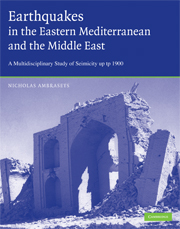
Earthquakes in the Mediterranean and Middle East
- A Multidisciplinary Study of Seismicity up to 1900
-
- Published online:
- 05 February 2015
- Print publication:
- 22 October 2009
Vertebrate Taphonomy
-
- Published online:
- 05 August 2014
- Print publication:
- 07 July 1994
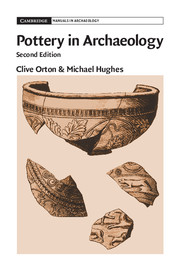
Pottery in Archaeology
-
- Published online:
- 05 June 2014
- Print publication:
- 13 May 2013
Contributors
-
-
- Book:
- Bioarchaeological and Forensic Perspectives on Violence
- Published online:
- 05 March 2014
- Print publication:
- 13 March 2014, pp x-xii
-
- Chapter
- Export citation
16 - Interpreting gunshot trauma as context clue: a case study from historic North Las Vegas, Nevada
- from Part IV - Violence and identity
-
-
- Book:
- Bioarchaeological and Forensic Perspectives on Violence
- Published online:
- 05 March 2014
- Print publication:
- 13 March 2014, pp 289-308
-
- Chapter
- Export citation
1 - Introduction: interpreting violence in the ancient and modern world when skeletonized bodies are all you have
- from Part I - Introduction
-
-
- Book:
- Bioarchaeological and Forensic Perspectives on Violence
- Published online:
- 05 March 2014
- Print publication:
- 13 March 2014, pp 3-14
-
- Chapter
- Export citation
8 - Classic Maya warfare and skeletal trophies: victims and aggressors
- from Part III - Ritual and performative violence
-
-
- Book:
- Bioarchaeological and Forensic Perspectives on Violence
- Published online:
- 05 March 2014
- Print publication:
- 13 March 2014, pp 120-133
-
- Chapter
- Export citation
Part V - Concluding thoughts
-
- Book:
- Bioarchaeological and Forensic Perspectives on Violence
- Published online:
- 05 March 2014
- Print publication:
- 13 March 2014, pp 309-320
-
- Chapter
- Export citation
5 - The first cut is the deepest: looking for patterns in cases of human dismemberment
- from Part II - Overview and innovative methodologies
-
-
- Book:
- Bioarchaeological and Forensic Perspectives on Violence
- Published online:
- 05 March 2014
- Print publication:
- 13 March 2014, pp 63-82
-
- Chapter
- Export citation
11 - Violence in life, violence in death, resiliency through repatriation: bioarchaeological analysis and heritage value of Yaqui skeletal remains from Sonora, Mexico
- from Part IV - Violence and identity
-
-
- Book:
- Bioarchaeological and Forensic Perspectives on Violence
- Published online:
- 05 March 2014
- Print publication:
- 13 March 2014, pp 171-191
-
- Chapter
- Export citation
Copyright page
-
- Book:
- Bioarchaeological and Forensic Perspectives on Violence
- Published online:
- 05 March 2014
- Print publication:
- 13 March 2014, pp vi-vi
-
- Chapter
- Export citation
7 - Signatures of captivity and subordination on skeletonized human remains: a bioarchaeological case study from the ancient Southwest
- from Part III - Ritual and performative violence
-
-
- Book:
- Bioarchaeological and Forensic Perspectives on Violence
- Published online:
- 05 March 2014
- Print publication:
- 13 March 2014, pp 103-119
-
- Chapter
- Export citation
3 - The taphonomy of maritime warfare: a forensic reinterpretation of sharp force trauma from the 1676 wreck of the Royal Swedish Warship Kronan
- from Part II - Overview and innovative methodologies
-
-
- Book:
- Bioarchaeological and Forensic Perspectives on Violence
- Published online:
- 05 March 2014
- Print publication:
- 13 March 2014, pp 34-50
-
- Chapter
- Export citation
13 - The contribution of forensic anthropology to national identity in Chile: a case study from Patio 29
- from Part IV - Violence and identity
-
-
- Book:
- Bioarchaeological and Forensic Perspectives on Violence
- Published online:
- 05 March 2014
- Print publication:
- 13 March 2014, pp 216-235
-
- Chapter
- Export citation
14 - Cranial trauma and cranial modification in post-imperial Andahuaylas, Peru
- from Part IV - Violence and identity
-
-
- Book:
- Bioarchaeological and Forensic Perspectives on Violence
- Published online:
- 05 March 2014
- Print publication:
- 13 March 2014, pp 236-260
-
- Chapter
- Export citation
4 - The determination of homicide vs. suicide in gunshot wounds
- from Part II - Overview and innovative methodologies
-
-
- Book:
- Bioarchaeological and Forensic Perspectives on Violence
- Published online:
- 05 March 2014
- Print publication:
- 13 March 2014, pp 51-62
-
- Chapter
- Export citation
Part III - Ritual and performative violence
-
- Book:
- Bioarchaeological and Forensic Perspectives on Violence
- Published online:
- 05 March 2014
- Print publication:
- 13 March 2014, pp 101-168
-
- Chapter
- Export citation
Part I - Introduction
-
- Book:
- Bioarchaeological and Forensic Perspectives on Violence
- Published online:
- 05 March 2014
- Print publication:
- 13 March 2014, pp 1-14
-
- Chapter
- Export citation
