To save content items to your account,
please confirm that you agree to abide by our usage policies.
If this is the first time you use this feature, you will be asked to authorise Cambridge Core to connect with your account.
Find out more about saving content to .
To save content items to your Kindle, first ensure no-reply@cambridge.org
is added to your Approved Personal Document E-mail List under your Personal Document Settings
on the Manage Your Content and Devices page of your Amazon account. Then enter the ‘name’ part
of your Kindle email address below.
Find out more about saving to your Kindle.
Note you can select to save to either the @free.kindle.com or @kindle.com variations.
‘@free.kindle.com’ emails are free but can only be saved to your device when it is connected to wi-fi.
‘@kindle.com’ emails can be delivered even when you are not connected to wi-fi, but note that service fees apply.
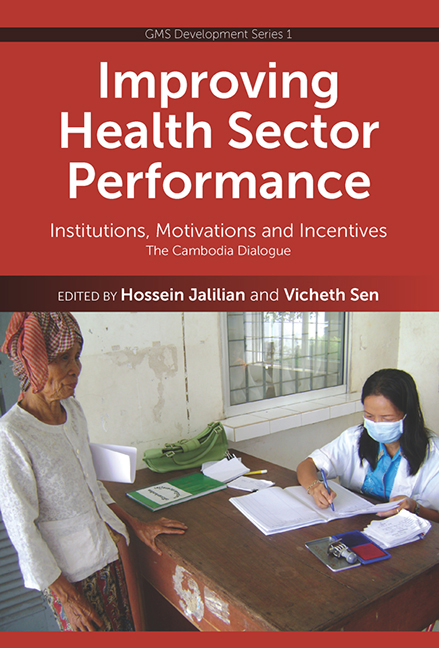
There is growing international evidence that the effectiveness of health services stems primarily from the extent to which the incentives facing providers and consumers are aligned with "better health" objectives. Efficiency in health service provision requires that providers and consumers have incentives to use healthcare resources in ways that generate the maximum health gains. Equity in at least one sense requires that consumers requiring the same care are treated equally, irrespective of their ability to pay. Efficiency in the use of health services requires that consumers are knowledgeable about the services on offer and which are most appropriate to their needs. Although these principles are enshrined in the design of every health system in the world, they have proven extremely difficult to apply in practice. Healthcare providers have financial obligations to their families as well as professional obligations to their patients. Health service consumers generally lack information about both their health and health services so that they under-consume or over-consume healthcare. The papers in this volume are selected from an international conference organized by the CDRI, Cambodia that tried to deal with some of these issues. With participation of international and local experts, it aimed at collecting major experiences and innovative solutions from inside and outside the country to improve health sector performance, with particular focus on institutions, motivations and incentives.
Within the last twenty years a large-scale bottom-up privatization has taken place in Vietnam, changing and dismantling the public health care system. This process has led to severe tensions inherent in the transitional society of Vietnam between equity and access to health care support – especially for the poor, elderly, migrants, and ethnic minorities – on the one hand, and its efficiency on the other hand. The book traces the reform efforts to modernize the health care system by the Communist Party of Vietnam and the Vietnamese government. The author bases her findings on little known primary literature and interviews with key stakeholders of the policy network involved in the reform of the health care system, thereby painting an authentic atmospheric picture of the profound changes in the health care system in Vietnam.
The richness and vibrancy of Vietnamese spirituality are vividly portrayed in these twelve essays that shed light on the remarkable reflorescence of religion in this communist country. Ancestor worship, mediumship, sacrifices, and communal rituals have not only survived Vietnam's reintegration into the capitalist world; they are intrinsic to the dramatic reshaping of its contemporary social and cultural life. Transnational Buddhism and Christianity challenge the political status quo as they answer conflicting aspirations for enlightenment, justice, national development and cultural identity. Making conceptual contributions to anthropology and comparative religion, this book provides insights from post-revolutionary Vietnam into the diverse passages to re-enchantment in the modern world.