To save content items to your account,
please confirm that you agree to abide by our usage policies.
If this is the first time you use this feature, you will be asked to authorise Cambridge Core to connect with your account.
Find out more about saving content to .
To save content items to your Kindle, first ensure no-reply@cambridge.org
is added to your Approved Personal Document E-mail List under your Personal Document Settings
on the Manage Your Content and Devices page of your Amazon account. Then enter the ‘name’ part
of your Kindle email address below.
Find out more about saving to your Kindle.
Note you can select to save to either the @free.kindle.com or @kindle.com variations.
‘@free.kindle.com’ emails are free but can only be saved to your device when it is connected to wi-fi.
‘@kindle.com’ emails can be delivered even when you are not connected to wi-fi, but note that service fees apply.
The Declaration of Independence, usually regarded principally or even exclusively as a manifesto about certain “inalienable rights,” is better understood, especially historically, as a complex argument about popular sovereignty. Who exactly were “the people” who were entitled, as in the America of 1776, to secede from the British Empire and then claim their own rights of “self-determination”? The Declaration begins with the assertion that Americans were “one people.” But that was demonstrably false, even in 1776, and has become even more so since then. After all, James Madison, in Federalist 10, emphasizes the plurality of interests, including, religion and property, that generate “faction” and the possibility of tyranny of governing elites. Does the Declaration, even if complemented by the Constitution, supply enough of an “American creed” to supply the basis for genuine unity and political amity or does it instead plant the seeds for further division and even secession in the name of self-determination and government by consent of the governed?
This chapter lays out the book’s argument in two parts. First, it first develops the concept of self-determination as understood by state and non-state actors in the Global South to apply to the legitimate exercise of power in the international system. Rather than requiring strict sovereignty and exclusion of outside actors, self-determination is about the nature of cooperation and international involvement. It requires that people, through their governments, be able to domestically affirm international rules and to meaningfully participate in their enforcement. The second part of this chapter explains how establishing regional organizations as an authority over issue areas can be a strategy for realizing self-determination and why, in the case of human rights, it necessitated compromising on the norm of non-interference. This strategy is effective at deterring pressure from Western governments because it combines and appeals to widely held beliefs about the legitimacy of self-rule with beliefs about the importance of exercising power through international organizations.
Why have regional organizations become authorities over human rights and international intervention, and what explains the differences in regional authority across different regions? Why did leaders in some parts of the Global South go from rejecting any interference to arguing for the central role of regional organizations in international interference? This chapter introduces the central questions addressed by this book and provides an overview of its core argument, focusing on the creation of new regional authority at one important moment: the emergence of regional organizations as authorities over human rights. This was the first time when leaders in the Global South changed from arguing for complete non-interference to arguing that legitimate interference should be carried out by or with the involvement of regional organizations. They did so as a strategy of subtle resistance to new challenges to self-determination, in the form of economic enforcement of human rights by Western governments. In regions targeted by this enforcement, leaders responded by establishing their regional organizations as authorities over human rights, accepting regional interference for the first time.
This chapter explores implications of the argument made in this book for other areas of international relations scholarship and for contemporary international politics, with regional authority and self-determination continuing to occupy an important place in the international politics of the Global South. It considers how incorporating the importance of self-determination, and the idea of regional organizations as a means of realizing it, can provide more complete understandings of contemporary political phenomena. I discuss how the argument in this book sheds light on the Global South’s dissatisfaction with liberal norms and institutions, the openness of democratic states in the Global South to cooperation with illiberal powers, and present-day dynamics of regionalism, including the creation of “new” regions and the growth of “authoritarian” regional organizations.
This chapter describes the changes in beliefs about human rights that occurred in the 1970s and the new forms of enforcement that this encouraged and enabled. This included the use of economic pressure to enforce human rights. Beginning at this time, enforcing human rights through international interference came to be understood as not just permissible, but as the duty of the international community. In the context of these changing beliefs, Western governments began to use economic pressure to enforce human rights in the Global South. However, as this chapter demonstrates, these governments systematically enforced human rights in regions where enforcement was relatively cheap and easy. They did so in Latin America and Africa, while at the same time subsuming human rights to other strategic priorities in the Middle East and Southeast Asia. These enforcement policies clashed with understandings of self-determination held by actors throughout the Global South, and they were regarded as an illegitimate imposition. However, in the context of changing beliefs about human rights, appealing to the norm of non-interference was no longer effective at deterring Western interference.
The idea that regional organizations rightly occupy a central place in human rights, global governance, and international intervention has come to be taken-for-granted in international politics. Yet, the idea of regions as authorities is not a natural feature of the international system. Instead, it was strategically constructed by the leaders in the Global South as a way of maintaining their voice in global decision-making and managing (though not preventing) outside interference. Katherine M. Beall explores changes in the norms and practice of international interference in late 1970s and early 1980s, a time when Latin American and African leaders began to empower their regional organizations to enforce human rights. This change represented a form of quiet resistance to the imposition of human rights enforcement and a transformation in the ongoing struggle for self-determination. This book will appeal to scholars of international relations, international history, and human rights.
In a longue durée study of the European context from 1918 to the present day, this article critically assesses alternative modalities of self-determination proposed by two non-state, transnational actors – the Congress of European Nationalities (1925–1942) and the Federal Union of European Nationalities (established 1949). Situating the activism of these organizations within an international system that has prioritized state determination over the self-determination of peoples, the study charts their attempts to renegotiate dominant statist paradigms of minority protection and human rights, using ideals and frameworks of European integration as a guide. The analysis shows that although the rise of the European Union after 1945 created an environment far more propitious than the one that existed between the two World Wars, transnational activism has faced consistent limitations on its effectiveness, arising not just from the external machinations of states but also from internal divisions within the organizations concerned. In this respect, the study also sheds light on an enduring tension between collective and individual concepts of self-determination within contemporary Europe, demonstrated most recently by the Federal Union of European Nationalities’ failed European Citizens’ Initiative on a “Minority Safepack” during 2013–2021.
As usually conceived and practiced, education – sustainability, environmental and beyond – is embedded in an overarching narrative of progress: increasing human knowledge leading us to make wiser decisions about our behaviour, as individuals and societies. This article outlines an alternative story that draws on the work of two Indigenous scholars, E. Richard Atleo (Nuu-chah-nulth) and Leanne Simpson (Nishnaabeg), who approach living well as a quest to co-exist in harmony and balance with all our relations (that is, the living world of which we are an integral part). Among the core principles they identify are self-determination, consent and sacred respect, understood both as operative in the functioning of healthy ecosystems and as guides to human development and relationships. We show how these principles are grounded in a quest for the mutual beneficial flourishing of free beings and trace some of their implications for environmental education. While stories of this kind are at odds with the current dominant conception of schooling, there are many ways in which they could begin to influence how we move beyond the metacrisis and further, how wethink about and practice education for eco-social –cultural change and the future world/s to come.
There is a critical role that environmental factors play in the thriving of animals. This chapter emphasises the distinction between natural and artificial environments and their respective impacts on animal welfare. It discusses the importance of habitat, the degree of physical movement possible, cognitive stimulation, social dynamics, and the intrinsic rewards that environments can provide. Further, it addresses the challenges and compensations associated with artificial environments. The narrative includes discussions on the limitations imposed by artificial settings and the innovative ways these can be mitigated to simulate natural habitats as closely as possible. The chapter concludes by stressing the importance of designing environments that cater to the specific needs of different animal species, thereby ensuring their psychological and physical thriving. The implications of these environmental factors are profound, suggesting that the well-being of animals is heavily influenced by the quality and design of their surroundings.
The alliance between the United States and the Soviet Union during the Second World War has often been seen by Americans as at best a temporary necessity to defeat Nazi Germany. In contrast, this chapter emphasizes how much American and Soviet attitudes changed during the war and how many people in both countries came to believe the wartime collaboration would be a foundation for postwar cooperation. While many American politicians, journalists, and historians have downplayed or even forgotten the vital Soviet role in the crushing of German armies, during the war most Americans were keenly aware of the enormous sacrifices made by the Soviet people. By the Soviet victory at Stalingrad in early 1943, mainstream media in the United States lionized not only the Red Army but even Joseph Stalin. The massive US Lend–Lease aid to the USSR was not crucial to the Soviet survival of German offensives in 1941 and 1942, as some have claimed, but it did significantly enhance the Red Army’s mobility and communications, thereby hastening the joint allied victory in Europe by May 1945.
The fluidity of the continuum between colonization and sovereignty is particularly evident in the case of small islands generally and Pacific Island states specifically. Colonialism arrived late to much of the Pacific and was thus short-lived compared to other regions. Imperial powers also struggled to extend control beyond their administrative capitals. Yet newly independent states remain enmeshed in relations of dependence with metropolitan countries via Official Development Assistance and forms of “non-sovereignty” or “free association” with states such as the United States, UK, France, and New Zealand. These alternative forms of sovereignty reflect a century-long process of experimentation with political forms for island communities and demonstrate historical legacies and the ambiguity of sovereignty itself. To substantiate this claim, this chapter traces the history of the ways island communities in the North Pacific have been governed over more than a century.
Despite the increasing implementation of consultation-based hospice palliative care teams in tertiary hospitals of Korea, there is limited research on their impact on self-determination respect rates. Understanding this impact is crucial for improving end-of-life care practices and respecting patient autonomy. The aim of this study is to assess the trends in self-determination respect rates regarding advance care planning before and after the introduction of a consultation-based hospice palliative care team in a tertiary hospital.
Methods
A retrospective observational study was conducted using medical records from a tertiary hospital in Korea from March 2018 to December 2023. The study included all patients aged 19 years and older with medical records at a tertiary hospital during the specified period. We examined the characteristics of patients referred to the palliative care team, the effects of the consultation-based hospice palliative care team on the completion rates of advanced care planning, and changes in self-determination respect rates.
Results
Following the introduction of the consultation-based hospice palliative care team, 411 patients were referred. The proportion of patients with completed advance care planning increased from 27.0% to 60.6% (p < 0.001). The overall number of advanced care planning completions and the self-determination respect rate also showed a marked increase, particularly from 2021 to 2022, when the respect rate spiked from 27.6% to 43.2%.
Significance of Results
Introduction of a consultation-based hospice palliative care team improved the respect for patient self-determination in end-of-life care decisions. These findings support the integration of hospice care teams in tertiary hospitals to enhance early and informed end-of-life decision-making.
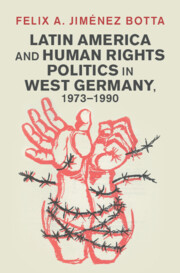
In this richly detailed history, Felix Jiménez Botta traces West German mobilization against human rights abuses in Latin America in the late twentieth century. Initially in the ascendant was a market-critical vision adopted by a loose, left-leaning coalition fighting against right-wing regimes seeking to destroy incipient welfare states and implant market fundamentalism. However, during the later 1970s–80s a market-friendly interpretation gained ground, emphasising negative civil and political rights at the expense of positive economic and social rights. Within these debates, the vocabulary of human rights was a malleable political language that served as a multidirectional point of reference for various actors from civil society, politics, and the churches. By analysing these opposing views of human rights, Jiménez Botta questions the revisionist interpretation of post-1970s human rights as an inherently conservative political and intellectual project. Instead, the triumph of market-friendly human rights in West Germany was contested, contingent and ultimately unfinished.
The minority claims made by the various minority movements that emerged in the 1950s coalesced in separate state movements. Separate states claims were made by minority communities in all three major regions and these claims were championed by their political elites who strategically occupied seats in the regional houses of assembly, starting in 1953. Niger Delta elites formed provisional alliance, supressing local disputes and differences, in order to keep their claim for a separate Mid-West state alive in the constitutional reform process. Their efforts succeeded in halting the final constitutional conference, which was to be held in London in 1957. The push for separate states was strong enough to threaten the decolonization process altogether, and the British government decided to establish a Minorities Commission to address and resolve these claims prior to formal independence.
This chapter brings together the threads of Chapters 8 and 9 to advance an alternative theoretical foundation for international organizations. First, it explains why we should understand the state as an artificial rather than as a natural construct, even for the purposes of international law. It traces states’ emergence back to a national community’s capacity for self-description through socially grounded rules of transformative re-description. Doing so, this chapter unveils the inherent openness of international law to admitting any other institutions that can also be traced back to this capacity. Thus, it recasts the state as just one institution among a family of such entities. All these entities, including international organizations, are equally admissible by default in international law without the need for any legislative intervention to that effect.
Indigenous Knowledges, and its evolution across pre- and post-colonial Australia, provide a demonstrated understanding and application of practices beyond One Health. Despite being most impacted by the failures of adopting interdisciplinary One Health approaches, Indigenous Knowledges provide critical methodologies and governance structures to implement and understand the relationship between people, animals, and Country. This chapter explores methods to reconceptualise and reorientate One Health understanding within Australia by aspiring to pre-colonial Indigenous ways of being and doing. Importantly, it also draws upon the post-colonial involvement and learnings of Indigenous peoples in Australia, integrating through self-determination or forced into modern economies and society.
William E. Hartmann and Joseph P. Gone use insights from Beatrice Medicine and Vine Deloria Jr., two luminaries in understanding how anthropology might better serve Indigenous peoples, as an evaluative framework to review five recent ethnographies on psychosocial well-being among Native Americans and three areas of Indigenous scholarship.Hartmann and Gone observe commonalities across areas of Indigenous scholarship and variation among ethnographic works in their degrees of theoretical abstraction, affordances for community control, and attention to relationality in knowledge production. Recommendations related to shifting the ethnographic gaze away from Indigenous peoples toward structures of power that constrain Indigenous self-determination are made in hopes of fostering more reciprocal relations between psychological anthropology and Native American peoples.
In the context of the new Arctic policies of the EU, it is of importance to bring to the fore elements of the long-standing histories that connect the Arctic and Europe, as those histories may help us to understand challenges of today. With that background, the aim of this chapter is to shed further light on the term ‘Eurarctic’, primarily being limited, however, to a focus on the colonial history of Greenland as well as present EU– Greenland relations. The history of the Nordic/Arctic to which the history of Greenland is anchored, is long, complex, and at times controversial, so the intention is to modestly take a bird’s-eye view and focus on some of the most significant aspects.
This chapter traces the rise of a market-critical vision of human rights in the solidarity movement with Central America. From 1977 onward, solidarity activists (including New Leftists, liberationist Christians, advocates connected to Social Democracy, and radical humanitarians) supported the revolutionary struggles in Nicaragua and El Salvador. Before 1979, solidarity activists and emissaries from the Sandinista guerrilla employed the politics of emergency to vilify the regimes of Anastasio Somoza in Nicaragua and Carlos Humberto Romero in El Salvador. After their overthrow in 1979, solidarity activists traded the politics of emergency for a politics of revolution. Activists came to believe that building social justice in Central America necessitated revolutionary state building. Market-critical human rights served solidarity activists to defend the Salvadoran guerrilla and the Sandinistas, even as they were accused of violating the rights of ethnic and political minorities. Market-critical activists refused to see the politics of revolution as a choice between morality and social justice; rather, they saw revolutionary social justice as the precondition for a moral society.
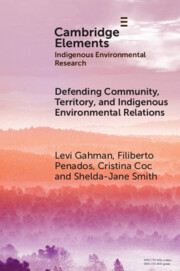
This Element addresses a range of pressing challenges and crises by introducing readers to the Maya struggle for land and self-determination in Belize, a former British colony situated in the Caribbean and Central America. In addition to foregrounding environmental relations, the text provides deeper understandings of Qʼeqchiʼ and Mopan Maya people's dynamic conceptions and collective defence of community and territory. To do so, the authors centre the voices, worldviews, and experiences of Maya leaders, youth, and organisers who are engaged in frontline resistance and mobilisations against institutionalised racism and contemporary forms of dispossession. Broadly, the content offers an example of how Indigenous communities are reckoning with the legacies of empire whilst confronting the structural violence and threats to land and life posed by the driving forces of capital accumulation, neoliberal development, and coloniality of the state. Ultimately, this Element illustrates the realities, repercussions, and transformative potential of grassroots movement-building 'from below.' This title is also available as open access on Cambridge Core.