To save content items to your account,
please confirm that you agree to abide by our usage policies.
If this is the first time you use this feature, you will be asked to authorise Cambridge Core to connect with your account.
Find out more about saving content to .
To save content items to your Kindle, first ensure no-reply@cambridge.org
is added to your Approved Personal Document E-mail List under your Personal Document Settings
on the Manage Your Content and Devices page of your Amazon account. Then enter the ‘name’ part
of your Kindle email address below.
Find out more about saving to your Kindle.
Note you can select to save to either the @free.kindle.com or @kindle.com variations.
‘@free.kindle.com’ emails are free but can only be saved to your device when it is connected to wi-fi.
‘@kindle.com’ emails can be delivered even when you are not connected to wi-fi, but note that service fees apply.
The 17-item Male Body Image Self-Consciousness Scale (M-BISC; McDonagh et al., 2008) examines the extent to which men feel self-conscious about their bodies when engaging in physically intimate activities with another person. The M-BISC can be administered online or in-person to adolescent and adult individuals who identify as male. It is free to use in any setting. This chapter first discusses the development of the M-BISC and then provides evidence of its psychometrics. More specifically, the M-BISC was found to be unidimensional via exploratory and confirmatory factor analysis. Internal consistency reliability and convergent validity support the use of the M-BISC. Next, this chapter provides the M-BISC items in their entirety, instructions for administering it to participants, item response scale, and scoring procedure. Logistics of use, such as permissions, copyright, and contact information, are available for readers.
Self-placement measures of masculinity and femininity have been gaining popularity in political science research, but questions remain about their long-term stability and the extent to which political views may impact gender identities. Taking advantage of two waves of measures of masculinity and femininity self-placement in an online panel, a categorical measure of masculinity and femininity (making use of a six-point scale, anchored scale) is found to be both highly stable and more stable than a scalar measure (making use of a 0 to 100 scale). The scalar measure is also found to be responsive to political views, such that men who report support for Donald Trump in the US Presidential elections identify as more masculine in the follow-up study. Overall, both measures are found to be relatively stable, bolstering the case that they are measuring a stable underlying construct.
The prevalence of female genital schistosomiasis (FGS) and male genital schistosomiasis (MGS) remains high in many low-to-medium-income countries, and each has sex-specific disease sequelae with wider detrimental gender and health impacts. Social science research studies on the former outnumber those on the latter. Indeed, in many countries across sub-Saharan Africa (SSA), MGS (as with male reproductive and sexual health issues in general) is overlooked, underappreciated, and broadly orphaned within urogenital and intestinal schistosomiasis research and control. Similarly, in those countries where MGS has been reported formally, its psychosocial dimensions and effects remain poorly understood, especially in terms of context-specific cultural and societal factors. In this scoping review, we attempt to better contextualize MGS within men’s sexual and reproductive health and rights (SRHR) and general wellbeing, as it often draws parallels with social science research in FGS. We discuss common psychosocial determinants, highlighting why current surveillance of MGS is particularly poor and the primary health care response to mitigate it is bottlenecked and largely stalled within the wider health system, from both top-down and bottom-up perspectives. Our specific approach remains cognisant of the context of infected households where all members could be suffering from urogenital and/or intestinal schistosomiasis. Looking ahead, we develop and frame a pragmatic social science research agenda to encourage and better explore and assess the detrimental impact of MGS on infected men and boys, considering appropriate ameliorations more holistically within primary care.
Scholarship on the gendered dimensions of US foreign relations flourished in the twenty years following the appearance in 1986 of Joan Scott’s “Gender: A Useful Category of History Analysis.” But a worrisome drop-off in the last decade or so merits a reminder that gender matters and that we have good tools for integrating gender analysis in our work. This chapter encourages historians of US foreign relations to pay careful attention to the types of sources we use and the questions we ask of them; the assumptions and stereotypes that permeate diplomatic interactions; the ways in which gender helps create, maintain, and justify hierarchies of power; and the role of sex and sexuality in shaping relations between the United States and the world.
Consumer items and gendered identities on display and in transition, existing materially and symbolically within a matrix of relations of production and desire. The practical frustrations and self-confirming identity choices of local shopping lead to consideration of twentieth-century consumer society’s essentialization of individual gender identities despite apparent freedoms and autonomy of choice. Marx’s analysis of the reification of the object and the fetishization of the commodity informs public displays of youth culture: masculine, feminine, and trans. Modern young women and men shape their gendered public personas through the knowing appropriation of brands as identity performance, yet risk repression by the state, society, and family. Whether dancing too exclusively to Pharrell Williams’ Happy, or performing gender identity too essentially through transsexual identification, Iranian youth encounter the limits of branded identity even as they claim the freedoms apparently promised by the social market. Borrowing from Jacques Lacan’s positing of gender as a choice between two doors, the question of what is behind the doors might matter more than deciding between them.
This chapter examines how Islamist dissidents of the 1960s and 1970s in Türkiye, Iran, and the United States mobilized race and religion in their comparative critiques of authoritarian modernization and, in so doing, transformed Islamism into a critical interlocutor on racial justice.
This article re-examines archaic and classical treatment of beer drinking to argue, contra Nelson, that beer in archaic and classical Greek texts is not primarily feminine nor does it necessarily feminize its drinkers. Rather, a review of sympotic lyric, historiography, ethnography and Athenian drama demonstrates that beer is primarily an ethnic marker with no inherent gendered connotations. At the same time, in contexts where definitions of Greek masculinity are being constructed, beer can gain gendered connotations which enhance the ethnic otherness of the beverage and contribute to the definition of the Greek man. Any gendered implications of beer, furthermore, come not from the beverage itself but from the method of consumption, of sucking through a tube of sorts rather than sipping from a cup. This article thus argues that beer in the Archaic and Classical periods marks non-Greek status first and foremost and only secondarily effeminizes drinkers through associations with oral sex in contexts where ideas of masculinity are in play.
This chapter explores the multifaceted role of gender within extremist ideologies and examines manifestations of masculinity, femininity, and misogyny in various extremist contexts. It shows how different scholarly approaches explain the ways in which gendered narratives shape recruitment, radicalization, and participation in extremist activities. Different explanations of male violence emphasizing the sociocultural construction of masculinity within extremist milieus is discussed and the notion of the “manosphere” and its subcultures like incels is introduced thereby showing how online spaces foster misogynistic ideologies that can escalate into violence. Furthermore, the roles women play within extremist groups, from active participation in violence to providing crucial support functions, are also highlighted. Finally, the implications of gender dynamics for prevention efforts are discussed. Ultimately, the chapter advocates for a nuanced understanding of gender dynamics to inform more effective prevention strategies and policymaking in the fight against violent extremism.
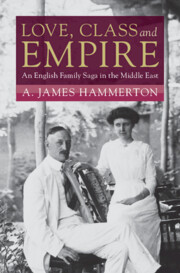
Early twentieth-century Persia and the Persian Gulf presented a largely blank slate to the British, best known only as a vital conduit to India and a site of contest – the 'great game' – with the Russian Empire. As oil discoveries and increasing trade brought new attention, the expanding telegraph and river shipping industries attracted resourceful men into junior positions in remote outposts. Love, Class and Empire explores the experiences of two of these men and their families. Drawing on a wealth of personal letters and diaries, A. James Hammerton examines the complexities of expatriate life in Iran and Iraq, in particular the impact of rapid social mobility on ordinary Britons and their families in the late imperial era. Uniquely, the study blends histories of empire with histories of marriage and family, closely exploring the nature of expatriate love and sexuality. In the process, Hammerton discloses a tender expatriate love story and offers a moving account of transient life in a corner of the informal empire.
Much of the existing analysis of women in O’Casey’s plays concentrates on the women in his earlier work; this chapter examines the representation of younger women in O’Casey’s later plays, revealing how O’Casey presented a strongly contemporary feminist outlook which sought to re-position his audience’s understanding of female sensibility. The chapter analyses the way in which, by questioning theatrical form and critiquing patriarchal control of women, O’Casey enabled experimentalism in dramatic form to go hand in hand with a willingness to evolve and develop a progressive expression of female sexuality.
O’Casey was a great writer of war, and he wrote a great deal during the Second World War when he lived in England, although much of this work has failed to find a place in the theatrical repertoire. This chapter focuses on the two wartime plays set during the war: the comic Purple Dust (1940), about two Englishmen moving to Ireland to escape the conflict; and the tragic Oak Leaves and Lavender (1946), set during the Battle of Britain. This chapter shows how the geopolitics of the Second World War, combined with O’Casey’s complex political affiliations and a heightened anxiety about Irish masculinity, placed O’Casey in a position from which he found it difficult to speak.
This chapter considers the influence of fellow writers James Baldwin and Ed Bullins on August Wilson’s dramaturgy. It argues that Bullins and Baldwin’s simultaneous inclusion on Wilson’s list of “Bs” represents both an expansion of his original influences and a specific articulation of his artistic pursuit or philosophy.
In their 2007 essay “‘The Body’ as a Useful Category for Working-Class History,” feminist scholars Ava Baron and Eileen Boris urged labor historians to consider “Why and in what ways … bodies matter for studies of work and the working class.” While scholars have written histories attentive to cultural assumptions about bodies at work, the impact of employment on the human body, and people’s experiences of their working bodies, little consideration has been given to the ways bodies matter for unemployed workers. This article uses Baron and Boris’s invitation to labor historians as a point of departure, but asks, in what ways do bodies matter for studies of people without work? Specifically, in what ways did bodies matter for unemployed working-class men in 1930s Britain? Using parliamentary papers and debates, published first-person narratives, and government documents, I demonstrate that prolonged unemployment was a bodily crisis for working-class men, who expected—and were expected—to direct their bodies and minds to productive labor. Critical Disability Studies scholars’ have emphasized the need to interrogate ableist norms that produce a “corporeal standard,” which for working-class men meant bodies and minds able to perform productive work. Ableist structures, policies, and practices, intersecting in the 1930s British case predominantly with gender and class identities and norms, challenged unemployed men, who experienced unemployment in ways that situated them outside the working-class masculine corporeal standard. To explore these issues, I focus on two closely linked concepts: fitness and employability. During the 1930s, British politicians, bureaucrats, and unemployed men assumed that men who had been without work for prolonged periods of time would not have the physical and mental fitness to be re-employed. I introduce the concept “embodying unemployment” to capture the relationships among discourses, bodily and emotional processes, and material conditions that shaped policy decisions, unemployed men’s experiences, and practices to enhance fitness and employability, highlighting the various perceptions of what caused unemployed men’s bodies and minds to deteriorate from the ableist norm and what strategies might slow or arrest the feared changes.
From 1941 to 1945, 30,000 African-American infantrymen were stationed at Fort Huachuca near the Mexican border. It was the only 'black post' in the country. Separated from white troops and civilian communities, these infantrymen were forced to accept the rules and discipline that the US Army, convinced of their racial inferiority, wanted to impose on them. Mistrustful of black soldiers, the Army feared mutiny and organized a harsh segregation that included strict confinement, control of the infantrymen during training and leisure, and the physical separation of white and black officers to diffuse any suggestion that equality of rank translated into social equality. In this book, available for the first time in English, Pauline Peretz uncovers America's tortuous relationship with its black soldiers against the backdrop of a war fought in the name of democracy.
Within contemporary feminism, perspectives on men being feminist range from those who are “viscerally opposed” to those who argue that engaging with men more systematically is “the most consequential move feminists can make.” While some feminist political scholars have called to expand the feminist agenda to include analyses of men as gendered, resistance to this expansion is significantly entrenched, and men who identify as feminist are frequently regarded with distrust. Yet, if feminist efforts are to transform deeply entrenched gendered power structures, there is good reason to engage fully with the many ways all conceptions and practices of gender work to maintain and/or challenge current power structures. This article offers a relational approach to feministing—that is, an approach grounded in becoming feminist through praxes centred on uncovering points of solidarity across and within gender identity categories, the pursuit of coalition-oriented politics and the prioritization of accountability through action not identity.
While a great deal of research has examined the form and format of extremist content and the expressions of hate speech that exist within far-right online communities, there has been less attention on why young men, the primary target audience, become motivated to engage with this kind of material. As a corollary, what is also missing from most accounts of radicalisation is a sustained discussion of how discourses of masculinity are leveraged in extremist spaces and how these discourses become part of an overarching system of persuasion, manipulation, and, ultimately, recruitment to extremist organisations. This chapter offers an analysis of data collected from r/The_Donald to examine how discourses of masculinity are exploited as a means of promoting and normalising extremist positions within the community. The chapter also shows how these discourses of masculinity are bound up with race and ethnicity, where particular raced and gendered configurations become valorised as ideal, normative, and desirable. Taking all of this together, I argue that closer attention to the nature of these gendered discourses can help us develop more effective interventions around deradicalization, as well as better informing public education campaigns, particularly those aimed at young men.
Regardless of any socially held perceptions of privilege or power differentials, boys and men present unique developmental vulnerabilities and disproportionate rates of specific mental health problems, such as disruptive behaviour disorders, substance misuse and completed suicide. Moreover, men are less likely than women to seek help for psychological distress and adhere less well to treatments. In this brief article, some of the unique mental health problems experienced by boys and men are reviewed within a developmental perspective and general clinical guidance is outlined to improve adherence and treatment outcomes.
This article studies the narratives of counter-urbanization as presented in contemporary South Korean documentaries. In recent decades, there has been a surge of ethnographic media productions with a return-to-nature theme, highlighting urban-to-rural migration. What appears as a Thoreauesque pursuit of pastoral life in the woods reveals the traumatic aftereffects of the 1960s-80s rapid industrialization as well as the 1990s Asian Financial Crisis that resulted in layoffs, bankruptcies, homelessness, and migration. This article analyzes a selection of counter-urbanist documentaries through the dual lens of social class and masculinity, especially considering South Korea's hypermasculine industrialization and neoliberal ethos of survivalist individualism. It also examines cross-generational perspectives on counter-urbanization to recover human agency.
Men from business are overrepresented in local politics in the United States. The authors propose a theory of gendered occupations and ambition: the jobs people hold-and the gender composition of those jobs-shape political ambition and candidate success. They test their theory using data on gender and jobs, candidacy and electoral outcomes from thousands of elections in California, and experimental data on voter attitudes. They find that occupational gendered segregation is a powerful source of women's underrepresentation in politics. Women from feminine careers run for office far less than men. Offices also shape ambition, candidates with feminine occupations run for school board, not mayor or sheriff. In turn, people see the offices that women run for as feminine and less prestigious. This Element provides a rich picture of the pipeline to office and the ways it favours men. This title is also available as Open Access on Cambridge Core.
Taiwanese masculinity was not defined only by young intellectuals and social elites. Rather, it was constructed, expanded, and complicated by ordinary men as represented by household heads and their family members. This chapter explores their masculinity by revealing the ways in which they continued to negotiate with judges over the treatment of brides and adopted daughters. Household heads had traditionally been free to choose their sons’ brides and preside over any adoptive deals, and thus they established masculinity as tied to household authority. Yet, this unchallenged image of patriarchy began contradicting judicial calls for a more equitable form of the family from the late 1910s. What involved those household heads in judicial reforms was the situation in which two or more household heads competed over the better treatment of brides and adopted daughters, establishing a protective form of masculinity. However, this did not end with the emasculation of male household heads in terms of their preexisting authority; instead, they shifted to a type of masculinity involving collusion between two or more household heads and colonial judges, undermining efforts to address women’s difficulties after the 1920s.