To save content items to your account,
please confirm that you agree to abide by our usage policies.
If this is the first time you use this feature, you will be asked to authorise Cambridge Core to connect with your account.
Find out more about saving content to .
To save content items to your Kindle, first ensure no-reply@cambridge.org
is added to your Approved Personal Document E-mail List under your Personal Document Settings
on the Manage Your Content and Devices page of your Amazon account. Then enter the ‘name’ part
of your Kindle email address below.
Find out more about saving to your Kindle.
Note you can select to save to either the @free.kindle.com or @kindle.com variations.
‘@free.kindle.com’ emails are free but can only be saved to your device when it is connected to wi-fi.
‘@kindle.com’ emails can be delivered even when you are not connected to wi-fi, but note that service fees apply.
How do elections affect credit-claiming and blame-shifting patterns in times of crisis? To answer this so far unanswered yet relevant question for crisis management, this study analyses government crisis communication in Germany’s consensus democracy, where federal elections took place in the second year of the COVID-19 pandemic. Empirically, this study examines media conferences from January 2021 to December 2021, which reveal that the Minister of Health not only shifted responsibility and blame but also claimed credit – particularly before the election. He also opted for implicit rather than explicit forms of blame shifting within the political system and shifted responsibility to citizens. The strategies of citizen blaming and credit claiming were most frequent during the ‘federal emergency brake’ when responsibility was more centralised than in other moments of the pandemic. This research advances blame avoidance theory by combining situational factors (crisis and electoral pressure) and institutional moderators (form of government and governance structures) to explain credit-claiming and blame-shifting patterns. Overall, the findings of this study indicate that institutional factors can moderate blame games in particularly challenging situations when it is essential for political systems to address societal and underlying political problems instead of getting caught up in blame games.
Following the Tet Offensive, the struggle to define the war intensified. The most widespread antiwar activity during 1968 was mobilizing behind the presidential campaigns of Eugene McCarthy and Robert Kennedy. Peace forces coalesced at the beginning of 1968 for what many perceived as a quixotic effort to replace a president who had promised peace with one who would actually secure peace. Lyndon Johnson’s withdrawal from the race in late March inspired a realistic potential for an antiwar Democratic Party nominee. Kennedy’s death in early June ended that hope, however, and strained the collaboration between movement insiders and outsiders. Street demonstrations and growing dissent within the military worked in conjunction with persistent critics within the federal government. Liberal emphasis on electoral campaigns reduced their impact in the national coalition. Leftists, radicals, and the counterculture played a greater role in the spring National Mobilization, the nationwide student strikes, and the August confrontation in Chicago. The government used the courts to deter ongoing draft resistance but without noticeable effect.
Keywords and images are deployed to communicate the gospel message that, in the person of Jesus, the divine Father has made himself known in a world otherwise lost in error and illusion. Its readers are taught to regard themselves as the elect, called out of darkness into light.
After Johnson’s exit from the race, Senator Robert Kennedy is assassinated. This and other events, such as the assassination of Martin Luther King and urban unrest, bring reflection on violence in US society, which in turn raises questions about American actions in Vietnam. The Catonsville Nine protest brings national attention to the Catholic antiwar movement while also summoning criticism and even condemnation from other sectors of the Catholic community.
The introduction underlines the need for this book and lays out the parameters that are important to understand the intricacies of Indian politics that forms the context of this book.
The book concludes with sober thoughts on how propagandist language use threatens Indian democracy. One of the primary reasons for the book is to underline the urgency of studying and identifying linguistic trickery. While each chapter does so, the conclusion highlights the consequences of linguistic trickery for Indian Muslims. Academic work on language use such as this has argued for studying not just the language but also what is actually does to people.
Little attention has been paid to competitive dynamics from a political perspective, despite numerous instances of political competition across cultures and systems. In liberal democratic societies, political competition is legalized, allowing citizens to elect leaders who represent their ideas. Conversely, in totalitarian societies, citizens lack voting rights, and political authority is not challenged through democratic means. However, political competitions still occur among ruling elites, often through purges to seize power. This chapter explores political competition, particularly in totalitarian regimes, where purges eliminate rivals among ruling elites. The collapse of such regimes has marked an evolution toward freedom and equal opportunities for all individuals, regardless of background, which aligns with Darwin’s theory of evolution. Highlighting the lack of research on political competitions from an evolutionary psychology perspective, this chapter underscores the need for future research on human emotions and competitive behaviors in the political arena.
We investigate whether election results are associated with emotional reactions among voters across democracies and under what conditions these responses are more intense. Building on recent work in comparative politics, we theorize that emotional intensity is stronger after elections involving populist candidates and highly polarized parties. We test these expectations with a big-data analysis of emotional reactions on parties’ Facebook posts during 29 presidential elections in 26 democracies. The results show that ideological polarization of political parties might intensify emotional reactions, but there is no clear relationship with the presence of populist candidates.
The Cambridge History of the Papacy is organized to provide readers with a critical–historical survey of the structural development of the papacy as an institution and as an actor in Church history, and in world history. It is hard to imagine a sphere of human activity over the past two millennia that has not been influenced by, and influenced in turn by, papal action – be it in the domains of religious belief and practice; social, cultural, and political thought; art, science, medicine, ethics, diplomacy, and international relations. Four questions – each addressed throughout the three volumes of the present work – have framed that vision across vast chronological and geographical expanses: the pope’s centrality within the Catholic Church, the primacy of papal power as an instrument of governance, the papacy’s cultural influence in society and culture, and the implications of secularity for its place in the lives of believers and non-believers alike. Each question – and the search for answers – converges around the fundamental question of papal authority: its original claims; the ebbs and flows of its effective reach; and the numerous ways in which claims, and expressions of papal authority and supremacy, have been contested within the Catholic tradition, and from without.
This chapter sets out the history of the process of electing the pope, including the development of voting rules, procedures, sites of election, and a wider electoral culture. The basic format for the modern papal election evolved gradually over a period from 1059 to the 1400s, with the first “conclaves” taking place in the mid-thirteenth century. In contrast to papal elections, papal resignations have been rare, with most occurring during the first Christian millennium. The question of how a pope might relinquish office nevertheless still interested canonists until long after this date, and rules about how popes might resign were incorporated into the twentieth-century codes of canon law even before Benedict XVI dramatically invoked them in 2013.
The Cambridge History of the Papacy is organized to provide readers with a critical–historical survey of the structural development of the papacy as an institution and as an actor in Church history, and in world history. It is hard to imagine a sphere of human activity over the past two millennia that has not been influenced by, and influenced in turn by, papal action – be it in the domains of religious belief and practice; social, cultural, and political thought; art, science, medicine, ethics, diplomacy, and international relations. Four questions – each addressed throughout the three volumes of the present work – have framed that vision across vast chronological and geographical expanses: the pope’s centrality within the Catholic Church, the primacy of papal power as an instrument of governance, the papacy’s cultural influence in society and culture, and the implications of secularity for its place in the lives of believers and non-believers alike. Each question – and the search for answers – converges around the fundamental question of papal authority: its original claims; the ebbs and flows of its effective reach; and the numerous ways in which claims, and expressions of papal authority and supremacy, have been contested within the Catholic tradition, and from without.
Sequential multi-battle contests are predicted to induce lower expenditure than simultaneous contests. This prediction is a result of a “New Hampshire Effect”—a strategic advantage created by the winner of the first battle. Although our laboratory study provides evidence for the New Hampshire Effect, we find that sequential contests generate significantly higher (not lower) expenditure than simultaneous contests. This is mainly because in sequential contests, there is significant over-expenditure in all battles. We suggest sunk cost fallacy and utility of winning as two complementary explanations for this behavior and provide supporting evidence.
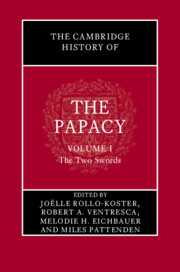
Throughout its history, the papacy has engaged with the world. Volume 1 addresses how the papacy became an institution, and how it distinguished itself from other powers, both secular and religious. Aptly titled 'The Two Swords,' it explores the papacy's navigation, negotiation, and re-negotiation, initially of its place and its role amid changing socio-political ideas and practices. Surviving and thriving in such environment naturally had an impact on the power dynamics between the papacy and the secular realm, as well internal dissents and with non-Catholics. The volume explores how changing ideas, beliefs, and practices in the broader world engaged the papacy and lead it to define its own conceptualizations of power. This dynamic has enabled the papacy to shift and be reshaped according to circumstances often well beyond its control or influence.
One of the issues for determination in All Progressives Congress v Bashir Sheriff and Others was whether the first respondent won the primary election that was conducted according to the Electoral Act 2022. This issue, however, was not addressed because the Supreme Court set aside the suit because the first respondent failed to initiate it through the proper originating process. This decision contrasts with its previous judgment in Ekanem v The Registered Trustees of the Church of Christ the Good Shepherd, where it held that an inappropriate originating process does not undermine the competence of a suit. By departing from this previous decision, this note argues that there is a high possibility that the Supreme Court may have aided in the subversion of the Constitution. It recommends that the Electoral Act 2022 be amended to restrict the court's authority to dismiss election disputes if they were initiated through inappropriate originating processes.
State responses to the recent ‘crisis’ caused by misinformation in social media have mainly aimed to impose liability on those who facilitate its dissemination. Internet companies, especially large platforms, have deployed numerous techniques, measures and instruments to address the phenomenon. However, little has been done to assess the importance of who originates disinformation and, in particular, whether some originators of misinformation are acting contrary to their preexisting obligations to the public. My view is that it would be wrong to attribute only to social media a central or exclusive role in the new disinformation crisis that impacts the information ecosystem.
The counterfactual question of whether Christ would have come had there been no fall turns out not to be the most helpful way of investigating the matter. The real question is whether God’s means are consistent with God’s ends – whether the story of God’s purpose to be with us now and always is a more encompassing narrative than the smaller story of evil, sin, suffering and death, and whether there is utter consistency between the Jesus who is with us in the incarnation and the Jesus who is with us always. In this chapter I investigate Karl Barth’s proposal and, while appreciating its very significant contributions to my project, find it finally wanting on these grounds. Barth helpfully renarrates election as the election of Jesus Christ, but his account of salvation is inconsistent with his Christocentrism and his eschatology is thin.
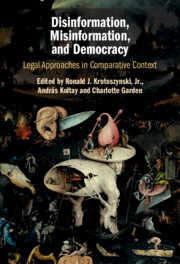
In today's digital age, the spread of dis- and misinformation across traditional and social media poses a significant threat to democracy. Yet repressing political speech in the name of truth can also undermine democratic values. This volume brings together prominent legal scholars from democracies worldwide to explore and evaluate different regulatory approaches for addressing this complex problem – all taking into account that the cure must not be worse than the disease. Using a comparative lens, the book offers important and novel insights into methods ranging from national regulation of politicians' speech to empowering civil-society groups that are well-positioned to blunt the effects of disinformation and misinformation. The book also provides solutions-oriented recommendations for policymakers, judges, legal practitioners, and scholars seeking to promote democratic values by encouraging free political speech while combatting disinformation and misinformation. This title is also available as Open Access on Cambridge Core.
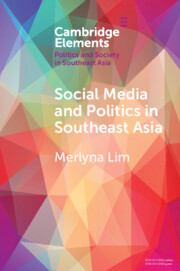
This Element endeavors to enrich and broaden Southeast Asian research by exploring the intricate interplay between social media and politics. Employing an interdisciplinary approach and grounded in extensive longitudinal research, the study uncovers nuanced political implications, highlighting the platform's dual role in both fostering grassroots activism and enabling autocratic practices of algorithmic politics, notably in electoral politics. It underscores social media's alignment with communicative capitalism, where algorithmic marketing culture overshadows public discourse, and perpetuates affective binary mobilization that benefits both progressive and regressive grassroots activism. It can facilitate oppositional forces but is susceptible to authoritarian capture. The rise of algorithmic politics also exacerbates polarization through algorithmic enclaves and escalates disinformation, furthering autocraticizing trends. Beyond Southeast Asia, the Element provides analytical and conceptual frameworks to comprehend the mutual algorithmic/political dynamics amidst the contestation between progressive forces and the autocratic shaping of technological platforms.
This chapter explores symmetry’s implications for the law of democracy. Symmetry has obvious relevance in this area, given the centrality of election-related disputes to maintaining courts’ political neutrality. At a minimum, symmetric interpretation should encourage the Supreme Court to ensure greater consistency in its emergency orders blocking legal changes before an election. In addition, symmetry may help justify the Court’s controversial decisions leaving both partisan gerrymanders and choices about overall districting procedures to the political process. In combination, if not in isolation, these rulings are symmetric because they avoid constitutionalizing one position or the other on politically charged questions about appropriate criteria for districting. Finally, symmetry should support closer scrutiny of voting rules and procedures with skewed partisan effects, provided that challengers can convincingly establish a meaningful impairment of political competition.