To save content items to your account,
please confirm that you agree to abide by our usage policies.
If this is the first time you use this feature, you will be asked to authorise Cambridge Core to connect with your account.
Find out more about saving content to .
To save content items to your Kindle, first ensure no-reply@cambridge.org
is added to your Approved Personal Document E-mail List under your Personal Document Settings
on the Manage Your Content and Devices page of your Amazon account. Then enter the ‘name’ part
of your Kindle email address below.
Find out more about saving to your Kindle.
Note you can select to save to either the @free.kindle.com or @kindle.com variations.
‘@free.kindle.com’ emails are free but can only be saved to your device when it is connected to wi-fi.
‘@kindle.com’ emails can be delivered even when you are not connected to wi-fi, but note that service fees apply.
The ten years between Joseph Stalin’s death and the assassination of President John F. Kennedy brought both dangerous crises and fitful steps toward an easing of superpower tensions. While this chapter describes the confrontations in Eastern Europe, the Middle East, Berlin, Cuba, and elsewhere, it also emphasizes four breakthroughs toward coexistence and cooperation: the Geneva summit of 1955; the agreement on cultural exchanges in 1958; Nikita Khrushchev’s tour of the United States in 1959; and the conclusion of a partial test ban treaty in 1963. Such progress was delayed and complicated both by domestic political dynamics and by international rivalries in an era of accelerating decolonization and the fraying of the Sino-Soviet alliance. Yet perhaps most remarkable was how far top political leaders, journalists, scientists, musicians, dancers, and others were able to go to transcend ideological tensions and negative stereotypes through dialogue, negotiation, travel, and cultural exchange.
This chapter offers a reading of a range of anglophone East African novels from Somalia, Kenya, Tanzania, Mozambique, Comoros, and Madagascar to highlight the long history of multifaceted interactions between African and Arab communities in the region due to trade, migration, intermarriage, and the assimilation of cultural and religious elements into Swahili culture. The narratives mark conditions of possibility for capacious diversity, hospitality, and accommodation, while simultaneously attending to prevalent racisms and forms of oppression: notably the slave trade, labor indenture, and the cruelty against women and children in patriarchal environments. Traces of the diffusion of Arab peoples, the spread of Islam and associated ways of life, the cross-fertilization of material culture, and the circulation of ideas and things on the Swahili littoral are demonstrated to be narrativized as diverse and varying. The chapter concludes that the fiction points to the shifting, contingent meanings of the African–Arab encounter at different points in time and in different places along this vast coastline.
This article presents a case study of the 1959 UK–USSR film weeks to investigate the political, cultural and industrial motivations shaping Cold War cultural exchange, focusing on the role of the British Council’s Soviet Relations Committee (SRC). Originating from a 1955 Soviet proposal for reciprocal film weeks, the project faced over four years of delays and aborted attempts due to a division of opinion among British state and non-state actors. The SRC sought to bridge the conflicting policy motivations between the British Council, the Foreign Office and the British film industry towards the film weeks, but the contradictory priorities and interests of the groups led to an ambiguous approach. The article reconstructs the negotiations, organisation and delivery of the film weeks from the British perspective, drawing on archival sources including the British Council Records at The National Archives to reveal new perspectives on the divergent policy motivations towards the use of films and film weeks in cultural exchange. In doing so, the article contributes to wider research into the role of the SRC and film weeks in the cultural Cold War.
This article explores Britain and the Soviet Union’s reciprocal exhibitions in 1961. Using methods from diplomatic and cultural history the article finds that, while typical of the cultural encounters that punctuated moments of Cold War crisis, these exhibitions formed part of a broader British policy of cultural diplomacy. The British state worked closely with the exhibition companies to present subtle propaganda about the British way of life at both displays. Britain’s key propaganda message was that a system of free enterprise was vital to a good political system and economy. However, while the fairs were nominally organised by an independent company many of the company’s directors were part of a network that existed between government, the civil service and business. The government was involved at all stages. A warm attitude was displayed towards the Soviets by many British people when the reciprocal fair opened in London, despite the less positive reception of Soviet consumer goods in the press. The British state sought to limit the Soviets’ propaganda gain. It therefore ensured that it was the trade fair’s organisers rather than communist supporting organisations who received the visit of the world’s first cosmonaut, Yuri Gagarin.
Cultural Property Agreements (CPAs) between the United States and foreign governments help to stop criminal activity at US borders by keeping looted and stolen art and artifacts out of American markets. Under US and international law, the United States can join CPAs to prevent looted and stolen antiquities and artifacts from entering the US art market, thereby fighting the illicit trade while allowing the legal trade to continue and even thrive. Moreover, bilateral agreements aim to lessen global demand for illicitly obtained or looted objects—especially because the United States makes up 42% of the legal global art market—while increasing responsible cultural exchange. The United States has signed CPAs with a growing number of countries around the world—generating mutual respect, strengthening global law enforcement, and protecting archaeological heritage in situ. From its inception, a key priority for the Antiquities Coalition (AC) has been shutting down markets to illicit antiquities, while increasing responsible cultural exchange. This article discusses the importance of barring antiquities traffickers from the multibillion US art market through legislation, international agreements, and executive orders—protecting both American consumers and our world heritage.
The chapter explores how Hume’s Essays were received in Germany during the eighteenth century, highlighting the cultural exchange and intellectual shifts of that time. Hume’s influence is analysed in the context of the growing interest in English books and culture in Germany during the eighteenth century, a trend known as ‘Anglophilia’. Hume’s political and economic writings were translated into German shortly after their original publication. His name was held in high regard and his writings were considered to be instructive. But the specifics of cameralism prevented his economic and political essays from having a major impact on German discourse. Nonetheless, new translations continued to appear. In the German reform debate of the late eighteenth century, Hume’s Essays were used to both support the status quo and to advocate for political change. In the early nineteenth century, an academic translation of Hume’s essay was published, acknowledging his contribution to the formation of political economy as a science. By exploring the reception of Hume’s Essays in eighteenth-century Germany, the chapter shows how translations not only played a big role in sharing knowledge during the Enlightenment but also reflected cultural differences.
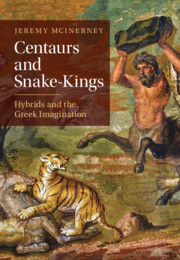
Griffins, centaurs and gorgons: the Greek imagination teems with wondrous, yet often monstrous, hybrids. Jeremy McInerney discusses how these composite creatures arise from the entanglement of humans and animals. Overlaying such enmeshment is the rich cultural exchange experienced by Greeks across the Mediterranean. Hybrids, the author reveals, capture the anxiety of cross-cultural encounter, where similarity and incongruity were conjoined. Hybridity likewise expresses instability of identity. The ancient sea, that most changeable ancient domain, was viewed as home to monsters like Skylla; while on land the centaur might be hypersexual yet also hypercivilized, like Cheiron. Medusa may be destructive, yet also alluring. Wherever conventional values or behaviours are challenged, there the hybrid gives that threat a face. This absorbing work unveils a mercurial world of shifting categories that offer an alternative to conventional certainties. Transforming disorder into images of wonder, Greek hybrids – McInerney suggests – finally suggest other ways of being human.
Diplomatic activity of various kinds forged close cultural links between England and Scotland and European polities. English and Scottish monarchs considered themselves part of a European ‘society of princes’, which was reflected in events held at court and the ways in which diplomats were incorporated into dynastic occasions. They regularly gave presents to, and received gifts from, foreign royals. Increasingly, diplomats at court were incorporated into the gifting framework; this, and the increasing volume of court entertainment driven by an increase in resident diplomats at court and the need to avoid disruptions to court events caused by precedence disputes among ambassadors, saw diplomacy spur cultural production in England in particular. At the same time, the rise in diplomatic activity inspired authors to explore themes related to diplomatic practices and cultures. Meanwhile, English and Scottish diplomats were important agents of cultural exchange, acting as cultural brokers for important political figures back home, and many of them were also avid consumers of paintings, furniture, and other cultural goods which they imported back to England or Scotland.
Qian Daosun (1887–1966) was imprisoned for collaborating with the Provisional Government in North China under Japanese occupation, and to this day he is labelled as hanjian (traitor). Yet, Qian was first and foremost a cultural literatus, librarian, and an exceptional translator with an in-depth understanding of Japanese culture and languages. This article examines the crucial role that Japan and the Japanese language played for Chinese cultural literati in their quest to save China. It also brings to the forefront the dilemmas and agonizing choices Qian faced in his attempt to promote Sino-Japanese cultural exchange in the midst of war, in particular as a librarian. Wartime libraries are highly contested sites of selection, destruction, censorship, preservation, confiscation, and knowledge production. An added layer of complexity was Japan’s cultural policy in China that promoted Japanese-language collections and governed libraries such as the Beijing1 Modern Science Library where Qian worked. What exacerbated Qian’s dilemmas was his upbringing, which led him to form close personal connections with like-minded Japanese literati. Lastly, this article revisits the hanjian label by comparing Qian’s fate to that of other librarians and returned students of Japan, such as May Fourth writer Lu Xun and patriotic bibliophile Zheng Zhenduo. By deliberately examining May Fourth writers alongside hanjian and Japanese intermediaries, the intention is to dismount arbitrary labels and divisions that have set them apart and against each other in the resistance versus collaboration dichotomy.
The most lasting testament to W. G. Sebald’s profound interest in literary translation is the British Centre for Literary Translation, which he founded at the University of East Anglia in 1989 on the model of translator houses in Germany and France. His aims with BCLT were to provide material support for literary translators and to raise the profile of literary translation as a profession in the UK. Sebald established a small team around him and quickly secured stable, recurrent funding for BCLT from the Arts Council of Great Britain and other sources. He established the pattern of BCLT activity that largely still persists: the Centre became a base for dozens of visiting translators, hosted events (conferences, workshops and seminars, the St Jerome Lecture) and pursued other projects, in particular compiling a Directory of Literary Translators. Sebald served as Director for the first five years of BCLT’s existence: he stepped down in 1994 as his literary career began to blossom, but retained an attachment till his death. Now into its fourth decade, BCLT continues its vigorous promotion of literary translation at the interface between academia and the profession.
This article examines the relationship between the manuscript translation of Mingxin baojian 明心寶鑑 (Precious Mirror for Enlightening the Mind) (circa 1590) by Juan Cobo (circa 1546–1592) and the Fujian book market in China. It explores the cultural implications of Cobo's translation by focusing on the commentary he provided in the marginalia of the manuscript. By investigating Cobo's translation and marginalia notes on three Chinese concepts—Chinese monks, dragons, and reincarnation—this article highlights the complex cultural issues present when the early Spanish missionaries in the Philippines negotiated with Chinese culture in their writings and publications.
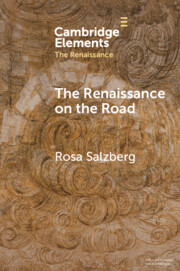
The Renaissance was a highly mobile, turbulent era in Europe, when war, poverty, and persecution pushed many people onto the roads in search of a living or a safe place to settle. In the same period, the expansion of European states overseas opened up new avenues of long-distance migration, while also fuelling the global traffic in slaves. The accelerating movement of people stimulated commercial, political, religious, and artistic exchanges, while also prompting the establishment of new structures of control and surveillance. This Element illuminates the material and social mechanisms that enacted mobility in the Renaissance and thereby offers a new way to understand the period's dynamism, creativity, and conflict. Spurred by recent 'mobilities' studies, it highlights the experiences of a wide range of mobile populations, paying particular attention to the concrete, practical dimensions of moving around at this time, whether on a local or a global scale.
This chapter examines the relations between thousands of Yemeni Jews and the Jews of the Indian subcontinent in modern times. Starting in the eighteenth century, Yemenite rabbis and emissaries filled in religious functions in Jewish communities first in Cochin and among other groups. In the opposite direction, members of Bene Israel community served as officials and officers in the British army during the time it occupied Aden in 1839. These mutual relations formed intimate ties among various communities across the Indian Ocean.
Between 839 and 1403 CE, there was a six-century lapse in diplomatic relations between present-day China and Japan. This hiatus in what is known as the tribute system has led to an assumption that there was little contact between the two countries in this period. Yiwen Li debunks this assumption, arguing instead that a vibrant Sino-Japanese trade network flourished in this period as Buddhist monks and merchants fostered connections across maritime East Asia. Based on a close examination of sources in multiple languages, including poems and letters, transmitted images and objects, and archaeological discoveries, Li presents a vivid and dynamic picture of the East Asian maritime world. She shows how this Buddhist trade network operated outside of the framework of the tribute system and, through novel interpretations of Buddhist records, provides a new understanding of the relationship between Buddhism and commerce.
This chapter investigates a little considered aspect of Rushdie’s work in the context of soundscapes and the auditory imagination. While ekphrasis and the way in which Rushdie works with images has been widely explored, his novels are fully realized through sound, whether it is trains, filmic soundtracks, songs, or the sounds of street life in cities such as Bombay, London, and New York. The chapter focuses particularly on music across Rushdie’s fictional oeuvre, paying closest attention to The Satanic Verses and The Ground Beneath Hear Feet. It argues that a change is perceptible in the way that music is figured across these two novels, which in turn reflects a wider shift in the author’s politics, especially with relation to Islam.
This chapter considers the tensions in Sino-American exchange diplomacy felt in the wake of the Watergate scandal and Richard Nixon’s resignation and replacement by Gerald Ford. Ford lacked domestic political authority and thus was unable to find the negotiating flexibility necessary to achieve a deal to establish official diplomatic relations with Beijing. The resulting deadlock in high-diplomatic negotiations was one cause of stasis and conflict over cultural exchanges in 1974 and 1975 that culminated in the last-minute cancellation of a tour by a famous Chinese performing arts troupe, news that made the front pages of US newspapers. This chapter also examines the more gradual accumulation of tension in exchanges arising from American resentment at tight controls on visitors to China and Chinese resentment at impolitic behavior by American guests, ranging from photographing evidence of Chinese “backwardness” to drunken brawls.
The high watermark in the Sino-American relationship during the Henry Kissinger era came in 1973 with the creation of “liaison offices,” or de facto embassies, in each capital: These liaison offices further deepened and formalized the diplomatic relationship after the Richard Nixon–Mao Zedong summit of 1972 and would remain the closest that the two governments would come to establishing official diplomatic relations before Kissinger left government in January 1977. This chapter reveals that – in cause, conception, and execution – liaison offices were a direct outgrowth of the exchange relationship. Other new milestones in that relationship were also set in 1973, not least during the visit of the largest cultural delegation yet to travel to the People’s Republic of China: the Philadelphia Orchestra. However, 1973 also saw the first signs of new tensions in exchange diplomacy as lingering Sino-American disagreements about Cambodia and Taiwan, as well as turbulent Chinese domestic politics, led to confrontations in cultural contacts and during a Congressional delegation to China led by Senator Warren Magnuson.
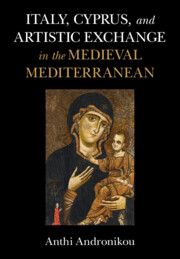
In this volume Anthi Andronikou explores the social, cultural, religious and trade encounters between Italy and Cyprus during the late Middle Ages, from ca. 1200 -1400, and situates them within several Mediterranean contexts. Revealing the complex artistic exchange between the two regions for the first time, she probes the rich but neglected cultural interaction through comparison of the intriguing thirteenth-century wall paintings in rock-cut churches of Apulia and Basilicata, the puzzling panels of the Madonna della Madia and the Madonna di Andria, and painted chapels in Cyprus, Lebanon, and Syria. Andronikou also investigates fourteenth-century cross-currents that have not been adequately studied, notably the cult of Saint Aquinas in Cyprus, Crusader propaganda in Santa Maria Novella in Florence, and a unique series of icons crafted by Venetian painters working in Cyprus. Offering new insights into Italian and Byzantine visual cultures, her book contributes to a broader understanding of cultural production and worldviews of the medieval Mediterranean.
Chapter 5 examines exchanges of material cultures. Through the paradigm of ‘domestication’, it shows how lakeshore populations incorporated several commodities circulating the wider Indian Ocean World into their everyday lives, while also showing how coastal traders sought to affect the supply of these objects to enrich their commercial networks. The principal items discussed are glass beads, cotton cloths, and guns. The chapter uses the Lake Tanganyika case study to show how demand for specific products in East Africa affected broader commercial patterns that traversed the wider Indian Ocean World, which themselves were concurrently being affected by the spread of capitalism from Europe. Additionally, it shows how patterns of consumption on the lakeshore served to enhance the status of several bonds(wo)men, suggesting a contravention of often assumed links between being in bondage and of having low social status.
Chapter 3 uses archival and anthropological sources to examine human encounters with Lake Tanganyika itself. The lake was a source of food, a barrier to cross, and the subject of religious and political innovation. How these features of human–lake encounters were understood shifted over time in ways that were related to the exchange of cultures and fluctuations in the lake’s level. In general terms, these shifts can be summed up as the ‘commercialisation’ of encounters with the lake, which affected how people crossed it, their motivations for doing so, and their means of appeasing spirits they believed to inhabit it. Technology, environmental factors, and religious paradigms with links to the wider Indian Ocean World affected how people crossed, used, and interpreted conditions on the lake.