To save content items to your account,
please confirm that you agree to abide by our usage policies.
If this is the first time you use this feature, you will be asked to authorise Cambridge Core to connect with your account.
Find out more about saving content to .
To save content items to your Kindle, first ensure no-reply@cambridge.org
is added to your Approved Personal Document E-mail List under your Personal Document Settings
on the Manage Your Content and Devices page of your Amazon account. Then enter the ‘name’ part
of your Kindle email address below.
Find out more about saving to your Kindle.
Note you can select to save to either the @free.kindle.com or @kindle.com variations.
‘@free.kindle.com’ emails are free but can only be saved to your device when it is connected to wi-fi.
‘@kindle.com’ emails can be delivered even when you are not connected to wi-fi, but note that service fees apply.
The notion of corporate success lies at the heart of directors’ duties in many corporate laws. Freedom of incorporation conferred considerable discretion on companies to determine the nature of their success and create financial value for their investors, subject to conforming with laws and regulation. However, this increasingly came into conflict with the interests of other stakeholders, in particular employees, supply chains, the environment and societies, and addressing the problem through specific regulatory rules proved inadequate to the task. This raises questions about the nature of the financial incentives that drive and resource corporate activities, namely profits, and the need to align these with the role of business in solving not creating problems for others. In the absence of such an alignment then markets fail and competition can intensify rather diminish the failures. There are three aspects to addressing the problem. The first is the use of corporate law to require companies to consider the interests of stakeholders other than their shareholders. This is already a feature of many corporate laws. The second is corporate governance codes that promote corporate purposes of profiting from solving not causing problems for others. This too is already a feature of some countries’ corporate governance arrangements. The third is the adoption of international standards and firm specific measures of performance that promote accounting and reporting on corporate social and environmental benefits and detriments. These are in the process of being established but need to be more closely related to accounting for specific firm measures of performance that ensure profits derive from solving not creating problems for others.
Chapter 1 critically examines why corporate law traditionally excludes family relationships from its analytical framework. Despite the prevalence of family businesses, legal scholarship has largely overlooked their unique dynamics, often framing them solely through the lens of economic rationality. This chapter explores the dominant influence of law and economics in corporate law, emphasizing the firm as a nexus of contracts designed to minimize transaction costs. From this perspective, family ties are treated as economically rational mechanisms rather than intrinsic social bonds. This approach often disregards the complex interplay between familial motivations and business decisions. The chapter also critiques the limitations of the economic model, highlighting how the failure to account for family relationships may lead to inadequate legal responses to disputes within family-owned firms. Through this analysis, the chapter calls for a more nuanced understanding of family businesses within corporate law.
In recent years, new forms of investment have been created to direct funds towards companies performing well according to predefined environmental, social, and governance (ESG) indicators. This volume addresses moral, political, and legal questions about the legitimacy of ESG as a management and investment strategy. Some chapters argue that ESG strategies should focus on creating real-life impacts on morally significant problems, such as climate change, human rights violations, and corporate corruption. Other chapters instead examine the possibility that the long-term feasibility of ESG limits its moral ambitions, requiring ESG to be regarded as only a set of devices for minimizing risk in a way that protects financial gain. The book contributes a much-needed understanding of ethical interpretations of the ESG movement, which are likely to drive future social, political and legal developments.
Chapter 3 provides a legal analysis of corporate governing, concluding that it poses minimal challenges under traditional corporate law. It introduces a framework for assessing corporate actions and focuses on two forms: government substitution and corporate socioeconomic advocacy. Courts have treated government substitution as a matter of business discretion, protected by the business judgment rule. Socioeconomic advocacy, while more politically charged, is likewise shielded – reinforced by Simeone v. The Walt Disney Company, where the Delaware Chancery Court denied a shareholder inspection request tied to Disney’s opposition to Florida’s “Don’t Say Gay” law. The decision reflects Delaware courts’ reluctance to intervene in corporate political speech absent credible evidence of fiduciary breaches. Although director liability under Caremark has expanded in other contexts, courts have shown little interest in extending it to political risk absent clear legal violation or egregious facts. That said, legal exposure remains in adjacent domains – particularly securities fraud and ESG/DEI compliance – where heightened regulatory and political scrutiny continues to evolve.
Since the Reagan era, American economic policy has amounted to self-colonization. Democratic majorities have consistently supported legal regimes that have enabled corporations to extract the lion’s share of the gains from trade from the public. For example, they have supported a corporate law regime that denies the public democratic control over the behavior of corporations and instead gives dictatorial powers to shareholders and managers. The Internet has made it even easier for firms to extract surpluses from consumers through surveillance and algorithmic pricing. One small contribution toward a project of decolonizing the public would be for consumers to obtain a property right in their personal information. This would allow them to claw back some of the surpluses that technology has taken from them.
Corporate law is a public policy balance. The state creates the corporation and provides its legal features. ‘Micro’ aspects of the corporation, like separate legal personality, limited liability, and perpetual succession, were each provided by the state for public benefits rather than for their evident private benefits. Widespread utilisation of the corporation provides ‘macro’ public benefits. Corporations can also harm third parties, and the state should balance benefits and harms. Yet modern corporate law theory downplays the state’s role. Those who focus on the state also tend to miss the state’s foundational role in setting the contours of the corporation and corporate law and encouraging certain behaviour. Identifying that corporate law is, descriptively, best seen as a public policy outcome shows the state is not a benign white knight which can only restrain corporations but instead should be seen as culpable in any perceived social harms caused by corporations.
The rules, doctrines and policies governing corporations and financial markets are complex and ever-changing in response to global, social and commercial needs. Contemporary Australian Corporate Law is a well-established foundational text that explores these rules and laws in detail, including the history and context in which they are established, how they are developed and how they will continue to evolve in the future. The third edition has been updated to include recent developments in legislation, case law and corporate governance. Discussion of financial markets and financial services has been modified in response to changes to the Corporations Act 2001 including amendments to the continuous disclosure requirements in Chapter 6CA. It considers the recently passed Treasury Laws Amendment (Financial Market Infrastructure and Other Measures) Act 2024 which covers climate disclosure obligations. The clear structure and detailed exploration of key concepts encourages students to develop a contextual understanding of corporate law.
The rise in the use of AI in most key areas of business, from sales to compliance to financial analysis, means that even the highest levels of corporate governance will be impacted, and that corporate leaders are duty-bound to manage both the responsible development and the legal and ethical use of AI. This transformation will directly impact the legal and ethical duties and best practices of those tasked with setting the ‘tone at the top’ and who are accountable for the firm’s success. Directors and officers will have to ask themselves to what extent should, or must, AI tools be used in both strategic business decision-making, as well as monitoring processes. Here we look at a number of issues that we believe are going to arise due to the greater use of generative AI. We consider what top management should be doing to ensure that all such AI tools used by the firm are safe and fit for purpose, especially considering avoidance of potential negative externalities. In the end, due to the challenges of AI use, the human component of top corporate decision-making will be put to the test, to prudentially thread the needle of AI use and to ensure the technology serves corporations and their human stakeholders instead of the other way around.
India’s landmark corporate law reform in 2013 contained a pioneering attempt to mandate corporate spending of 2 percent of average profits on corporate social responsibility (CSR) initiatives. This chapter explores a puzzle: The CSR requirement could have been written as a CSR tax rather than a CSR spending requirement, so why did the government choose the latter, more heterodox, option? The analysis suggests that the motivation for the reforms reflects a blend of political optics and state capacity or efficiency considerations informed by historical experiences with market-oriented reforms. On the efficiency and state capacity front, the Indian state might not have been as well placed to enforce a CSR tax as Indian firms might have been able to manage a CSR spending requirement in 2013. On the political optics side there was a prevailing perception that the liberalization had primarily benefited only a very small sliver of the country. If corporations were engaged in CSR then it might look like the gains from economic liberalization were beginning to find their way from India Inc. to the general citizenry. This blended account provides interesting insights about this rather unique set of reforms and subsequent developments.
Prevailing stereotypes depict the corporate laws of developing countries as either antiquated or plagued by problems of enforcement and misfit despite formal convergence. This chapter offers a different view by showing how Global South jurisdictions have pioneered heterodox stakeholder approaches in corporate law. Examples of those approaches include the erosion of limited liability for purposes of stakeholder protection in Brazil and India, the adoption of mandatory corporate social responsibility in Indonesia and India, and a large-scale program of Black corporate ownership and empowerment in South Africa, among many others. By incorporating broader public policy and distributional objectives into corporate law, heterodox stakeholderism can be interpreted as an institutional adaptation to a context of high inequality and externalities that remain unaddressed through other areas of law. As the rise of inequality and growing distrust of the state’s ability to tackle social and environmental concerns have brought the Global North closer to the Global South’s realities, the resurgent interest in stakeholderism in the developed world constitutes a surprising form of “reverse convergence” that merits greater attention. Heterodox stakeholderism in the Global South also responds to critical, but heretofore neglected, distributional implications of corporate law rules.
In this Element, emerging legal forms of purpose-driven corporations are analyzed, revealing two important insights. First, within the traditional corporate law, a purpose is neither protected nor enforceable over time. While companies can have goals beyond profit, these are controlled by shareholders, who also appoint corporate managers. To protect social or environmental ambitions, especially during shareholder changes, a legal commitment from the company is essential. Second, these new legal forms highlight the need to redefine the corporation's legal foundations. In an era when management decisions impact entire populations and the planet, the law inadequately conceptualizes the conditions necessary for responsible management. The Element argues that embedding a purpose in the constitution of corporations can provide these new legal foundations. Ultimately, the Element suggests that purpose provides a unified theoretical framework for understanding the variety of corporate legal forms and for discussing their respective potentials and limitations in holding corporations accountable in the face of upcoming transitions.
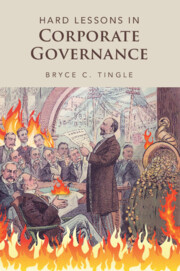
How should corporations be run? Who should get a say, and what results can we expect? Hard Lessons in Corporate Governance provides an accessible introduction to the various failed attempts at using corporate governance to improve society. It introduces the record of these failures and illuminates hard lessons spread across thousands of empirical studies. If we look at the outcomes generated by various corporate governance 'best' practices, we find that none of the practices work. If we look at the theories and assumptions that support modern corporate governance, we find they are likely wrong. And if we look at the prospect of corporate governance to improve political, environmental, and social outcomes, we find ample evidence that governance will fail us here too. After documenting these failures, Bryce Tingle K.C. turns to the most important lesson: How to fix this important, but broken, system.
How AI has and could impact the content, application and processes of corporate law and corporate governance, and the interactions of corporate law actors, including boards, shareholders and regulators, are critically examined. The current and future impact of AI and related technologies on corporate law and corporate governance norms and practices are also analysed.
Buried within the everyday deployment of business vehicles by Indigenous governments as a seemingly neutral way to pursue economic development are also legal notions of corporate personhood and representation. While it is occasionally suggested that corporate law is itself part of the problem of colonialism, the idiomatic notions of “representation,” “legal personhood,” and “business as neutral” form an opaque curtain that hides colonizing tendencies within the legal structures used by Indigenous peoples. This article explores these colonial tendencies at play in Canadian corporate law, showing how corporate law’s deployment of the “legal person” sits at odds with Indigenous juridical orders.
Part III applies the suggested analytical framework at the micro level by delving deep into China’s corporate and capital market development puzzle. It uses the explanatory power of law and political economy to bring more clarity to China’s evolving approach to corporate governance. The purpose is to better understand the role played by formal law in governing Chinese public firms and ultimately in China’s capital market growth and to unpack the political–economic determinants that drove its evolution. The chapters in this part of the book pay particular attention to the creation and efficacy of corporate governance institutions, both traditional and idiosyncratic, that operate in the Chinese market.
This part of the book finds that law and political economy dynamics have produced operational results. They have mobilized market participants (both economic and political) to design and deploy various growth-promoting mechanisms within firms and in the market at large. The analysis shows how such mechanisms at times triggered, supported, boosted, or replaced more conventional corporate governance institutions in ways that eventually marched the market forward.
The take-up of mandatory human rights due diligence (HRDD) initiatives by states is continuously gaining momentum. There are now numerous states adopting some form of HRDD laws. While corporations being duly diligent in respecting human rights is a positive step towards addressing problems of business and human rights, these HRDD initiatives on their own may only be a form of window-dressing, that is, enabling states to put a smart spin on their efforts to address business and human rights issues without addressing some of the root causes of that predicament. As a result, HRDD laws are likely to be a helpful, but insufficient tool for addressing corporate abuse of human rights. One reason for this is because the root cause of many business and human rights problems is the structural elements and goals of corporate law facilitates corporate violations of human rights. So long as states fail to transform the way in which corporations operate – in part, by reconceptualizing corporate law – even the best drafted HRDD laws will be inadequate to halt corporate harms.
Since their creation, corporations have proven to be vehicles for incredible aggregate wealth creation. It was, however, recognised at the outset that in creating a unique set of legal features that would make the company attractive for private investment, the state was not only creating a co-investor in public wealth but there was also the possibility that the company would pose a threat to the state itself. As such, since its inception, the corporation has been involved in a delicate dance with the state both to route its productive capacity towards socially desirable ends and to control the corporation’s power. Today, as technological development and the mobilisation of international financial capital allow the power of the corporation to transcend that of the state, the tools of the past that were used to constrain the corporation are increasingly relevant. Corporate law and antitrust were once used to maintain the balance between the power of the corporation and the power of the state. The now-separate conversations about corporate responsibility in the corporate governance sphere and about corporate power within competition policy circles have always, in fact, been fundamentally connected and targeted at the same set of risks.
Common ownership is the talk of the town in antitrust land. The competitive implications of rival firms being partially owned and controlled by a small set of overlapping owners are both fascinating and hotly contested. Could the source of potential harm be minority shareholder control in a setting of widely held companies? Critics question the extent and mechanisms of common owners’ influence driving any pro- or anticompetitive effects. This chapter aims to present a comprehensive account of partial ownership, capturing the incentives and effects of both individual and institutional investors and also cross- and common shareholding. It illustrates the early historical unity between corporate and competition laws in regulating shareholding acquisitions but also their progressive quiet disconnect. Triggered by the contemporary common ownership (hypo)thesis, it puts forward a taxonomy of shareholding types and their control characteristics from a competition law perspective, with emphasis on commonly thought passive and diversified investment holdings. The chapter concludes by urging competition and corporate governance and finance policymakers towards harmonic regulatory solutions to address common ownership. It also offers a quantum theory of the corporate property “atom”, drawing cautionary tales about the dynamic and ambiguous qualities of minority common shareholding for antitrust enforcers.
Recent literature on common ownership has employed econometric findings on the correlation between parallel holdings and prices on specific product markets to support policy claims directed to intervene in the investment strategies of the worlds largest investment corporations. Regardless of the validity of such econometric findings, direct intervention in the investment strategies of large investment management corporations may produce a series of unwanted negative repercussions on the positive externalities that are correlated to the presence of parallel holdings (e.g. enhanced pursuance of ESG objectives) without actually sorting out the expected pro-competitive effects – because of the presence of other co-causation factors that determine price increases. Sound policy interventions should also consider the larger picture (concentration on the product markets, concentration on the financial services market, status of governance practices and policies and finally also geopolitical variables) before embarking in any policy strategy in this field.
This chapter highlights the potential anti-competitive risks raised by interlocking directorates between competitors (companies having common board members). Although in the US, Section 8 of the Clayton Act specifically prohibits interlocks among competitors, there is no such prohibition in Europe. The main claim of this chapter is that there may be an enforcement gap around anti-competitive effects of interlocking directorates in Europe. A review of relevant provisions shows that interlocking directorates are likely to fall short of EU competition law. In addition, national corporate laws, as well as tools of corporate governance may be of limited use to remedy competitive concerns. This chapter concludes with a discussion of research avenues that would inform suggestions for reforms.