To save content items to your account,
please confirm that you agree to abide by our usage policies.
If this is the first time you use this feature, you will be asked to authorise Cambridge Core to connect with your account.
Find out more about saving content to .
To save content items to your Kindle, first ensure no-reply@cambridge.org
is added to your Approved Personal Document E-mail List under your Personal Document Settings
on the Manage Your Content and Devices page of your Amazon account. Then enter the ‘name’ part
of your Kindle email address below.
Find out more about saving to your Kindle.
Note you can select to save to either the @free.kindle.com or @kindle.com variations.
‘@free.kindle.com’ emails are free but can only be saved to your device when it is connected to wi-fi.
‘@kindle.com’ emails can be delivered even when you are not connected to wi-fi, but note that service fees apply.
The chapter opens with comments on autobiographical writings by Petrarch, Augustine, Uriel da Costa, Franciscus Junius, Ludvig Freiherr von Holberg, Jan Amos Komenský, and Leibniz. There are seen as attempts to make sense of one’s own life circumstances, while aware that absolute knowledge of one’s own life is not possible. This is particularly salient when it comes to understanding one’s sufferings. Following this, there is a discussion of the concepts of public and fatherland, comparing contemporary times to olden times, primarily Greek and Roman antiquity. The public is understood as a kind of collective moral and legal arbiter, and language plays an important role in its existence. This is seen to be particularly important for what is called a public of the Hebrews. The contemporary public is that of Christianity, but also of commerce, schools, and universities. A fatherland is explained in terms of familial bond to a community and a link in the chain of humanity. This is followed by a discussion of Machiavelli, Hugo Grotius, and Leibniz.
This essay examines the remarkable phenomenon of “life stories,” which the Spanish Inquisition required of its defendants after 1561. The narratives offered by defendants fit into a wider cultural context in two ways. First, they match a rise in autobiographical consciousness which was increasingly present in all sorts of Spanish literature in the sixteenth century. Second, the life stories demanded by Spanish inquisitors also.
An account of the making of the Wooster Group’s Rumstick Road, an autobiographical inquiry into the circumstances and legacy of the suicide of Spalding Gray’s mother. (The production, in rehearsal in the fall and winter of 1976, held an open rehearsal in December before opening the following spring.) The chapter considers the Wooster Group’s approach to acting (distinct from the style of its predecessor, the Performance Group), the visual art sources for the production’s imagery and structure, the use of recording technology, the role of the spectator, and the nature of privacy.
A comprehensive examination of the plays and prose of Adrienne Kennedy, with particular focus on two works she premiered in 1976: A Rat’ s Mass / Procession in Shout, an operatic adaptation of her early play A Rat’ s Mass, composed and directed by the jazz composer and pianist Cecil Taylor; and A Movie Star Has to Star in Black and White, a play derived from Kennedy’s fascination with Hollywood film and her memory of her brother’s devastating car accident. The chapter also explores Kennedy’s experiments in visual art, with particular attention to her own and her mother’s scrapbooks, her assemblage of photographed objects ("Cherished Objects from the Past"), her use of quotation, and the mixed-media nature of her manuscripts.
Chapter 1 takes Gertrude Stein’s visit to the recently incorporated “Indian Territory” of Oklahoma as an opportunity to reread her geographical histories of the United States from a point in Native space. It contrasts Stein’s love for state lines with the writings of Yankton Dakota writer Zitkála-Šá. Her autobiographical essays of the early twentieth century contain shadow maps of Očhéthi Šakówin, or The Great Sioux Nation. They complicate Stein’s excitement over how the airplane makes patchwork earth look like an official US map. By reading contrapuntally between Stein and Zitkála-Šá, this chapter considers autobiography as a contested genre of cartographic literature. In response to technics of automated transport, the form was retooled by Stein and Zitkála-Šá in ways that make the overlap of US geography and Native space visible as a differential space.
This chapter discusses the nature of the Selbstzeugnisse left by the merchants in this study and locates the texts in the history of autobiography, ego-documents, and similar self-narratives. It also explains that no other regions in northern Europe produced texts like these during this period (1400–1600) and that the German-speaking regions from which they come was then emerging as a major center of early modern capitalism.
Ghostwriting autobiographies has gained so high a profile that novels and films focus on the ghost. To deepen understanding of such collaborations in science and medicine, this article reconstructs the making of A Matter of Life (1980), ‘the sensational story of the world’s first test-tube baby’. Although critiqued by feminist scholars, revised through research and embellished in fiction, this double autobiography of Robert Edwards and Patrick Steptoe is still the standard history of the British team’s work to achieve in vitro fertilisation (IVF). It is thus high time to investigate the debt acknowledged only by ‘gratitude for his invaluable help’ to the physician and poet Dannie Abse. I use previously unexploited manuscripts to illuminate relationships among authors, rewriter, and editor, and among those they cast as involved in the research. The records show that Abse rewrote underwhelming drafts for a publisher that had bought and sold the doctors’ story of the ‘baby of the century’ and needed a bestseller. To engage readers, he reworked the text so that alleviating infertility appeared as a career-long quest. As a result of adding vivid scenes with characters and expository dialogue, Abse began to give women—wives, assistants and patients—larger roles in the drama. The objections of Edwards and his circle to various literary references and factual claims were overruled. Yet the authors came across more sympathetically, and IVF was promoted more effectively, than in their own drafts. The process puts recent retellings of the story into perspective and exemplifies how collaboration can shape scientific and medical autobiographies.
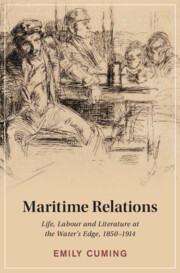
This chapter offers a survey of published and unpublished autobiographies by writers born in the period 1790–1901 that tell the story of the ‘sailor in the family’. It identifies a set of common narrative motifs within these ‘maritime memoirs’ that cluster around the figure of the family sailor – including tales of travel, separation, dispersal, orphanhood, vanishings, reinventions, and improbable returns. Interweaving readings of autobiographies and family myths, alongside the broader literary forms of the Bildungsroman, adventure fiction, fairy tale and waif stories, the chapter shows how global maritime experience shaped the composition of ordinary families and the stories they told about themselves. The maritime relations of this chapter also reveal alternative family structures, beyond the nuclear family order, that were flexibly adapted and shaped to the various realities of mobility, risk and opportunity.
Detailing the lives of ordinary sailors, their families and the role of the sea in Britain's long nineteenth century, Maritime Relations presents a powerful literary history from below. It draws on archival memoirs and logbooks, children's fiction and social surveys, as well as the work of canonical writers such as Gaskell, Dickens, Conrad and Joyce. Maritime Relations highlights the workings of gender, the family, and emotions, with particular attention to the lives of women and girls. The result is an innovative reading of neglected kinship relations that spanned cities and oceans in the Victorian period and beyond. Working at the intersection of literary criticism, the blue humanities and life writing studies, Emily Cuming creatively redefines the relations between life, labour and literature at the waterly edge of the nineteenth century.
Chapter 7 draws on Nietzsche’s autobiographical writings to focus in on his philosophical methods. Here I identify the three features of genealogical analysis. First, Nietzsche attests to being gripped and limited by theological and moral prejudices, which, as he further suggests, functioned to constrict his evaluative horizons (GM P 3). Second, Nietzsche substantiates further that those deeply entrenched patterns of value and habits of thought, which (non-consciously or pre-reflectively) shaped his outlook, also oriented him in a particular way toward his suffering. As a way of combating that precarity, he adopts, for a time at least, thoroughly moralized responses: He warded off precarity through decadence in the forms of either world-denial (pessimism) or ascetic self-renunciation. Finally, he confirms that refracting these automatic responses through his long-drawn-out illnesses opened up, for him, a new line of sight.
This semi-autobiographical essay offers the perspective from the 1970s to the present of a leading historian of Nazi Germany. It shows how a series of paradigms in one way or another obscured the Holocaust, while at the same time underling the importance of the scholarship on the Final Solution that took off in the 1960s. A particular focus of the essay is the debates around fascism and the difficulty of acknowledging the centrality of racism within the fascist model.
Writing in the US in the early twentieth century, Leonor Villegas de Magnón was a Mexican American activist, educator, nurse, and founder of La Cruz Blanca Constitucionalista, a group of nurses established during the Mexican Revolution. Her most comprehensive text is her autobiography, which chronicles the contributions of La Cruz Blanca and which she essentially writes twice, once in Spanish for the Mexican and Mexican American reader, and then in English for the English-speaking readers of the US. What becomes apparent as she shifts audiences, in her writing and in her archive, is a preoccupation not only with the preservation of history and culture, but with its translation. This chapter proposes that this question of translation (across languages, generations, nations, and cultures) is one equally applicable to the task of digitizing archival material. In making the physical archive digitally accessible, digital humanists are enacting translation and must wrestle with questions regarding the responsibilities of the translator. Guided by the question of the ethics of translation, this chapter outlines the process of creating an online exhibit of Villegas de Magnon’s archive, finally claiming that the project of Latinx Digital Humanities is itself an urgent but complex task of translation.
Just as Song of Solomon and Down These Mean Streets inspired Junot Díaz to become a writer, Youngblood (1954), a novel by the radical African American author John Oliver Killens, inspired Piri Thomas to write Down These Mean Streets (1967). What does Thomas’s personal relationship with Killens reveal about the intertextual relationship between DTMS and Youngblood? What can we learn from reading DTMS as a coming-of-age memoir rather than as a coming-of-age novel? What can be gained by reading DTMS from a child-centered perspective? Inspired by Ralph Ellison’s concept of literary ancestry, Harold Bloom’s theory of the anxiety of influence, Gerard Genette’s definition of intertextuality, and Henry Louis Gates Jr.’s theory of signifying, I argue that the shared themes of racial, sexual, and gendered trauma intertextually bind the homosocial coming-of-age narratives in DTMS and Youngblood. I examine how the coming-of-age narratives in each of these texts explore the entanglement of homosocial camaraderie and ethnic, racial, and sexual identity formation. In critically explicating these themes, this chapter expands Latino American and African American literary history and reveals new insights about the intertextual genealogy of influence between DTMS and Youngblood.
This narrative is a reflection of the turning points, the dilemmas and disappointments, the cultural nuances and sensitivities, and all that comes with being a developmental scientist working on issues of adversity and resilience, inequity, and social policy. It’s a journey with a focus on promoting greater visibility for the Asian region in professional societies; capacity-building and mentoring initiatives for young scholars in Asia, Africa, and Latin America; and facilitating regional collaborations and opportunities for resource sharing. The way forward for young scholars from LMICs [Low-Middle-Income-Countries] is to break barriers, disseminate work widely, and have authentic conversations with colleagues across and within the country that lead to innovative research collaborations. As developmental scientists we need to engage with policy makers by mapping culturally sensitive, evidence-based solutions to societal problems and form advocacy groups to bring societal issues to life and network with the right people to drive change in these areas.
Embark on a journey through the rich tapestry of developmental psychology with 'Pillars of Developmental Psychology.' This collection reveals personal histories of influential scholars, the living 'pillars,' whose decades-long contributions have shaped the discipline. The book deepens the argument that a complete understanding of the field requires the human narratives that have woven its fabric, complementing and going beyond analytical views. These 'pillars' not only recount the achievements and challenges of their journeys, but also highlight how their work can inspire future generations. This reflective anthology resonates across disciplines, offering invaluable insights for scholars and students alike. A framing preface, tantalizing abstracts, illuminating chapters, and a closing commentary amplify the significance of these scholars' contributions, revealing overarching themes in personal, inter-personal, institutional, socio-political, and intellectual dimensions. "Pillars of Developmental Psychology" is a testament to the enduring impact of these luminaries and a roadmap for the dynamic future of developmental inquiry.
This essay is a write-up of my Professorial Inaugural Lecture, delivered at the London School of Economics on 9 December 2024. Herein, I describe how I became involved and have helped develop the field of behavioural public policy (BPP). I detail how the intellectual architecture of BPP – its journal, Annual International Conference and Association – came into existence, and allude to my hopes for how the field might develop as we go forward.
Hopkins centred his life on the Gospel and the Incarnation from the time of his conversion to Catholicism in 1866 onwards, and the exposition of the faith in the Mass became his life’s central activity when he joined the Jesuits in 1868. His sermons deserve to be read as ardent yet stylish examples of the genre as well as for their relevance to Hopkins as poet and to Hopkins as original thinker. This chapter examines the liturgical context of the sermons and ways in which they relate to the context of Victorian preaching and Jesuit homiletics. Hopkins’s sometimes baroque preaching style was not always orthodox, running counter to the simple language advised by Jesuit preaching manuals. In the texts of his sermons, it is nevertheless possible to find moving autobiographical testimony to Hopkins’s psycho-spiritual struggles, as well as his desire to empathize with his congregants’ lives and work.
This chapter focuses on examples of Henry James’s post-1890 writings – including Notes of a Son and Brother (1914), the Prefaces to the New York Edition (1907–9), and ‘Maud-Evelyn’ (1900) – which engage with, or themselves embody, the challenge of commemorating lives cut short prematurely or traumatically. The first half addresses formal and stylistic features and explores how James’s commitment to conserving and commemorating the unspent experiential potential of the dead of the American Civil War manifests within his late aesthetics: informing syntax, notions of character, and the pressure placed on traditional narrative structures. The subsequent sections then trace a competing phenomenon, inspired in part by the author’s meditations on Civil War Monuments: the concern that several of James’s late works (both fictional and non-fictional) display about the wisdom of investing emotionally in the unlived lives of the untimely dead. Together, these sections argue that, during the last twenty-five years of his life, James produced writings at once enthralled by and wary of unfulfilled narrative potential, and attentive to how it might be used to bind epochs together.
This Element analyses the autobiographies of historians from a global perspective and looks at all eras, from antiquity to the present day. It includes twenty autobiographies: Caesar's and Lucian of Samosata's memories in antiquity; an autobiography of a medieval king such as Peter IV of Aragon; Vico's, Gibbon's and Adams' intellectual self-accounting in modernity; autobiographical revelations and social activism of twentieth century women historians such as Carolyn Steedman, Jill Conway and Gerda Lerner; classical Chinese and Islamic traditions through the autobiographies of Sima Quian and Ibn Khaldun; the perplexities inherent in the modernisation of Japan (Fukuzawa Yukichi), China (Gu Jiegang), India (Nirad Chaudhuri) and Egypt (Taha Hussein); postmodernists such as Rosenstone; and traumatic postcolonial experiences in Africa (Bethwell Ogot), Latin America (Carlos Eire) and Southeast Asia (Wang Gungwu). This Element proposes a literary and historical approach to these autobiographies, emphasising its historiographical dimension and value.
This chapter examines forms of self-writing (memoir, autobiography, diaries, documentary prose, and other in-between genres) that demonstrate an ‘orientation toward authenticity’, to borrow the phrase of the writer-scholar Lidiia Ginzburg. The arc spans the late seventeenth century to the present, with a focus on the period from the end of World War II to the late Soviet era, which witnessed an explosion of non-fictional narratives to document the war, camps, and Stalinist terror. The chapter takes its cues from Ginzburg’s theory that in-between prose is uniquely innovative when it fixes its attention on concepts of the self and literary forms, and that it flourishes most when canonical genres are in flux. In addition to the topic of childhood and, more centrally, personal encounters with history, the chapter discusses the role of women writers, and the sub-genre of the memoirs of contemporaries written by members of the intelligentsia.