To save content items to your account,
please confirm that you agree to abide by our usage policies.
If this is the first time you use this feature, you will be asked to authorise Cambridge Core to connect with your account.
Find out more about saving content to .
To save content items to your Kindle, first ensure no-reply@cambridge.org
is added to your Approved Personal Document E-mail List under your Personal Document Settings
on the Manage Your Content and Devices page of your Amazon account. Then enter the ‘name’ part
of your Kindle email address below.
Find out more about saving to your Kindle.
Note you can select to save to either the @free.kindle.com or @kindle.com variations.
‘@free.kindle.com’ emails are free but can only be saved to your device when it is connected to wi-fi.
‘@kindle.com’ emails can be delivered even when you are not connected to wi-fi, but note that service fees apply.
Population displacement is a prominent state-building strategy. Using either force or positive inducements, states sponsor the resettlement of racial, ethnic, or linguistic groups to consolidate territorial control. We evaluate the long-run consequences of large-scale displacement by analyzing a historical episode in Afghanistan: the relocation of Pashtun communities during the rule of Emir Abd al-Rahman. Using historical records, we reconstruct the map of relocated tribes to identify contemporary settlements that are connected to the original displaced settlements. We analyze novel, microlevel survey data on more than 80,000 subjects to study how contemporary attitudes about the central government and the Taliban as well as individuals’ identity salience differ across coethnic communities separated by the emir’s state-building effort. We argue that under conditions common to many historical cases, settlers develop regional political identities that are neither ethnocentric, nor pro-central-state, nor focused on national identity. We show that the long-term consequences of the state-led resettlement of Pashtuns to northern Afghanistan are stronger attachments to regional government and local institutions, along with greater hostility to the central government and the Taliban relative to Pashtuns in the south and east.
Chapter 6 examines the lives, intellectual discourses, and working conditions of those who were supposed to build socialism in postindependent Africa. Workers embraced and subverted the socialist visions the state and its leftist supporters imagined. Despite the state and leftist intellectuals championing themselves as a worker’s party and embodying workers’ rights, laws were passed to handicap workers’ ability to unionize and strike outside of state channels. Despite these measures, workers used their voices, feet, and letters to highlight the contradictions and the limitations of a postcolonial, socialist African government that both championed workers’ rights and sought to put the means of production into their hands. The workers used ingenious techniques to resist and negotiate the power of the state and capital. Workers understood that their positions were tenuous and that true liberation was only possible in coordination and conjunction with each other. Black liberation was not a solo affair. For workers, they believed that their liberation was linked up with the survival and success of Black labor worldwide. Events and time would prove them right. The chapter complements histories highlighting African workers’ centrality – through their letters and feet – in articulating the contradictions and aspirations of postcolonial African states and socialism.
Chapter 1 examines the fragility and unenviability of Black independence. It shows how Black Marxists and anticolonial figures navigated and negotiated Soviet and communist linkages from the 1940s to the 1960s against attempts by white Western imperial and colonial powers to weaponize the term “communism” to suffocate anticolonial movements and suspend Black independence. Once independent, the chapter shows that the Ghanaian government’s wariness of hastily establishing relations with the Soviet government arose not only from Western pressure but from genuine fears of swapping one set of white colonizers for another. The chapter then questions the totalizing analytical purchase of using the Cold War paradigm to understand the relationship between Black African nations and white empires – whether capitalist or communist – during the 20th century. It posits that a framework highly attentive to race and racism in international relations and diplomatic history must also be employed to understand the diplomatic actions of African states during this period. By so doing, Chapter 1 follows other pioneering works to argue that Ghanaians and the early African states had agency and dictated the paces and contours of their relationship with the USSR and other white imperial states.
Chapter 5 excavates the debates leftist and socialist thinkers in Ghana had about the brand of socialism they were building and its relationship to religion, morality, Black freedom, and precolonial African history. The chapter argues that debates surrounding how to define and historicize socialism in the African context were not simply intellectual exercises and disputes over labeling rights but central to reclaiming Africans and African history within global history. It was a deliberate critique of white supremacist paradigms that situated ideas, histories, and societies emanating from Africa as operating outside the continuum and space of human history. By rethinking and (re)historicizing histories of exploitation and violence in Africa, socialists in Ghana were simultaneously decolonizing and rescuing socialism from itself. The chapter demonstrates that socialism then was more than a fashionable lexicon or moniker to curry favor with certain geopolitical groups. Instead, it also offered a tangible way, a theoretical analytic, for Africans to revisit, debate, and offer a critical appraisal of African historiography and societies and Africa’s place in world history. Not only were the socialist theorists in Ghana domesticating socialism, they were remaking it globally. They were Marxist-Socialist worldmakers.
Led by the charismatic Kwame Nkrumah, Ghana won its political independence from the United Kingdom in 1957. It precipitated both the dying spiral of colonialism across the African continent and the world's first Black socialist state. Utilising materials from Ghanaian, Russian, English, and American archives, Nana Osei-Opare offers a provocative and new reading of this defining moment in world history through the eyes of workers, writers, students, technical-experts, ministers, and diplomats. Osei-Opare shows how race and Ghana-Soviet spaces influenced, enabled, and disrupted Ghana's transformational socialist, Cold War, and decolonization projects to achieve Black freedom. This title is also available as open access on Cambridge Core.
The fourteenth century Indian Ocean world saw a rapid increase in seaborne trade, which led to developing port cities and new centres of power. These port cities sometimes became the capitals of emergent states which broke away from the traditional pattern of landed states and established their own spheres of influence over land-and-sea realms. One such emergent state was the polity centred on Raigama and Kotte in southwestern Sri Lanka, which gained prominence in the region thanks to the port policies followed by its rulers, the Alakeshwara family. This research analyses the rise of this state in the context of the Indian Ocean custom of the ‘right of the port,’ which allowed merchant groups like the Alakeshwaras to establish taxation and sovereignty over an area. This also presents an alternative perspective from which the politics of the kingdoms of Sri Lanka can be reframed and understood, breaking away from the internal logic of ceremonial succession and historical inevitability.
Sub-Saharan Africa was on the threshold of a new and violent era in the second half of the fifteenth century. The ensuing four centuries would see innovative forms of military organisation, novel cultures of militarism underpinning such systems, and new wars, as well as new ways of fighting them. There were often different factors at work in different regions; the presence of external drivers was a key distinction between Atlantic Africa and the rest of the continent, for instance. However, warfare across early modern Africa had much in common, in terms of the aim to control factor endowments, to maximise population, and to construct enduring ideological systems, whether territorially or culturally defined. In some ways – certainly in terms of the underlying trends and broad contours of Africa’s military history – the existence or absence of external intrusion is a distraction, however significant it was in particular places at particular times. The outcome of the processes in motion between c. 1450 and c. 1850 was an expansion in military scale, the professionalisation of soldiery, the adoption of new weaponry, and the militarisation of the polity – whether ‘state-based’ or otherwise. The militarisation of African polities and societies was an ongoing process between the fifteenth and the nineteenth century, a period which in many ways witnessed the laying of the foundations of modern African political systems; this would culminate in a veritable military revolution in the nineteenth century, a transformation in the organisation and culture of violence, without which Europe’s later partition of the continent cannot properly be understood.
While often described as a unified process imposed by external actors on weak, conflict-ridden countries, international state building increasingly comprises a variety of actors involved in different ways in (re)building a diverse set of institutions. Civilian preferences are often excluded from this fragmented environment. We identify and explicate three dimensions along which postconflict state building meaningfully varies: the actor involved, the type of institution targeted, and the form of involvement. We then examine how variation along each dimension impacts civilians’ state-building preferences with two rounds of original survey experiments fielded in Liberia. We find that Liberians largely prefer state-building processes overseen by a subset of international actors; that they prefer state building focused on security-oriented institutions over non-security-oriented institutions; and that different forms of involvement in the process meaningfully influence their preferences. We also find that these preferences depend on civilians’ characteristics. Ultimately, we provide an initial, conceptual mapping of the diversified landscape of international state building, as well as an empirical “unpacking” of the conditions that may shape civilians’ preferences toward the process.
The essay examines the lessons from the international intervention in Afghanistan, highlighting the failures of externally imposed state building, including neglect of local governance structures and prioritizing donor interests over Afghan ownership. The international peace- and state-building intervention in Afghanistan, which spanned two decades, culminated in the abrupt withdrawal of U.S. troops in 2021, leading to the Taliban’s swift resurgence. This event has sparked a critical examination of the strategies employed by NATO and allied nations during their engagement in Afghanistan. This essay aims to distill seven key lessons from this intervention, emphasizing the need for future peacebuilders to adapt their approaches to better align with local contexts and realities. The analysis highlights the failures of liberal peacebuilding, the importance of local ownership, the necessity of effective and legitimate institutions, and the detrimental impact of corruption. Furthermore, it underscores the significance of coherence among international actors and the need for a nuanced understanding of regional dynamics. By reflecting on these lessons, the essay seeks to provide actionable insights for future international interventions in fragile and conflict-affected states.
This article explores the mechanics of institution building through a case study of Peru’s tax authority reform in the early 1990s. An agency riddled with corruption and despondency became a model bureaucracy oriented toward public service under the leadership of a career civil servant with a religious background. The explanation combines systemic factors associated with institutional change with other, less well-known forces. The profound socioeconomic crisis that had struck Peru at the time opened a window for reform. More significantly, the analysis focuses on the struggle to supplant old and enforce new institutional values. Management policy played a role by fostering a predisposed workforce. However, it was the charismatic performance of the reform leader and his task force, articulated around a nation-saving narrative, that instilled the belief that change was possible, encouraged employees to embrace new values, and paradoxically enabled the creation of an agency with a Weberian ethos. Subsequent developments hint at the limits of charismatic state building.
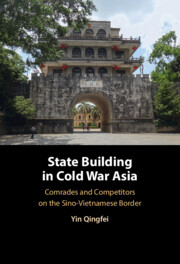
Departing from conventional studies of border hostility in inter-Asian relations, Yin Qingfei explores how two revolutionary states – China and Vietnam – each pursued policies that echoed the other and collaborated in extending their authority to the borderlands from 1949 to 1975. Making use of central and local archival sources in both Chinese and Vietnamese, she reveals how the people living on the border responded to such unprecedentedly aggressive state building and especially how they appropriated the language of socialist brotherhood to negotiate with authorities. During the continuous Indochina wars, state expansion thus did not unfold on these postcolonial borderlands in a coherent or linear manner. Weaving together international, national, and transnational-local histories, this deeply researched and original study presents a new approach to the highly volatile Sino-Vietnamese relations during the Cold War, centering on the two modernising revolutionary powers' competitive and collaborative state building on the borderlands and local responses to it.
The chapter examines the role of forced displacement in increasing the demand for state intervention and expanding the size of the state bureaucracy in West Germany. It discusses the government elites’ strategies for dealing with the needs of expellees and receiving communities and reviews expellees’ ability to influence government policy. Statistical analysis is used to demonstrate that counties with a greater proportion of expellees to population had more civil servants per capita.
This chapter introduces cases motivating the book and presents a three-step argument about the effects of forced migration on societal cooperation, state capacity, and economic development. It reviews evidence from post-WWII displacement in Poland and West Germany, discusses the applicability of the findings to other cases, and highlights the main contributions of the book.
The conclusions close the manuscript and make four points. First, they review the macro-level observational expectations tested in Part II, and how my findings, obtained through a triangulation of different techniques, allow for a comprehensive picture of how war affected state formation throughout the entire region. Second, they bring together all case studies in Part III, noting how the historical evidence collected fits the expectations of the theory at a micro-level—e.g., considering the behavior of individual actors and the effects of narrow events like battles within wars—and does so with out-and-out consistency—i.e., case by case, almost without exception. Third, they reflect upon the scope of the theory, discussing many other cases that could be explained by the long-term effects of war outcomes. This discussion covers many regions and time periods, showing that classical bellicist theory not only can travel, but can also solves logical problems and empirical puzzles highlighted by previous scholarship. Finally, the conclusions suggest many lines of enquiry for future research that the book leaves open.
In this chapter I lay the foundations of the book and give an overview of the argument. After introducing the importance of studying state capacity and the main puzzle of why certain states are set in divergent state building trajectories, I discuss the state of bellicist theory and criticisms related to its alleged functionalist approach to history, and lack of fit with a world where inter-state war has become less frequent. I then turn to Latin America, a poster child of anti-bellicist scholars. There I review the aforementioned books by Centeno, Kurtz, Mahoney, Mazzuca, Saylor, and Soifer, amongst others. My book is set against this new consensus which dismisses war as an explanation for intra-regional variation in state capacity. In a final section, I propose the need to rethink the theory with a focus on the long-term consequences of war outcomes rather than pre-war conditions. The introduction closes with a discussion of my case selection strategy and chapter layout.
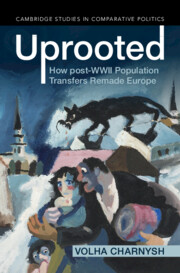
Each year, millions of people are uprooted from their homes by wars, repression, natural disasters, and climate change. In Uprooted, Volha Charnysh presents a fresh perspective on the developmental consequences of mass displacement, arguing that accommodating the displaced population can strengthen receiving states and benefit local economies. Drawing on extensive research on post-WWII Poland and West Germany, Charnysh shows that the rupture of social ties and increased cultural diversity in affected communities not only decreased social cohesion, but also shored up the demand for state-provided resources, which facilitated the accumulation of state capacity. Over time, areas that received a larger and more diverse influx of migrants achieved higher levels of entrepreneurship, education, and income. With its rich insights and compelling evidence, Uprooted challenges common assumptions about the costs of forced displacement and cultural diversity and proposes a novel mechanism linking wars to state-building.
After 2011, the Syrian opposition took on the Assad government directly through military means and indirectly by establishing pockets of rule beyond the government’s reach. As rebels took control of many government-held locations, they sparked the establishment of insurgent governing institutions in hundreds of communities. Local opposition-run institutions in the form of civilian-led local councils proliferated, dotting the provinces of Aleppo, Idlib, rural Damascus, Raqqa, Hama, and Homs. They worked to deliver basic relief and restore public services, sometimes in collaboration with, but often operating separately from, their armed counterparts. The boundaries of this “political marketplace”1 grew increasingly porous as a number of foreign states and private actors directly championed clients of their choosing, bolstering their favorites with financial and military support.2
Protest in the face of authoritarian rule necessitates a kind of audacity rarely, if ever, called for in daily life. When uprising turns to revolt and revolt to civil war, new questions arise: What comes next? What combination of suffering and joy does the future hold? And to whom should one now turn to manage those matters previously entrusted to the state? Even as new political possibilities arise, the stuff of ordinary life does not disappear but instead must be managed on terms that are both newly expansive and constrained. As people confront the hopes and hardships that come with rebellion, bread must be baked, crimes punished, and garbage collected.
Edited by
Anja Blanke, Freie Universität Berlin,Julia C. Strauss, School of Oriental and African Studies, University of London,Klaus Mühlhahn, Freie Universität Berlin
After laying out the substantial challenges faced by the young People’s Republic of China in 1949, this chapter focuses on the particular ways in which revolutionary policies were implemented: by an ever shifting mix of bureaucratic and campaign modalities that were supported by a range of public performances. Bureaucracy was characterized by hierarchy, order, precedent, the strengthening of formal state institutions and a mania for classification, thus radically simplifying complex realities through a process of disaggregation; campaigns mobilized moral commitments through a different type of radical simplification – fusion into morally charged narratives and popular mobilization. Both modalities were in evidence in the two signature campaigns of 1951: the Campaign to Suppress Counterrevolutionaries and land reform. While, in the early 1950s, bureaucratic and campaign modalities were co-constitutive, after the mid 1950s, they were more often in stark tension with each other.
In 1899, municipal officials throughout Mexico sent tables of agricultural statistics to Mexico City to assist in the preparation of a special publication for the 1900 Paris Universal Exposition, where the Mexican government hoped it would impress the world with Mexico's modernity and potential. Though the activity was nothing new, the ways in which municipal officials provided the requested information confounded the national project of both understanding and representing the Mexican countryside. The statistics were never published. This article serves as an introduction to a new dataset and collection of maps built from transcriptions of the manuscript tables. It also demonstrates that regular participation in statistical undertakings served as a means for provincial Mexicans to complicate and confound the process of state consolidation. Here I see, rather than refusal or rebellion, ready participation in state knowledge projects as another way in which those beyond Mexico City managed their relationships with President Porfirio Díaz's technocratic government. Engaging with conceptions of governmentality on one side and data management on the other, I use the 1899 agricultural statistics to highlight how unruly participation in data collection frustrated the practice's centralizing and standardizing project.