To save content items to your account,
please confirm that you agree to abide by our usage policies.
If this is the first time you use this feature, you will be asked to authorise Cambridge Core to connect with your account.
Find out more about saving content to .
To save content items to your Kindle, first ensure no-reply@cambridge.org
is added to your Approved Personal Document E-mail List under your Personal Document Settings
on the Manage Your Content and Devices page of your Amazon account. Then enter the ‘name’ part
of your Kindle email address below.
Find out more about saving to your Kindle.
Note you can select to save to either the @free.kindle.com or @kindle.com variations.
‘@free.kindle.com’ emails are free but can only be saved to your device when it is connected to wi-fi.
‘@kindle.com’ emails can be delivered even when you are not connected to wi-fi, but note that service fees apply.
organized, haphazardly coordinated, and dreadfully led, suffering from German racism, mutual mistrust, and systematic lack of resources. Finnish participation in Operation Barbarossa was motivated by two things: the country’s exposed geographical position next to Russia and the unfinished Soviet attempt to occupy it during the Winter War in 1939–1940. Finland was not occupied by the Red Army and thus maintained its liberal democracy.
While most histories describe the Romanian Army as a reluctant ally of the German Army on the Easten Front, this chapter argues that Romania had embraced a far-right ideology that made the country Nazi Germany’s most important partner in the campaign against the Soviet Union. The Italian Royal Army fought an unplanned campaign, under German command, against the Red Army between August 1941 and January 1943. Despite severe limitations, the combatants of the CSIR and the ARMIR fought bravely until German defeat at Stalingrad led to the deadly disaster on the Don River.
This chapter examines employment testing bias and unfairness in Romania, the legal framework, discrimination types, and the role of regulatory bodies. Multiple organizational stakeholders are involved in employment testing, yet the Romanian legal system lacks explicit regulations on test bias and fairness. Although EU directives mandate equal treatment, they do not require validation of employment tests. The National Council for Combating Discrimination oversees enforcement but lacks authority over compensation or reinstatement. Employers, particularly in the private sector, often outsource recruitment and selection. Psychological testing is primarily governed by the Romanian College of Psychologists. Bias detection and disparate impact assessment remain underdeveloped, with limited legal requirements for test validity evidence. Romania’s approach to balancing validity and diversity remains informal, and artificial intelligence-based hiring tools are scarcely used. Legal consequences for discrimination range from fines to criminal penalties, yet selection methods remain largely unregulated. The chapter highlights gaps between advances in psychometrics and their application in employment selection.
In recent years, scholars have investigated the ‘corruption voting puzzle’, ie why, despite an overwhelming distaste for corruption, voters often collectively fail to ‘throw the rascals out’. While previous literature has largely investigated why voters support corrupt incumbents, our focus lies on nonvoters. Using an original two-wave panel data with Romanian voters just prior to and after the 2020 municipal elections, we test three hypotheses. First, that there is a discrepancy between voters’ intentions and their actual voting behavior (e.g. ‘norms versus actions’). Second, that those most pessimistic about other voters’ intentions to come out to the polls to vote out corrupt incumbents are most likely to abstain. Finally, building on the collective action literature, whether providing such pessimistic voters with information about the intentions of other voters will decrease abstention and increase opposition voting. Using original observational and experimental data, we demonstrate empirical support for our three hypotheses.
This article analyzes the Romanian transition to communism in the late 1940s. The cultural turn in political sociology shows that state building has a strongly symbolic and performative element. Less attention has been paid to the symbolic aspects of regime change, which involves the need to not just accrue power but also diminish that of others. This article starts with a processual understanding of the state, one where a regularity such as the state needs to be validated with reference to time and space. Preexisting understandings, however, are sticky and potentially path-dependent. Regime change is therefore not simply (or always) a matter of failing to validate old understandings – but also actively elaborating and promoting their replacement. To justify regime change, Romanian communists thus worked to elaborate new historical and contextual understandings of the state, engineering a turning point that effectively established a new version of the Romanian state. Without reifying institutions, we can nonetheless make space for process itself to accumulate and (momentarily, incompletely) stabilize, such that social change is a difficult though not impossible achievement.
This chapter focuses on the urban and rural landscapes of the Balkans in Late Antiquity, covering modern-day Albania, Bosnia and Herzegovina, Bulgaria, Croatia, Greece, Kosovo, Montenegro, North Macedonia, Romania, Serbia and Slovenia . It examines how cities and countryside areas evolved between the third and seventh centuries, with a particular emphasis on the material traces of early Christianity. The chapter draws on archaeological evidence, historical texts and urban planning studies to highlight the transformation of key cities such as Thessaloniki, Nicopolis ad Istrum and Serdica (modern Sofia). This contribution argues that the Balkans served as a cultural and political bridge between Asia and Europe, influencing the spread of Christianity and shaping imperial policies. It also explores how urban centres adapted to economic shifts and military threats, with some cities reinforcing their fortifications while others declined. Thessaloniki, for instance, maintained its urban layout and economic role, even as certain Roman public buildings fell out of use. Religious change also played a crucial role in shaping the Balkan landscape. Christian basilicas replaced pagan temples, while monasteries and bishopric centres became focal points for local governance and cultural life. The chapter further addresses the challenges of dating archaeological sites, emphasising the need for more precise chronological frameworks.
During the 1920s Jewish organizations in the USA developed a strategy for guarding the global security of Jews. The strategy was based on economic assistance, international diplomatic pressure, and emigration. The Nazi accession to power fundamentally upset that strategy.
This article examines the neglected war crimes trials of Holocaust perpetrators that took place at the People's Tribunal in early postwar Romania, focusing especially on the first trial (the “Macici group”). The article shows that in spite of the political interferences by the new pro-communist regime and the USSR, the Macici group trial in particular, and the first war crimes trials in general, were not Stalinist show trials or fake trials and they sentenced real war criminals and accurately captured Romania's participation in the Holocaust. Unlike the Antonescu group trial – that indicted the former pro-Nazi dictator and his closest collaborators – the first war crimes trial was not a typical political trial. In general, it respected the rule of law of the era. Resembling the cases of other trials of Nazi perpetrators and collaborators in postwar Europe, the Romanian perpetrators invoked superior orders as their main line of defense. In spite of the public perception and the communist regime's propaganda, the primary sources show that the People's Tribunal proved rather lenient and inefficient. Additionally, these trials had an important political-social role in postwar Romania and helped the communist regime discredit political adversaries, purge the judiciary, gain legitimacy, and increase its control of local society.
How did the new Alliance for the Union of Romanians (AUR) obtain 9% of the vote in the 2020 Romanian general elections? This article explores the fast rise of populist radical right (PRR) parties by examining the support for the AUR at the locality level in Romania during the coronavirus crisis. The AUR's discourse combined populism, nationalism and anti-masking rhetoric. The findings show great variation across the 3,181 localities, from 0% to 50% support for the AUR, and highlight the significant influence of local cultural and political factors, while economic explanations were not confirmed. The vote for the AUR was high in localities with low ethnic diversity and low voter turnout. This research underscores that national-level explanations obscure important dynamics of PRR support that take place at the subnational level. The rise of the AUR is important beyond the Romanian and European contexts and emphasizes the significance of local responses to global crises.
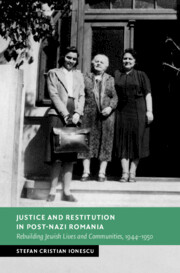
On 23rd August 1944, following the collapse of the pro-Nazi dictatorship of Ion Antonescu, Romania changed sides and abandoned the Axis to join the Allies. Justice and Restitution in Post-Nazi Romania explores the hopes, struggles and disappointments of Jewish communities in Romania seeking to rebuild their lives after the Holocaust. Focusing on the efforts of survivors to recuperate rights and property, Stefan Cristian Ionescu demonstrates how the early transitional government enabled short term restitution. However, from 1948, the consolidated communist regime implemented nationalizations which dispossessed many citizens. Jewish communities were disproportionality affected, and real estate and many businesses were lost once again. Drawing on archival sources from government documentation to diaries and newspaper reports, this study explores both the early success and later reversal of restitution policies. In doing so, it sheds light on the postwar treatment of Romanian Jewish survivors, and the reasons so many survivors emigrated from Romania.
In Chapter 13, we provide a preliminary analysis of the policy orientation of the EU’s post-Covid-19 new economic governance (NEG) regime to give policymakers, unionists, and social-movement activists an idea about possible future trajectories of EU governance of employment relations and public services. We do that on the basis of not only the recently adopted EU laws in these two policy areas, such as the decommodifying Minimum Wage Directive, but also EU executives’ post-Covid-19 NEG prescriptions in two areas (employment relations, public services), three public sectors (transport services, water services, healthcare services), and four countries (Germany, Italy, Ireland, Romania). Vertical NEG interventions in national wage policies paradoxically cleared the way for the decommodifying EU Minimum Wage Directive by effectively making wage policy an EU policymaking issue, but, in the area of public services, we see an accentuation of the trend of NEG prescriptions in recent years: more public investments but also much more private sector involvement in the delivery of public services.
Chapter 7 shows that EU leaders had already started in the 1980s to steer the trajectory of national public services in a commodifying direction. The commodifying pressures from direct EU interventions reached a peak in 2004 with the Commission’s draft Services Directive, which failed to become law because of unprecedented transnational protest movements. After the financial crisis however, the EU’s shift to its new economic governance (NEG) regime empowered EU executives to pursue public service commodification by new means. Our analysis reveals that the NEG prescriptions on public services for Germany, Italy, Ireland, and Romania consistently pointed in a commodifying direction, by demanding both a curtailment of public resources for public services and the marketisation of public services. Although our analysis uncovers some decommodifying prescriptions, namely, quantitative ones calling for more investment at the end of the 2010s, they were usually justified with policy rationales subordinated to NEG’s commodification script.
Chapter 8 traces the EU governance of transport services from the Treaty of Rome to the new economic governance (NEG) regime adopted by the EU after the 2008 financial crisis. Initially, European public sector advocates were able to shield transport from commodification, but, over time, the Commission gradually advanced a commodification agenda one transport modality after another. Sometimes, however, the Commission’s draft liberalisation laws encountered enduring resistance and recurrent transnational protests by transport workers, leading the European Parliament and Council to curb the commodification bent of the Commission’s draft directives. After 2008 however, NEG provided EU executives with new means to circumvent resistance. Despite their country-specific methodology, all qualitative NEG prescriptions on transport services issued to Germany, Italy, Ireland, and Romania pointed towards commodification. But the more the Commission succeeded in commodifying transport services, the more the nature of counter-mobilisations changed. Accordingly, the European Transport Workers’ Federation’s Fair Transport European Citizens’ Initiative no longer targeted vertical EU interventions, but rather the social dumping pressures created by the horizontal free movement of services and fellow transport workers. This target made joint transnational collective action more difficult.
Chapter 6 shows that workers’ wages and employment relations were, until the 2008 crisis, shaped by horizontal market pressures rather than direct political vertical EU interventions in the labour policy area. That changed radically after the EU’s shift to its new economic governance (NEG) regime. We found that the EU’s NEG prescriptions on wage levels, collective bargaining, and hiring and firing mechanisms followed a consistent trajectory that furthered the commodification of labour in Italy, Ireland, and Romania, but less so in Germany. Instead, Germany received decommodifying NEG prescriptions on wage policy that were linked to a rebalance-the-EU-economy policy rationale. Although this policy rationale was still compatible with NEG’s overarching commodifying script, the diverging policy orientation of prescriptions in this area across countries made it hard for unions to challenge NEG transnationally.
Chapter 9 analyses the EU governance of water and the countervailing mobilisations against its commodification. Initially, European law decommodified water services through the harmonisation of quality standards that took them out of regulatory competition between member states. However, from the 1990s onwards, the Commission repeatedly attempted to commodify water through liberalising EU laws. When these attempts failed, EU executives tried to advance commodification by new means, namely, through the EU’s new economic governance (NEG) prescriptions. Our analysis revealed that all qualitative prescriptions on water services issued from 2009 to 2019 to Germany, Ireland, Italy, and Romania called for their marketisation, despite recent calls to increase public investment. Like preceding attempts by draft EU directives, the NEG’s consistent commodification script triggered transnational protests by unions and social movements that defended water as a human right and as a public service, namely, under the banner of the successful Right2Water European Citizens’ Initiative.
Chapter 10 traces the EU governance of health services and its discontents. The first European interventions in the health sector facilitated mobile workers’ access to health services in their host countries, thereby decommodifying cross-border care, albeit by recourse to solidaristic mechanisms situated at national rather than EU level. Since the 1990s however, European horizontal market pressures and EU public deficit criteria have led governments to curtail healthcare spending and to introduce marketising reforms. Thereafter, healthcare became a target of EU competition and free movement of services law. In 2006, transnational collective action of trade unions and social movements moved EU legislators to drop healthcare from the scope of the draft EU Services Directive. After the financial crisis of 2008 however, EU executives pursued commodification of healthcare through new means, as shown by our analysis of their new economic governance (NEG) prescriptions for Germany, Italy, Ireland, and Romania. Even when commodifying prescriptions were on occasion accompanied by decommodifying ones, the latter remained subordinated to the former. Although NEG’s country-specific methodology hampered transnational protests, the overarching commodification script of NEG prescriptions led not only to transnational protests by the European Federation of Public Service Unions, but also to the formation of the European Network against the Privatisation and Commercialisation of Health and Social Protection, which unites unionists and social-movement activists.
Eugenics suffused the medical field through its convergence with hygiene and ideologically underpinned governmental policies of national health, maternal health, and venereal disease control in many countries globally, including in Romania and China. This resulted in the creation of Institutes of Social Hygiene in different countries, including in Romania. The writings of Dr Iuliu Moldovan, founder of The Institute of Hygiene and Social Hygiene in Cluj, Romania, offer insights into eugenics and its connection to veneral disease control in Romania. One case study of applying eugenics to public health is the work against venereal disease at the Model Sanitary Station in Gilau between 1924-33 in Transylvania, Romania. This chapter also uncovers transnational medical cooperation to create public health in China by following the international training of Dr Yang Chongrui, a renowned specialist in maternal health. The details of Yang”s Euro-American study tour attest to how she encountered important elements for eugenic public health: hygiene, venereal disease control, lectures on “the mentally defective”, puericulture, facilities for syphilitic children, prisons, and hospitals for indigent women. Yang”s interaction with Andrija Štampar, who arranged her global tours sponsored by League of Nations Health Organization, was also formative in shaping her eugenic beliefs.
When and how do party politics matter in junior allies’ decisions to engage in multinational military operations? Developing a new role theory model of party politics and multinational military operations, we put forward a two-level argument. First, we argue that the rationale for military action is defined in a contest between political parties with expectations of what constitutes the proper purpose (constitutive roles) and functions (functional roles) of the state. Second, we hold that material and ontological insecurities reduce political space for contestation and debate, but that junior allies tend to focus on role demands for ‘good states’ and ‘good allies’ rather than the nature and aim of the military operation. To unpack our argument, we analyse the debate among political parties in Romania and Denmark leading up to the invasion of Iraq in 2003. Concluding our analysis, we outline the implications for the changing security order and current debates in NATO member states on how to respond to the Russian invasion of Ukraine.
The Maramures Basin, in the Carpathian mountain belt of northern Romania on the border with the Ukraine, belongs to the eastern part of the Pannonian Basin. In the study area, extensional tectonic movements during the Miocene were coeval with silicic and intermediate volcanism in the inner part of the Eastern Carpathians. Throughout this region, explosive events have resulted in the deposition of pyroclastic flows and ash-fall deposits interbedded with marine sediments.
Several tuff units of Badenian (15–13.6 Ma) age occurring throughout the area are extensively zeolitized. These rocks occur as massive homogeneous beds, white to pale greenish-blue, and are commonly extensively jointed. In the Bârsana-Calinesti area and along the Morii Valley, two conspicuous tuff units that can be traced over many km are separated by a calcareous sandstone bed. Most tuffs have a vitroclastic texture in which former glass shards are pseudomorphed by clay minerals and clinoptilolite. Opal-CT commonly occurs as clumps of radiating rods that produce a spherical morphology. Also, rare celadonite is found in the lower greenish tuffs. Pyrogenic crystal fragments are quartz, plagioclase and biotite. Folded muscovite plates and fragments of basement rocks are dominant among the lithic clasts. Above the Bârsana Formation, a second series of white zeolitized tuff, the Ocna Sugatag Formation, is represented by at least two different units overlying an evaporite salt deposit. A large outcrop of a massive white tuff at this locality contains abundant fine-grained clinoptilolite and cation-exchange capacity values of >160 meq/100 g. Clinoptilolite-Ca is also present in the Sighetu tuff unit in the northern part of the Maramures Basin where a distinctive horizon contains plant remains preserved in spherical concretions. Plant material and algal limestones in the same succession strongly suggest that the marine depositional environment was close inshore, and shallow-rather than deep-water conditions are inferred. A mineralogically similar, unaltered, volcanic tuff found in the Coas area suggests that the precursor glass was rhyolitic (72–74% SiO2) with a high-K calc-alkaline affinity. We conclude that pervasive zeolitization is due to the interaction between seawater and vitroclasts at an early stage after deposition.
The island-arc volcanics situated in the eastern part of the Căpîlnaş-Techereu nappe (South Apuseni Mountains, Romania) were studied to evaluate the temperature, fluid properties, and mineral chemistry during low-temperature metamorphism. Detailed observations of metamorphic mineral assemblages were conducted using powder X-ray diffraction and electron microprobe. The metamorphism involved albitization of plagioclase feldspar and the formation of mafic phyllosilicates, zeolites, and other hydrous Ca-Al-silicate minerals. Mafic phyllosilicates consisted of transitional dioctahedral-trioctahedral smectites, mixed-layer chlorite-smectite (C/S, 6–96% chlorite), and discrete chlorite. The zeolites were analcime, stilbite ± stellerite, heulandite, laumontite, epistilbite, and mordenite. Also present, as secondary minerals filling amygdales and veins, are prehnite, pumpellyite, and secondary amphibole. Two mineral assemblages were identified which provide important information about metamorphic conditions (temperature, reaction progress, and fluid properties): (1) heulandite + analcime + quartz; and (2) laumontite + albite + quartz + prehnite + pumpellyite ± amphibole. The types of and relations between minerals in the first assemblage suggest the occurrence of low-temperature hydrothermal metamorphism in the zeolite facies at ~125°C, whereas the second assemblage was metamorphosed at 200°C. The composition and variability of the mineral assemblages in the study area suggest that, due to slow reaction rates, the low-temperature transformations and mineral assemblages were influenced not only by temperature but also by local rock composition, fluid-rock ratio, and fluid chemistry.
What happens when nation-builders in an independent state imagine themselves to have fallen behind kinfolk living under imperial oppression, and how does this affect their vision of a future of national unity? This paper explores the shapes that critical self-comparison could take among Romanians in the Kingdom of Romania around the turn of the twentieth century by considering three interconnected vignettes. First, it outlines the context in which politicized notions of mutual interdependence between the Kingdom and Transylvania allowed for comparison as self-criticism to take root and gain salience in the public sphere. It explores the implications that comparison as self-criticism had on ascribing agency and apportioning blame for causes of the disparity between state and kinfolk. Second, it examines two Transylvanian travelogues produced by major political and cultural figures on the fringes of the Romanian establishment, and, in a reflexive move, contrasts their politics of comparison. Third, it offers a grassroots perspective on how the travelogues of teachers and priests, as rank-and-file nation-builders, expressed these topoi. The article contributes to the nascent trend of considering historical comparisons in actors’ own terms, and as historical processes unto themselves.