Refine search
Actions for selected content:
107 results
Magneto-gravity-precessional instability
-
- Journal:
- Journal of Fluid Mechanics / Volume 1025 / 25 December 2025
- Published online by Cambridge University Press:
- 16 December 2025, A2
-
- Article
-
- You have access
- Open access
- HTML
- Export citation
-
Magneto-gravity-precessional instability, which results from the excitation of resonant magneto-inertia-gravity (MIG) waves by a background shear generic to precessional flows, is addressed here. Two simple background precession flows, that of Kerswell (1993 Geophys. Astrophys. Fluid Dyn. vol 72, no. 1–4, pp. 107–144), and that of Mahalov (1993 Phys. Fluids A: Fluid Dyn. vol. 5, no. 4, pp. 891–900), are considered. We analytically perform an asymptotic analysis to order ${ O}(\varepsilon ),$ where $\varepsilon$ denotes the Poincaré number, i.e. the precession parameter, and determine the maximum growth rate of the destabilizing subharmonic resonances of MIG waves: that between two fast modes, that between two slow modes and that between a fast mode and a slow mode (mixed modes). The domains of the $(K_0 B_0/\varOmega _0, N/\varOmega _0)\hbox{-}$plane for which this instability operates are identified, where $1/K_0$ denotes a characteristic length scale, $B_0$ is the unperturbed Alfvén velocity, $\varOmega _0$ is the rotation rate and $N$ denotes the Brunt–Väisälä frequency. We demonstrate that the $N\rightarrow 0$ limit is, in fact, singular (discontinuous). At large $K_0B_0/\varOmega _0,$ stable stratification acts to suppress the destabilizing resonance between two fast modes as well as that between two slow modes, whereas it revives the destabilizing resonance between a fast mode and a slow mode provided $N\lt \varOmega _0,$ because, without stratification, the maximal growth rate of this instability approaches zero as $K_0B_0/\varOmega _0\rightarrow +\infty .$ This would be relevant for the generation of the mean electromotive force, and hence, the $\alpha \hbox{-}$effect in helical magnetized precessional flows under weak stable stratification. Diffusive effects on the instability is considered in the simple case where the magnetic and thermal Prandtl numbers are both equal to one.


Frozen waves in the inertial regime
-
- Journal:
- Journal of Fluid Mechanics / Volume 1021 / 25 October 2025
- Published online by Cambridge University Press:
- 14 October 2025, A12
-
- Article
-
- You have access
- Open access
- HTML
- Export citation
Global instability of flows through single- and double-bifurcation airway models
-
- Journal:
- Journal of Fluid Mechanics / Volume 1020 / 10 October 2025
- Published online by Cambridge University Press:
- 06 October 2025, A32
-
- Article
-
- You have access
- Open access
- HTML
- Export citation
-
This study considers the global instability of unidirectional flows through single, and double, bifurcation models using linear stability and direct numerical simulation (DNS). The motivation is respiratory flows, so we consider flow in both directions, through two geometries. We identify conditions (quantified by the Reynolds number, ${Re}=U^*D/\nu$, where $U^*$ is the peak centreline velocity, $D$ is the primary pipe diameter and $\nu$ is the kinematic viscosity) where temporal fluctuations occur using DNS. We calculate the linear stability of the steady flows, identifying the critical Reynolds number and leading unstable modes. For flows from single to double pipe, the critical Reynolds number is dependent on the number of bifurcations in the domain, but the mode structures are similar, with growth observed in regions dominated by longitudinal vortices formed by the centrifugal imbalance of flows passing through curved bifurcations. Flows in the opposite direction, from double to single pipe, also depend on the number of bifurcations in the domain. The flow through the double-bifurcation case undergoes two spatial symmetry-breaking bifurcations, altering the mode structure and critical Reynolds number. In all cases, the critical Reynolds number closely matches with temporal fluctuations observed from DNS, suggesting transition is the result of a linear instability, similar to other curved geometries like toroidal and helical pipes. We compare the frequencies of the modes with the frequencies observed from DNS, finding a close match during both initial and saturated flows. These results are important for understanding respiratory flows where turbulent mixing and streaming contribute to gas transport.


Triad near-resonant instability of vertically bounded internal waves in non-uniform stratification
-
- Journal:
- Journal of Fluid Mechanics / Volume 1018 / 10 September 2025
- Published online by Cambridge University Press:
- 01 September 2025, A20
-
- Article
-
- You have access
- Open access
- HTML
- Export citation
-
Vertically bounded, horizontally propagating internal waves may become unstable through triad resonant instability, in which two sibling waves in background noise draw energy from a parent internal tide. If the background stratification is uniform, then the condition for pure resonance between the parent and sibling wave frequencies and horizontal and vertical wavenumbers can be found semi-analytically from the roots of a polynomial expression. In non-uniform stratification, determining the frequencies and horizontal wavenumbers for which resonance occurs is less straightforward. We develop a theory for near-resonant excitation of a pair of sibling waves from a low-mode internal wave in which the proximity to pure resonance is characterised by the discrepancy between the forced sibling wave frequencies and the natural frequency of these modes. Knowing this discrepancy can be used methodically to determine pure resonance conditions. This inviscid theory is compared with numerical simulations of effectively inviscid waves. For comparison with laboratory experiments, the theory is adapted to include viscous effects both in the bulk of the fluid and at the side walls of the tank. We find that our theoretical predictions for frequencies and wavenumbers of the fastest growing sibling waves are generally consistent between theory, simulations and experiments, though theory overpredicts the growth rate observed in experiments. In all cases, the growth rate of sibling waves decreases with decreasing parent wave frequency, becoming negligibly small in experiments if the parent wave has frequency less than $\approx 0.7$ of the buoyancy frequency at the surface.

Shape modes and jet formation on ultrasound-driven wall-attached bubbles
-
- Journal:
- Journal of Fluid Mechanics / Volume 1017 / 25 August 2025
- Published online by Cambridge University Press:
- 11 August 2025, A9
-
- Article
-
- You have access
- Open access
- HTML
- Export citation
Enhancement of heat transfer using Faraday instability
-
- Journal:
- Journal of Fluid Mechanics / Volume 1016 / 10 August 2025
- Published online by Cambridge University Press:
- 04 August 2025, A35
-
- Article
-
- You have access
- Open access
- HTML
- Export citation
A generalised multiparameter linear stability and sensitivity analysis method
-
- Journal:
- Journal of Fluid Mechanics / Volume 1011 / 25 May 2025
- Published online by Cambridge University Press:
- 15 May 2025, A12
-
- Article
- Export citation
-
A generalised multiparameter model for linear modal stability and sensitivity analysis is developed. The stability and sensitivity equations are derived from a generalised vector-form governing equation comprised of multiple dimensionless parameters that represent different physical forces affecting the system’s stability. By introducing adjoint variables and constructing the Lagrangian identity, a differential relationship between the eigenvalue of the perturbation mode and dimensionless parameters is determined and defined as the global sensitivity gradient. It provides the constraint that must be satisfied for changes in different dimensionless parameters along the isoeigenvalue curve, which aids in the fast computation of the neutral curve. Moreover, the global sensitivity gradient can directly and intuitively evaluate the competitive relationship among the influences of various parameters on system instability. Based on the global sensitivity gradient, an optimal stability control strategy for transitioning from an unstable state to a stable state is discussed. Additionally, the relative sensitivity function is also introduced to investigate the influence of relative parameter variations on instability. To demonstrate the effectiveness of this method, three applications are presented: two-dimensional flow around a circular cylinder with a single dimensionless parameter Re; three-dimensional axisymmetric magnetohydrodynamic (MHD) flow around a sphere with two parameters Re and $N$; and two-dimensional MHD mixed convection with three parameters Re, ${\textit{Gr}}$ and $\textit{Ha}$.


Marangoni-driven patterns, ridges and hills in surfactant-covered parametric surface waves
-
- Journal:
- Journal of Fluid Mechanics / Volume 1008 / 10 April 2025
- Published online by Cambridge University Press:
- 10 April 2025, R4
-
- Article
-
- You have access
- Open access
- HTML
- Export citation
-
Parametric oscillations of an interface separating two fluid phases create nonlinear surface waves, called Faraday waves, which organise into simple patterns, such as squares and hexagons, as well as complex structures, such as double hexagonal and superlattice patterns. In this work, we study the influence of surfactant-induced Marangoni stresses on the formation and transition of Faraday-wave patterns. We use a control parameter, $B$, that assesses the relative importance of Marangoni stresses as compared with the surface-wave dynamics. Our results show that the threshold acceleration required to destabilise a surfactant-covered interface through vibration increases with increasing $B$. For a surfactant-free interface, a square-wave pattern is observed. As $B$ is incremented, we report transitions from squares to asymmetric squares, weakly wavy stripes and ultimately to ridges and hills. These hills are a consequence of the bidirectional Marangoni stresses at the neck of the ridges. The mechanisms underlying the pattern transitions and the formation of exotic ridges and hills are discussed.


Faraday waves and period tripling in a horizontal circular tank
-
- Journal:
- Journal of Fluid Mechanics / Volume 1006 / 10 March 2025
- Published online by Cambridge University Press:
- 03 March 2025, A4
-
- Article
-
- You have access
- Open access
- HTML
- Export citation
Wall-damped Faraday waves in horizontally oscillating two-layer fluid flows
-
- Journal:
- Journal of Fluid Mechanics / Volume 1002 / 10 January 2025
- Published online by Cambridge University Press:
- 26 December 2024, R1
-
- Article
-
- You have access
- Open access
- HTML
- Export citation
-
We study experimentally the onset of Faraday waves near the end walls of a rectangular vessel containing two stably stratified fluid layers, subject to horizontal oscillations. These subharmonic waves (SWs) are excited, because the horizontal inertial forcing drives a harmonic propagating wave which displaces the interface in the vertical direction at the end walls. We find that the onset of SWs is regulated by a balance between capillary and viscous forces, where the rate of damping is set by the Stokes layer thickness at the wall rather than the wavelength of the SWs. We model the onset of SWs with a weakly damped Mathieu equation and find that the dimensional critical acceleration scales as $\nu _m^{1/2} \omega ^{3/2}$, where $\nu _m$ is the mean viscosity and $\omega$ is the frequency of forcing, in excellent agreement with the experiment over a wide range of parameters.


Atomisation of an acoustically levitated droplet: experimental observations of myriad complex phenomena
-
- Journal:
- Journal of Fluid Mechanics / Volume 999 / 25 November 2024
- Published online by Cambridge University Press:
- 21 November 2024, A89
-
- Article
-
- You have access
- Open access
- HTML
- Export citation
Parametric oscillations of the sessile drop
-
- Journal:
- Journal of Fluid Mechanics / Volume 995 / 25 September 2024
- Published online by Cambridge University Press:
- 19 September 2024, A3
-
- Article
-
- You have access
- Open access
- HTML
- Export citation
-
Waves are formed on the surface of a sessile drop driven through substrate vibrations oriented at a slanting angle from the normal. A mathematical model is derived, which leads to an infinite system of coupled Mathieu equations governing the wave dynamics that are solved using Floquet theory. The spatial structure of the waves is described by the mode number pair $[\ell,m]$, where $\ell$ and $m$ are the polar and azimuthal mode numbers, respectively. Limiting cases corresponding to horizontal and vertical vibrations are discussed with predictions agreeing well with prior literature. We focus our results on three drop motions – (1) harmonic $[1,1]$ rocking mode, (2) harmonic $[2,0]$ pumping mode, and (3) subharmonic rocking $[1,1]$ mode – as they depend upon the slanting angle, static contact angle, and contact-line conditions, which we assume to be either pinned or freely moving with fixed contact angle. New theoretical predictions are tested through experiments over a range of parameters, showing good agreement.


A revised gap-averaged Floquet analysis of Faraday waves in Hele-Shaw cells
-
- Journal:
- Journal of Fluid Mechanics / Volume 977 / 25 December 2023
- Published online by Cambridge University Press:
- 27 December 2023, A45
-
- Article
-
- You have access
- Open access
- HTML
- Export citation
Pattern evolution and modal decomposition of Faraday waves in a brimful cylinder
-
- Journal:
- Journal of Fluid Mechanics / Volume 974 / 10 November 2023
- Published online by Cambridge University Press:
- 10 November 2023, A56
-
- Article
- Export citation
-
This paper investigates the steady-state pattern evolution of symmetric Faraday waves excited in a brimful cylindrical container when driving parameters much exceed critical thresholds. In such liquid systems, parametric surface responses are typically considered as the resonant superposition of unstable standing waves. A modified free-surface synthetic Schlieren method is employed to obtain full three-dimensional spatial reconstructions of instantaneous surface patterns. Multi-azimuth structures and localized travelling waves during the small-elevation phases of the oscillation cycle give rise to modal decomposition in the form of $\nu$-basis modes. Two-step surface-fitting results provide insight into the spatiotemporal characteristics of dominant wave components and corresponding harmonics in the experimental observations. Arithmetic combination of modal indices and uniform frequency distributions reveal the nonlinear mechanisms behind pattern formation and the primary pathways of energy transfer. Taking the hypothetical surface manifestation of multiple azimuths as the modal solutions, a linear stability analysis of the inviscid system is utilised to calculate fundamental resonance tongues (FRTs) with non-overlapping bottoms, which correspond to subharmonic or harmonic $\nu$-basis modes induced by surface instability at the air–liquid interface. Close relationships between experimental observations and corresponding FRTs provide qualitative verification of dominant modes identified using surface-fitting results. This supports the validity and rationality of the applied $\nu$-basis modes.


Resonances and instabilities in a tilted rotating annulus
-
- Journal:
- Journal of Fluid Mechanics / Volume 973 / 25 October 2023
- Published online by Cambridge University Press:
- 20 October 2023, A34
-
- Article
- Export citation
-
The flow inside a rotating annulus tilted with respect to gravity is characterized experimentally and theoretically. As in the case of a tilted rotating cylinder the flow is forced by the free surface, maintained flat by gravity. It leads to resonances of global inertial modes (Kelvin modes) when the height of fluid is a multiple of half the wavelength of the mode. The divergence of the mode is saturated by viscous effects at the resonance. The maximum amplitude scales as the Ekman number to the power $-1/2$ when surface Ekman pumping is dominant, and to the power $-1$ when volumic damping is dominant. An analytical prediction is given with no fitting parameter, in excellent agreement with experimental results. At lower Ekman numbers, the flow destabilizes with respect to a triadic resonance instability, as already observed by Xu & Harlander (Phys. Rev. Fluids, 2020). We provide here a linear stability analysis leading to the viscous threshold of the instability for small tilt angles. For large tilt angles, a centrifugal instability is observed due to the acceleration of the flow by the inner cylinder. Finally, the features of the turbulent flow and its mixing efficiency are characterized experimentally. We underline the potential interest of this configuration for bioreactors.


The onset and saturation of the Faraday instability in miscible fluids in a rotating environment
-
- Journal:
- Journal of Fluid Mechanics / Volume 973 / 25 October 2023
- Published online by Cambridge University Press:
- 12 October 2023, A6
-
- Article
-
- You have access
- Open access
- HTML
- Export citation
-
We investigate the influence of rotation on the onset and saturation of the Faraday instability in a vertically oscillating two-layer miscible fluid using a theoretical model and direct numerical simulations (DNS). Our analytical approach utilizes Floquet analysis to solve a set of the Mathieu equations obtained from the linear stability analysis. The solution of the Mathieu equations comprises stable and harmonic, and subharmonic unstable regions in a three-dimensional stability diagram. We find that the Coriolis force delays the onset of the subharmonic instability responsible for the growth of the mixing zone size at lower forcing amplitudes. However, at higher forcing amplitudes, the flow is energetic enough to mitigate the instability delaying effect of rotation, and the evolution of the mixing zone size is similar in both rotating and non-rotating environments. These results are corroborated by DNS at different Coriolis frequencies and forcing amplitudes. We also observe that for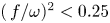 $(\,f/\omega )^2<0.25$, where $f$ is the Coriolis frequency, and $\omega$ is the forcing frequency, the instability and the turbulent mixing zone size- $L$ saturates. When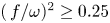 $(\,f/\omega )^2\geq 0.25$, the turbulent mixing zone size- $L$ never saturates and continues to grow.


Superharmonic and triadic resonances in a horizontally oscillated stably stratified square cavity
-
- Journal:
- Journal of Fluid Mechanics / Volume 970 / 10 September 2023
- Published online by Cambridge University Press:
- 04 September 2023, A25
-
- Article
-
- You have access
- Open access
- HTML
- Export citation
Sliding, vibrating and swinging droplets on an oscillating fibre
-
- Journal:
- Journal of Fluid Mechanics / Volume 967 / 25 July 2023
- Published online by Cambridge University Press:
- 19 July 2023, A24
-
- Article
-
- You have access
- Open access
- HTML
- Export citation
Parametric subharmonic instability of inertial shear at ocean fronts
-
- Journal:
- Journal of Fluid Mechanics / Volume 966 / 10 July 2023
- Published online by Cambridge University Press:
- 05 July 2023, A34
-
- Article
-
- You have access
- Open access
- HTML
- Export citation
-
The two-dimensional stability of vertically sheared inertial oscillations at ocean fronts is explored through a linear stability analysis and nonlinear simulations. Baroclinic effects reduce the minimum frequency of inertia-gravity waves to an extent determined by the balanced Richardson number ${{Ri}}$ of the front. Below a critical value of ${{Ri}}$, which depends on the strength of the inertial shear, the inertial oscillations become unstable to parametric subharmonic instability (PSI) resulting in growing perturbations that oscillate at half the inertial frequency $f$. Since the critical value is always greater than 1, PSI can occur at fronts stable to symmetric instability. Although modest in weak inertial shear, growth rates exceeding $f/2$ can be achieved for inertial shear greater than or equal to the thermal wind shear. Our formulation allows for non-hydrostatic perturbations and can be applied to initially unstratified geostrophic adjustment problems. We find that PSI will almost totally damp the transient oscillations that arise during geostrophic adjustment. The perturbations gain energy at the expense of the inertial oscillations through ageostrophic shear production. The perturbations then themselves become unstable to secondary Kelvin–Helmholtz instabilities creating a pathway by which the inertial oscillations can be dissipated rapidly. In contrast to symmetric and baroclinic instabilities that draw on a front's kinetic or potential energy, PSI acts to increase the energy stored in the balanced front as the convergence and divergence of the eddy-momentum fluxes set up a secondary circulation in the sense to stand up the front.


Mechanics of removing water from the ear canal: Rayleigh–Taylor instability
-
- Journal:
- Journal of Fluid Mechanics / Volume 963 / 25 May 2023
- Published online by Cambridge University Press:
- 16 May 2023, A12
-
- Article
-
- You have access
- Open access
- HTML
- Export citation
