To save content items to your account,
please confirm that you agree to abide by our usage policies.
If this is the first time you use this feature, you will be asked to authorise Cambridge Core to connect with your account.
Find out more about saving content to .
To save content items to your Kindle, first ensure no-reply@cambridge.org
is added to your Approved Personal Document E-mail List under your Personal Document Settings
on the Manage Your Content and Devices page of your Amazon account. Then enter the ‘name’ part
of your Kindle email address below.
Find out more about saving to your Kindle.
Note you can select to save to either the @free.kindle.com or @kindle.com variations.
‘@free.kindle.com’ emails are free but can only be saved to your device when it is connected to wi-fi.
‘@kindle.com’ emails can be delivered even when you are not connected to wi-fi, but note that service fees apply.
This introduction presents the historical and social context of Argentina in the nineteenth century, as it relates to the local Afro-descendant population. It explains the building-nation conceived by the dominant groups toward the end of the century. The project sought to create a national imaginary founded on the notion of a culturally and racially homogeneous country of white European descent. This project necessarily entailed the disappearance of the population of African (and Indigenous) descent as part of the nation. The strategies used to achieve this project (census, cultural appropriation, official history) are mentioned. In this sense, it is proposed that the construction and recurrent use of visual stereotypes throughout the nineteenth century (concentrated in specific iconographic nuclei) was one of the strategies used in the process of invisibilization of the descendants of enslaved Africans in Argentina. It also explains the state of the art on the subject, the theoretical framework, and the methodology used in the research.
The final and concluding chapter reflects on diasporic state-building, drawing out the implications for how this transforms our understanding of state-building under military intervention. It critiques the limitations of diasporic state-building when approached through Western military and developmental interventions and their Euro-centric positionality. The chapter discusses how the optic of diasporic state-building allows us to witness transformations in how we conceive the nation-state and transnational civil society, since diasporas are constitutive actors transforming homelands states and societies in significant and contradictory ways, which can simultaneously bolster and undermine the state. Diasporic state-building also sheds light on transformations in our understanding of concepts such as citizenship, belonging, and nationhood in a globalised world when the nation-state is unshackled from state boundaries and occupies a transnational space. Finally, the chapter ends with the significance of diasporic state-building, when we consider the persistence of conflicts and migrations and the emergence of new diasporas. It offers probing questions for future research for exploring diasporic state-building of other global diasporas in other non-Western contexts.
Small linguistic tricks can have big footprints. This book examines how India's current Hindu nationalist government uses language as a weapon against its Muslim citizens. Each chapter provides a discursive history of matters that have been a source of conflict between Hindus and Muslims in India, highlighting the potent relationship between language and politics. The book explores four issues, Ramajanmbhoomi temple, Muslim Personal Law as it pertains to Indian Muslim women, Kashmir and revocation of Article 370, and Citizenship (Amendment) Act/National Registry of Citizens, whose histories in courts and legislative bodies are written in linguistic trickery. Offering novel ways of understanding why the Hindu right has claimed victories on these legislative and judicial matters that impact the lives of minority citizens, it is essential reading for key insights for academic researchers and students in sociolinguistics, as well as South Asia studies, gender studies and Indian politics and culture.
Liberal and Conservative federal governments engage in nation-building within official languages governance, seeking to align social and political norms with partisan principles. This article compares the Chrétien, Harper and Justin Trudeau governments’ instrumentalization of Canadian identity in the five action plans and roadmaps for official languages developed since 2003. These documents are comprehensive five-year outlines of the governments’ approach to official languages, interspersed with priorities, funding commitments and minister statements. This analysis is facilitated by a novel interpretive framework, drawing attention to the use of a national narrative, values and affect. Our analysis reveals the Chrétien government to have translated the Liberal, civics-based depiction of Canadian identity to suit an international focus. The Harper government portrayed Canadian identity as true to settler roots, rebuking the Liberal model. Finally, the Trudeau government established a pluralist Canadian narrative to justify Liberal civics as a means for protecting and promoting equity and diversity.
How do people form durable cognitive and affective bonds to state territories? How do these place attachments become rigid? I argue that territorial attachments rest on what social epistemologists call structural ignorance — background knowledge and cognitive mechanisms that filter out discomforting narratives to preserve a dominant view. As the state structures ignorance and as people reproduce it, certain knowledges — the nation’s artificialness and the past presence/ongoing oppression of non-core groups inhabiting the state’s territory — cannot be known, lest people’s cognitive environment and sense of self be disrupted. As structured ignorance becomes entrenched, territorial attachments rigidify. I shed light on the territorializing practices-structured ignorance-rigid attachments mechanism through the case of Azerbaijan and Nagorno-Karabakh. Through discourse analysis and practice tracing, I find that as the Azerbaijani state structured ignorance during the Soviet era about the symbolic significance of Nagorno-Karabakh and the erasure of ethnic Armenians, territorial attachments grew. I then show how the 1988–1994 war over Nagorno-Karabakh and practices leading to the 2020 War entrenched the structure and rigidified attachments. Uncovering the structure of ignorance and the attachments it prescribes reveals new ramifications of nation-building and one of the facets of intractable conflicts.
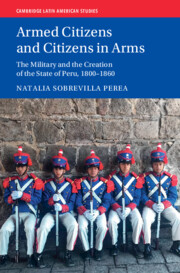
In this book, Natalia Sobrevilla Perea reconstructs the history of the armed forces in nineteenth-century Peru and reveals what it meant to be a member. By centering the experiences of individuals, it demonstrates how the armed forces were an institution that created social provision, including social care for surviving family members, pensions for the elderly, and assistance for the infirm. Colonial militias transitioned into professional armies during the wars of independence to become the institution underpinning and sustaining the organization of the republic. To understand the emergence and weaknesses of nineteenth-century Peru, it is imperative to interrogate how men of the sword dominated post-independence politics.
In States Against Nations, Nicholas Kuipers questions the virtues of meritocratic recruitment as the ideal method of bureaucratic selection. Kuipers argues that while civil service reform is often seen as an admirable act of state-building, it can actually undermine nation-building. Throughout the book, he shows that in countries with high levels of group-based inequality, privileged groups tend to outperform marginalized groups on entrance exams, leading to disproportionate representation in government positions. This dynamic exacerbates intergroup tensions and undermines efforts towards nation-building. Drawing on large-scale surveys, experiments, and archival documents, States Against Nations provides a thought-provoking perspective on the challenges of bureaucratic recruitment and unearths an overlooked tension between state- and nation-building.
Situated at the intersection of language rights, nation-building processes, and security issues, this article analyzes language policies in Ukraine in the three decades since its independence (1991–2021). It traces the legal evolution and decisions of the Ukrainian Constitutional Court, identifying the specific ideological approaches towards language issues that emerge in such a development. We distinguish four periods in the evolution of Ukrainian laws, highlighting how these stages reflect specific ontological and societal (in)securities and related securitization processes, and their intersection with the process of nation-building and the role assigned to the Ukrainian language in such a process. In this way, the article discusses how, in light of the Soviet legacy and Russian kin-state activism and geopolitical agenda, Ukraine has moved to adopt a more assertive nationalizing approach to language issues that aim at promoting Ukrainian as the state language. Russia’s aggressive actions accelerated the ongoing nation-building process, interplaying with the relevance assigned to the Ukrainian language for the Ukrainian nation-state as well as the country’s ontological and societal (in)securities. In this way, our contribution complements our understanding of language policies, bringing to light the connections of their evolution and variations with how security concerns affect nation-building processes.
What is the definition of both the state and the nation? How did these two concepts emerge – and what explains their comparative advantage in supplanting alternative forms of political organization and identity? This chapter critically reviews the scholarly literature on these questions, placing a particular emphasis on how the state and the nation are “built,” and arguing that questions of bureaucratic selection constitute the key element of state-building. The chapter concludes by developing a theory about the relationship between rulers’ efforts at state-building and nation-building.
The article explores the interplay between imperialism and ethnonationalism, revealing how these seemingly conflicting ideologies coalesced in Russian political thought. The period of 1989–1994 saw a struggle between civic nationalism, which sought to redefine Russia within its existing borders, and imperialist-nationalist currents that viewed Soviet disintegration as a geopolitical catastrophe. Within this ideological conflict, the “time bomb” metaphor emerged as a potent rhetorical device, encapsulating anxieties about territorial fragmentation and national decline. The study identifies Russian émigré intellectual Gleb Rahr as a key figure in introducing the metaphor, later popularized by figures such as Dmitry Rogozin and Vladimir Putin.
In the late nineteenth century, the orally transmitted Armenian legend about the folk hero David of Sassoun seemed doomed to oblivion when Ottoman Armenian clergyman Karekin Srvandzdiants published a tiny booklet containing the story that he had learned by chance. Srvandzdiants noted that he would be happy if the story could reach twenty people. Decades later, this hitherto little-known folk legend would be read, and its main heroes celebrated by tens of millions of citizens of the Soviet Union. Scores of variants of the epic were collected from all over the newly established Soviet Armenia; some of the most revered Soviet poets and linguists produced a collated text of the epic and translated it into dozens of languages. More importantly, David of Sassoun and other heroes of the epic cycle came to symbolize the newly forged Soviet Armenian national character in a vast totalitarian empire whose guiding ideology was inimical to various aspects of Armenian traditions. In this article, I examine the underlying messages of the epic, discuss how Soviet policies helped the epic captivate a large audience in a short period, and analyze the political calculations and ideological justifications behind the promotion of the epic.
Does the presence of two or more transborder minorities alter the logic of nation-building and affect minority securitization? This article goes beyond the triadic nexus framework commonly applied to minorities caught between their home- and kin-states, proposing a complex lens for analyzing states with multiple ethnic minorities. Titular political elites dealing with multiple minorities assign them to contradictory frames to manage the challenging reality of ethnic demography and regional security. By framing one minority as a “model minority” — trustworthy and law-abiding — and another as a “fifth column” — threatening and disruptive – they accomplish two aims: (1) maintain the dominant status of the titular nation by discrediting minority claims for institutional changes, and (2) legitimize the differential treatment of minorities. Ethnic minorities’ responses to these frames vary from relative acquiescence to violent conflict. I explore why the initially excluded Poles have been recently accommodated in Lithuania, why the marginalized Uzbeks became targets of repression in the Kyrgyz Republic, and why the relatively accommodated Russian speakers, former colonizers, became framed as a security threat in Lithuania but not in the Kyrgyz Republic after the Russian invasion of Ukraine. Understanding how strategic framing advances nation-building offers generalizable insights on (de)securitization of ethnicity.
Russian nation-building policy has often been described as ambiguous, blending a rhetorical commitment to the state’s multinational character together with more exclusionary rhetoric and policies. Drawing from original survey questions on national identity commissioned in December 2022, I find that Russian citizens continue to endorse a multinational vision of the Russian state during wartime. Respondents are simultaneously likely to exclude minorities from being fully considered as “true Rossians” [istinnye rossiiane], while socioeconomic and political factors are meaningfully associated with these patterns. In line with previous scholarship, these findings underscore the blurriness of the russkii/rossiiskii distinction in practice: just as russkii should not always be interpreted as an exclusively ethnic term, rossiiskii should not be seen as a non-ethnic category, either. The findings in the Russian case carry implications for understanding how nation-builders in multiethnic contexts may seek to cater to ethnic majorities while simultaneously signaling commitments to ethnic diversity.
The one hundredth anniversary of the Great War is prompting a renewed effort at both the popular and academic levels to ensure that the different units and countries involved are not forgotten. While not supplying combat troops, China entered the First World War on the side of the Allies, furnishing much-needed labourers, 140,000 by conservative estimates and possibly more, who played an essential role on the Western Front and other theatres, taking responsibility for a wide range of tasks. Among others, unloading military supplies and handling ammunitions, building barracks and other military facilities, digging trenches, and even agriculture and forest management. While their essential contribution was recognized in British documents, both Paris and London saw them as a temporary expedient, to be ended as soon as the war was over. Furthermore, their deployment gave rise to all sorts of culture and language clashes, in addition to the dangers of travelling to Europe and surviving in close proximity to the battle field. However, beyond these travails, the Chinese Labour Corps left a significant legacy, with members seeing the world, experiencing other nations, and often becoming literate. More widely, despite being on the winning side, China's failure to secure any gains at Versailles prompted the May 4th Movement and can be seen as a key juncture in the long and winding road from empire to nation-state. It is an important reminder of the global nature of the Great War, whose impact extended far from the battle field to all corners of the world.
In 2022, the Centre for Global South Asia (CGSA) at Royal Holloway University of London developed a small research project entitled ‘Exhibit Asia’. The aim was to explore the use of exhibitions in nation-making in postcolonial South and East Asia in contrast to the scholarly preoccupation with investigating the region’s history of museums and exhibitions primarily in a colonial context. Its academic outcomes were to be a conference and related publication; but we also wanted our research to be relevant to our students. The resulting intervention in the teaching and learning of history took the form of a curatorial fellowship for an international cohort of ten students from Taiwan, Japan, India, Pakistan and the UK, leading to a co-curated online exhibition. The first section of this article sets out the development, design and delivery of the fellowship and discusses the viability and relevance of such projects. The subsequent three sections are co-authored by several of the participating students. They outline their methods, reflections and learnings; share their insights on the role of exhibitions in perceptions of Asia in the UK today; and analyse responses to ‘Tea and Tigers’, the online exhibition that was the outcome of the fellowship.
This article describes the research on the nationalization of peasantry in Poland by the Polish sociologist Józef Chałasiński (1904–1979). He realized that the ethnicity and nation in Poland were formed with the exclusion of peasants marginalized by privileged classes. The idea of a nation was used to ensure class domination over peasants; their inclusion in the nation was tantamount to the abandonment of the peasant culture and rural lifestyle. Chałasiński described the emergence of a modern Polish nation through the popularization of the elite culture, which led to the gradual disappearance of the peasant class in Poland.
This paper analyses the period following the annexation of Veneto to the Kingdom of Italy in 1866 from the standpoint of forest history. Recent historiography has demonstrated that the development of scientific forestry was a crucial factor in the state-building process. Post-unification Veneto provides an opportunity to explore these dynamics from a decentralised perspective, focusing on two critical aspects, relevant in Italy as in many other countries at that time: (a) the administration's attempts to study and manage forest resources, and (b) the forest conflicts arising from economic and institutional transformations in rural areas.
Nineteenth and twentieth-century West African writer-intellectuals harnessed their Atlantic networks to explore ideas of race, regeneration, and nation-building. Yet, the ultimately cosmopolitan nature of these political and intellectual pursuits has been overlooked by dominant narratives of anti-colonial history. In contrast, Cosmopolitan Nationalism in Ghana uses cosmopolitanism as a primary theoretical tool, interrogating the anti-colonial writings that prop up Ghana's nationalist history under a new light. Mary A. Seiwaa Owusu highlights the limitations of accepted labels of nationalist scholarship and confirms that these writer-intellectuals instead engaged with ideas around the globe. This study offers a more complex account of the nation-building project, arguing for the pivotal role of other groups and factors in addition to Kwame Nkrumah's leadership. In turn, it proposes a historical account which assumes a cosmopolitan setting, highlights the centrality of debate, and opens a vista for richer understandings of Ghanaians' longstanding questions about thriving in the world.
This chapter traces the shadow that ancient Greek epic, and the Homeric poems most particularly, have cast over the modern nations of Greece and Turkey, using case studies with a specific focus on how the epics came to figure in the nation-building work of both countries. Greece presents a unique case for the reception of these poems for two related reasons: Homeric Greek can be integrated into modern Greek literature without transl(iter)ation, and a long-standing national discourse casts the Greek heroes of the Iliad and Odyssey as the ancestors of Greeks living today. On the other hand, Turkey, whose borders encompass the ancient site of Troy, made different use of the Homeric tradition. During the self-conscious process of Westernisation in the twenty-first century, the Homeric poems were among the first great works of ‘Western’ – not Greek – literature to be translated by translators working in the employ of the state. Hanink uses these contrasting studies of the national receptions of ancient epic in the ‘Homeric lands’ to point to the range of ways that Homeric poetry has been invoked in modern nation-building projects.