To save content items to your account,
please confirm that you agree to abide by our usage policies.
If this is the first time you use this feature, you will be asked to authorise Cambridge Core to connect with your account.
Find out more about saving content to .
To save content items to your Kindle, first ensure no-reply@cambridge.org
is added to your Approved Personal Document E-mail List under your Personal Document Settings
on the Manage Your Content and Devices page of your Amazon account. Then enter the ‘name’ part
of your Kindle email address below.
Find out more about saving to your Kindle.
Note you can select to save to either the @free.kindle.com or @kindle.com variations.
‘@free.kindle.com’ emails are free but can only be saved to your device when it is connected to wi-fi.
‘@kindle.com’ emails can be delivered even when you are not connected to wi-fi, but note that service fees apply.
This chapter examines the financing of ISIS and how the United States and the international community were able to thwart ISIS’s access to finance through a combination of methods, including the use of sanctions, the prosecutions of foreign terrorist fighters, and an aggressive bombing campaign.
This chapter examines cases where cryptocurrency has been used by terrorist actors. At the same time, the chapter also examines the important role played by the private sector in ensuring that virtual assets are not misused. The chapter also takes a peek at the role of government regulation in the industry and where the private sector has concerns regarding an overly interventionist approach that could stifle a new technology.
This chapter examines the roles played by the FATF and the UN in countering terrorist access to finance. The chapter also notes the role played by the G-7 (G-8), OAS, and the ASEAN Regional Forum. Among the issues discussed in detail are sanctions, capacity building, and the importance of FATF’s recommendations that are a feature of government efforts to counter terrorist financing and money laundering.
Chapter 7 is an examination of the ways in which religion is still being used to facilitate slavery. We describe the use and justification of slavery by ISIS, trokosi slavery in West Africa, and deuki and devadasi slavery in Nepal and India. Next, we show how the caste system in India and Buddhist conceptions of karma are implicated in modern slavery. After briefly discussing child marriage, we close with an analysis of how religion is a driver of enslavement today.
Multiple terrorist attacks on cultural heritage since 2001 have drawn heritage into international security politics, reframing it from a Law of Armed Conflict issue to one of hybrid warfare. This exploratory study uses semi-structured interviews with 51 practitioners from two community groups to examine perspectives on terrorism and heritage, testing assumptions in the literature against protection practices. Findings reveal that credible, dynamic threat data is scarce, leading to reliance on historic event data to extrapolate future risks. The article proposes a new multi-layered cultural intelligence framework for more critical threat assessments and argues that concerns over religiously motivated terrorist attacks may be overstated, suggesting a shift toward considering political and ideological drivers within unconventional warfare.
In the region of Cyrenaica is located the rural sanctuary of Martuba, where two altars and a set of statues have been discovered that have traditionally been linked to the goddess Isis. However, through a comparison with other elements belonging both to the region and to Numidian and Phoenician-Punic areas, as well as Egypt, this paper defends their identification not with the Egyptian divinity, but with the one with which a process of hybridisation or religious bricolage took place at some point prior to Herodotus, the puissance divine called for convenience ‘Luna’ (Moon). This suggests the presence of two intertwined cultural traditions that have contributed to the formation of an innovative and distinct local reality. The resultant cultural artefact is characterised by a synthesis of influences from dominant cultures, such as Roman and Egyptian, while retaining distinctive elements that are unique to the Libyan-Phoenician tradition.
This chapter considers the overlaps and divergences between cults and terrorist movements. It begins by considering whether terrorism has entered a new era that increasingly overlaps with apocalyptic religious cults. It then takes into account the historical tension between defining groups that engage in extremist violence for ideological purposes as terrorist groups, as cults, or as a combination of the two. Following this, an analysis of the Islamic State of Iraq and Syria provides a vehicle for drawing out the commonalities and dissimilarities between the two concepts. Finally, the chapter concludes by considering any need to differentiate between terrorism and cults when engaging in risk assessment for individuals at risk of violence, along with strategies for intervention.
This chapter offers three case studies to illustrate the main theoretical claim of this book. The rise of ISIS was animated by a narrative of historical humiliation of Sunnis by “apostates.” This narrative featured key elements of our account of humiliation in international affairs – from dismissal of past promises to contempt towards cultural and geographical realities. Russia’s foreign policy in the last two decades is also deeply tied with a sense of national humiliation, both reflected and manufactured by Vladimir Putin, according to which Russia has been displaced and discarded as a serious world power by the United States and its NATO allies. Finally, we look at the 1973 Middle East war as an example of a conflict fueled by a need to reverse an earlier humiliation. Egypt’s primary aim in this war was to erase or counteract the humiliation it suffered in the 1967 war with Israel. Interestingly, in this case, the officials who negotiated the war’s conclusion took the sentiment’s potency into account as they designed the terms of the ceasefire and armistice.
The conclusion of the book summarizes its main arguments and findings and considers their implications for research on forced migration, conflict, and political violence. Beyond strategic displacement, the book illuminates the politics of civilian movements in wartime, which can shape the perceptions of civilians as well as combatants during and after war. To demonstrate this, the chapter provides evidence of a survey experiment from Iraq that shows how displacement decisions during the ISIS conflict influence people's willingness to accept and live alongside others after war. The chapter also discusses the policy implications of the analysis in five areas: displacement early warning, justice and accountability, humanitarian aid, post-conflict peacebuilding, and refugee resettlement and asylum. It also discusses some of the limitations of the analysis in the book and pathways for future research.
The chapter examines the methodological conundrums of producing knowledge about past traditions through present-day realities, a dilemma we navigate using the “progressive-regressive” method, a term first articulated by Marc Bloch. But beyond the study of the past, the study of the non-Western world poses particular challenges, which we explicate using Joan Cocks’ concept of neo-cosmopolitanism. The Islamic world, while culturally and historically distinct, has always operated within global circuits of economic and political exchange and has shared social imaginaries with the universal civilization of a given time. Where necessary we transcend the limits of three epistemic postures: Enlightenment liberalism, Orientalism, and postmodernism. We examine the status of “science” in the Abbasid world in relation to Ghazālī’s distinction between profane natural knowledge and sacred signs (āyat). Political fragmentation and economic change overlapped with Islam’s encounter with foreign scientific traditions. Ghazālī intervened to differentiate ẓāhir (the apparent) and baṭin (the hidden) as reconcilable components of knowledge, rendering these encounters theoretically coherent.
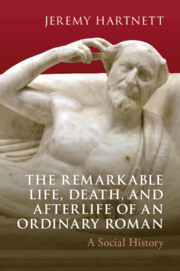
When we think of Romans, Julius Caesar or Constantine might spring to mind. But what was life like for everyday folk, those who gazed up at the palace rather than looking out from within its walls? In this book, Jeremy Hartnett offers a detailed view of an average Roman, an individual named Flavius Agricola. Though Flavius was only a generation or two removed from slavery, his successful life emerges from his careful commemoration in death: a poetic epitaph and life-sized marble portrait showing him reclining at table. This ensemble not only enables Hartnett to reconstruct Flavius' biography, as well as his wife's, but also permits a nuanced exploration of many aspects of Roman life, such as dining, sex, worship of foreign deities, gender, bodily display, cultural literacy, religious experience, blended families, and visiting the dead at their tombs. Teasing provocative questions from this ensemble, Hartnett also recounts the monument's scandalous discovery and extraordinary afterlife over the centuries.
According to Tacitus, Tiberius declared before the Senate that he observed all of the deeds and pronouncements of Augustus as if they were law (Ann. 4.37). This chapter explores the degree to which that statement is true and the consequences of Tiberius’ adherence to Augustan precedents. I begin with an overview of Tiberius’ relationship with the Senate. I then examine the much criticized fiscal policies of Tiberius. Even those were a consequence of his reverence for Augustus and his desire to preserve Augustan precedent. Next, we examine the notion of the pax Augusta under Tiberius. Again, we see that Tiberius was bound by Augustan policy in his failure to expand the empire. Finally, we analyze the persecution of Jews, worshippers of Isis, and astrologers in the reign of Tiberius. These persecutions were prompted not only by Tiberius’ desire to follow Augustus’ precedents but also, more importantly, by attacks on the domus Augusta.
This chapter examines belief in misinformation during the Coalition air war against ISIL in Iraq. In particular, it investigates a unique nationwide survey of contemporary Iraq that measures Iraqis’ factual perceptions about the Coalition airstrikes against ISIL, as well as whether they have lived under ISIL rule where the vast majority of strikes actually occurred. Moreover, this survey is paired with geo-located event data on the Coalition airstrikes themselves obtained from Airwars in order to measure the respondents’ proximity to the events more directly. Overall, the results reveal that Iraqis’ factual misperceptions about Coalition actions are widespread – fueled by both their own preexisting political orientations and streams of information in the dispute – but that civilians with greater personal exposure to the campaign are much less likely to embrace these falsehoods. Indeed, both experience living under ISIL control and proximity to the airstrikes themselves significantly reduce factual misperceptions about the Coalition’s aerial campaign, including false claims about its targeting of Shiʿa Arab-led militias and its strategic benefits to ISIL.
This chapter focuses on a selection of recipes included in Byzantine alchemical and pharmacological compendia that are preserved in manuscripts dating between the fourteenth and the fifteenth centuries: MSS Parisinus gr. 2314, Bononiensis 1808, and Vaticanus gr. 1174. These manuscripts represent important case studies that are compared with similar collections, from late antique medical encyclopaedias to Byzantine alchemical writings and Nicholas Myrepsos’ pharmaceutical handbook. Through an in-depth analysis of the contents and the terminology of these works, I track the transformation of their technical vocabulary, focusing on cross-cultural exchanges between the Byzantine, Arabic, and Latin traditions. Byzantine authors and copyists reshaped and ‘updated’ a long-lasting technical tradition deeply rooted in late antique and early Byzantine writings, which continued to be read and commented on during the Palaiolοgan period, when scholars compiled large selections of formulas and prescriptions belonging to different, yet overlapping fields, such as metallurgy, pharmacology, and cuisine.
Protest in the face of authoritarian rule necessitates a kind of audacity rarely, if ever, called for in daily life. When uprising turns to revolt and revolt to civil war, new questions arise: What comes next? What combination of suffering and joy does the future hold? And to whom should one now turn to manage those matters previously entrusted to the state? Even as new political possibilities arise, the stuff of ordinary life does not disappear but instead must be managed on terms that are both newly expansive and constrained. As people confront the hopes and hardships that come with rebellion, bread must be baked, crimes punished, and garbage collected.
As the Syrian uprising took a violent turn, armed fighters and civilian leaders alike carved out insurgent micropolitical economies across the country’s contested territories. Raqqa City was the first provincial capital to fall from the regime’s control into the hands of opposition forces. The city elected its first opposition council, the Raqqa city council, in early 2014, but the council proved short-lived. By mid-2014, a zealous band of foreign fighters had consolidated control over the city with the aim of establishing a caliphate that would transcend the Westphalian state system and manifest an extreme vision of Islamic rule. These aspiring governors quickly established a monopoly over coercion and availed themselves of a range of capital assets through access to natural resources, looting, and various forms of taxation in the service of their state-building effort. Our close reading of accounts from the city of Raqqa between 2014 and 2016 revealed the corresponding emergence of tight forms of social control as well as the demonstrated capacity to deliver a wide array of key services. In these ways, the so-called Islamic State proved to be a paragon of rebel governance, mobilizing key forms of material power to erect a robust new political order.
When a revolutionary uprising erupted in Syria during the spring of 2011, pockets of local resistance and the nascent institutions therein transformed into clusters of rudimentary participatory politics and service delivery. Despite the collective fatigue induced by the wars in Afghanistan and Iraq, the United States and its allies embarked on an effort to encourage liberal, democratic politics amid the Syrian conflict. As a result, the project of 'good rebel governance' became the latest attempt at Western democracy promotion. This book moves the scholarship on insurgent rule forward by considering how governing authority arises and evolves during violent conflict, and whether particular institutions of insurgent rule can be cultivated through foreign intervention. In so doing, the book theorizes not only about the nature of authoritative rebel governance but also tests the long-standing precepts that have undergirded Western promotion of democracy abroad.
Strategic narratives are employed by political actors as tools to pursue their goals, constructing a shared meaning of the past, present, and future in order to shape behaviour. Building on discourse analysis of the magazine Dabiq and from in-depth, semi-structured interviews conducted between 2018 and 2019 with IS civilian employees and civilians living in IS-controlled territory, we analyse how IS organised its strategic narrative of governance and statebuilding around three main themes considered as central in the statebuilding literature – the provision of security, the provision of basic services, and social cohesion – and how such a strategic narrative was received by citizens living in IS-controlled territory. We argue that the study of strategic narratives of governance and statebuilding casts light on the factors leading to the success or demise of emergent statebuilding efforts, equally demonstrating how IS’s project is quite conventional when compared to other mainstream statebuilding narratives.
This chapter traces the translocal dynamics in the exercise of religion on the Greek island of Delos, one of the eminent hot-spots of global connectivity in the Hellenistic world. Stainhauer argues that the local population, among many foreigners and immigrants, shaped their lived environment through various processes of cultural brokerage: by developing genuinely local cults such as that of Apollo, Zeus, and Athena Kynthios; by introducing new cults, sometimes upon the initiative of individuals or associations from away; and third, by locally appropriating global cults, for instance that of Isis and Serapis. Combining these dimensions, the people on Delos crafted a religious pluriverse that was moulded and tied to the local specificities of their island.