To save content items to your account,
please confirm that you agree to abide by our usage policies.
If this is the first time you use this feature, you will be asked to authorise Cambridge Core to connect with your account.
Find out more about saving content to .
To save content items to your Kindle, first ensure no-reply@cambridge.org
is added to your Approved Personal Document E-mail List under your Personal Document Settings
on the Manage Your Content and Devices page of your Amazon account. Then enter the ‘name’ part
of your Kindle email address below.
Find out more about saving to your Kindle.
Note you can select to save to either the @free.kindle.com or @kindle.com variations.
‘@free.kindle.com’ emails are free but can only be saved to your device when it is connected to wi-fi.
‘@kindle.com’ emails can be delivered even when you are not connected to wi-fi, but note that service fees apply.
The Covid-19 epidemic came at a sensitive time for Russia’s leadership, which was attempting a political reset and structural reforms, including the removal of President Putin’s presidential term limits. This article examines how issues related to the pandemic provided new opportunities for the systemic opposition, the Communist Party of the Russian Federation, who emerged as the main beneficiaries after capitalising on opportunities created by the epidemic. The underappreciated role of systemic opposition parties in electoral authoritarian systems, which balance “voice” and “loyalty” to benefit both themselves and the regime, is examined in the context of the Covid-19 crisis.
Chapter 9 uses both original survey data from Cameroon and cross-national data from the Afrobarometer to provide evidence for the argument that political geography affects nonpartisan and cross-partisan political beliefs. It first demonstrates that people in different party strongholds describe themselves using categorically different kinds of adjectives, reflecting localized understandings of citizenship shaped by political geography. It then turns to the importance of understanding the effect of political geography on public opinion more broadly: Using Afrobarometer data from five different electoral autocracies, it reveals not only that public opinion is systematically different between party strongholds, even controlling for partisanship, but that even the beliefs of ruling party partisans change depending upon where they live. Finally, using Afrobarometer data from Uganda and Ghana, the chapter shows, first, that the development of party strongholds is not endogenous to preexisting political beliefs, and, second, that these patterns are, indeed, unique to electoral autocracies and do not hold in a democratic context.
In many authoritarian regimes, multiparty elections are held in which the opposition can potentially defeat the incumbent. How do ordinary citizens perceive the integrity of elections in such regime environments? We argue that government supporters adopt the incumbent’s narrative to consider elections fair and legitimate. By contrast, opposition supporters regard elections in such systems as biased and not meaningful. We provide evidence from large cross-country public opinion data and the unexpected 2018 Turkish snap election announcement to examine long- and short-term patterns of perceived electoral integrity. We find that the partisan gap in perceived electoral integrity is more substantial under electoral authoritarianism than under democratic rule. The partisan gap grows in autocratizing political systems, and these perceptions are mostly stable in the short term, even at times of radically increased salience of electoral competition. Our study yields implications for the dynamics between elites and citizens in autocracies in which elections remain a critical source of regime legitimacy.
Many opposition parties in electoral-authoritarian regimes identify as democracy movements. I ask: what ideologies do they publicly express? The first-glance answer is ‘democratic ones’, but there are many theories of liberal democracy, and they say little about living under or indeed confronting authoritarian regimes. I analyse the public messages of two such democracy movements: Chadema (Tanzania) and the Citizens Coalition for Change (CCC, in Zimbabwe). I argue that they each articulate a homegrown vision of democracy in which they adapt democratic theory to make sense of their electoral-authoritarian circumstances. They do so by articulating that theory through the ‘populist logic’ conceptualized in the discourse-theoretic perspective. I call them anti-authoritarian (and democratic) populisms. Previous research has overlooked the distinctiveness of these ideologies because it has adopted concept configurations which invisibilize them. I argue that there are reasons to expect there to be a wider body of anti-authoritarian populisms articulated by democracy movements in electoral-authoritarian regimes in Africa, and indeed, worldwide.
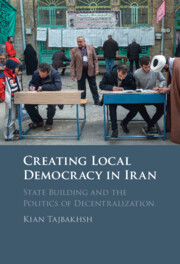
In 1999, the Islamic Republic of Iran established elected local government by holding nationwide elections for city and village councils. Competing actors hoped it would support distinct outcomes: Islamization, administrative efficiency, and democratization. This chapter describes the underlying logic of these motivations and their outcomes over the two decades since: in the main, the triumph of Islamization and technocracy. It explores the regime’s use of local government and administrative law to undercut the democratizing potential of political decentralization through two arenas of local politics. The regime controlled the scope of local political participation through widespread disqualification of opposition individuals and political parties. The regime also severely restricted the autonomy of elected local government in passing legislation. This institutionalized elected local government as a subordinate administrative tier of the regime rather than a local partner in subnational governance. The chapter concludes that political decentralization in Iran is best interpreted through the theory of electoral authoritarianism and is best viewed historically as an integral part of building Iran’s authoritarian Islamic state.
Chapter 10 situates the findings of the book in the main lines of literature on Iran state-building: state centralization and its contradictions; authoritarian persistence; social welfare compact between state and citizens; and the challenges of democratization. The chapter also assesses the implications of the Iran experience for conventional expectations of the democracy-decentralization nexus. The chapter explains why the main lines of literature on modern Iranian state-building fail to explain what motivated the IRI to adopt political decentralization or to explain the timing when it finally did so. Nor does this scholarship distinguish the two dimensions of centralization emphasized in this book. Moreover, scholarship on Iranian state-building has thus far not engaged with the theory of electoral authoritarianism; my findings give strong support to this theory, which explains how the regime effectively deploys local electoral politics to enhance its dominance. Electoral authoritarianism moreover explains how the two forms of state power – the despotic and infrastructural – can be combined in the management of subnational divisions of the nation’s territory. Finally, the findings of the book undermine the claim, associated with writers such as Mahmoud Taleghani or Alexis de Tocqueville, that there is an necessary and causal relationship between decentralization and democratization. The book shows how political and electoral decentralization can be compatible with authoritarian state-building.
Empirically rich and theoretically informed, this book is an innovative analysis of political decentralization under the Islamic Republic of Iran. Drawing upon Kian Tajbakhsh's twenty years of experience working with and researching local government in Iran, it uses original data and insights to explain how local government operates in towns and cities as a form of electoral authoritarianism. With a combination of historical, political, and financial field research, it explores the multifaceted dimensions of local power and how various ideologically opposed actors shaped local government as an integral component of authoritarian state building. Ultimately, this book demonstrates how local government serves to undermine democratization and consolidate the Islamist regime. As Iran's cities and towns grow and develop, their significance will only increase, and this study is vital to understanding their politics, administration and influence.
Since the end of its absolute monarchy in 1932, Thailand has been variously described as a “hybrid regime,” “flawed democracy,” and “failed democracy.” Furthermore, its governance system has been identified as “electoral authoritarianism,” ‘hybrid authoritarianism,” “military domination,” and “Thai-style democracy.” Regardless of the analytic lens applied, the history of Thai politics has involved a continuing struggle for control of government between both authoritarian and democratic forces. Following the 2014 military coup d’état, the first election held in 2019 saw the 2014 military coup leader, General Prayuth Chan-o-cha, elected as prime minister. This article assesses the conduct and results of the 2019 election in terms of the general discourse on electoral authoritarianism and as an emerging framing of authoritarian regimes particularly applicable to Southeast Asia—the rise of “sophisticated authoritarianism.” This approach distills and integrates the discourse on electoral authoritarianism to produce a typology that is useful for considering the empirical characteristics of Southeast Asia. The 2019 election offers an opportunity to consider Thailand within this framing and to determine to what extent the military-dominated regime and its holistic manipulation of electoral institutions and processes can be assessed as “sophisticated authoritarianism.” This study demonstrates that Prayuth's election partially demonstrates “sophisticated authoritarianism”; nonetheless, his attempt to depoliticise Thailand and reduce it to a non-political state has met substantial resistance that will likely persist while he remains in power.
Originally dismissed as inherently unstable, transitional polities, electoral autocracies have become the most widespread and resilient form of authoritarianism in the world today. Chapter 1 surveys this phenomenon and its interpretations in the literature. It also introduces the book’s core argument that electoral autocracies have thrived due to their genuine popular appeal in societies plagued by turmoil.
This chapter lays the foundation for what comes next by providing a summary discussion of the electoral history of each country. Intended partly to introduce names, events, dates and institutions that will be reappear in subsequent chapters, it also sets out a central element of our argument: that the history of elections has been shaped by a chronic tension between two alternative registers of virtue: a patrimonial register that revolves around reciprocity and personal relations; and a civic register that exalts bureaucratic order and emphasises the moral claims of national citizenship. The electoral histories shaped by that tension in the three countries may seem to follow different trajectories, yet they share significant features. In all three, electoral politics has continued to revolve around securing access to the resources controlled by ‘the government’; in all three, the same chronic tension persists – between elections as manifestations of civic order, and as sites for an intense local politics of clientelism and redistribution. Finally, all three continue to see high levels of electoral participation that shape political subjectivity. Widely understood as a site for moral claims-making as well as political competition, elections underwrite – albeit in a contingent way - the legitimacy of the state.
What had prevented the KMT regime from stealing more elections during its heydays and facilitate Taiwan’s transition to democracy under the long-existing voting rules? Whereas the existing literature on electoral authoritarianism, democratization, and electoral malpractice views the integrity of election administration in authoritarian states mainly as a function of what the authoritarian rulers do regime-wise, this chapter looks into the rise and fall of vote rigging in Taiwan and argues that two underappreciated voting arrangements – on-site ballot counting and poll worker selection – make much difference to the development of election administration integrity in Taiwan. The ritualized on-site ballot-counting procedure not only empowers vigilant voters to monitor elections, but also encourages a culture that respects the sanctity of votes. And it certainly helps that the polling stations are staffed with conscientious public servants rather than those who answer only to the authoritarian party-state. In this light, the case of Taiwan highlights the roles of institutional design, cultural norms, and street-level bureaucrats in taming and transforming an authoritarian regime with the rule of law.
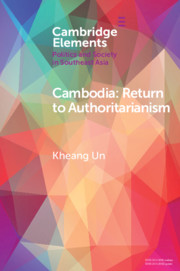
This chapter argues that the democratic transition in Cambodia was a product of external imposition through the 1991 Paris Peace Agreement. The accords authorized the United Nations Transitional Authority in Cambodia in 1992–93 to oversee the democratic transition by organizing multi-party elections and to assist in the drafting of a new liberal democratic constitution. Across the next two decades, Cambodia’s democracy went through a period of electoral authoritarianism and in 2017 plunged into a de facto one-party authoritarianism. These developments derived from Cambodia’s weak state capacity. Cambodia’s entrenched neo-patrimonialism kept the quality of governance low in terms of administrative and extractive capacity but kept coercive capacity against democratic forces strong. As popular demand for deeper democracy and government accountability and responsiveness intensified, the Cambodian People’s Party (CPP) strengthened the state’s capacity by increasing revenue collection, public service provision and the quality of the bureaucracy. However, this reform is unlikely to lead to democratic deepening due to the CPP’s determination to preserve its interests and its ideational inclination to transform Cambodia into a developmental authoritarian state where economic growth takes precedence over liberal democracy.
Drawing data from multiple sources, Un argues that following the 1993 United Nations intervention to promote democracy, the Cambodian People's Party (CPP) perpetuated a patronage state weak in administrative capacity but strong in coercive capacity. This enabled them to maintain the presence of electoral authoritarianism, but increased political awareness among the public, the rise in political activism among community-based organizations and a united opposition led to the emergence of a counter-movement. Sensing that this counter-movement might be unstoppable, the CPP has returned Cambodia to authoritarianism, a move made possible in part by China's pivot to Cambodia.
Why do autocrats hold multiparty elections? This article argues that transitions to electoral authoritarianism (EA) follow a strategic calculus in which autocrats balance international incentives to adopt elections against the costs and risks of controlling them. It tests this hypothesis with a multinomial logit model that simultaneously predicts transitions to EA and democracy, using a sample of non-electoral autocracies from 1946–2010. It finds that pro-democratic international leverage – captured by dependence on democracies through trade ties, military alliances, international governmental organizations and aid – predicts EA adoption. Socio-economic factors that make voters easier to control, such as low average income and high inequality, also predict EA transition. In contrast, since democratization entails a loss of power for autocrats, it is mainly predicted by regime weakness rather than international engagement or socio-economic factors. The results demonstrate that different forms of liberalization follow distinct logics, providing insight into autocratic regime dynamics and democracy promotion’s unintended effects.
This article investigates the dynamics that gender quota reforms create within and between government and opposition parties in electoral authoritarian dominant-party states. A dominant-party state regularly holds relatively competitive elections, but the political playing field is skewed in favour of the government party. We investigate the circumstances under which gender quotas’ goal of furthering political gender equality within political parties can be reconciled with parties’ electoral concerns. We address these issues by analysing the implementation of reserved seats by the three largest parties in the dominant-party state of Tanzania. The empirical analysis suggests that the uneven playing field leaves an imprint on the specific priorities parties make when implementing candidate selection reforms. Because of large resource gaps between parties, the ruling party, Chama Cha Mapinduzi – (CCM), is able to reconcile gender equality concerns with power-maximizing partisan strategies to a greater extent than the opposition parties.
We analyze and compare three separate efforts to code bias in Malaysia's media and find strong empirical evidence of an ongoing and profound progovernment bias in coverage. We also find, however, significant variation in bias between different types of news outlets. While Malay and Anglophone sources tended to be strongly progovernment, Chinese-language and online outlets were far more impartial. We demonstrate that both the general bias and the variation in it are largely the result of two factors: (1) government censorship and (2) ownership structures that link many major outlets to the ruling coalition. These findings provide a detailed view of the struggle for media independence in a less-than-democratic regime and supply insight into media bias across both authoritarian and democratic regimes in Asia, as well as outside it.
The last part of 20th century saw the collapse of a dramatic number of dictatorships. Rather than democracy, several of these transitions brought regimes where limited political competition coexists with persistently authoritarian practices. The diffusion of this form of authoritarianism in the developing world raises several questions about its broader consequences. Most importantly, does political change short of democratization matter for ordinary citizens? Recent research demonstrates that nominally democratic institutions, even in the absence of people empowerment, can result in better living conditions. The paper adds to this debate by formulating and testing new hypotheses. I compare electoral authoritarianism with democracy and full dictatorship, including specific subtypes of the latter, and focus on both policy outputs and outcomes.