To save content items to your account,
please confirm that you agree to abide by our usage policies.
If this is the first time you use this feature, you will be asked to authorise Cambridge Core to connect with your account.
Find out more about saving content to .
To save content items to your Kindle, first ensure no-reply@cambridge.org
is added to your Approved Personal Document E-mail List under your Personal Document Settings
on the Manage Your Content and Devices page of your Amazon account. Then enter the ‘name’ part
of your Kindle email address below.
Find out more about saving to your Kindle.
Note you can select to save to either the @free.kindle.com or @kindle.com variations.
‘@free.kindle.com’ emails are free but can only be saved to your device when it is connected to wi-fi.
‘@kindle.com’ emails can be delivered even when you are not connected to wi-fi, but note that service fees apply.
Abstract: This chapter argues that the state of nature brings into focus colonial imaginaries of land and identity. It also contends that these colonial imaginaries have come to shape the modern West more broadly.
This conclusion explores whether nostalgia can exist in postcolonial literatures, burdened as they are by traumatic histories of imperial oppression, by examining the St. Lucian poet Derek Walcott’s variation on Homeric epic, Omeros. Is nostalgia no longer relevant when a culture’s past is cut off by violence and the lost homeland cannot be restored? Or can longing for the irrecoverable past be part of a creative response to problematic histories? This inquiry crystalizes a central aim of the project: to show how nostalgia can be a means of reimagining the national past, an inclusive way of expressing commitment to a particular culture.
Abstract: The Conclusion argues that the state of nature remains central to understanding the fractured condition of modern Western thought, particularly in the fields of colonialism, secularism, and ecology. It highlights the continuing relevance of the notion for interpreting the fragmented imaginaries of Western modernity.
This chapter discusses poets of the South West Asian and North African diasporas who have experienced exile and loss, some as refugees. It describes a translingual pluriverse of diasporic poets from a region that has come to have many names and terminologies assigned to it. The chapter reflects on the political and cultural conditions in which diasporic writers produce poetry in Australia, in both spoken and written forms. Themes of witness, protest and identity, often interwoven, are analysed. The chapter considers the presence of poets from Arabic-, Kurdish-, Dari- and Farsi-speaking backgrounds, some of whom write in English while others have translingual practices and experiment with hybrid modes. It assesses the impact of settler monolingualism in Australia and argues for the importance of multilingual poetry in articulating cultural diversity and challenging delimiting discursive systems. The significance of literary journals is also detailed, and the value of poetry in the face of violence, displacement and prejudice is asserted.
This chapter is an overview of the life and work of Oodgeroo Noonuccal (formerly Kath Walker), whose poetry collection We Are Going (1964) was not only the first ever book of poetry by an Aboriginal person but also one of the fastest-selling books in Australian history. It traces her early involvement in civil rights in Queensland, her ongoing activism in Aboriginal struggles, and the power of her poetry to articulate the feelings and lived experiences of the Aboriginal people. It discusses Oodgeroo’s friendship with Judith Wright and her founding of Moongalba, an Aboriginal cultural and education centre on Noonuccal country. The chapter outlines her role in various national Aboriginal and Torres Strait Islander arts organisations and her international connections with Indigenous writers. Lastly, it emphasises Oodgeroo’s lifelong work in foregrounding Aboriginal cultural and political perspectives.
Aerial lidar (light detection and ranging) has been hailed as a revolutionary technology in archaeological survey because it can map vast areas with high-precision and seemingly peer beneath forest cover. This excitement has led to a proliferation of lidar scans, including calls to map the entire land surface of earth. Highlighting how the growth of aerial lidar is tied to fast capitalism, this article seeks to temporarily pause the global rush for data collection/extraction by focusing on the ethical dilemmas of remotely scanning Indigenous homelands and heritage. Although lidar specialists must obtain federal permissions for their work, few engage with people directly in the path of their scans or descendant stakeholders. This oversight perpetuates colonial oppression by objectifying Indigenous descendants. To address Indigenous objectification, I argue that aerial lidar mapping should be preceded by a concerted, culturally sensitive effort to obtain informed consent from local and descendant groups. With the Mensabak Archaeological Project as a case study, I demonstrate how aerial lidar can become part of a collaborative, humanizing praxis.
This chapter examines the “verse politics” of eighteenth-century Asia. It explores how Anglophone authors used epics and ruin poetry to advance imperialism, assess governmental policy, and reimagine the role of India in the British Empire. To demonstrate poetry’s role in politics and imperial policymaking, this chapter focuses on the career of Eyles Irwin, a colonial administrator stationed in Madras during the 1770s and 1780s and one of the earliest authors to publish English poetry while in India. The chapter analyzes his collection of travel poems, the Occasional Epistles (1783), and his lengthy poetic epistle, “The Ruins of Madura, or, the Hindoo Garden” (c. 1785–92), which versifies the holy sites and gardens of an ancient southern Indian city, Madura (Madurai), and the decayed palace of one of its Hindu rulers, Tirumala Nayaka. From these details, and Madura’s ruins, Irwin reanimates a South Indian culture and polity. Epics and ruin poetry reimagined writing about empire not as an attempt at personal fame but as an extension of imperial policy, and in ruin poetry Anglophone authors sought to reconcile the obvious oppression of India with the supposed liberty of Britain’s empire.
This chapter tracks the way the accumulation of capital in the colonial metropole enabled a cross-cultural dialogue among certain poets from the East and the West in London in the 1920s and 1930s, one that gradually diminishes in the postcolonial period. Poetry, in the modernist period, sought to dismantle the binary between authenticity and derivation, a binary which has been given new life in our own moment and has, therefore, blinded us from seeing these poets as participating in a common enterprise, even if it is one beset with many conceptual pitfalls resulting from the colonial relation. Nevertheless, poets as distinct as Rabindranath Tagore, Sarojini Naidu, and Una Marson – and thinkers such as C. L. R. James – wished to construct a universal humanism out of the uneven terrain of imperial modernity, an impulse they shared with such complicated figures as W. B. Yeats and even the violently reactionary Ezra Pound. Ultimately, this unstable humanism gives way to the starker divides of the period of decolonization.
Royal tribute was a tax based on ancestry that linked free people to the colonial government and the Spanish monarch. For families, royal tribute was about more than the immediate pressure of tax payment. Registration as a taxpayer could alter a family’s status, or calidad, for generations. Using tax rolls and case studies of people who resisted registration, this chapter argues that families took varied strategies to try to keep off the tax registers and establish alternative expressions of their loyalty to the Spanish crown. The cases demonstrate the interpersonal, political, and gendered conflicts that arose when individuals with African ancestry resisted the obligation of royal tribute. Officials and bureaucrats denounced the actions of those who confronted agents of the tribute regime. By refusing registration, or discouraging others from complying, men and women prompted officials to reflect on what loyalty from Afro-descendants entailed.
Adam Smith treated the American colonial crisis as a case study that illustrates and further illuminates several of his core arguments in favor of commercial society. This essay examines his use of this case study, focusing on three elements. The first concerns economic policy and institutions, and specifically Smith’s treatment of the colonial crisis as an illustration of the pernicious effects of mercantilism and the beneficial effects of free trade. A second concerns moral theory, and specifically Smith’s treatment of the psychology of the colonial leaders as an illustration of the practical significance of the desire for respect and recognition of their “importance.” A third concerns political theory, and specifically Smith’s treatment of the efforts of the colonists to claim their place among the world’s nations as a key moment in the long transformative process that he believed would in time fundamentally reshape the global order.
What does 'Irish romanticism' mean and when did Ireland become romantic? How does Irish romanticism differ from the literary culture of late eighteenth- and nineteenth-century Britain, and what qualities do they share? Claire Connolly proposes an understanding of romanticism as a temporally and aesthetically distinct period in Irish culture, during which literature flourished in new forms and styles, evidenced in the lives and writings of such authors as Thomas Dermody, Mary Tighe, Maria Edgeworth, Lady Morgan, Thomas Moore, Charles Maturin, John Banim, Gerald Griffin, William Carleton and James Clarence Mangan. Their books were written, sold, circulated and read in Ireland, Britain and America and as such were caught up in the shifting dramas of a changing print culture, itself shaped by asymmetries of language, power and population. Connolly meets that culture on its own terms and charts its history.
Examining the systemic exploitation of mentally ill individuals, this study focuses on the practices of the British colonial administration in Kabba Province, Northern Nigeria (1900–1947). This research investigates how colonial authorities employed biopolitical strategies to categorise, control, and exploit this vulnerable population for labour, prioritising colonial economic and administrative interests. The study utilises a qualitative methodology, primarily analysing archival documents from the National Archives of Nigeria (NAK), Kaduna, and Arewa House Archives (AHA), to uncover the forced labour system’s practices and rationalisations. Crucially, it incorporates oral sources from direct descendants of ethno-medical practitioners, former colonial staff, traditional chiefs, and learned community members. This oral history component provides vital intergenerational knowledge, contextualising archival findings and offering perspectives often absent from official records, ensuring a nuanced understanding of pre-colonial mental health practices and colonial-era lived experiences. Secondary literature on colonial biopower, mental health history, and regional history provides a comparative framework. Findings indicate the colonial administration systematically repurposed traditional care and established new mechanisms to identify, isolate, and compel mentally ill individuals into various forms of forced labour for infrastructure and economic extraction. In conclusion, this research significantly contributes to scholarship on vulnerable populations during colonialism, illuminating the intricate link between mental illness, labour, and power in colonial Nigeria, and informing contemporary debates on mental health, human rights, and historical justice.
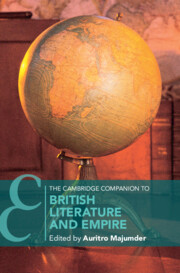
The volume outlines modern British literature's relation to global empire from the 16th century to the present. Spanning the interactions between Britain, Europe, and the world outside, in Asia, Africa, Australasia, North America, and the Caribbean, it suggests the centrality of colonial-capitalist empire and global exchanges in the development of major genres of literary fiction, poetry, drama, and non-fiction. Illuminating the vital role of categories such as race, class, gender, religion, commerce, war, slavery, resistance, and decolonization, the twenty-one chapters of the book chart major aspects of British literature and empire. In rigorous yet accessible prose, an international team of experts provides an updated account of earlier and latest scholarship. Suitable for a general readership and academics in the field, the Companion will aid readers in familiarizing with Britain's imperial past and its continuing relevance for the present.
In the contemporary era, territorial conquest has been seen as illegitimate and has taken place in only limited ways. According to an influential narrative in scholarship and public debate, this “territorial integrity norm” is a product of the post-World War II international order and contrasts with the nineteenth century, when conquest was normalized and “might made right.” This essay argues, however, that nineteenth-century European international law imposed meaningful limitations on conquest, including “territorial inviolability.” These limitations were more effective in the colonized world than in Europe, primarily because national irredentism was not thought relevant outside Europe. Europeans’ denial of non-European sovereignty contrasted with their respect for European-established colonial boundaries, and they did not fight over colonial territory between 1815 and 1914. I demonstrate the strength of this “etiquette of thieves” by examining two events where territorial conflict between colonial powers was narrowly avoided: the Panjdeh (1885) and Fashoda (1898) incidents. Viewing territorial integrity as qualitatively changing, rather than absent at one time and present later, has important implications for discussions of how recent conquests, such as those of Russia in Ukraine, will affect the principle of territorial integrity. In particular, territorial integrity may be more likely to be altered in how it is applied than eroded altogether. A specific form of territorial integrity is an integral part of the post-World War II international order, but constraints on conquest as such need not be limited to that specific version of territorial integrity.
Siam, now known as Thailand, was never colonized by Western powers. Despite the nineteenth-century expansions of the British to its west and south and the French to its east, Siam managed to survive as a country until the end of the colonial era. How did Siam evade colonial rules? More specifically, why did the British and the French choose a policy of restraint over Siam, while not doing the same for others? This chapter argues that Siam’s survival was due to a combination of its geographical location and strategic political and economic reforms. Siam’s central location provided the crucial advantage of time, allowing it to prepare for encounters with Western powers. Additionally, through successful reforms, Siam strengthened its political and economic systems, eliminating any potential threat to Western interests and removing the pretext for colonization.
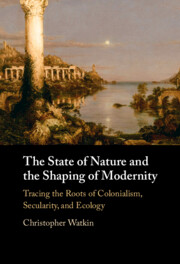
The state of nature is a powerful idea at the heart of the fragmented and sometimes conflicting stories the modern West tells about itself. It also makes sense of foundational Western commitments to equality and accumulation, freedom and property, universality and the individual. By exploring the social and cultural imaginaries that emerge from the distinct and often contradictory accounts of the state of nature in the writing of Hobbes, Locke and Rousseau, The State of Nature and the Shaping of Modernity offers a fresh perspective on some of the most pressing debates of our time, showing how the state of nature idea provides a powerful lens through which to focus the complex forces shaping today's political and cultural landscape. It also explores how ideas about human nature and origins drive today's debates about colonialism, secularism, and the environment, and how they can shed new light on some of society's most heated debates.
The history of legal aid in South Asia has hitherto been restricted to appendages or short overviews in writings orientated towards its contemporary. This article offers the first archivally grounded study of the birth of the legal aid movement in early twentieth-century colonial India, focusing specifically on the Bombay Legal Aid Society. It pursues three major lines of inquiry. First, I consider the transnational intellectual networks between India and America upon which early Indian legal aid thinking developed. Second, I tackle the fraught politics of doing legal aid in interwar Bombay, a period marked by anticolonial nationalism and strong trade union organizing. Finally, the article examines why the BLAS succeeded in building strong working relationships with existing social welfare societies, state institutions, and like-minded legal professionals, but failed to garner considerable interest from the working classes it sought to serve. I argue that these struggles point to the hard limits of legal aid in the colony but also present a valuable window into the Bombay working classes’ legal consciousness. The article thus contributes to ongoing efforts at globalizing the history of legal aid and to the small but growing study of the legal profession in colonial South Asia.
This introductory chapter begins by considering two general features of the politics of territory in modernity: the expectation that borders should be precisely defined as lines, and the central role of colonial legacies. The book centres on the relation between these two features. Four narratives about the global history of borders that the book seeks to engage with and modify are elaborated: first, colonial-inherited borders are generally remarkable for their vagueness; second, linear borders are originally and most properly a practice of sovereign states or nation-states; third, lines on maps determine politics; and fourth, linear borders were first practiced in Europe, then exported to the rest of the world through colonialism. The chapter outlines the argument and the rest of the book. At its most general level, the argument is that modern borders are distinct not because they express sovereignty but because of certain technical, apolitical practices.
In many parts of Africa, the mass production of printed texts began with Christian missions. Missionaries’ descriptions of African languages and their compilation of dictionaries were essential for the emergence of print cultures. However, missionary linguistics mirrored missionary politics. Two Protestant missionaries in Central Africa, one in Congo and the other in Malawi, differed in their views on both African languages and the European presence in Africa. Where Walter Henry Stapleton’s dictionary took an interest in colonial rule, David Clement Scott advanced dialogue in a radical vision for race relations. Both worked with widely spoken language forms, but the missionaries were driven by disparate motivations. Between them, the two dictionaries indicate considerable variation in the nineteenth-century missionary contributions to African print cultures. They, and the missionaries who compiled them, convey sharply divergent visions for African languages as contributions to human knowledge and imagination.
This brief paper aims to consider the impact of Israel’s settler-colonial measures on workers in the West Bank of the occupied Palestinian territories (oPt) after October 2023. Although the ongoing war has been waged on the Gaza Strip, with devastating repercussions for lives and livelihoods in the Strip, Israeli colonial measures in the West Bank have had a grave impact on all segments of Palestinian society, including workers. These measures include: First; closure of the Israeli labor market in the face of tens of thousands of Palestinian workers. Second, broadening the system of movement restrictions within the West Bank which led to disruptions in local production and trade thus damaging private sector operations. Third; Israel’s continued withholding of Palestinian custom duty revenues with adverse impacts on workers in general but particularly public sector workers. To assess the impact of these measures, the paper utilizes a number of indices to assess the situation of these workers; including labor supply, unemployment, wage levels, distribution across sectors, informality, and workers’ rights. The paper finds a grave deterioration in the situation of workers in the labor market at all levels, with dire repercussions for workers and their families.