To save content items to your account,
please confirm that you agree to abide by our usage policies.
If this is the first time you use this feature, you will be asked to authorise Cambridge Core to connect with your account.
Find out more about saving content to .
To save content items to your Kindle, first ensure no-reply@cambridge.org
is added to your Approved Personal Document E-mail List under your Personal Document Settings
on the Manage Your Content and Devices page of your Amazon account. Then enter the ‘name’ part
of your Kindle email address below.
Find out more about saving to your Kindle.
Note you can select to save to either the @free.kindle.com or @kindle.com variations.
‘@free.kindle.com’ emails are free but can only be saved to your device when it is connected to wi-fi.
‘@kindle.com’ emails can be delivered even when you are not connected to wi-fi, but note that service fees apply.
In this chapter we discuss the case of the Russian unicorn Yandex, also known as the ‘Russian Google’. The company has become one of the largest information technology (IT) champions in Russia over the years and seemed to be unaffected by government, political interests and geopolitical tensions. In 2022, after the military conflict with Ukraine triggered severe economic sanctions on Russia, the company experienced political pressures both from the sanctioning countries and its home country government. We analyse the journey of Yandex, which started as a national IT unicorn, and shed light on its transformation into a state-affiliated enterprise in a dynamic situation of geopolitical reshuffling.
This article investigates the impact of electoral reforms on entry barriers in political markets. The discussion starts by delineating the theoretical boundaries of various political markets, such as those for participation, parties and government. By taking a cue from industrial organisation theory, the article offers an analysis of entry barriers, both hard and soft, along with their operationalisation for empirical research. Based on this theoretical framework, a single hypothesis is investigated. It posits that the modification of the entry barriers in the market for parties leads to changes in the concentration of the popular vote for party lists. An observable implication of this relationship would be if an electoral reform that raises entry barriers led to subsequent increases in the Herfindahl index (a measure of market concentration), and vice versa. This proposition is empirically tested by a comparative analysis of a new database covering Czechia, Hungary, Poland and Slovakia. The analysis offers support for the following proposition: in most cases the changes in the entry barriers led to a corresponding change of concentration in the market for parties.
This brief article introduces the Special Issue “Unlikely Partners? Evolving Government-Nonprofit Relationships, East and West”, which calls attention to a growing pattern of “nonprofitization” of the welfare state in countries stretching from Western Europe, through Central Europe and Russia, and into Central Asia and the Far East to determine what lessons they might hold for the Russian experience and for the evolution of the modern welfare state more generally.
This article offers a new empirical perspective on the state of Comparative Politics (CP) in Central and Eastern Europe (CEE). We present findings on the authors, methods, and epistemology of CP publications in the most relevant journals from eleven countries in the region. The major finding is that CP is rather marginal in CEE Political Science. Furthermore, CP articles predominantly focus on the authors’ country of origin, use off-the-shelf data, apply mostly qualitative data analysis techniques, and rarely take a historical perspective.
The article discusses some of the paradoxes of minority accommodation in Eastern Europe 30 years after the fall of the Berlin Wall. In the course of doing so, it focuses on four specific issues: volatility, sequencing, a shift from nationalism (group) to social conservatism (grid), and on the radicalisation of mainstream parties. Volatility is tied to the ebb and flow of shifts in the status quo associated with minority accommodation, which elucidates both why radical right mobilisation accelerates and why it loses steam. The expansion of minority rights leads to political ‘extreme reactions’. Sequencing matters since minority accommodation coincided with democratisation in Eastern Europe, so the struggle over minority rights is confounded with a concurrent regime change. Shifts from group to grid refer to the recent rise in socially conservative issues as sources of polarisation. Finally, extremist parties can threaten democratic pluralism. Nevertheless, large radicalised mainstream parties that control parliaments, not small extremist parties, subvert the institutions of democratic oversight. The threat originates from the mainstream and is exacerbated by the fact that liberal democracy has not ‘locked in’ in most of Eastern Europe.
This article introduces the Debate on editing and publishing (in) Political Science and International Relations journals in Central and Eastern Europe (CEE). The Debate brings together editors of PoliSci and IR journals published in four CEE countries to examine the practice of publishing (in) these disciplines and explore the diverse strategies journals, and their editors employ to navigate the semiperipheral context of CEE. Going beyond structuralist accounts of semiperipheral inferiority, we introduce CEE journals as institutions endowed with agency, self-reflection and responsibility towards their academic communities. The Debate discusses if and in which sense these journals try to become (limited) innovators, how they are bound by different conditions stemming from the national or regional contexts, how they work with or challenge them and which opportunities they exploit to advance their goals.
This article discusses the integration of scholars from Central and Eastern Europe (CEE) into the broader field of European political science. Evaluating data from 2000 to 2020, we ask whether CEE scholars managed to “close the gap” stemming from the initially underdeveloped state of post-communist political science. We contend that the results are rather mixed: CEE scholars have been increasingly present, yet achieved only very limited access to the top levels and mostly remain in a position of dependency. Using the case of Czechia, we discuss the factors that have likely contributed to the perpetuation of this state of integration with limited convergence.
This research aims to develop a deeper insight into the development of political science from the bibliometric perspective by analysing peer-reviewed journal articles (n = 1117) indexed in the Scopus database and published by authors from fifteen Central and Eastern European (CEE) countries in the period 1996–2013. Results indicate that the majority of articles (84%) by CEE authors have been published in international journals and in the English language. The visibility of these articles in international journals, measured by the mean number of citations, is 5.2 per paper, while the same indicator for CEE journal articles amounts to 0.2. Authorship analysis indicates a gradual but continuous increase in co-authorships. Additionally, there are significant differences in citations between single-authored and co-authored articles, both in international and CEE journals. Co-authorship among CEE authors is present in only 1% of the analysed articles, confirming weak collaboration between political scientists in CEE countries.
This research note addresses issues, concerns, and opportunities for teachers and researchers of the third sector in Central and Eastern Europe, drawing on experiences in Bulgaria, Croatia, Estonia, and Hungary. The paper briefly outlines the development of the third sector in the aforementioned countries, and describes the current state of third sector teaching and research there. It then frames the challenges for the region’s teachers and researchers, and proposes an appropriate role for the West, commenting upon the West’s relevance within Central and Eastern Europe.
Despite the ever growing body of scholarly work on policy developments in the post‐communist New Member States of the European Union (NMS), systematic comparisons of policy outcome performance and its determinants are still scarce. This article identifies patterns of post‐communist policy outcomes across the fields of economic, social and environmental policy. By employing pooled time‐series cross‐sectional analysis with a Fixed Effects Vector Decomposition (FEVD) estimator it investigates to what extent policy outcome performance is determined by differing policy efforts (outputs or reform tracks), transitional conditions and international influences. Although citizens are still negatively affected by the initial economic recession, especially in the social domain, policy reforms and efforts are decisive in determining the outcome performance of the NMS relative to one another in the longer run. Successful and comprehensive market reforms and steering capabilities prove to be particularly important in this regard. Furthermore, internationalisation has an important, albeit ambiguous, impact. While exposure to the world market is reflected in negative policy performance, interaction with and financial commitment from Western European Union countries promote positive policy outcomes.
Romanian Political Science was institutionalized mostly after the fall of the communist regime. While the number of Political Science departments has declined after the 2000s, the number of journals continued to increase. We investigate this unusual pattern, focusing on the journals’ relationship with their home universities and editorial teams, and on their reaction to the opening of Romanian Political Science to the outside world. In a context characterized by low competition, lack of resources, and the absence of functioning professional associations and national conferences, the journals failed to cut across departmental boundaries and evolve into a national platform for scientific publishing. Changes in national academic standards also brought them into direct competition with international journals. Although, through internationalization, standards of scientific publishing have improved, the landscape of Romanian Political Science journals remains semiperipheral, and the national community continues to be fragmented and tribal.
This article proposes a mixed-methods measurement of the mass-elite congruence of opinions on the EU based on a combination of speech and survey data. It focuses on two countries (Bulgaria and Romania) that were known for their pro-European profile until their EU accession, but which faced many political difficulties afterwards. The analysis covers the 2013–2017 period that includes a great deal of these post-accession difficulties. The article illustrates how we can make meaningful comparisons between short-term, dichotomous mass, and elite attitudes with timeframes determined by non-electoral events.
The paper discusses the Polish Political Science Review as a case study of a semiperipheral scientific journal focused on political science and international relations and published by the University of Wrocław. The objective is to present the strategies adopted by the journal’s editors in a twofold context, which is critical for the journal: the international rankings and the national system of journal assessment in Poland. The paper discusses how the journal has to navigate the intersections of the requirements posed by the two systems as well as reasons why both are important. The Polish Political Science Review faces challenges typical for semiperipheral journals, building its recognisability and position on the Polish and international markets. While ensuring the high-standard quality of manuscripts is the mainstay of a journal’s strategy, functioning within the inconsistent and sometimes unpredictable environment requires a combination of internationalisation with strong local rooting.
To many citizens in post-communist states European Union (EU) membership represented a historical–civilisational choice: an end to the Cold War division of Europe and symbolic reuniting of Eastern Europe with a ‘West’ that they had always considered themselves to be part of culturally and spiritually. In fact, in spite of its multiple crises, there continued to be high levels of support for EU membership and ‘Hard’ rejectionist Eurosceptic discourses were confined to the margins of politics. However, the increasing sense of East European cultural distinctiveness, highlighted by the post-communist states’ responses to the European migration crisis, meant that pro-EU discourses were less romantic and more instrumental, driven increasingly by a cost–benefit analysis based on an evaluation of the tangible material benefits that the Union was felt to deliver.
Internationalisation among European political scientists is not uniform and while research emphasises variations between Western and Eastern Europe, we known less about the contrasting patterns of internationalisation among countries in Central and Eastern Europe. This contribution aims to identify if there are different patterns of internationalisation among groups of countries in the East and what factors influence diverging or converging trajectories. We look at how historical institutionalisation of the discipline, European Union membership, and levels of national funding impact internationalisation in four groups of countries, for three different profiles of international scholars. Relying on data from the 2018 ProSEPS survey among European political scientists, we find that historical legacies have a significant negative impact on levels of internationalisation for all profiles of international scholars. On the other hand, higher access to national funding and EU resources has a positive impact on internationalisation, but not as significant. We conclude that legacies matter and that Europeanisation and access to resources leads to a slow convergence in internationalisation of political scientists form Eastern and Western Europe.
The concluding article of this collection (Debate) summarises the preceding contributions and puts forward a scalar perspective on the position of CEE Political Science and International Relations journals. It draws attention to the interactions and tensions between international, national and local scales and discusses how journals navigate their positions on these scales. The article is structured around three questions that concern the purpose of publishing Political Science and International Relations journals in CEE, the relations of the journals with the disciplinary core and the role played by national science evaluation systems. In conclusion, the article highlights the split identity that many CEE journals have to assume due to their position on both national and international scales and the tensions stemming from the different and conflicting demands of these two scales.
This article comparatively examines expertise and policy-making related to school maturity in postwar Czechoslovakia and Poland. Through an analysis of published sources and archival material, it traces the intensive development of pedagogical and psychological expertise about school maturity from the early 1960s onward and examines how that development influenced the policies introduced in both countries in the late 1960s and early 1970s. Using the concept of the expertise as a network as our analytical lens, we show that despite considerable differences in education systems and particular features of expertise in the two countries, pedagogical expertise affected policies in a very similar way through intensive networking, leading to the introduction of measures such as preparatory departments and compensatory classes in Czechoslovakia and early enrollment in Poland. We argue that educational policy-making in post-Stalinist Czechoslovakia and Poland was largely expert-driven. Nevertheless, there were limitations on the experts’ influence, as not all the proposed changes were introduced.
The radical right succeeds when minorities challenge the societal standing of majorities. In Central and Eastern Europe (CEE), research often focuses on the political gains of ethnic minorities. We build on this work by differentiating among (1) types of representation; (2) minority mobilization versus ally advocacy; and (3) politically mobilized versus socially marginalized ethnic minorities. First, we introduce a novel measure of representation based on the power, influence, and prestige afforded to ethnic minorities at the executive (cabinet) level. Second, we evaluate whether legislative descriptive representation, ethnic minority party coalition participation, and ethnic minority cabinet-level prestige are associated with radical-right aggregate electoral success and individual-level radical-right vote choice. Cabinet-level prestige consistently predicts radical-right success; descriptive representation and coalition participation have less robust associations. Third, experiments in Romania and Slovakia highlight the mechanism, underscoring that representation – namely the substantive representation of politically mobilized minorities – causes resentment among ethnic majorities. In sum, majority-minority relations continue to structure CEE electoral politics, and the politicization of minority gains remains a viable strategy for mobilizing radical-right support.
Populist radical right parties across Europe have consistently capitalized on refugee crises to advance anti-immigrant agendas. By employing extensive content analysis of social media posts from February 2022, the onset of the Russo-Ukrainian war, to March 2023, this article examines how Bulgarian, Czech, German and Polish populist radical right actors discursively contest and reinvent the legitimacy of Ukrainian war refugees. Two dominant narratives emerge. First, radical right politicians assessed the legitimacy of seeking refuge based on ethnicity, reasons for flight and gender, initially welcoming Ukrainians as vulnerable Europeans who needed immediate protection. Second, radical right rhetoric quickly endorses nativist connotations. Despite their cultural proximity, war refugees are now portrayed as an imminent threat to security, welfare and national identity. This study sheds light on the consistency of the discursive tactics populist radical right parties employ when shaping public opinion on solidarity, national identity, immigration and foreign policy.
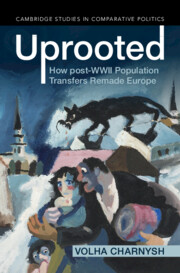
Each year, millions of people are uprooted from their homes by wars, repression, natural disasters, and climate change. In Uprooted, Volha Charnysh presents a fresh perspective on the developmental consequences of mass displacement, arguing that accommodating the displaced population can strengthen receiving states and benefit local economies. Drawing on extensive research on post-WWII Poland and West Germany, Charnysh shows that the rupture of social ties and increased cultural diversity in affected communities not only decreased social cohesion, but also shored up the demand for state-provided resources, which facilitated the accumulation of state capacity. Over time, areas that received a larger and more diverse influx of migrants achieved higher levels of entrepreneurship, education, and income. With its rich insights and compelling evidence, Uprooted challenges common assumptions about the costs of forced displacement and cultural diversity and proposes a novel mechanism linking wars to state-building.