To save content items to your account,
please confirm that you agree to abide by our usage policies.
If this is the first time you use this feature, you will be asked to authorise Cambridge Core to connect with your account.
Find out more about saving content to .
To save content items to your Kindle, first ensure no-reply@cambridge.org
is added to your Approved Personal Document E-mail List under your Personal Document Settings
on the Manage Your Content and Devices page of your Amazon account. Then enter the ‘name’ part
of your Kindle email address below.
Find out more about saving to your Kindle.
Note you can select to save to either the @free.kindle.com or @kindle.com variations.
‘@free.kindle.com’ emails are free but can only be saved to your device when it is connected to wi-fi.
‘@kindle.com’ emails can be delivered even when you are not connected to wi-fi, but note that service fees apply.
This chapter examines the dialectic of positive and negative utopian tendencies in China Miéville’s Bas-Lag trilogy. Critically acclaimed as a landmark series in the British New Weird subgenre, Perdido Street Station (2000), The Scar (2002), and Iron Council (2004) offer readers rich worldbuilding, blending neo-Victorian steampunk with semi-fascist capitalist oppression. Within the largely negative terrain of Perdido Street Station moments of utopian positivity can nonetheless flourish – most memorably in the inter-species love affair between the scientist protagonist and his insectoid partner. The Scar, which is set on a floating city-state, offers a positive utopian space partly modelled on the social organisation of real-world pirate ships on the eighteenth-century Atlantic. However, it also plays on Ursula Le Guin’s notion of the ‘ambiguous utopia’, with counter-utopian as well as counter-counter-utopian narrative elements. The third novel in the series, Iron Council, sees a transition towards communism, focusing on the political construction of revolutionary utopian ideals. Together, Miéville’s novels present readers with a heady mix of fantastic worldbuilding and Marxist utopian politics, with overt references to the Paris Commune, the Russian Revolution, and, more recently, the anti-globalisation protests at the World Trade Organization conference in Seattle in 1999.
The introduction presents the aims, scope and structure of the book and discusses major historiographical issues: the role of empires in global history; that of slavery in the Atlantic world and that of serfdom in Eurasia; the great divergence debate; the historical meanings and practices of emancipation in a global perspective. The introduction then discusses the question of scales; the role of gender and law; the definitions of institutions, empires and capitalism as well as the qualification of coercion, resistance and agency.
This chapter asks how ‘the people’ has been mobilised in contemporary literature as an anti-hegemonic category for imagining collective life in times of crisis. Reading a handful of poems written by Sean Bonney, D. S. Marriot, and Andrea Brady, the chapter’s hypothesis is that poetic address – the axis of communication, the deictic situation that obtains between articulation and understanding – acts as a cipher for the people in moments of social upheaval. Specifically, this chapter shows how poetic form bears witness to the people as an antagonistic social force defined by class, race, and gender, but also as a category that disarticulates – or has been forcefully disarticulated from – labour and its traditions and cultures.
Five Economies of World Literature is a comprehensive revision of nineteenth-century conceptualizations of 'world literature' in view of their intersections with economic thought. The book demonstrates that with a routinized identification of world literature as the cultural manifestation of modern capitalism, recent discussions have lost sight of an important historical and conceptual dynamic. Based on reinterpretations of the work of Goethe, Thomas Carlyle, Fichte, Hugó von Meltzl, and Marx, the chapters center on five economic notions (free trade, the gift, central planning, protectionism, and common ownership) that have shaped the theory and praxis of transnational exchange. At a time of profound reconfigurations in global political, cultural, and economic landscapes, this analysis deepens our historical understanding of cross-cultural encounters and also offers a better grasp of many of our current concerns about the globalization of cultural production and consumption.
This chapter traces the roots of racial capitalism in early modern England. It shows how ideologies of class and race were grounded in the logic of both nationalism and overseas trade and colonialism. It does so by tracing the evolution of the story of Dick Whittington, a fantasy about a poor boy that acquired the status of a fairy tale in English culture. This evolution illustrates how dreams of class mobility at home were shaped by the promises of international wealth; how these promises in turn molded the ideology of nationalism whereby the nobility and the mercantile classes came together despite the tensions between them; how existing geographic differences were rewritten to present European superiority; and finally, how peoples from different parts of the world were represented as both necessary and dangerous to the advancement of the European self.
This essay coins and develops the concept of Longevity Capitalism, a biopolitical and financial regime in which both the condition of living longer and the pursuit of longevity are transformed into frontiers of accumulation. As financialisation extends into the domain of ageing, longevity – once a social and fiscal challenge – has been reframed as an investment opportunity. The essay traces a shift from collective welfare management to individualized risk-bearing, showing how uncertainty about life expectancy is converted into a new asset class. Drawing on examples such as financial instruments that profit from longevity risk, the rise of ‘age-tech’, and Silicon Valley’s ventures in life extension, it shows how biological time is increasingly treated as an economic resource. It also examines the speculative pursuit of ‘longevity escape velocity’, where technological innovation is imagined to outpace ageing and death itself becomes a technical problem. Together, these developments reveal a system in which longer life functions as a perpetually deferred investment cycle – an economy sustained by its own postponement. The essay argues that economic and biological time, wealth and health, are now fused within a single regime of managed futurity, reflecting new forms of power over who – and how – gets to live longer.
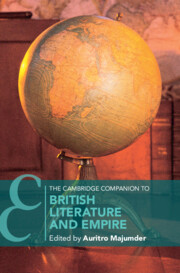
The volume outlines modern British literature's relation to global empire from the 16th century to the present. Spanning the interactions between Britain, Europe, and the world outside, in Asia, Africa, Australasia, North America, and the Caribbean, it suggests the centrality of colonial-capitalist empire and global exchanges in the development of major genres of literary fiction, poetry, drama, and non-fiction. Illuminating the vital role of categories such as race, class, gender, religion, commerce, war, slavery, resistance, and decolonization, the twenty-one chapters of the book chart major aspects of British literature and empire. In rigorous yet accessible prose, an international team of experts provides an updated account of earlier and latest scholarship. Suitable for a general readership and academics in the field, the Companion will aid readers in familiarizing with Britain's imperial past and its continuing relevance for the present.
The English weavers who organized what would become a flourishing cooperative business in 1844 remain famous worldwide. In the second half of the nineteenth century, their story traveled through a newly international labor press, inspiring workers to build cooperatives in the template set forth by the so-called “Rochdale Pioneers.” While scholars have detailed the Rochdale model’s impact on the cooperative movement itself, historians have missed its significance as a vector for wider changes in working-class politics. Drawing on cooperative movement literature and organizational records, this essay traces the transnational circulation of the Rochdale story from Britain to the United States from the mid-nineteenth to the early twentieth century. I explore how the Rochdale method’s influence simultaneously standardized cooperative practices, and reflected a protracted shift in anti-capitalist struggles. Against the backdrop of land dispossession and anti-labor violence, the Rochdale experiment captured hopes for a cooperative economic strategy fit to survive in the modern era. Focusing on the rise of consumers’ cooperation in the United States, I show how organizers mobilized a cooperative vision for a post-enclosure world—one consistent with the structure, if not the spirit, of private property and commodity markets. This article explores how the cooperative movement became a vital site for reimagining economic autonomy as industrial capitalism conscripted ever more people into wage labor.
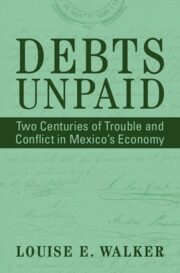
This book places the troubles of ordinary people at the centre of economic change in Mexico, arguing that conflicts over small-scale unpaid debts were a stress test for the economic and political order. Studying malfunction – what happened when contracts broke or soured – exposes the ways in which debt trouble became a driving force in the history of accumulation and justice in the modern world. This concluding chapter offers final thoughts on the book’s core proposal: that a broad sense of fairness and justice provided a bedrock of stability that allowed for massive economic transformation over a long chronological horizon.
Chapter 4 adds another intellectual dimension and genealogy to Nkrumah’s political-economic philosophy by arguing that he was aware of Lenin’s state capitalist ideas and that the Ghanaian economy existed and functioned within this state capitalist, mixed economic framework. Moreover, this chapter examines how people within and outside Ghana understood the duality of Ghana’s socialist and capitalist economy – its socialist state capitalist project – and its applicability to Ghana’s conditions and the postcolonial world. It demonstrates that the Ghanaian political economy under Nkrumah combining socialist and capitalist development paths was not a contradictory Marxian policy but was embedded within Black Marxist understandings of Lenin’s state capitalist ideas. In so doing, Socialist De-Colony merges the nonoverlapping intellectual and geographic spaces of Paul Gilroy’s “Black Atlantic” and Cedric Robinson’s “Black Marxism” with Maxim Matusevich’s “Africa and the Iron Curtain.” It shows how the cultural and intellectual interchange of ideas between and amongst Black thinkers moved beyond the Atlantic circuit and were simultaneously heavily mediated and impacted by ideas from the East.
This chapter examines the shift from almost total estrangement in the early 1920s to broad enmeshment in cultural, economic, and finally diplomatic exchanges in the early 1930s. While acknowledging the importance of converging economic and strategic interests, the chapter argues that images and ideas were also significant, particularly in defining the identities and trajectories of the two countries. It illuminates the divergence between American anticommunists who loathed the atheist Soviet dictatorship and the growing number of intellectuals, journalists, African Americans, and others who became fascinated by the Soviet experiment in social and economic transformation. It also analyzes the ambivalence of Soviet writers, cartoonists, and political leaders about the United States, which they harshly criticized for its imperialism, racism, and economic exploitation, but also admired for its energy, productivity, and advanced technology. The chapter closes with a discussion of how President Franklin Roosevelt disregarded a terrible famine in Ukraine and protests by Ukrainian Americans as he negotiated for the establishment of diplomatic relations.
A critique of capitalism, in order to count as such, must identify a problem that is not shared by all other feasible economic systems, for this would amount to little more than a complaint (or kvetch) about the human condition. The distinction between critique and kvetch raises the question of what constitutes a feasible alternative to capitalism. Although it sounds as though this is a pragmatic or technical question, I will argue that it is usually normative. With this clarification in place, I will consider whether Waheed Hussain’s concerns about capitalism amount to a critique or a kvetch.
In this final chapter from the authors we consider in some ways the meeting of our previous ideas and cases with the hegemonic operation of capitalism as envisaged with moral imagination
This chapter explores how capitalism has shaped US global power, and how US foreign policy has shaped the trajectory of US capitalism. The approach departs from more well-examined questions, such as quantifying how much capitalist motivations dictated foreign policy decisions, or interrogating whether US actions were determined by geopolitical calculations of realpolitik, versus ideological commitments to democracy, versus ambitions of expanding market share. Rather, beginning with an observation of the inextricability of the development of capitalism and the US as a nation, this chapter examines in what ways economic motivations, structures, and beliefs have appeared in US diplomacy; how centering capitalism shifts the definitions we have of terms like “US foreign relations” and “US global power”; and how this framework troubles concepts we might otherwise have left unexamined. This approach poses new methodological challenges: determining what scale(s) are most useful for studying capitalism; the problem of accessing private corporate archives; how to consider the role of the state in a study that places capitalism at its core; expanding the roster of actors in the history of US foreign relations; and considering how a focus on business and labor changes our understanding of the connections between US power abroad and at home.
Although not explicitly a socialist, in his political philosophy Kant provides arguments that can be deployed by socialists to argue for radically different forms of social and economic organisation. In this article I contrast Karl Marx’s criticism of capitalist property relations with the general theory of property which Kant outlines in his Doctrine of Right. I demonstrate that Kant’s concept of property provides a sounder ethical basis for the regulating and reform of capitalist economic organisations than Marx’s historical materialist view of economic and social development. Kant’s theory of property relations may fall short of Marx’s in terms of the sociological and historical insights it affords but Kant’s theory more than makes up for this is with its greater moral and political astuteness.
Power struggles between debtors and creditors about unpaid debts have animated the history of economic transformation from the emergence of capitalist relations to the recent global financial crashes. Illuminating how ordinary people fought for economic justice in Mexico from the eve of independence to the early 2000s, this study argues that conflicts over small-scale debts were a stress test for an emerging economic order that took shape against a backdrop of enormous political and social change. Drawing on nearly 1,500 debt conflicts unearthed from Mexican archives, Louise E. Walker explores rapidly changing ideas and practices about property rights, contract law, and economic information. This combination of richly detailed archival research, with big historical and theoretical interpretations, raises provocative new questions about the moral economy of the credit relationship and the shifting line between exploitation and opportunity in the world of everyday exchange.
This concluding chapter reflects on the relationship between transitional justice, power, and law at the current global conjuncture of the alleged end or “eclipse” of liberal democracy and human rights and the rise of rightwing authoritarian populism and fascism. It recapitulates the major interventions of the book that critically interrogate the binary of liberalism and authoritarianism and the abstract idealization of the virtues of transparency and the right to know in dominant transitional justice and human rights politics. The chapter organizes the concluding reflections under five headings that draw attention to the making of rightwing authoritarian populist legalism and transitional justice; the problem of Eurocentrism; capitalist and nation-state-centric politics of transitional justice; and reflections on the alternative notions of truth and political responsibility that the book has developed as part of its attempt to envision socially transformative justice beyond moral autopsy and heated political struggles.
Industrialists and enabling financial institutions accelerated America’s economic motion, operating organizations so colossal that they commanded economic influence and encroached upon the nation’s cultures and politics. These institutions altered the national face of business and wielded increasing quantities of money, laborers, technological innovations, and political power. Narratives increasingly portrayed businessmen as a new type of hero, “self-made” even if operating within potent networks. They and their advocates portrayed their influence and wealth as proof of their superiority and, by implication, everyone else’s shortcomings. The rhetoric of self-making acquired a new grandeur. The frequency of the term “self-made” reached its nineteenth-century peak in the press around 1890, by which time the concept was well embedded in mainstream culture, and a related term, “individualist,” was climbing rapidly, along with terms like “self-reliance” and “survival-of-the-fittest.” Elites defended their male offspring as “self-made” if they didn’t lose family fortunes. At the same time, laborers and other critics asked whether the rich were “Self-Made or Made for Self”?
A number of philosophical themes run throughout Marx’s corpus. Foremost is his focus on free social and political relations – on emancipated people governing themselves together rather than being mastered by others. There is no doubt, however, that Marx was a sharp critic of law, justice, and right (Recht) – which Kant had argued can only be realized in a state – and that Marx’s communist social ideal is nonjuridical. A second theme is that although Marx rejects the modern deontic conception of morality, he is very much aware that his own ideal of freedom is a modern conception, which is based, like modern morality, in a view of the unique value of human persons – the “self-worth of men” as “free.” A third is Marx’s communitarian emphasis on “a community of people [organized] for their highest ends”: a “democratic” society of free people, whether organized as a state or not. It is important that Marx does not ground his democratic conception as orthodox liberal moderns do in a deontic conception of fundamental equal human authority. Ultimately, Marx’s ideas must be understood as a liberal egalitarianism of the good rather than of the right.
The term “self-made” was fully embedded in 1920s popular culture, intertwined with individualism. Master of positive thinking Dale Carnegie dominated armies of cultural entrepreneurs selling tales of success. The Crash of 1929 and the Great Depression turned many Americans against businessmen’s leadership, but business advocates militantly circulated the myth of self-made success to justify why the privileged still deserved esteem and power. They rejected efforts at systemic change. They used the myth of self-making to explain success and failure as individual matters, and explicitly upheld inequality as a valid outcome of merit alone. To resist the progressive state, conservatives invested enormous resources to attack reformers for threatening freedom and opportunities. Among their rhetorical tools were fantasies of self-made success that they often imagined came from Horatio Alger, distorting his legacy into an individualistic and often harsh “bootstraps” mythology. Into the 1950s, positive thinker Norman Vincent Peale and others magnified the faith that people could “make” their own lives regardless of what the world handed them.