To save content items to your account,
please confirm that you agree to abide by our usage policies.
If this is the first time you use this feature, you will be asked to authorise Cambridge Core to connect with your account.
Find out more about saving content to .
To save content items to your Kindle, first ensure no-reply@cambridge.org
is added to your Approved Personal Document E-mail List under your Personal Document Settings
on the Manage Your Content and Devices page of your Amazon account. Then enter the ‘name’ part
of your Kindle email address below.
Find out more about saving to your Kindle.
Note you can select to save to either the @free.kindle.com or @kindle.com variations.
‘@free.kindle.com’ emails are free but can only be saved to your device when it is connected to wi-fi.
‘@kindle.com’ emails can be delivered even when you are not connected to wi-fi, but note that service fees apply.
A preoccupation with the music of Johann Sebastian Bach was one of the constants in the lives of the Mendelssohn family, especially Fanny and Felix. Bach was one of the few composers who were considered exemplary in the Mendelssohn family. The special chorale and fugue-orientated training with Zelter, their membership of the Singakademie and the cultivation of Bach among their family and friends make it clear in which traditions the siblings Fanny and Felix grew up and undertook their first musical steps and expressions. Bach’s works are always present in the musical performances of both of them. In Fanny’s ’Sunday musicales’, works by Bach were just as much a part of the repertoire as in the concerts that Felix conducted or played on the piano or organ. Their lifelong engagement with Bach’s music is reflected in the compositions of Fanny and Felix and includes details of content, form and compositional technique.
Nowadays Beethoven’s canonic status is taken for granted, but in the 1820s as the Mendelssohns were coming of age, his music was still controversial, and their advocacy of it was something that set them apart from many contemporaries. In their roles as composers, performers, and promoters of music, both Felix Mendelssohn and Fanny Hensel would play a fundamental part in the evolving story of early nineteenth-century Beethoven reception. Moreover, their activities intersected with some of the other leading figures in the nineteenth-century canonisation of Beethoven in ways that shed light on the already contested legacy of their forebear. Equally, the influence of Beethoven on Hensel and Mendelssohn has often been misunderstood, commonly being viewed through later 19th-century anxieties and ideologies that remain extraneous to their world. In short, their relationship with Beethoven is crucial for understanding their own music – and historically was no less crucial for understanding Beethoven’s.
For centuries, Christians believed that the biblical letters of 1, 2, and 3 John were penned by a disciple of Jesus. Today, scholars speculate that the three are artifacts of a lost 'Johannine Community.' In this groundbreaking study, however, Hugo Méndez challenges both paradigms, meticulously laying out the evidence that the Epistles are, instead, a series of falsely authored works. The texts position themselves as works by a single author. In reality, they were penned by three different writers in a chain of imitation, creative adaptation, and invention. Through incisive, close readings of the Epistles, Méndez clarifies their meaning and purpose, demystifying their most challenging sections. And by placing these works in dialogue with Greco-Roman pseudo-historical writing, he uncovers surprising links between Classical and early Christian literature. Bold, comprehensive, and deeply original, this book dismantles older scholarly views while proposing new and exciting approaches to these enigmatic texts.
This chapter begins its discussion of Australian poetry in the decades immediately following World War II, post-Ern Malley hoax. It identifies the impulse in major poets of this time to establish a canon of Australian poetry that reinforced a strong sense of settler identity. The chapter reflects upon this expansionary period of Australian literary culture, as evidenced by the growth of Australian publishers, literary magazines, government support for the arts, professional networks, and forums for the discussion of poetry. It considers canon-building manoeuvres in light of a deep divide between conservative and left-wing viewpoints. The role of Douglas Stewart and Beatrice Davis, and Angus & Robertson’s Australian Poets Series, is detailed. The chapter also describes the expansion of Australian literary studies as underpinned by the growth of tertiary education. It discusses how a number of poets assumed elevated university positions, encouraging scholarly accounts and criticism of poetry. Lastly, the chapter concludes that the advent of Oodgeroo’s work presented a formidable challenge to this mid century envisioning of a national canon.
This chapter synthesises empirical methodology with detailed contextual analysis to reflect on the ways in which anthologies of the late twentieth and early twenty-first century constructed or de-prioritised national, canonical and generational frames. Noting previous interpretative frameworks such as ‘new lyricism’, this chapter argues that a number of anthologies during this era reflected an ethical turn in Australian poetry and emerged out of or postulated literary communities and networks. The chapter includes an analysis of the two Best Australian anthology series and an analysis of anthologies with canonical impetus. Lastly, it considers the shift in definitional terms from the ‘modern’, ‘new’ or ‘now’ to the ‘contemporary’, as well as forms of discontent with such a term.
The chapter provides an overview situating the literatures produced or circulated in Britain and the racialized, classed, and gendered imaginaries of empire. English literature was informed by imperial concerns and anti-capitalist critique alike since the sixteenth century, even as England was a minor player among European imperial powers. Contemporary scholarship, while attending to marginalized authors, such as women, immigrants, minorities, and the working class, demonstrates that diverse literature, prose especially, but also drama and verse, were shaped by expanding trade, global markets, territorial appropriations, military conquests, human emigration, and cultural contact. A mix of ideologies spawned in the nineteenth century to rationalize British presence as not only inevitable but beneficial for the colonized; for colonized intellectuals, on the other hand, literature fostered alternative visions of resistance. Diasporic writers in twentieth-century Britain introduced readers to the vocabulary and memory of colonized lands. The chapter contends that many themes of contemporary culture are not unique to the present but variations of older, far-flung contests. Literature, in its ability to articulate shifts in perception, sensibilities, and relations before such changes are actualized, is an indispensable site of analysis and study.
Debussy composed three of his planned Six Sonatas for Various Instruments between 1915 and 1917 before his death in 1918. In 2018, composers from across Europe and North America were invited to write music for the instrumentation of these three incomplete sonatas from Debussy’s grand project, for a concert to be held at the University of Glasgow Memorial Chapel. As a result, several original works were performed by the Chamber Group of the Royal Scottish National Orchestra under the direction of Jon Hargreaves, alongside the completed Debussy sonatas.
This chapter presents the reflections of several of these composers, exploring how they confronted the specific question of Debussy’s influence and legacy, as well as trickier questions that arise from attempts to memorialise canonical precursors through contemporary creative practice. In what ways might Debussy’s music live on through the widely diverse imaginations of twenty-first-century composers?
The last musicologist to see the original canon-pictures was apparently Eusebius Mandyczewski, who says: ‘At Eisenstadt [the Esterházy family’s principal residence] there are still [1891] preserved Haydn’s presentation canons – as copies – in slender wooden frames, those that he hung on the walls of his room.’ Mandyczewski, a Haydn authority, recognised that the hand in the canon-pictures was not the composer’s, strengthening a claim made in 1811 by Johann Elßler, Haydn’s servant and copyist, that he had copied their music directly from autographs. Mandyczewski’s observation that the frames were ‘slender’ suggests that Haydn adopted a style of framing favoured by collectors of prints, which the composer would have seen in London and which was much imitated in Germany in the later eighteenth century.
Patrick Prétot comments on the individual parts of which the celebration of the Eucharist consists. For that, he takes as his point of departure the script of the Order of Mass, which is used in the Roman Catholic Church but which shows many commonalities with other liturgical and ecclesial traditions.
This chapter explores the major auction landscapes before 1914 and also describes the defining elements of the fin-de-siècle European market: integration, free trade, and cosmopolitanism. Examining societies’ approaches to artwork acquisition unveils contradictions and frictions within a milieu united by an international collecting class. France contended with an international, yet conservative, nationalist art world, while Germany’s bourgeoisie tried to control the world of luxury and consumption. In contrast, Britain grappled with questions about free trade and the preservation of art that challenged its laissez-faire tradition. It is precisely these tensions, which directly reflect the challenges posed by the commercialisation of art, that provide a framework for analysing the impact of the war. By emphasising the shared features of an integrated trade sphere, this chapter paints a balanced portrayal of a European market, where art mirrored the complex integration of both socioeconomic and cultural frameworks.
The chapter pursues the consequences of the claim that the Greek canon was made based on the performative qualities of its authors, emphasizing its internal friction. As such, it did not embody any timeless values. Its function could be replicated by other traditions influenced by it: first Roman, then European languages and then globally. There is no function today that is uniquely performed by the Greek literary legacy and, in this sense, there is no need to preserve the particular tradition of classical studies. Greek antiquity is worthy of study simply because of its pivotal role, but it essentially expired. And yet, the attitude of admiration toward this type of liberating past experience is a useful one to maintain, as part of an overall hopeful attitude toward the arc of the moral universe.
Despite its familiarity, the fourfold canonical gospel presents a challenge for interpreters, captured in the famous symbols of the evangelists. Mark’s Jesus embodies the paradox of the crucified king of Israel. Matthew adds to this a portrait of Jesus the Prophet-like-Moses and Davidic shepherd who renews Israel’s covenant. Luke presents Jesus as Lord and prophet who brings redemption and distinctively champions the poor. John’s Jesus is the Word from the beginning and glorified Son of the Father. These subsequently canonized gospels stand out as authoritative amidst proliferating Jesus books. An approach that respects the fourfold gospel’s catholicity as well as its holding together of tensions in the historical impact of Jesus of Nazareth on his followers may be a fruitful path toward perceiving the one Jesus in the canonical Four.
In its early days, the methods and theories of the digital humanities promised to reform our understanding of the canon, or, given a comprehensive archive of literature and the tools for analyzing all of it, even abolish it all together. Although these earlier utopian hopes for digital archives and computational text analysis have proven to be ill founded, the points of contact between the canon and the digital humanities have had a profound effect on both. From studies that test the formal properties of canonical literature to those that seek to explore the depths of newly available archives, the canon has remained an object of significant interest for scholars working in these burgeoning fields. This chapter explores the fraught relationship between the canon and computational analysis, arguing that, in the hands of cultural analytics, the canon has transformed from a prescriptive to a descriptive technology of literary study.
Eusebius’ much-discussed catalogue of ‘acknowledged’, ‘disputed’ and ‘spurious’ works (Historia Ecclesiastica 3.25) is a key passage in the history of New Testament canon formation, but it is often extracted from its literary context and consequently misunderstood. This passage is in fact a summary of conclusions that Eusebius has already reached in the contributions to apostolic biography with which he supplements the Book of Acts in HE 2.1–3.24. Biographical passages relating the conclusion of the apostolic lives of James, Peter, Paul and John are accompanied by statements about the texts they authored or authorised, or that have been falsely attributed to them. This biographical context for differentiating genuine works of prestigious figures from their pseudepigraphal counterparts has its roots in Greco-Roman literary culture, as exemplified in the Lives of the Philosophers of Diogenes Laertius. Eusebius’ crucial contribution to the formation of the New Testament canon is thus rooted not in exclusively Christian concerns but in the wider literary culture of Late Antiquity.
The Poet’s Voice is an intervention in the field of classics and is committed to the slow, close reading of Greek texts. The testing of how critical activity could be transformed by theoretical reflection is to be found in how the texts of antiquity were opened to a transformative exploration of their meaning. The practice of the discipline – how texts are read and understood, what questions are authorized, what sorts of answers countenanced – is what is at stake in such an enterprise. The Poet’s Voice is written from within the discipline of classics, to transform it from within, and hence its focus is on critically reading the texts of the discipline, both the ancient literature and its modern critics. That is how its theoretical commitment is embodied and enacted.
This volume’s introduction traces the longstanding interdigitation between American literature and sexuality studies broadly imagined, mapping the inseparability between queer American literature and the history of sexuality. In so doing, it offers an institutional history of gay and lesbian studies, queer studies, and trans studies and grapples with the theoretical question of how to understand queer American literature. Examining the mutual imbrication of “queer,” “American,” and “literature,” it provides an overview of the volume’s theoretical investments, conceptual choices, and organization in order to introduce the reader to the volume as a whole.
This chapter gives a practical overview of writing for a variety of chamber music scenarios, from the traditional (e.g. string quartet) to the unusual (e.g. tuba trio). It describes how to respond to the existing canon of music for ensemble, as well as being creatively inspired by performers in rehearsal situations.
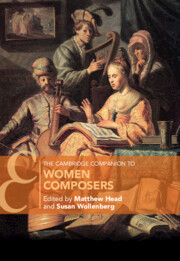
Moving beyond narratives of female suppression, and exploring the critical potential of a diverse, distinguished repertoire, this Companion transforms received understanding of women composers. Organised thematically, and ranging beyond elite, Western genres, it explores the work of diverse female composers from medieval to modern times, besides the familiar headline names. The book's prologue traces the development of scholarship on women composers over the past five decades and the category of 'woman composer' itself. The chapters that follow reveal scenes of flourishing creativity, technical innovation, and (often fleeting) recognition, challenging long-held notions around invisibility and neglect and dismissing clichés about women composers and their work. Leading scholars trace shifting ideas about composers and compositional processes, contributing to a wider understanding of how composers have functioned in history and making this volume essential reading for all students of musical history. In an epilogue, three contemporary composers reflect on their careers and identities.