To save content items to your account,
please confirm that you agree to abide by our usage policies.
If this is the first time you use this feature, you will be asked to authorise Cambridge Core to connect with your account.
Find out more about saving content to .
To save content items to your Kindle, first ensure no-reply@cambridge.org
is added to your Approved Personal Document E-mail List under your Personal Document Settings
on the Manage Your Content and Devices page of your Amazon account. Then enter the ‘name’ part
of your Kindle email address below.
Find out more about saving to your Kindle.
Note you can select to save to either the @free.kindle.com or @kindle.com variations.
‘@free.kindle.com’ emails are free but can only be saved to your device when it is connected to wi-fi.
‘@kindle.com’ emails can be delivered even when you are not connected to wi-fi, but note that service fees apply.
The chapter details recent and future climate changes, primarily caused by anthropogenic emissions of greenhouse gases. This period of time is now commonly referred to as the Anthropocene. The chapter begins with a critical discussion of the hypothesis that anthropogenic activities have already begun to significantly impact the global climate since the mid-Holocene. The climate changes observed during the last century and their attribution to human activities are presented. The concept of anthropogenic emission scenarios and projections of future climate change are then described. The results of several future model simulations are shown, and the most robust aspects of future climate change projections and their potential impacts on natural systems and humanity are discussed. Finally, the possibility of predicting the very long-term future (beyond the current millennia) is discussed and possible scenarios are presented.
How were seventeenth-century projects of wetland improvement remembered and revived in the centuries that followed? What remnants of wetlands past persist in popular memory, troublesome spirits, floodwaters, and nature reserves? This chapter traces afterlives of the turbulence and tumult generated by fen projects. In doing so, it weaves together the key strands of this book. First, new intellectual and political tools were needed to define and implement wetland improvement, reconceiving the scale of environmental thought and action in early modern England. Second, customary politics proved a powerful force in the negotiation of improvement as commoners intervened in the flow of water, the exercise of property rights, and the practice of sovereignty. Finally, coercive projects of environmental change expanded cracks in the exercise of central authority, becoming entangled in civil war conflict and imperilling the stability of improvement. It concludes by asking what conflict over early modern wetlands can tell us about the environmental politics of the Anthropocene.
The Quaternary period, which began 2.58 million years ago and continues to the present day, is distinctive for its significant climate variability. Understanding the mechanisms of climate change during this period and the relationship between carbon dioxide levels and temperature are hugely important in improving our ability to develop models to predict future climate change. This book discusses the main methods of empirical climatology and the models used to address different aspects of Quaternary climate dynamics, offering a multidisciplinary view of past and future climate changes. It examines the proposed mechanisms of Quaternary climate variability, including glacial cycles and abrupt climate changes, and their relationship to the intrinsic instability of ocean circulation and ice sheets. Including a final chapter on the Anthropocene, it provides a comprehensive overview of Quaternary and modern climate dynamics for graduate students and researchers working in paleoclimatology and climate change science.
The entangled relations of humanity’s natural and digital ecosystems are discussed in terms of the risk-uncertainty conundrum. The discussion focuses on global warming from the perspective of the small world of geoengineering, with a particular focus on geothermal energy, marine geoengineering, and the political economy of mitigation and adaptation (section 1). It inquires into the large world of the biosphere, Anthropocene, and uncertainties created by the overlay of human and geological time (section 2). And it scrutinizes the technosphere, consciousness, and language as humanity’s arguably most important cultural technology (section 3).
The chapter offers provisional compass points for navigating new modes of writing by 21st-century Australian poets in light of a world of overdevelopment, environmental crises and extinctions. The compass points include: modes of anxiety and grief involved with poetic form, and material forms emerging in combination with agencies, matter and forces. Inflection points include the shared becoming of humans and non-humans. The chapter includes a discussion of ecopoetic literary journals, as well as anthologies that have gathered and showcased ecopoetry, radical writing of land, and environmental protest poetry. It includes analyses of poetry by writers such as Judith Beveridge, Louise Crisp, Coral Hull, John Kinsella, Peter Minter and Mark Tredinnick.
As the planet confronts an interconnected meta-crisis linked to natural, political, social, and psychological challenges, there are some pedagogical tendencies that should be challenged within university education. Drawing on the philosophical literature of the Ecological University, this article uses an eco-philosophical framework for considering mainstream university pedagogy. We emphasise that the increasing mental health challenges of so many young people at university is both a symptom and a feature of the meta-crisis and a key consideration for how we might respond as university educators. We argue that many of the existing neoliberal and liberal tendencies in university can be interpreted as “Miserable Pedagogies” — which typically fail to engage with the meta-crisis as a threat to the planet’s psychological, social, political, or natural ecosystems. We suggest that our “pedagogies of misery” need to be disrupted and radically contested with an ecological world-view we describe as “Anthropocene Intelligence.” After setting out the key features of Anthropocene Intelligence, we consider how an alternative teaching approach, used by one of the authors, reflects such an ecological worldview and potentially provides a basis for more meaningful and active ways of being and learning on this finite planet.
This Introduction specifies the book’s aims. Its main thesis is that a comprehensive examination of Kant’s texts displays the relevance of his ethical, legal, aesthetic, metaphysical, and historical ideas for environmental problems like climate change, despite the standard view of Kant as anthropocentrist, individualist, dualist, and nonconsequentialist. Doing so, the book builds a bridge between environmental philosophy and Kant studies by offering distinctly Kantian solutions to environmental problems. I begin with an overview of the tensions in these philosophical fields, emphasizing that the climate crisis exhibits the value of Kant’s philosophy for contemporary environmental problems. After providing empirical background on climate change, I indicate why philosophy matters for the crisis. A recent greening-the-canon movement in environmental philosophy nonetheless places Kant on the wayside. The Introduction also offers an overview of the chapters.
Kant’s Metaphysics of Morals, while useful for moving past the ecological limitations of the standard reading, is limited insofar as it focuses on individual actors—consumers, citizens, and politicians in particular. Kant’s ethical thought emphasizes individual humans rather than economic and political systems, and his teleological thought appears scientifically outdated. This chapter asks whether these aspects of Kant’s thought need revision. It begins by placing Kant in dialogue with Darwin and Marx, pursuing a critical discussion on the human species and political systems in the context of the Anthropocene. The Kantian reply, I suggest, encourages us to reconsider Kant’s philosophy of history and philosophical anthropology. Kant’s ideas are significant for the climate crisis insofar as they enjoin normative reflection on the human species globally and in the long term. I conclude with critical reflections on Kant’s racism and sexism as obstacles to reading Kant in the Anthropocene.
The cold, low carbon dioxide (CO2) conditions of the Pleistocene epoch fundamentally structured ecosystems, profoundly influencing the evolutionary trajectory of Homo sapiens and other large mammals. Although often considered uniquely stable, the Holocene is more usefully viewed as just another Pleistocene interglacial interval that was naturally trending towards a renewed glacial phase. However, rapid anthropogenic greenhouse gas emission rates have reversed this trajectory and might have now foreclosed the prospect of returning to cyclic glacial climates for millennia. A large set of flora and fauna has benefited from low CO2 conditions, which we define as low-CO2 dependents. By elevating atmospheric CO2 concentrations beyond levels seen for millions of years, we have accelerated global warming beyond the adaptive capacities of many species and ecosystems. African savannas and grasslands are particularly relevant in this context because this was the environment in which the human species evolved. These biomes have been previously maintained by fire and carbon scarcity but are now experiencing woody encroachment driven by rising CO2. The resultant global reforestation further threatens biodiversity adapted to open ecosystems, while rewilding initiatives must therefore pair prehistoric analogues with explicit climate-fitness tests that anticipate mid-century CO2 trajectories. Addressing these complex challenges requires both targeted local interventions and systemic policy reforms, grounded in a pragmatic recognition of the transient nature of the Holocene. Recognising the transience of any single baseline allows conservation and agriculture to plan for a dynamic, overshoot-prone future.
Failures of environmental law to preserve, protect and improve the environment are caused by law’s contingency and constitutional presumptions of supremacy over the self-regulatory agency of nature. Contingency problems are intrinsic to law and, therefore, invite deployment of technologies. Constitutional presumptions can be corrected through geo-constitutional reform. The latter requires the elaboration of geo-constitutional principles bestowing authority on nature’s self-regulatory agency. It is suggested that principles of autonomy, loyalty, pre-emption, supremacy and rights have potential to serve that aim and imply proactive roles for technologies in environmental governance. Geo-constitutional reform is necessary to prevent the fatal collapse of the natural regulatory infrastructure enabling life and a future of environmental governance by design. Once environmental catastrophe has materialized, however, geo-constitutionalism loses its raison d’être.
Kant and Environmental Philosophy starts with problems of the Anthropocene and looks to Immanuel Kant for answers. It offers a close reading of Kant's texts, arguing that the views we find in his ethical, political, and aesthetic theory are helpful for making sense of ecological challenges like climate change. The book clarifies our duties regarding climate extinction, geoengineering, consumerism, and future generations. It provides insights and solutions for obstacles to sustainability, including corruption and the possibility of civil collapse. In environmental philosophy, historical commentators mine familiar philosophers for insights to these problems, but Kant is often seen as an anthropocentric and dualistic individualist in a world dominated by consequentialist thinking, and accordingly he is overlooked as relevant for environmental philosophy. This book challenges that conclusion, and its comprehensive examination of Kant's texts provides lessons for environmental philosophy and climate ethics at a time when a fresh perspective is desperately needed.
Climate and landforms are intimately tied together. Indeed, much of geomorphology is concerned with how landforms, climate, and other surficial processes (like erosion) interact. Landforms are often studied to understand past climates, and vice versa. Thus, a complete understanding of landform genesis requires knowledge of past climates, generally termed paleoclimate.
Climate can be viewed as the prevailing weather/atmospheric conditions for a site, but over long timescales. If a geomorphologist was interested in how sand dunes in a modern desert migrate, they might look at climate over the last few decades. However, a geomorphologist interested in the origin and evolution of the entire desert would need to examine climate over tens of thousands, or even millions, of years. Thus, climate is a somewhat slippery concept, especially when one considers that climate is always changing.
This paper examines the recent rejection of the ‘Anthropocene’ as a formal geological epoch to explore how climate anxiety shapes scientific research. While there is broad agreement among scientists about climate change, political and legal action lag behind. Scientists bridge this gap by communicating their findings in ways that influence policy. This effort reflects the broader condition of ‘polycrisis’: multiple overlapping global challenges. I argue that terms like ‘Anthropocene’ and ‘polycrisis’ are not fixed truths, but strategies for taming uncertainty. Scientists, accordingly, are increasingly coming to replace legislators by encouraging certain kinds of present-day action towards more desirable futures.
Technical summary
This paper examines the Anthropocene Working Group's (AWG) effort to formalise a new geological epoch and interprets its 2024 rejection as a case study in the politics of polycrisis. Drawing on ethnographic research with the AWG, it shows how scientific observation is increasingly driven by anticipatory anxiety and a performative impulse to orient action towards uncertain futures. Through the concepts of the technofossil and procedural precedent, the article illustrates how geoscientific methods both generate and respond to normative expectations. The paper argues that polycrisis is not merely descriptive, but constitutes a second-order mode of engaging with the future, wherein political urgency animates what and how scientists observe. In the context of climate change, scientific actors are not only producing knowledge but also seeking to shape policy and social response by innovating within disciplinary protocols. Terms like ‘Anthropocene’ and ‘polycrisis’ are powerful abstractions whose utility lies in their imaginative capacity to narrate contingency and complexity, and imagine solutions by orienting action in the present towards desirable outcomes in the future, rather than in any fixed claim to objectivity.
Social media summary
Anxiety about the future is reshaping science, law, and the way we understand today's overlapping global crises.
As human development is colliding with planetary boundaries, the world is facing interconnected crises, disasters, and geopolitical conflicts that require and complicate cooperative solutions for navigating the global polycrisis between a collapse of human civilisation and a sustainable transformation of nature–society relationships. When multiple crises are compounding and become ‘overcritical’ beyond tipping points, they may trigger cascading chain reactions that overwhelm efforts to control the dynamics. Understanding the complex dynamic interaction between climate, conflict, migration, and pandemic risks offers insights to develop capabilities for effective earth system governance to facilitate a transformation from a negative to a positive nexus.
Technical summary
To assess the complex interplay and stability conditions of multiple risks in the polycrisis, an integrative framework involves interacting changes, sensitivities, and pathways in nature–society interaction with natural resources and human security. Results highlight the role of additive compounding and multiplicative cascading events for crisis expansion or containment which can be influenced across thresholds by interventions and governance. The analysis is specified for the climate–conflict–migration–pandemic nexus in which the interactions of climate sensitivity and conflict sensitivity affect internal stability against destabilising external factors. For a risk minimization and containment strategy, desirable is a stable low-risk case compared to unlimited risk escalation, compensated by efforts and investments enabling anticipative governance, adaptive management and cooperative institutional mechanisms, moving from individual to collective action and converting a destabilising vicious circle into a stabilising virtuous circle.
Social media summary
The present polycrisis is unprecedented, increasing the interconnectivity, complexity and intensity of interactions with globalisation, breeding instability, overwhelming adaptation, and requiring new anticipative governance and management capacities.
We co-designed a bee sequence with a specialist primary science teacher at an Australian government school. Year 6 students learned about European honeybees and Australian native bees, including through Cli-Fi. In this paper, we explore the pedagogical power of providing students with opportunities to create Cli-Fi about bee futures in the Anthropocene. We present and thematically analyse examples of students’ bee Cli-Fi to argue that they generated these narratives to express how we ought to value bees and how we ought to conduct ourselves towards bees to realise more desirable futures. We propose that these students were futuring as normative myths. Students generated dystopian views of bee futures in adopting a human perspective, but also present were glimmers of hope for a more positive outlook that embraced more-than-human perspectives. We adopt a pragmatist semiotic approach to propose that these young people’s bee Cli-Fi constituted normative claims about the future of bees, as they outlined the aesthetics (how and what we ought to value) and ethics (how and in what way we ought to act) of humans caring for bees in an epoch of polycrisis. We suggest that Cli-Fi ought to be an integral part of climate change education in empowering students to assert their agency.
Since the 1990s, there has developed an increasingly sophisticated ecocritical approach within Irish literary studies. Ecocriticism may not seem entirely relevant to analyses of O’Casey’s Autobiographies nor to his ‘Dublin Trilogy’. But this chapter argues that the critical resources of the field can productively re-orient our appreciations of writers who seem to ‘pre-date’ climate change and environmentalism. The chapter suggests how it might be possible to read O’Casey’s work in terms of its engagement with human and non-human relations, with the urgencies of social and economic injustice, and with the politics of representation as they are germane to non-human ecologies.
This article explores surrealism as an overlooked critical resource for International Relations theory (IR) and argues that surrealism’s legacy for international theorizing lies in its capacity to provoke radical reimaginings of the political status quo and to offer engagements with catastrophes that are not grounded in end time. Tracing the movement’s intellectual genealogy beyond its artistic origins, this article draws on key surrealist texts, particularly those of its founder, André Breton (1896–1966), to emphasise surrealism’s value as a sophisticated intellectual response to the horrors of the early and mid-twentieth century: nationalism, industrial warfare, rationalism, imperialism, and totalitarianism. The article offers two main contributions. First, its historico-political reading of surrealism enables a reinterpretation of the long-standing debate between realism and utopianism in IR. Highlighting important intersections between surrealism and international theory – most notably classical realism – it shows that the surrealist stress on the imagination as a radical, transformative force offers a stark reminder to contemporary IR theory of the necessity of utopian thinking. Second, the article claims that the surrealist foregrounding of myths opens imaginative pathways for confronting the Anthropocene, providing a crucial counterpoint to contemporary IR scholarship that predominantly frames planetary challenges through narratives of imminent collapse.
This chapter traces and contingently periodizes the development of Latinx science fiction from the early 1990s to the present, and charts its historical, political, and cultural contexts. While noting the complex genealogies of the genre, the chapter begins with a survey of Latinx dystopian and post/apocalyptic works responding to the nightmarish aftermath of the passing of NAFTA. The chapter then shifts to examine how Latinx science fiction following 9/11 foregrounds how Latinxs have never been safe in our own ostensible homeland. The remainder of the chapter maps how the genre proliferates in an unprecedented manner following the turn of the millennium, diversifying in terms of ethno-racial identity, subgenres, tropes, and subject matter that demand hemispheric approaches. The diverse narratives comprising Latinx science fiction reengage the post/apocalyptic, cyberpunk, and dystopian/utopian to excavate and linger in the past so as to radically restructure both the present and future. This chapter explores how Latinx science fiction narratives – differential, dissensual, and generative – collectively envision brown temporalities and futures of being-in-common.
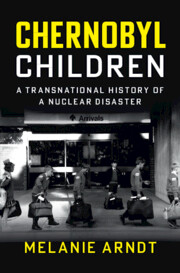
In the wake of the Chernobyl nuclear disaster, more than a million Belarusian, Ukrainian, and Russian children were sent abroad. Aided by the unprecedented efforts of transnational NGOs and private individuals, these children were meant to escape and recover from radiation exposure, but also from the increasing hardships of everyday life in post-Soviet society. Through this opening of the Soviet Union, hundreds of thousands of people in over forty countries witnessed the ecological, medical, social and political consequences of the disaster for the human beings involved. This awareness transformed the accident into a global catastrophe which could happen anywhere and have widespread impact. In this brilliantly insightful work, Melanie Arndt demonstrates that the Chernobyl children were both witness to and representative of a vanishing bipolar world order and the future of life in the Anthropocene, an age in which the human impact on the planet is increasingly borderless.