Refine search
Actions for selected content:
19 results
Global well-posedness and soliton resolution for the half-wave maps equation with rational data
- Part of
-
- Journal:
- Forum of Mathematics, Sigma / Volume 13 / 2025
- Published online by Cambridge University Press:
- 20 November 2025, e190
-
- Article
-
- You have access
- Open access
- HTML
- Export citation
-
We study the energy-critical half-wave maps equation:
 $$\begin{align*}\partial_t \mathbf{u} = \mathbf{u} \times |D| \mathbf{u} \end{align*}$$
for $\mathbf {u} : [0, T) \times \mathbb {R} \to \mathbb {S}^2$. Our main result establishes the global existence and uniqueness of solutions for all rational initial data $\mathbf {u}_0 : \mathbb {R} \to \mathbb {S}^2$. This demonstrates global well-posedness for a dense subset within the scaling-critical energy space $ \dot {H}^{1/2}(\mathbb {R}; \mathbb {S}^2) $. Furthermore, we prove soliton resolution for a dense subset of initial data in the energy space with uniform bounds for all higher Sobolev norms $\dot {H}^s$ for $s> 0$.
Our analysis utilizes the Lax pair structure of the half-wave maps equation on Hardy spaces in combination with an explicit flow formula. Extending these results, we establish global well-posedness for rational initial data (along with a soliton resolution result) for a generalized class of matrix-valued half-wave maps equations with target spaces in the complex Grassmannians $ \mathsf {Gr}_k(\mathbb {C}^d) $. Notably, this includes the complex projective spaces $ \mathbb {CP}^{d-1} \cong \mathsf {Gr}_1(\mathbb {C}^d) $ thereby extending the classical case of the target $\mathbb {S}^2 \cong \mathbb {CP}^1 $.


A remark on the well-posedness of the modified KdV equation in L2
- Part of
-
- Journal:
- Proceedings of the Royal Society of Edinburgh. Section A: Mathematics , First View
- Published online by Cambridge University Press:
- 22 November 2024, pp. 1-26
-
- Article
- Export citation
-
We study the real-valued modified KdV equation on the real line and the circle in both the focusing and the defocusing cases. By employing the method of commuting flows introduced by Killip and Vişan (2019), we prove global well-posedness in Hs for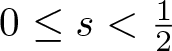 $0\leq s \lt \tfrac{1}{2}$. On the line, we show how the arguments in the recent article by Harrop-Griffiths, Killip, and Vişan (2020) may be simplified in the higher regularity regime $s\geq 0$. On the circle, we provide an alternative proof of the sharp global well-posedness in L2 due to Kappeler and Topalov (2005) and also extend this to the large-data focusing case.

Sharp well-posedness for the cubic NLS and mKdV in $H^s({{\mathbb {R}}})$
- Part of
-
- Journal:
- Forum of Mathematics, Pi / Volume 12 / 2024
- Published online by Cambridge University Press:
- 02 April 2024, e6
-
- Article
-
- You have access
- Open access
- HTML
- Export citation
-
We prove that the cubic nonlinear Schrödinger equation (both focusing and defocusing) is globally well-posed in $H^s({{\mathbb {R}}})$ for any regularity $s>-\frac 12$. Well-posedness has long been known for $s\geq 0$, see [55], but not previously for any $s<0$. The scaling-critical value $s=-\frac 12$ is necessarily excluded here, since instantaneous norm inflation is known to occur [11, 40, 48].
We also prove (in a parallel fashion) well-posedness of the real- and complex-valued modified Korteweg–de Vries equations in $H^s({{\mathbb {R}}})$ for any $s>-\frac 12$. The best regularity achieved previously was $s\geq \tfrac 14$ (see [15, 24, 33, 39]).
To overcome the failure of uniform continuity of the data-to-solution map, we employ the method of commuting flows introduced in [37]. In stark contrast with our arguments in [37], an essential ingredient in this paper is the demonstration of a local smoothing effect for both equations. Despite the nonperturbative nature of the well-posedness, the gain of derivatives matches that of the underlying linear equation. To compensate for the local nature of the smoothing estimates, we also demonstrate tightness of orbits. The proofs of both local smoothing and tightness rely on our discovery of a new one-parameter family of coercive microscopic conservation laws that remain meaningful at this low regularity.


A GENERALISATION OF WITTEN’S CONJECTURE FOR THE PIXTON CLASS AND THE NONCOMMUTATIVE KDV HIERARCHY
- Part of
-
- Journal:
- Journal of the Institute of Mathematics of Jussieu / Volume 22 / Issue 6 / November 2023
- Published online by Cambridge University Press:
- 18 July 2022, pp. 2987-3009
- Print publication:
- November 2023
-
- Article
-
- You have access
- Open access
- HTML
- Export citation
q-DISCRETE PAINLEVÉ EQUATIONS: THEIR HIERARCHIES AND PROPERTIES
- Part of
-
- Journal:
- Bulletin of the Australian Mathematical Society / Volume 103 / Issue 2 / April 2021
- Published online by Cambridge University Press:
- 14 September 2020, pp. 333-334
- Print publication:
- April 2021
-
- Article
-
- You have access
- Export citation
Dispersionless integrable hierarchies and GL(2, ℝ) geometry
- Part of
-
- Journal:
- Mathematical Proceedings of the Cambridge Philosophical Society / Volume 170 / Issue 1 / January 2021
- Published online by Cambridge University Press:
- 08 October 2019, pp. 129-154
- Print publication:
- January 2021
-
- Article
- Export citation
π-TYPE FERMIONS AND π-TYPE KP HIERARCHY
- Part of
-
- Journal:
- Glasgow Mathematical Journal / Volume 61 / Issue 3 / September 2019
- Published online by Cambridge University Press:
- 14 September 2018, pp. 601-613
- Print publication:
- September 2019
-
- Article
-
- You have access
- Export citation
Global Phase Portraits for the Abel Quadratic Polynomial Differential Equations of the Second Kind With Z2-symmetries
-
- Journal:
- Canadian Mathematical Bulletin / Volume 61 / Issue 1 / 01 March 2018
- Published online by Cambridge University Press:
- 20 November 2018, pp. 149-165
- Print publication:
- 01 March 2018
-
- Article
-
- You have access
- Export citation
-
We provide normal forms and the global phase portraits on the Poincaré disk for all Abel quadratic polynomial diòerential equations of the second kind with ${{\mathbb{Z}}_{2}}$ -symmetries.

Integrable Properties of a Variant of the Discrete Hungry Toda Equations and Their Relationship to Eigenpairs of Band Matrices
- Part of
-
- Journal:
- East Asian Journal on Applied Mathematics / Volume 7 / Issue 4 / November 2017
- Published online by Cambridge University Press:
- 31 January 2018, pp. 785-798
- Print publication:
- November 2017
-
- Article
- Export citation
Generalised (2+1)-dimensional Super MKdV Hierarchy for Integrable Systems in Soliton Theory
-
- Journal:
- East Asian Journal on Applied Mathematics / Volume 5 / Issue 3 / August 2015
- Published online by Cambridge University Press:
- 07 September 2015, pp. 256-272
- Print publication:
- August 2015
-
- Article
- Export citation
Non-Semisimple Lie Algebras of Block Matrices and Applications to Bi-Integrable Couplings
-
- Journal:
- Advances in Applied Mathematics and Mechanics / Volume 5 / Issue 5 / October 2013
- Published online by Cambridge University Press:
- 03 June 2015, pp. 652-670
- Print publication:
- October 2013
-
- Article
- Export citation
A Block Matrix Loop Algebra and Bi-Integrable Couplings of the Dirac Equations
-
- Journal:
- East Asian Journal on Applied Mathematics / Volume 3 / Issue 3 / August 2013
- Published online by Cambridge University Press:
- 28 May 2015, pp. 171-189
- Print publication:
- August 2013
-
- Article
- Export citation
TRIGONOMETRIC DARBOUX TRANSFORMATIONS AND CALOGERO–MOSER MATRICES
-
- Journal:
- Glasgow Mathematical Journal / Volume 51 / Issue A / February 2009
- Published online by Cambridge University Press:
- 01 February 2009, pp. 95-106
- Print publication:
- February 2009
-
- Article
-
- You have access
- Export citation
INTEGRABLE LATTICE MAPS: QV, A RATIONAL VERSION OF Q4
-
- Journal:
- Glasgow Mathematical Journal / Volume 51 / Issue A / February 2009
- Published online by Cambridge University Press:
- 01 February 2009, pp. 157-163
- Print publication:
- February 2009
-
- Article
-
- You have access
- Export citation
EXPLICIT SOLUTION FORMULAS FOR THE MATRIX-KP
-
- Journal:
- Glasgow Mathematical Journal / Volume 51 / Issue A / February 2009
- Published online by Cambridge University Press:
- 01 February 2009, pp. 147-155
- Print publication:
- February 2009
-
- Article
-
- You have access
- Export citation
Dupin Hypersurfaces in ${{\mathbb{R}}^{5}}$
-
- Journal:
- Canadian Journal of Mathematics / Volume 57 / Issue 6 / 01 December 2005
- Published online by Cambridge University Press:
- 20 November 2018, pp. 1291-1313
- Print publication:
- 01 December 2005
-
- Article
-
- You have access
- Export citation
-
We study Dupin hypersurfaces in
${{\mathbb{R}}^{5}}$ parametrized by lines of curvature, with four distinct principal curvatures. We characterize locally a generic family of such hypersurfaces in terms of the principal curvatures and four vector valued functions of one variable. We show that these vector valued functions are invariant by inversions and homotheties.

INTEGRABLE KP AND KdV CELLULAR AUTOMATA OUT OF A HYPERELLIPTIC CURVE
-
- Journal:
- Glasgow Mathematical Journal / Volume 47 / Issue A / June 2005
- Published online by Cambridge University Press:
- 14 July 2005, pp. 33-44
- Print publication:
- June 2005
-
- Article
-
- You have access
- Export citation
ON A GENERALIZED TZITZEICA EQUATION
-
- Journal:
- Glasgow Mathematical Journal / Volume 47 / Issue A / June 2005
- Published online by Cambridge University Press:
- 14 July 2005, pp. 221-231
- Print publication:
- June 2005
-
- Article
-
- You have access
- Export citation
SOLUTIONS OF A DERIVATIVE NONLINEAR SCHRÖDINGER HIERARCHY AND ITS SIMILARITY REDUCTION
-
- Journal:
- Glasgow Mathematical Journal / Volume 47 / Issue A / June 2005
- Published online by Cambridge University Press:
- 14 July 2005, pp. 99-107
- Print publication:
- June 2005
-
- Article
-
- You have access
- Export citation
