Refine search
Actions for selected content:
48 results
Chi-Boundedness of graphs containing no cycles with k chords
- Part of
-
- Journal:
- Forum of Mathematics, Sigma / Volume 13 / 2025
- Published online by Cambridge University Press:
- 20 November 2025, e189
-
- Article
-
- You have access
- Open access
- HTML
- Export citation
-
We prove that the family of graphs containing no cycle with exactly k-chords is $\chi $-bounded, for k large enough or of form $\ell (\ell -2)$ with $\ell \ge 3$ an integer. This verifies (up to a finite number of values k) a conjecture of Aboulker and Bousquet (2015).


Graph operations and a unified method for Turán-type problems on paths, cycles, and matchings
- Part of
-
- Journal:
- Canadian Journal of Mathematics , First View
- Published online by Cambridge University Press:
- 03 November 2025, pp. 1-27
-
- Article
- Export citation
LONGEST CYCLES AND LONGEST CHORDLESS CYCLES IN $2$-CONNECTED GRAPHS
- Part of
-
- Journal:
- Bulletin of the Australian Mathematical Society / Volume 112 / Issue 3 / December 2025
- Published online by Cambridge University Press:
- 27 February 2025, pp. 401-409
- Print publication:
- December 2025
-
- Article
- Export citation
-
Thomassen’s chord conjecture from 1976 states that every longest cycle in a $3$-connected graph has a chord. The circumference $c(G)$ and induced circumference $c'(G)$ of a graph G are the length of its longest cycles and the length of its longest chordless cycles, respectively. Harvey [‘A cycle of maximum order in a graph of high minimum degree has a chord’, Electron. J. Combin. 24(4) (2017), Article no. 4.33, 8 pages] proposed the stronger conjecture: every $2$-connected graph G with minimum degree at least $3$ has $c(G)\geq c'(G)+2$. This conjecture implies Thomassen’s chord conjecture. We observe that wheels are the unique Hamiltonian graphs for which the circumference and the induced circumference differ by exactly one. Thus, we need only consider non-Hamiltonian graphs for Harvey’s conjecture. We propose a conjecture involving wheels that is equivalent to Harvey’s conjecture on non-Hamiltonian graphs. A graph is $\ell $-holed if all its holes have length exactly $\ell $. We prove that Harvey’s conjecture and hence also Thomassen’s conjecture hold for $\ell $-holed graphs and graphs with a small induced circumference.


A SUFFICIENT CONDITION FOR PANCYCLIC GRAPHS
- Part of
-
- Journal:
- Bulletin of the Australian Mathematical Society / Volume 112 / Issue 2 / October 2025
- Published online by Cambridge University Press:
- 20 December 2024, pp. 220-226
- Print publication:
- October 2025
-
- Article
- Export citation
-
A graph G is called an $[s,t]$-graph if any induced subgraph of G of order s has size at least $t.$ We prove that every $2$-connected $[4,2]$-graph of order at least $7$ is pancyclic. This strengthens existing results. There are $2$-connected $[4,2]$-graphs which do not satisfy the Chvátal–Erdős condition on Hamiltonicity. We also determine the triangle-free graphs among $[p+2,p]$-graphs for a general $p.$
$p.$


Long induced paths in expanders
- Part of
-
- Journal:
- Combinatorics, Probability and Computing / Volume 34 / Issue 2 / March 2025
- Published online by Cambridge University Press:
- 19 November 2024, pp. 276-282
-
- Article
-
- You have access
- Open access
- HTML
- Export citation
EXTREMAL GRAPHS FOR DEGREE SUMS AND DOMINATING CYCLES
- Part of
-
- Journal:
- Bulletin of the Australian Mathematical Society / Volume 111 / Issue 2 / April 2025
- Published online by Cambridge University Press:
- 13 September 2024, pp. 205-211
- Print publication:
- April 2025
-
- Article
- Export citation
-
A cycle C of a graph G is dominating if $V(C)$ is a dominating set and $V(G)\backslash V(C)$ is an independent set. Wu et al. [‘Degree sums and dominating cycles’, Discrete Mathematics 344 (2021), Article no. 112224] proved that every longest cycle of a k-connected graph G on $n\geq 3$ vertices with $k\geq 2$ is dominating if the degree sum is more than $(k+1)(n+1)/3$ for any $k+1$ pairwise nonadjacent vertices. They also showed that this bound is sharp. In this paper, we show that the extremal graphs G for this condition satisfy $(n-2)/3K_1\vee (n+1)/3K_2 \subseteq G \subseteq K_{(n-2)/3}\vee (n+1)/3K_2$ or $2K_1\vee 3K_{(n-2)/3}\subseteq G \subseteq K_2\vee 3K_{(n-2)/3}.$


Strong digraph groups
- Part of
-
- Journal:
- Canadian Mathematical Bulletin / Volume 67 / Issue 4 / December 2024
- Published online by Cambridge University Press:
- 31 May 2024, pp. 991-1000
- Print publication:
- December 2024
-
- Article
-
- You have access
- Open access
- HTML
- Export citation
-
A digraph group is a group defined by non-empty presentation with the property that each relator is of the form $R(x, y)$, where x and y are distinct generators and $R(\cdot , \cdot )$ is determined by some fixed cyclically reduced word $R(a, b)$ that involves both a and b. Associated with each such presentation is a digraph whose vertices correspond to the generators and whose arcs correspond to the relators. In this article, we consider digraph groups for strong digraphs that are digon-free and triangle-free. We classify when the digraph group is finite and show that in these cases it is cyclic, giving its order. We apply this result to the Cayley digraph of the generalized quaternion group, to circulant digraphs, and to Cartesian and direct products of strong digraphs.


A generalization of Bondy’s pancyclicity theorem
- Part of
-
- Journal:
- Combinatorics, Probability and Computing / Volume 33 / Issue 5 / September 2024
- Published online by Cambridge University Press:
- 17 April 2024, pp. 554-563
-
- Article
-
- You have access
- Open access
- HTML
- Export citation
-
The bipartite independence number of a graph $G$, denoted as $\tilde \alpha (G)$, is the minimal number $k$ such that there exist positive integers $a$ and $b$ with $a+b=k+1$ with the property that for any two disjoint sets $A,B\subseteq V(G)$ with $|A|=a$ and $|B|=b$, there is an edge between $A$ and $B$. McDiarmid and Yolov showed that if $\delta (G)\geq \tilde \alpha (G)$ then $G$ is Hamiltonian, extending the famous theorem of Dirac which states that if $\delta (G)\geq |G|/2$ then $G$ is Hamiltonian. In 1973, Bondy showed that, unless $G$ is a complete bipartite graph, Dirac’s Hamiltonicity condition also implies pancyclicity, i.e., existence of cycles of all the lengths from $3$ up to $n$. In this paper, we show that $\delta (G)\geq \tilde \alpha (G)$ implies that $G$ is pancyclic or that $G=K_{\frac{n}{2},\frac{n}{2}}$, thus extending the result of McDiarmid and Yolov, and generalizing the classic theorem of Bondy.


On the Turán number of the hypercube
- Part of
-
- Journal:
- Forum of Mathematics, Sigma / Volume 12 / 2024
- Published online by Cambridge University Press:
- 15 March 2024, e38
-
- Article
-
- You have access
- Open access
- HTML
- Export citation
-
In 1964, Erdős proposed the problem of estimating the Turán number of the d-dimensional hypercube $Q_d$. Since $Q_d$ is a bipartite graph with maximum degree d, it follows from results of Füredi and Alon, Krivelevich, Sudakov that $\mathrm {ex}(n,Q_d)=O_d(n^{2-1/d})$. A recent general result of Sudakov and Tomon implies the slightly stronger bound $\mathrm {ex}(n,Q_d)=o(n^{2-1/d})$. We obtain the first power-improvement for this old problem by showing that $\mathrm {ex}(n,Q_d)=O_d\left (n^{2-\frac {1}{d-1}+\frac {1}{(d-1)2^{d-1}}}\right )$. This answers a question of Liu. Moreover, our techniques give a power improvement for a larger class of graphs than cubes.
We use a similar method to prove that any n-vertex, properly edge-coloured graph without a rainbow cycle has at most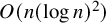 $O(n(\log n)^2)$ edges, improving the previous best bound of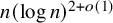 $n(\log n)^{2+o(1)}$ by Tomon. Furthermore, we show that any properly edge-coloured n-vertex graph with $\omega (n\log n)$ edges contains a cycle which is almost rainbow: that is, almost all edges in it have a unique colour. This latter result is tight.


Many Hamiltonian subsets in large graphs with given density
- Part of
-
- Journal:
- Combinatorics, Probability and Computing / Volume 33 / Issue 1 / January 2024
- Published online by Cambridge University Press:
- 02 October 2023, pp. 110-120
-
- Article
- Export citation
-
A set of vertices in a graph is a Hamiltonian subset if it induces a subgraph containing a Hamiltonian cycle. Kim, Liu, Sharifzadeh, and Staden proved that for large $d$, among all graphs with minimum degree $d$,
$d$,  $K_{d+1}$ minimises the number of Hamiltonian subsets. We prove a near optimal lower bound that takes also the order and the structure of a graph into account. For many natural graph classes, it provides a much better bound than the extremal one ( $\approx 2^{d+1}$). Among others, our bound implies that an $n$-vertex $C_4$-free graph with minimum degree $d$ contains at least $n2^{d^{2-o(1)}}$ Hamiltonian subsets.


Disparity-persistence and the multistep friendship paradox
- Part of
-
- Journal:
- Probability in the Engineering and Informational Sciences / Volume 38 / Issue 2 / April 2024
- Published online by Cambridge University Press:
- 25 July 2023, pp. 290-298
-
- Article
-
- You have access
- Open access
- HTML
- Export citation
Ramsey numbers of cycles versus general graphs
- Part of
-
- Journal:
- Forum of Mathematics, Sigma / Volume 11 / 2023
- Published online by Cambridge University Press:
- 17 February 2023, e10
-
- Article
-
- You have access
- Open access
- HTML
- Export citation
-
The Ramsey number $R(F,H)$ is the minimum number N such that any N-vertex graph either contains a copy of F or its complement contains H. Burr in 1981 proved a pleasingly general result that, for any graph H, provided n is sufficiently large, a natural lower bound construction gives the correct Ramsey number involving cycles: $R(C_n,H)=(n-1)(\chi (H)-1)+\sigma (H)$, where $\sigma (H)$ is the minimum possible size of a colour class in a $\chi (H)$-colouring of H. Allen, Brightwell and Skokan conjectured that the same should be true already when $n\geq \lvert H\rvert \chi (H)$.
We improve this 40-year-old result of Burr by giving quantitative bounds of the form $n\geq C\lvert H\rvert \log ^4\chi (H)$, which is optimal up to the logarithmic factor. In particular, this proves a strengthening of the Allen–Brightwell–Skokan conjecture for all graphs H with large chromatic number.


Bipartite-ness under smooth conditions
- Part of
-
- Journal:
- Combinatorics, Probability and Computing / Volume 32 / Issue 4 / July 2023
- Published online by Cambridge University Press:
- 03 February 2023, pp. 546-558
-
- Article
- Export citation
-
Given a family $\mathcal{F}$ of bipartite graphs, the Zarankiewicz number $z(m,n,\mathcal{F})$ is the maximum number of edges in an $m$ by $n$ bipartite graph $G$ that does not contain any member of $\mathcal{F}$ as a subgraph (such $G$ is called $\mathcal{F}$-free). For $1\leq \beta \lt \alpha \lt 2$, a family $\mathcal{F}$ of bipartite graphs is $(\alpha,\beta )$-smooth if for some $\rho \gt 0$ and every $m\leq n$, $z(m,n,\mathcal{F})=\rho m n^{\alpha -1}+O(n^\beta )$. Motivated by their work on a conjecture of Erdős and Simonovits on compactness and a classic result of Andrásfai, Erdős and Sós, Allen, Keevash, Sudakov and Verstraëte proved that for any $(\alpha,\beta )$-smooth family $\mathcal{F}$, there exists $k_0$ such that for all odd $k\geq k_0$ and sufficiently large $n$, any $n$-vertex $\mathcal{F}\cup \{C_k\}$-free graph with minimum degree at least $\rho (\frac{2n}{5}+o(n))^{\alpha -1}$ is bipartite. In this paper, we strengthen their result by showing that for every real $\delta \gt 0$, there exists $k_0$ such that for all odd $k\geq k_0$ and sufficiently large $n$, any $n$-vertex $\mathcal{F}\cup \{C_k\}$-free graph with minimum degree at least $\delta n^{\alpha -1}$ is bipartite. Furthermore, our result holds under a more relaxed notion of smoothness, which include the families $\mathcal{F}$ consisting of the single graph $K_{s,t}$ when $t\gg s$. We also prove an analogous result for $C_{2\ell }$-free graphs for every $\ell \geq 2$, which complements a result of Keevash, Sudakov and Verstraëte.


Cycles of many lengths in Hamiltonian graphs
- Part of
-
- Journal:
- Forum of Mathematics, Sigma / Volume 10 / 2022
- Published online by Cambridge University Press:
- 31 August 2022, e70
-
- Article
-
- You have access
- Open access
- HTML
- Export citation
-
In 1999, Jacobson and Lehel conjectured that, for $k \geq 3$, every k-regular Hamiltonian graph has cycles of $\Theta (n)$ many different lengths. This was further strengthened by Verstraëte, who asked whether the regularity can be replaced with the weaker condition that the minimum degree is at least $3$. Despite attention from various researchers, until now, the best partial result towards both of these conjectures was a $\sqrt {n}$ lower bound on the number of cycle lengths. We resolve these conjectures asymptotically by showing that the number of cycle lengths is at least $n^{1-o(1)}$.


ALMOST THEOREMS OF HYPERARITHMETIC ANALYSIS
- Part of
-
- Journal:
- The Journal of Symbolic Logic / Volume 88 / Issue 2 / June 2023
- Published online by Cambridge University Press:
- 01 August 2022, pp. 664-696
- Print publication:
- June 2023
-
- Article
-
- You have access
- Open access
- HTML
- Export citation
-
Theorems of hyperarithmetic analysis (THAs) occupy an unusual neighborhood in the realms of reverse mathematics and recursion theoretic complexity. They lie above all the fixed (recursive) iterations of the Turing Jump but below ATR $_{0}$ (and so $\Pi _{1}^{1}$-CA $_{0}$ or the hyperjump). There is a long history of proof theoretic principles which are THAs. Until Barnes, Goh, and Shore [ta] revealed an array of theorems in graph theory living in this neighborhood, there was only one mathematical denizen. In this paper we introduce a new neighborhood of theorems which are almost theorems of hyperarithmetic analysis (ATHAs). When combined with ACA $_{0}$ they are THAs but on their own they are very weak. We generalize several conservativity classes ( $\Pi _{1}^{1}$, r- $\Pi _{2}^{1}$, and Tanaka) and show that all our examples (and many others) are conservative over RCA $_{0}$ in all these senses and weak in other recursion theoretic ways as well. We provide denizens, both mathematical and logical. These results answer a question raised by Hirschfeldt and reported in Montalbán [2011] by providing a long list of pairs of principles one of which is very weak over RCA $_{0}$ but over ACA $_{0}$ is equivalent to the other which may be strong (THA) or very strong going up a standard hierarchy and at the end being stronger than full second order arithmetic.


Transversal Ck-factors in subgraphs of the balanced blow-up of Ck
- Part of
-
- Journal:
- Combinatorics, Probability and Computing / Volume 31 / Issue 6 / November 2022
- Published online by Cambridge University Press:
- 30 May 2022, pp. 1031-1047
-
- Article
- Export citation
-
For a subgraph $G$ of the blow-up of a graph $F$, we let $\delta ^*(G)$ be the smallest minimum degree over all of the bipartite subgraphs of $G$ induced by pairs of parts that correspond to edges of $F$. Johansson proved that if $G$ is a spanning subgraph of the blow-up of $C_3$ with parts of size $n$ and $\delta ^*(G) \ge \frac{2}{3}n + \sqrt{n}$, then $G$ contains $n$ vertex disjoint triangles, and presented the following conjecture of Häggkvist. If $G$ is a spanning subgraph of the blow-up of $C_k$ with parts of size $n$ and $\delta ^*(G) \ge \left(1 + \frac 1k\right)\frac n2 + 1$, then $G$ contains $n$ vertex disjoint copies of $C_k$ such that each $C_k$ intersects each of the $k$ parts exactly once. A similar conjecture was also made by Fischer and the case $k=3$ was proved for large $n$ by Magyar and Martin.
In this paper, we prove the conjecture of Häggkvist asymptotically. We also pose a conjecture which generalises this result by allowing the minimum degree conditions in each bipartite subgraph induced by pairs of parts of $G$ to vary. We support this new conjecture by proving the triangle case. This result generalises Johannson’s result asymptotically.


THEOREMS OF HYPERARITHMETIC ANALYSIS AND ALMOST THEOREMS OF HYPERARITHMETIC ANALYSIS
- Part of
-
- Journal:
- Bulletin of Symbolic Logic / Volume 28 / Issue 1 / March 2022
- Published online by Cambridge University Press:
- 31 March 2022, pp. 133-149
- Print publication:
- March 2022
-
- Article
-
- You have access
- Open access
- HTML
- Export citation
-
Theorems of hyperarithmetic analysis (THAs) occupy an unusual neighborhood in the realms of reverse mathematics and recursion-theoretic complexity. They lie above all the fixed (recursive) iterations of the Turing jump but below ATR $_{0}$ (and so $\Pi _{1}^{1}$-CA $_{0}$ or the hyperjump). There is a long history of proof-theoretic principles which are THAs. Until the papers reported on in this communication, there was only one mathematical example. Barnes, Goh, and Shore [1] analyze an array of ubiquity theorems in graph theory descended from Halin’s [9] work on rays in graphs. They seem to be typical applications of ACA $_{0}$ but are actually THAs. These results answer Question 30 of Montalbán’s Open Questions in Reverse Mathematics [19] and supply several other natural principles of different and unusual levels of complexity.
This work led in [25] to a new neighborhood of the reverse mathematical zoo: almost theorems of hyperarithmetic analysis (ATHAs). When combined with ACA $_{0}$ they are THAs but on their own are very weak. Denizens both mathematical and logical are provided. Generalizations of several conservativity classes ( $\Pi _{1}^{1}$, r- $\Pi _{1}^{1}$, and Tanaka) are defined and these ATHAs as well as many other principles are shown to be conservative over RCA $_{0}$ in all these senses and weak in other recursion-theoretic ways as well. These results answer a question raised by Hirschfeldt and reported in [19] by providing a long list of pairs of principles one of which is very weak over RCA $_{0}$ but over ACA $_{0}$ is equivalent to the other which may be strong (THA) or very strong going up a standard hierarchy and at the end being stronger than full second-order arithmetic.


Short proofs for long induced paths
- Part of
-
- Journal:
- Combinatorics, Probability and Computing / Volume 31 / Issue 5 / September 2022
- Published online by Cambridge University Press:
- 11 February 2022, pp. 870-878
-
- Article
-
- You have access
- Open access
- HTML
- Export citation
-
We present a modification of the Depth first search algorithm, suited for finding long induced paths. We use it to give simple proofs of the following results. We show that the induced size-Ramsey number of paths satisfies $\hat{R}_{\mathrm{ind}}(P_n)\leq 5 \cdot 10^7n$, thus giving an explicit constant in the linear bound, improving the previous bound with a large constant from a regularity lemma argument by Haxell, Kohayakawa and Łuczak. We also provide a bound for the k-colour version, showing that $\hat{R}_{\mathrm{ind}}^k(P_n)=O(k^3\log^4k)n$. Finally, we present a new short proof of the fact that the binomial random graph in the supercritical regime, $G(n,\frac{1+\varepsilon}{n})$, contains typically an induced path of length $\Theta(\varepsilon^2) n$.


Proper Lie automorphisms of incidence algebras
- Part of
-
- Journal:
- Glasgow Mathematical Journal / Volume 64 / Issue 3 / September 2022
- Published online by Cambridge University Press:
- 07 February 2022, pp. 702-715
- Print publication:
- September 2022
-
- Article
- Export citation
TOUGHNESS, ISOLATED TOUGHNESS AND PATH FACTORS IN GRAPHS
- Part of
-
- Journal:
- Bulletin of the Australian Mathematical Society / Volume 106 / Issue 2 / October 2022
- Published online by Cambridge University Press:
- 03 December 2021, pp. 195-202
- Print publication:
- October 2022
-
- Article
- Export citation
-
A graph G is called a $(P_{\geq n},k)$-factor-critical covered graph if for any $Q\subseteq V(G)$ with $|Q|=k$ and any $e\in E(G-Q)$, $G-Q$ has a $P_{\geq n}$-factor covering e. We demonstrate that (i) a $(k+1)$-connected graph G with at least $k+3$ vertices is a $(P_{\geq 3},k)$-factor-critical covered graph if its toughness $t(G)>{(2+k)}/{3}$; (ii) a $(k+2)$-connected graph G is a $(P_{\geq 3},k)$-factor-critical covered graph if its isolated toughness $I(G)>{(5+k)}/{3}$. Furthermore, we show that the conditions on $t(G)$ and $I(G)$ are sharp.


