To save content items to your account,
please confirm that you agree to abide by our usage policies.
If this is the first time you use this feature, you will be asked to authorise Cambridge Core to connect with your account.
Find out more about saving content to .
To save content items to your Kindle, first ensure no-reply@cambridge.org
is added to your Approved Personal Document E-mail List under your Personal Document Settings
on the Manage Your Content and Devices page of your Amazon account. Then enter the ‘name’ part
of your Kindle email address below.
Find out more about saving to your Kindle.
Note you can select to save to either the @free.kindle.com or @kindle.com variations.
‘@free.kindle.com’ emails are free but can only be saved to your device when it is connected to wi-fi.
‘@kindle.com’ emails can be delivered even when you are not connected to wi-fi, but note that service fees apply.
Humanity’s impact on the planet is undeniable. Fairly and effectively addressing environmental problems begins with understanding their causes and impacts. Is over-population the main driver of environmental degradation? Poverty? Capitalism? Poor governance? Imperialism? Patriarchy? Clearly these are not technical questions, but political ones.
Updated to cover new debates, data, and policy, and expanded to include chapters on colonialism, race and gender, and the impacts of energy and resource extraction, this book introduces students to diverse perspectives and helps them develop an informed understanding of why environmental problems occur.
How the international community should act is deeply contested. Guiding students through the potential responses, including multilateral diplomacy, transnational voluntary action, innovative financial mechanisms, problem displacement, consumer-focused campaigns, and resistance, this book explains the different forms of political action, their limitations and injustices.
Online resources include lecture slides, a test bank for instructors, updated weblinks to videos, and suggested readings for students.
Humanity’s impact on the planet is undeniable. Fairly and effectively addressing environmental problems begins with understanding their causes and impacts. Is over-population the main driver of environmental degradation? Poverty? Capitalism? Poor governance? Imperialism? Patriarchy? Clearly these are not technical questions, but political ones.
Updated to cover new debates, data, and policy, and expanded to include chapters on colonialism, race and gender, and the impacts of energy and resource extraction, this book introduces students to diverse perspectives and helps them develop an informed understanding of why environmental problems occur.
How the international community should act is deeply contested. Guiding students through the potential responses, including multilateral diplomacy, transnational voluntary action, innovative financial mechanisms, problem displacement, consumer-focused campaigns, and resistance, this book explains the different forms of political action, their limitations and injustices.
Online resources include lecture slides, a test bank for instructors, updated weblinks to videos, and suggested readings for students.
Humanity’s impact on the planet is undeniable. Fairly and effectively addressing environmental problems begins with understanding their causes and impacts. Is over-population the main driver of environmental degradation? Poverty? Capitalism? Poor governance? Imperialism? Patriarchy? Clearly these are not technical questions, but political ones.
Updated to cover new debates, data, and policy, and expanded to include chapters on colonialism, race and gender, and the impacts of energy and resource extraction, this book introduces students to diverse perspectives and helps them develop an informed understanding of why environmental problems occur.
How the international community should act is deeply contested. Guiding students through the potential responses, including multilateral diplomacy, transnational voluntary action, innovative financial mechanisms, problem displacement, consumer-focused campaigns, and resistance, this book explains the different forms of political action, their limitations and injustices.
Online resources include lecture slides, a test bank for instructors, updated weblinks to videos, and suggested readings for students.
Humanity’s impact on the planet is undeniable. Fairly and effectively addressing environmental problems begins with understanding their causes and impacts. Is over-population the main driver of environmental degradation? Poverty? Capitalism? Poor governance? Imperialism? Patriarchy? Clearly these are not technical questions, but political ones.
Updated to cover new debates, data, and policy, and expanded to include chapters on colonialism, race and gender, and the impacts of energy and resource extraction, this book introduces students to diverse perspectives and helps them develop an informed understanding of why environmental problems occur.
How the international community should act is deeply contested. Guiding students through the potential responses, including multilateral diplomacy, transnational voluntary action, innovative financial mechanisms, problem displacement, consumer-focused campaigns, and resistance, this book explains the different forms of political action, their limitations and injustices.
Online resources include lecture slides, a test bank for instructors, updated weblinks to videos, and suggested readings for students.
Humanity’s impact on the planet is undeniable. Fairly and effectively addressing environmental problems begins with understanding their causes and impacts. Is over-population the main driver of environmental degradation? Poverty? Capitalism? Poor governance? Imperialism? Patriarchy? Clearly these are not technical questions, but political ones.
Updated to cover new debates, data, and policy, and expanded to include chapters on colonialism, race and gender, and the impacts of energy and resource extraction, this book introduces students to diverse perspectives and helps them develop an informed understanding of why environmental problems occur.
How the international community should act is deeply contested. Guiding students through the potential responses, including multilateral diplomacy, transnational voluntary action, innovative financial mechanisms, problem displacement, consumer-focused campaigns, and resistance, this book explains the different forms of political action, their limitations and injustices.
Online resources include lecture slides, a test bank for instructors, updated weblinks to videos, and suggested readings for students.
Humanity’s impact on the planet is undeniable. Fairly and effectively addressing environmental problems begins with understanding their causes and impacts. Is over-population the main driver of environmental degradation? Poverty? Capitalism? Poor governance? Imperialism? Patriarchy? Clearly these are not technical questions, but political ones.
Updated to cover new debates, data, and policy, and expanded to include chapters on colonialism, race and gender, and the impacts of energy and resource extraction, this book introduces students to diverse perspectives and helps them develop an informed understanding of why environmental problems occur.
How the international community should act is deeply contested. Guiding students through the potential responses, including multilateral diplomacy, transnational voluntary action, innovative financial mechanisms, problem displacement, consumer-focused campaigns, and resistance, this book explains the different forms of political action, their limitations and injustices.
Online resources include lecture slides, a test bank for instructors, updated weblinks to videos, and suggested readings for students.
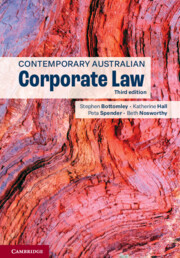
The rules, doctrines and policies governing corporations and financial markets are complex and ever-changing in response to global, social and commercial needs. Contemporary Australian Corporate Law is a well-established foundational text that explores these rules and laws in detail, including the history and context in which they are established, how they are developed and how they will continue to evolve in the future. The third edition has been updated to include recent developments in legislation, case law and corporate governance. Discussion of financial markets and financial services has been modified in response to changes to the Corporations Act 2001 including amendments to the continuous disclosure requirements in Chapter 6CA. It considers the recently passed Treasury Laws Amendment (Financial Market Infrastructure and Other Measures) Act 2024 which covers climate disclosure obligations. The clear structure and detailed exploration of key concepts encourages students to develop a contextual understanding of corporate law.
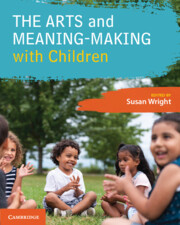
Quality arts education delivered in early childhood has a positive impact on children's early development and learning. The Arts and Meaning-Making with Children focuses on arts in early childhood through the lenses of 'play' and 'meaning making'. Examples of creative arts such as drawing, painting, sculpture, movement, music, dramatising and storytelling are provided alongside theoretical principles, to showcase how children can express ideas and make meaning from early ages. Each chapter includes case studies, examples of arts-based research, links to the EYLF guidelines, and end-of-chapter questions and activities to engage students and help them reflect on the content. Suggested adaptations for younger and older children are also included. Written by experienced educators, artists and academics, The Arts and Meaning-Making with Children offers a focused, in-depth exploration of the arts in early childhood and is an essential resource for pre-service and in-service educators.
This chapter discusses the crucial concept of effect sizes in quantitative research, particularly within the field of applied linguistics. Understanding effect sizes is essential for interpreting research findings, as they provide a measure of the strength of relationships or differences observed in data. We will explore various types of effect sizes, including Cohen’s d, Hedges’s g, Glass’s delta, eta squared, and partial eta squared, as well as odds and risk ratios, the phi coefficient, and Cramer’s V. You will learn how to calculate and interpret these effect sizes, gaining practical insights into their application in applied linguistics studies. Additionally, the chapter examines correlational effect sizes, such as the Pearson product moment correlation coefficient, Spearman’s rank correlation coefficient, and Kendall’s tau correlation coefficient, along with the coefficient of determination (R²). By the end of this chapter, you will not only see the importance of effect sizes but also be able to differentiate between them, calculate them, and interpret their implications for analyzing data in applied linguistics research.
This chapter explores the stages involved in qualitative research data analysis and how to conduct it effectively. We begin by defining qualitative data analysis and explaining its purpose, which is to derive meaning from nonnumeric data, often gathered through interviews, observations, or textual sources. We then discuss the coding process, a key element in qualitative data analysis, explaining its role in organizing data into meaningful categories and how it can be conducted. We distinguish between different types of coding, such as open and axial coding. Throughout, we emphasize the importance of rigor and validity in ensuring credible results. We also provide an overview of various methods used in qualitative data analysis, including content analysis, thematic analysis, discourse analysis, and grounded theory, highlighting how these approaches can be applied to identify patterns, themes, and insights from the data. By the end of the chapter, you will have a comprehensive understanding of qualitative data analysis and the skills to apply these methods effectively.
This chapter explores qualitative research design with a focus on its application in applied linguistics. You will be introduced to key qualitative research designs, including ethnography, grounded theory, case study, narrative inquiry, and discourse studies. The chapter also discusses discourse analysis, examining subtypes such as conversational analysis, interaction analysis, and critical discourse analysis. Through this chapter, you will gain a solid understanding of the distinctive features of each design, learn how they differ, and develop the ability to identify when a particular design is most appropriate. By the end, you will know how to critically evaluate various qualitative research designs, understanding their strengths, limitations, and applicability to different research questions in applied linguistics.
This chapter offers a comprehensive guide to conducting an effective literature review and developing research questions—both essential components of the research process. We begin by defining a literature review and discussing its importance in shaping effective research. The chapter outlines the steps for conducting a thorough review, including identifying relevant sources, evaluating study quality, and synthesizing findings. We explore various types of literature reviews, their characteristics, and specific purposes, providing a clear understanding of what constitutes a good literature review. Additionally, the chapter guides you through developing research questions, emphasizing their significance and key characteristics. It also discusses various sources for formulating research questions and demonstrates how to create clear, concise, and effective questions for both qualitative and quantitative research. By the end of this chapter, you will be able to create effective literature reviews and research questions, which provide a solid foundation for your research projects.
This chapter aims to provide a comprehensive understanding of reliability and validity in qualitative research. While in quantitative studies, reliability refers to the consistency of measurements, such as obtaining the same test results when administered repeatedly to the same group, qualitative research interprets these concepts differently. In qualitative research, reliability refers to consistency in the researcher’s observations and interpretations, while validity addresses the trustworthiness of the data collected. This chapter will emphasize the critical role of these concepts in ensuring robust qualitative studies. It explores key aspects like credibility, transferability, dependability, and confirmability, which serve as foundational measures of reliability and validity in qualitative studies. Practical strategies for ensuring reliability and validity, such as member checking, prolonged engagement, and triangulation, are also discussed in depth. By the end of the chapter, you will be prepared to apply these concepts and strategies to enhance the reliability and validity of your qualitative research, leading to more credible and trustworthy findings.