To save content items to your account,
please confirm that you agree to abide by our usage policies.
If this is the first time you use this feature, you will be asked to authorise Cambridge Core to connect with your account.
Find out more about saving content to .
To save content items to your Kindle, first ensure no-reply@cambridge.org
is added to your Approved Personal Document E-mail List under your Personal Document Settings
on the Manage Your Content and Devices page of your Amazon account. Then enter the ‘name’ part
of your Kindle email address below.
Find out more about saving to your Kindle.
Note you can select to save to either the @free.kindle.com or @kindle.com variations.
‘@free.kindle.com’ emails are free but can only be saved to your device when it is connected to wi-fi.
‘@kindle.com’ emails can be delivered even when you are not connected to wi-fi, but note that service fees apply.
Discussing different aspects of the philosophy of Gilbert Simondon, Raymond Ruyer, Gilles Deleuze and Félix Guattari, and including some contemporary thinkers, such as Catherine Malabou, Bernard Stiegler, Bruno Latour, and Donna J. Haraway, Audronė Žukauskaitė argues that all these threads can be seen as precursors to organism-oriented ontology.
Rather than concentrating on individuals and identities, contemporary philosophy is increasingly interested in processes, multiplicities and potential for change, that is, in those features that define living beings. Žukauskaitė argues that the capacity of living beings for self-organisation, creativity and contingency can act as an antidote to biopolitical power and control in the times of the Anthropocene.
Across Europe there are numerous examples of recent linkages between universities and Islamic seminaries. In Germany the federal 'top-down' experiment, now over ten years old, of establishing departments of Islamic theology in five universities has now recruited over two thousand students, many of whom will end up teaching confessional Islam religious education in schools. In the UK, local partnerships have been developed at under- and postgraduate level between e.g. Warwick, Birmingham and Middlesex universities and Islamic seminaries representing a range of Islamic traditions. Similar experiences are being developed on a smaller scale in other countries. These developments, which have taken place against a backdrop of state pressure to 'integrate' Islam and address 'radicalisation', challenge university traditions of 'scientific' approaches to the study of Islam as well as the confessional expectations of faith-based Islamic theological training. By looking more closely at the developing experience in Germany and Britain and selected other countries this volume explores how the two approaches are finding ways of creative cooperation.
This book focuses on the transitional period in late Koryŏ and early Chosŏn dynasty Korea from the 1270s until 1506, situating the Korean peninsula in relation to the neighbouring Mongol Empire and Ming Dynasty China. During this period, Korean statesmen expanded their influence over people and the environment. Human-animal relations became increasingly significant to politics, national security, and elite identities. Animals, both wild and domestic, were used in ritual sacrifices, submitted as tax tribute, exchanged in regional trade, and most significantly, hunted. Royal proponents of the hunt, as a facet of political and military legitimacy, were contested by a small but vocal group of officials. These vocal elites attempted to circumscribe royal authority by co-opting hunting through Confucian laws and rites, either by regulating the practice to a state ritual at best, or, at worst, considering it a barbaric exercise not befitting of the royal family. While kings defied the narrow Confucian views on governance that elevated book learning over martial skills, these tensions revealed how the meaning of political power and authority were shaped. Attention to animals and hunting depicts how a multiplicity of cultural references - Sinic, Korean, Northeast Asian, and steppeland - existed in tension with each other and served as a battleground for defining politics, society, and ritual. Kallander argues that rather than mere resources, animals were a site over which power struggles were waged.
What happens when we redirect our lines of reading along new lines, borders, and orientations-those that fail to fit neatly into the cardinal directions of North, South, East, and West? What is, who stands for, and where exactly is the 'Orient' in British Romantic poetry? To where does the 'Orient' lead? Romanticism and the Poetics of Orientation responds by tracing shifting orientations-cultural, geographical, aesthetic, racial, and gendered- through Orientalist sites, subjects, and settings. Kim coins the term 'poetics of orientation' to describe a poetics newly aware of cultural difference as a site of aesthetic contestation. She focuses on the contestation that occurs at the site of the lyric subject. A 'poetics of orientation', rather than situating the lyric subject in assumed racial whiteness, repositions the lyric subject within discussions of Orientalism and racial formation, tracing the white supremacist logics that have for too long been dismissed as inessential or nonconsequential to Romantic studies.
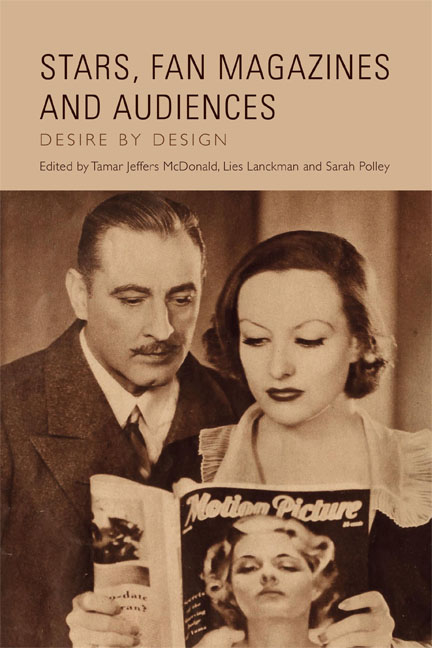
Stars, Fan Magazines and Audiences focuses on movie magazines, publications first produced in 1911 for movie fans in the United States, but soon reaching movie fans on a global scale. Bringing together scholars from different disciplinary and international contexts, this collection considers fan magazines as objects of material and visual history. The designer's toolkit aided movie magazines in seducing their readers, with visual elements, such as fonts, photographs, and illustrations, plied across both editorial content and advertisements. In this way, each issue was subtly designed to stir desire in readers and moviegoers alike. By focusing on the visual aspects of fan magazines, a key pleasure for readers, this collection provides detailed examples of how visual elements engendered aspiration and longing, thus putting the visual contents of the fan magazines at the heart of every chapter.
Spinoza and Marx would seem to be two very opposed philosophers. Spinoza was interested in contemplating eternal truths of nature while Marx was interested in the history of capital.
Franck Fischbach suggests that by reading the two together we may better understand both history and nature, as well as ourselves, making possible a new understanding of human nature. Rather than see history and nature as opposed, history is nothing but the constant transformation of nature.
Central to this transformation is a new understanding of alienation not as loss of the self in a world of objects, but as loss of objects in a world that disconnects us from nature and social relations, leaving us isolated as a subject. The isolated individual, the kingdom within a kingdom, as Spinoza put it, is not the condition of our liberation but the basis of our subjection.
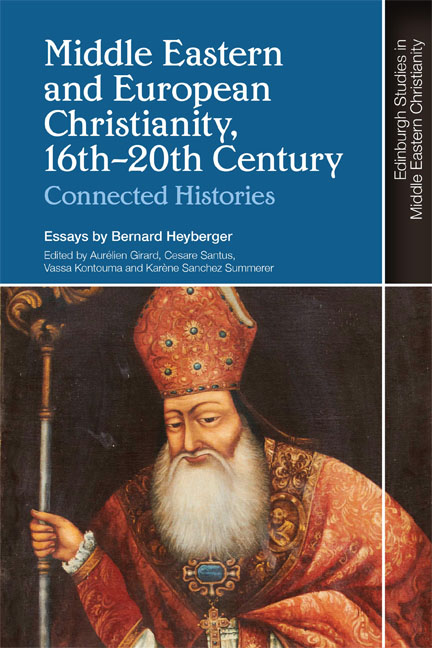
Bernard Heyberger carved new paths in the study of Middle Eastern Christianity, helping to shed fresh light on aspects of the connected history of the Near East that had previously been neglected. His ground-breaking work has spanned many disciplines, his approach to 'global microhistory' has focused on questions of space and circulation (people, texts and objects). In addition, he has made important contributions to the social and cultural history of Early Modern Catholicism.
In order to allow the international public to access his work, this volume presents a collection of Heyberger's studies for the first time in English, accompanied by an essay discussing the importance and legacy of his work and a comprehensive bibliography of his writings.
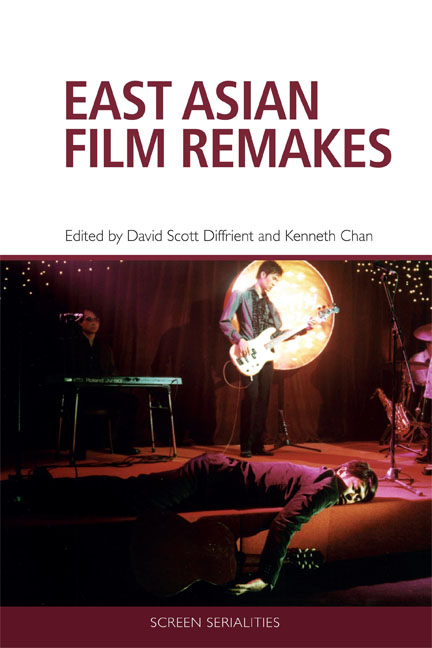
This wide-ranging, historically grounded exploration of motion picture remakes produced in East Asia brings together original contributions from experts in Chinese, Hong Kong, Japanese, South Korean, and Taiwanese cinemas and puts forth new ways of thinking about the remaking process as both a critically underappreciated form of artistic expression and an economically motivated industrial practice. Exploring everything from ethnic Korean filmmaker Lee Sang-il's 'Unforgiven' (2013), a Japanese remake of Clint Eastwood's Western of the same title, to Stephen Chow's 'The Mermaid' (2016), a Chinese slapstick reimagining of Walt Disney's 'The Little Mermaid' (1989) and Hans Christian Andersen's 1837 fairy tale, East Asian Film Remakes contributes to a better understanding of cinematic remaking across the region and offers vital alternatives to the Eurocentric and Hollywood-focused approaches that have thus far dominated the field.
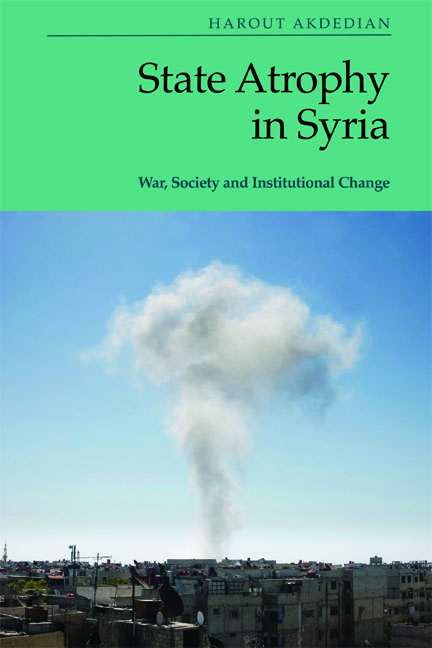
How do governments contribute to galvanizing public hostility against state institutions? And what are the consequences of undermining the state as a strategy for political change?
State Atrophy in Syria highlights how the appropriation of state institutions by public officials limits public capacity to demand accountability from government without having to challenge the state or its institutions. This creates consequential trade-offs for the public. As the Syrian case demonstrates, the undermining of state institutions failed to depose the dictatorship, continuously benefitted Assad's foreign allies, Russia and Iran, and engendered unprecedented levels of predatory practices against the public.
As Syria continues to play a strategic role on the world's political stage, the book outlines the country's tragic decade and derives lessons for state-society relations in Syria and beyond.
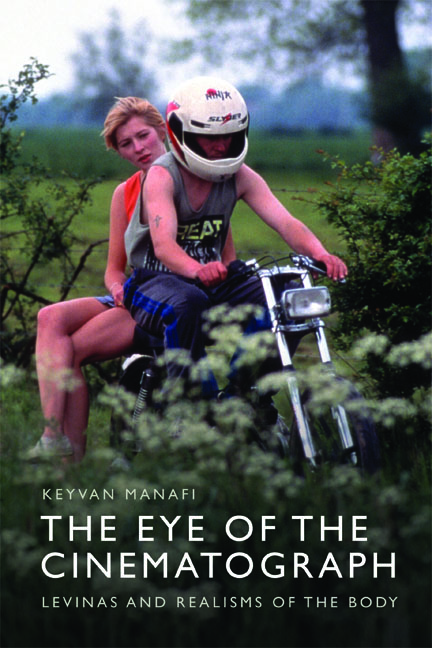
The Eye of the Cinematograph investigates the ethical and aesthetic implications of the automatic formation of the body's image by the camera. Drawing on Emmanuel Lévinas' thought, Manafi asks what happens when the other makes their body available to the gaze of the camera to be automatically recorded, and this giving of the body is preserved within the image, juxtaposed with other images to allude to a story that might otherwise remain untold.
To locate the ethical at this intersection of the body and the aesthetic, this book articulates an ethical account of a diverse range of film theories to demonstrate alternative encounters with the other that realisms of the body offer. Manafi discusses works by Chantal Akerman, Bruno Dumont, Pedro Costa, Gus Van Sant, Sohrab Shahid Saless, Abbas Kiarostami, Amir Naderi, Jafar Panahi, Carlos Reygadas and Andy Warhol to make a case for the ethics and aesthetics of incompleteness and performative failure.
Between 1050 and 1128 the nomadic Seljuq Turks and European Crusaders subjected northern Syria to a series of invasions from the east and west. The migration of militant peoples from the Eurasian Steppe and Western Europe inserted a new set of political elites into a complex frontier zone already beset by numerous conflicts fought along several ethno-cultural and religious contours. Surveying this turbulent chapter of Syrian history from multiple perspectives, this book recalibrates the underlying power dynamics of the late eleventh and early twelfth centuries. Through this regional focus, it reassesses both the impact that the establishment of Turkish and Crusader lordships had upon bilad al-sham (Greater Syria) and the reactions of Syria's established ruling elite to this unprecedented sequence of events.
Providing a unique reinterpretation of the political situation in bilad al-sham during one of the most important periods in Middle Eastern history, this book proposes a new model for understanding the political dynasties of this period and questions the significance ascribed to the establishment of the Crusader States by modern historians.
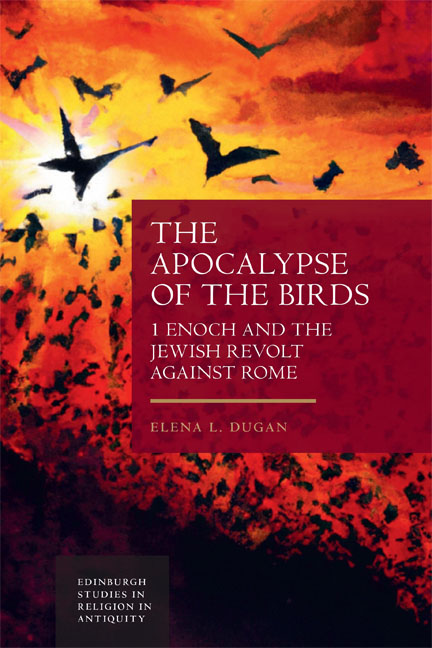
This book identifies a new apocalyptic work-the Apocalypse of the Birds-contained in the Animal Apocalypse (1 Enoch 85-90), and argues that it is born of the chaotic Jewish-Christian world of the first-century CE. Through close analysis of texts and manuscripts in Ge'ez, Greek, Aramaic, and Hebrew, alongside historical and numismatic evidence, the book situates the Apocalypse of the Birds alongside literature and historiography of the first-century CE. It argues that the Apocalypse of the Birds belongs to the heady early days of the First Jewish Revolt, and represents crucial evidence for the early optimism of the revolutionaries, the dynamic and progressive evolution of the Animal Apocalyptic tradition, and the blurred and porous boundaries between Jew and Jesus-follower in the first-century CE.
What did modernist writers make of the things of war? Often studied for its fascination with the shell-shocked mind, modernist literature is also packed with more tangible traces of the First World War, from helmets, trench art and tombstones to shop signs, military newspapers and leaflets dropped from airplanes. Modernism, Material Culture and the First World War asks what experimental writers read into these objects and how the conflict prompted a way of thinking of their writings as objects in their own right. Ranging from 1914 to the early 1940s, the chapters in this book weave together prose and poems by Guillaume Apollinaire, E. M. Forster, Virginia Woolf, Hope Mirrlees and Mulk Raj Anand.
This is a book about discontents of the global order. Building on the innovative reading of ISIS as an international revolutionary actor, it explores the movement's everyday political practices and confronts them with other global revolutionaries to arrive at a novel understanding of revolutionary agency in global politics. Benefiting in particular from Deleuze and Guattari's notion of war machine and understanding of hybridity, the book shows how modern revolutionaries seek to disrupt the existing Westphalian order of modern states, yet are inevitably entangled with it and even reproduce in their conduct its founding principles. Including discussions on movements ranging from the Bolsheviks and Palestinian revolutionary groups to Khomeinists, to insurgents in Iraq and ISIS, the book pushes forward debates informed by critical social theory of revolution, violence, resistance and global order.
Can wisdom and power, philosophy and politics be combined to secure justice? Or are there formidable tensions, even antagonism between them? Socrates presented the philosopher king as an aspiration, a remedy for the ills of the world. He also called it a paradox, a challenging and perplexing innovation. Ever since, the philosopher king has been an enduring and fascinating question as well as a political aspiration. Modern Philosopher Kings examines the philosopher king as a paradox and an ambitious modern project. Through a series of diverse studies ranging from the prophet, intellectual, artist, advisor, scientist and 'the people' it examines modern attempts to unite wisdom and power. In doing so it reveals the different ways and the extent to which wisdom can be empowered and power ennobled.
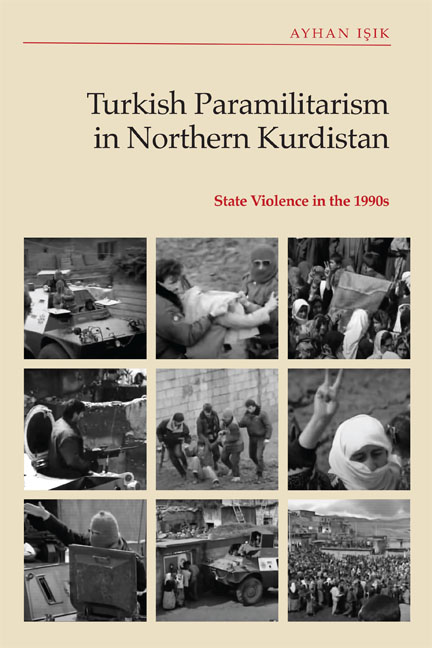
This book focuses on paramilitary groups and the Turkish state relations during the armed conflict between the state and the Kurdistan Workers' Party (Partiya Karkerên Kurdistan, PKK) in the 1990s. In August 1984, the PKK launched an armed struggle against the Turkish state, leading to a full-blown war throughout the 1990s. During the conflict, the Turkish state established new armed groups, many of them having a paramilitary character. This research investigates the ways in which these paramilitary groups emerged, functioned, and were deactivated. It analyses the historical background, transformations and continuities of these paramilitary groups, and examines their violence against civilians particularly in two regions of Northern Kurdistan: Batman province and Cizre district.
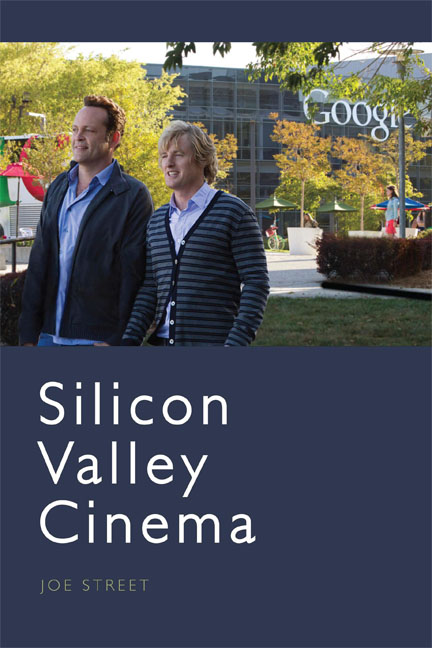
Silicon Valley corporations now dominate our daily lives to the extent that many of us now question their ability to determine the direction of human life in the twenty-first century. The 2010s saw Hollywood filmmakers engaging in this very debate. Through a sequence of films ranging from biopics of key Silicon Valley leaders to science fiction action films and whimsical workplace comedies, Hollywood films probed Silicon Valley's impact on our past, present, and future. Silicon Valley Cinema analyses these films, arguing that they seek to encourage scepticism about our Silicon Valley overlords and have us step back from our immersion in Silicon Valley's world. Doing so, they suggest, might make our working lives more pleasurable, our world a better place, and might even help us avoid a war with genetically enhanced apes or avert a robot-led apocalypse.
Ben Moore presents a new approach to reading urban modernity in nineteenth-century literature, by bringing together hidden, mobile and transparent features of city space as part of a single system he calls 'invisible architecture'. Resisting narratives of the nineteenth-century as progressing from concealment to transparency, he instead argues for a dynamic interaction between these tendencies. Across two parts, this book addresses a range of apparently disparate buildings and spaces. Part I offers new readings of three writers and their cities: Elizabeth Gaskell and Manchester, Charles Dickens and London, and Émile Zola and Paris, focusing on the cellar-dwelling, the railway and river, and the department store respectively. Part II takes a broader view by analysing three spatial forms that have not usually been considered features of nineteenth-century modernity: the Gothic cathedral, the arabesque and white walls. Through these readings, the book extends our understanding of the uneven modernity of this period.
The erosion of trust in politicians and political institutions is a major challenge in early twenty-first-century democratic politics, not least in the United States. This book argues that, rather than being a flaw or corruption, the potential for political distrust must be understood as an essential feature of representative democracy because representation works through performance. The book explores performance as a constellation of factors: scripts, embodiment, ideas of selfhood, and historical norms and ideals. It draws on key scholarship of political representation, rhetoric, and populism; on theories of performativity, theatricality, and acting; and on interviews the author conducted with political speechwriters spanning presidential administrations and campaigns from Ronald Reagan to Barack Obama to demonstrate both that distrust is inherent in representative politics and that in mainstreamed populism distrust becomes a focal point around which the theatre of politics revolves.
Organised into four thematic sections covering issues of text and context, revolution, the working class and other social groups, and the relevance of the Manifesto today, this useful book introduces the Manifesto for students just coming to Marxism. Providing an historical background to the writing of the Manifesto, it highlights the main political and philosophical issues raised in the text, and opens upcurrent debates for which the Manifesto has relevance. Includes an all-new translation of the Manifesto itself.