To save content items to your account,
please confirm that you agree to abide by our usage policies.
If this is the first time you use this feature, you will be asked to authorise Cambridge Core to connect with your account.
Find out more about saving content to .
To save content items to your Kindle, first ensure no-reply@cambridge.org
is added to your Approved Personal Document E-mail List under your Personal Document Settings
on the Manage Your Content and Devices page of your Amazon account. Then enter the ‘name’ part
of your Kindle email address below.
Find out more about saving to your Kindle.
Note you can select to save to either the @free.kindle.com or @kindle.com variations.
‘@free.kindle.com’ emails are free but can only be saved to your device when it is connected to wi-fi.
‘@kindle.com’ emails can be delivered even when you are not connected to wi-fi, but note that service fees apply.
Provides a forceful corrective to the idea that Britain 'stood alone' until the invasion of the Soviet Union and the attack on Pearl Harbor brought about 'the Grand Alliance'.
An interdisciplinary volume of essays identifying the impact of technology on the age-old cultural practice of collecting, as well as the opportunities and pitfalls of collecting in the digital era.
Explores the impact of Jesuit missions on the development of Christianity in postcolonial French Africa, which found itself at the centre of major shifts and struggles within global Christianity and world politics.
This book explores the dimensions of the coming-of-age novel in the Spanish-speaking Caribbean and Brazil, focusing on works by eight major Afro-Latin American writers.
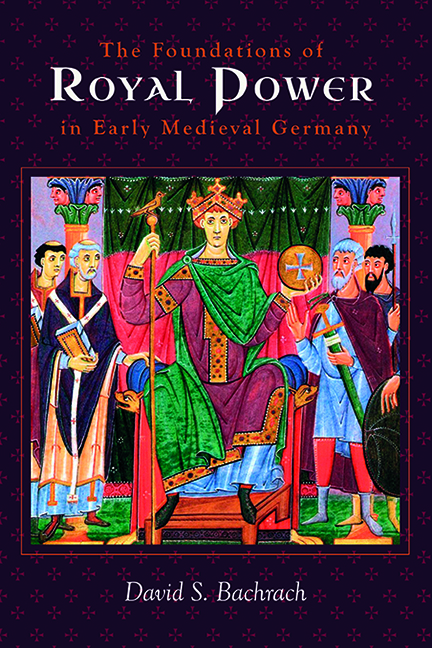
The Ottonians were the most powerful monarchs in Europe during the tenth and early eleventh century, exercising hegemony in West Francia, Burgundy, and much of Italy in addition to ruling the German realm. Despite their enormous political and military success, however, the foundations of Ottonian royal power remain highly contested and largely misunderstood, with previous scholarship tending to have considered it as depending upon the ability of the king to shape and harness the power of the nobles.
This study challenges the dominant historiographical paradigm, rebutting the notion of putative power-sharing between the king and the nobility, which simply did not exist as a legal class in the Ottonian century. Rather, it argues that the foundations of royal power under the Ottonians comprised not only their own enormous wealth, but also their unique authority and ability, through the royal ‘bannum’ the authority inherent in the office of the king, to make use of the economic resources and labour of the broad free population of the realm, as well as from the Church. In so doing, the Ottonians drew upon and further developed the administrative, institutional, and ideological inheritance of their Carolingian predecessors, in the process creating the dominant polity in tenth-century Europe.
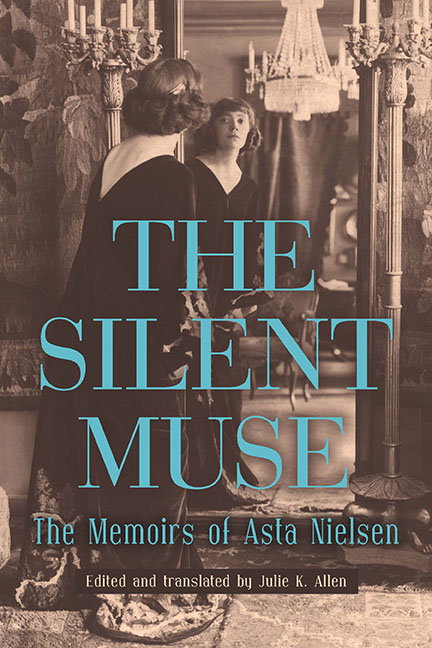
The memoirs of the pioneering Danish silent film star Asta Nielsen in English translation for the first time, with scholarly introduction and annotations.
Thomas Traherne (1637-1674), a clergyman of the Church of England during the Restoration, was little known until the early twentieth century, when his poetry and Centuries of Meditations were first printed. Since then, only selections of his poetry and devotional writings have been fully-edited for print publication, a gap which The Works of Thomas Traherne will remedy by bringing together Traherne's extant works, including his notebooks, in a definitive, printed edition for the first time.
This book explores the processes by which the people of Edinburgh came to understand and order their world and establish those scales of judgement through the acquisition of geographic knowledge.
As the drama of recognition demonstrates, kinship drama makes for good narrative, playing off expectations of familial solidarity against the ambivalences of kinship to structure narrative episodes in an arc that is opened by the introduction of tension between kin and ultimately resolved by the recognition of mutual, interdependent kinship between the parties involved. Relations between parents and their children are stretched almost to breaking point in Old Norse myth and legend in the knowledge that the foundation of solidarity among kinsmen remains secure. These narratives may provide the space in which to probe the frustrations and ambivalences inherent in kinship so long as the conception of mutual and transpersonal kinship also mediated through these literary depictions reassures their audience of the fundamental resilience of parent-child relationships in literature and, by extension, in life.
The literary depictions of parent-child relations, therefore, inform us about the anxieties and ambivalences provoked by kinship in the Old Norse society that told and retold these mythic-heroic narratives, articulating their hopes and fears about what kinship might look like in a variety of imagined situations. As Boose has pointed out, the family is a public as well as a private institution, the emotional ambivalences of which ‘get written not in its official documents but inside the masking devices of what we might call the archetypal histories of family – its literary and mythic texts.’ These ambivalences are no less authentic for having been expressed via imaginative literary means and suggest that while kinship was vitally important to Old Norse society it was also deeply problematic.
At the same time, it must be borne in mind that kinship and family relations in a literary setting operate under a different set of rules and strictures to those enacted in the outside world. Within the confines of the literary text, family relations are less constrained by certain cultural taboos, like incest or kin-slaying, but simultaneously more constrained by considerations of narrative composition, such as the demand for balance between tension and closure within a literary production. Any successful narrative requires both conflict and suspense in order to retain an audience's interest and attention.
Upon first being introduced to Án's eighteen-year-old son Þórir in Áns saga bogsveigis, Án's wife Jórunn remarks to her husband: ‘Kemr at því, sem mælt er, at hverr er auðgari en þykkist. Ekki sagðir þú mér, at þú ættir þenna son, en þó hygg ek ekki aukasmíði vera munu at honum’ (It comes to this, as it is said, that everyone is wealthier than he thinks. You didn't tell me that you had this son, but still I think that he will turn out to be no trifling piece of work). Her comment is characteristic of the attitude toward fathers and sons in the fornaldarsögur.
While less imaginative and descriptive than Guðrún's laments in Hamðismál and Atlamál or Ingibjörg's marital justification in Hrólfs saga Gautrekssonar, the same transpersonal conception of kinship so vividly expressed by their use of arboreal imagery also underlies Jórunn's offhand congratulation of Án's paternity. Þórir is immediately considered an asset to his father despite the lack of any personal relationship between them, raised as he was by his maternal relatives. His identity as his father's son must be proven, by means of a golden ring, but once this is done Þórir belongs to his father, compared in Jórunn's implicit analysis to any other precious possession and valued as a productive addition to Þórir's household. Jórunn reckons he will be ekki aukasmíði (no trifling piece of work, not a superfluous thing), the smíð element of the compound conveying expectations of tangible contributions to his father's wealth. The verb eiga (to have) which she uses to denote the relation is also used to denote marriage in Old Norse sagas where it affirms the objectification of the bride by both her husband and her father. Here, instead the son is objectified. Just as father and son are bound together in the patronymic naming system (see Chapter 5) the son is here presented as an extension of the father to whom he belongs. Solidarity between father and son is assumed not on the basis of any emotional relationship but because the father-son relationship is conceived of as inherently solidary, though the balance of power is weighted firmly in the father's favour.
Intergenerational family relationships in the mythic-heroic corpus are not confined to parent-child relations. These are supplemented by, or contrasted with, relationships between uncles and aunts and nephews and nieces, which have the same intergenerational dynamic even though the participants are less closely related. Aunts and uncles were important members of the wider kin-group. According to Grágás, uncles and nephews were liable to pay or receive a two-mark ring in compensation for the other's killing, more than first cousins but less than fathers, brothers, sons, grandfathers and grandsons. Given the ambivalence which so often characterises parent-child relations, it might be expected that these relationships could prove to be substitutes for dysfunctional or broken parent-child relationships. From the literary evidence of the Íslendingasögur, Steven B. Johnson and Ronald C. Johnson suggest that ‘uncles and nephews were strong allies’, citing the example of Njáll and his nephew Þorgeir skorargeir in Njáls saga. Still, they do not discount the evidence of Orkneyinga saga, where the joint rule of an uncle and his nephew quickly results in the nephew's murder, suggesting alliance between uncle and nephew was by no means guaranteed in Old Norse literature.
Johnson and Johnson's is one of the few studies to examine uncle-nephew relations in Old Norse literature in any detail. In the fornaldarsögur, depictions of interactions between uncles or aunts and nephews or nieces are less common than parent-child interactions and have received minimal critical attention. This chapter will explore relationships between children and their parents’ siblings in Old Norse myth and legend, relationships complicated by the fact that, in certain incestuous cases, a child's uncle or aunt can double as their parent. Since it has long been suggested that the relationship between the mother's brother and his nephew was an especially intimate one in Germanic society, I devote particular attention to this bond. The foundation for this intimate assessment of maternal uncle-nephew relations in Germanic culture has rested largely on Tacitus’ description in Germania:
sororum filiis idem apud avunculum qui apud patrem honor. quidam sanctiorem artioremque hunc nexum sanguinis arbitrantur et in accipiendis obsidibus magis exigunt, tamquam et animum firmius et domum latius teneant.
‘Kinship is fascinating’, argued Jennifer Mason, not as an expression of her own subjective opinion but as ‘a sociological observation’. Regardless of historical or geographical situation, kinship has been and remains a source of considerable fascination for every human society, including that of medieval Iceland. Old Norse society was far from unique in its fixation on the intrafamilial dynamics which are reflected so vividly in the imaginative literary works of the period. More striking perhaps is the nuance and complexity with which kinship is approached in Old Norse myth and legend. Parent-child relationships within mythic-heroic literature are characterised by a tension between ambivalence and transpersonal solidarity. Within these narratives, kinsmen are conceived as inherently co-present in one another, sharing mutual being and leading interdependent lives. Concurrently, parent-child interactions are also wracked by ambivalence which is founded on the ever-changing nature of intergenerational relationships, whereby the younger generation matures to accede to the kinship roles of the elder, which must inevitably decline and pass away.
This study has tried to emphasise the fluidity and dynamism of Old Norse kinship as an experiential participation rather than an organising principle. As such, arguments about the existence or non-existence of kinship as an abstract category in the Middle Ages become irrelevant. Hans Hummer has recently argued that ‘kinship did not exist in Europe during the Middle Ages’, in the sense that it was ‘never an indigenous category; […] never an abstraction by which people of the time conceptualized their social life’. As the foregoing analysis has made plain, however, seeking kinship purely as an abstraction can only blind us to the realities of kinship as intersubjective being. If kinship is understood as a process of transpersonal identification, then it becomes impossible to extract kinship as an ‘ontological category’ from its means of expression and its embodied experience. The writers and the audiences of the sources I have studied, and indeed the people of the Middle Ages more widely, were not anthropologists. It was not incumbent upon them to demarcate and define a single term which could encompass everything which the discipline of anthropology has assigned to the study of kinship.
Just as the daughter has been characterised in some critical discourse by absence, so too has the mother, who is, after all, only a daughter who has reached a later stage in life. Julia Kristeva linked the mother to her understanding of the Abject, ‘the “object” of primal repression’ which we are compelled to cast away from ourselves to preserve our own sense of identity. Paul Acker points out that ‘patriarchal culture will have a stake in this form of abjection in its attempt to control the means of reproduction. The mother line may be effaced in the system of patronymics’. His observation, made with reference to the abjection of the maternal in Beowulf, chimes with Sinclair's identification of an ‘ideological “writing-out” of the feminine in the medieval articulation of its own social ideal’ in the French chansons de geste and with Jochens’ remarks on the absence of the kvennkné (female link) in medieval Norwegian conceptions of royal genealogy. In fact, Renate Blumenfeld-Kosinski argues that medieval texts of all modes, ‘legal and canonical as well as literary […] strangely neglect women's role as mothers’. Nikki Stiller talks even more dramatically of the ‘total obliteration of the mother's role found in medieval works’ since ‘in medieval times, all children were their father's children’. Certainly, the vast majority of mothers in Old Norse legendary literature are peripheral figures who do not intrude on the all-male genealogy, but sit invisibly in what Sinclair, following Sarah Kay, calls the ‘white space’ of the text where they function as an empty conduit for the male dynastic line, filling in ‘the interstices of a tale told between men’. However, this position, she suggests, can allow apparently marginalised mothers to ‘undercut the very system they apparently seek to maintain’, which has relegated them and their contributions to absent status.
If maternity is conspicuous by its absence, receiving ‘scant attention in the sagas’, it has still been noted that when mothers do appear ‘they are more likely to be callous or indifferent’, than devoted and affectionate. Jochens argues that the depiction of motherhood in Old Norse literature only reinforces the assertions of recent scholarship that ‘love and self-service (beyond the demands imposed by biology) are not universal and “essential” features of maternal behaviour’.