To save content items to your account,
please confirm that you agree to abide by our usage policies.
If this is the first time you use this feature, you will be asked to authorise Cambridge Core to connect with your account.
Find out more about saving content to .
To save content items to your Kindle, first ensure no-reply@cambridge.org
is added to your Approved Personal Document E-mail List under your Personal Document Settings
on the Manage Your Content and Devices page of your Amazon account. Then enter the ‘name’ part
of your Kindle email address below.
Find out more about saving to your Kindle.
Note you can select to save to either the @free.kindle.com or @kindle.com variations.
‘@free.kindle.com’ emails are free but can only be saved to your device when it is connected to wi-fi.
‘@kindle.com’ emails can be delivered even when you are not connected to wi-fi, but note that service fees apply.
Continues the Society's commitment to historical and interdisciplinary research into the early and central Middle Ages, demonstrating its belief that the close interrogation of primary sources can yield new insights into or important revisions of our understanding of the past.
The convocation records of the Churches of England and Ireland are the principal source of our information about the administration of those churches from middle ages until modern times. They contain the minutes of clergy synods, the legislation passed by them, tax assessments imposed by the king on the clergy, and accounts of the great debates about religious reformation; they also include records of heresy trials in the fifteenth and sixteenth centuries, many of them connected with the spread of Lollardy. However, they have never before been edited or published in full, and their publication as a complete set of documents provides a valuable resource for scholarship.
This volume contains the acts of convocation during the reigns of Richard II and Henry IV, extensively reconstructed from the archbishops' registers [which are in disorder for much of this period] and other sources. The texts enable us to chart the evolution of the convocations to the point where they became virtually synonymous with provincial councils, and show how they dealt with the challenge posed by John Wycliffe and the early Lollards.
This long-awaited study explores the creation of NBC-TV's landmark 1952-53 WWII documentary series, with particular attention to its evocative Rodgers-Bennett score.
During a period of tumultuous change in English political, religious and cultural life, music signified the unspeakable presence of the divine in the world for many.
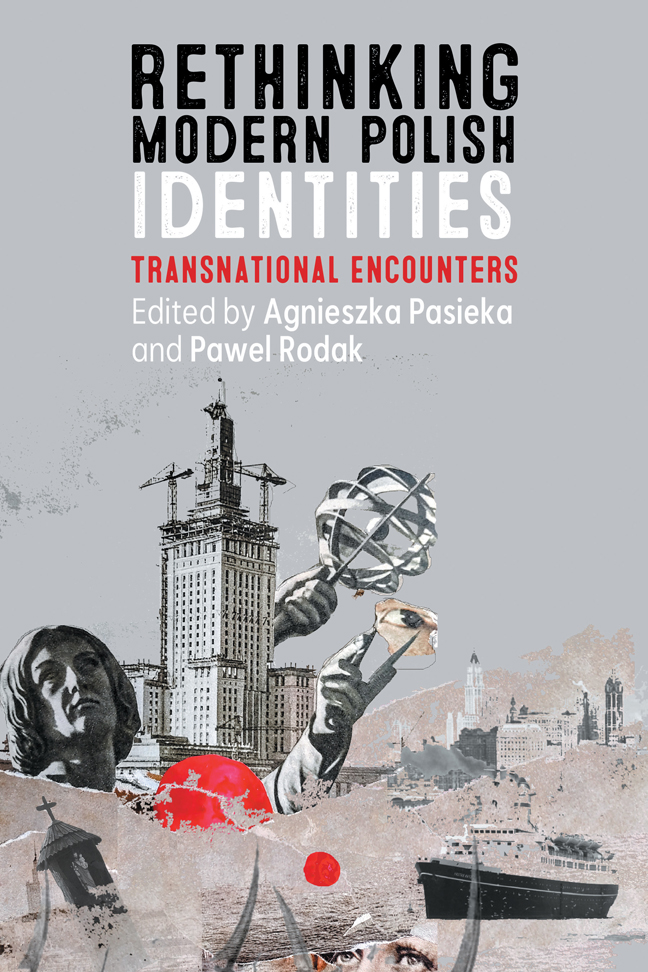
A critical examination of the category of 'Polishness' - that is, the formation, redefinition, and performance of various kinds of Polish identities - from a wide range of disciplinary perspectives.
A collection of new essays bringing into view the push and pull of the national and the international in the German-language cultural field of the period.
A new translation of Rilke's great work with close readings of each of the ten elegies elucidating how their poetic attributes constitute their meaning.
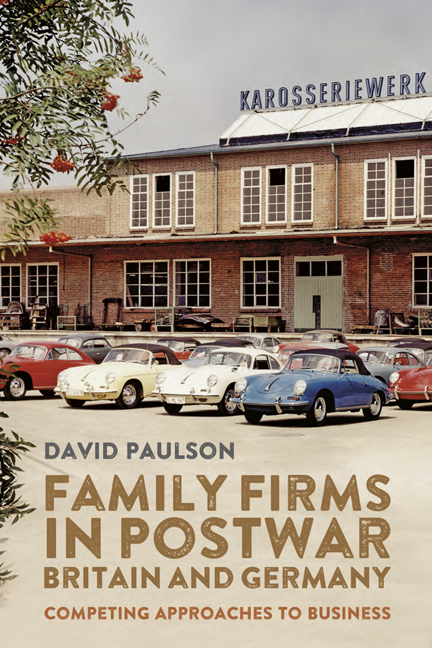
Examines the culture and conduct of six small and medium-sized enterprises (SMEs) in England and West Germany from 1945 to the late-1970s, drawing on numerous archives in Germany and Britain.
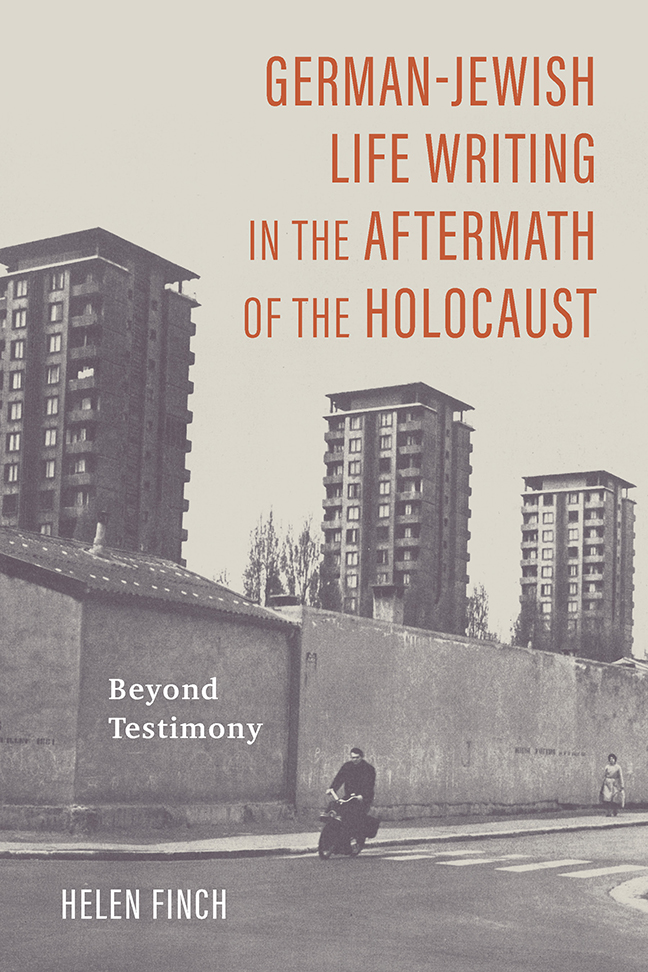
Shows how Adler, Wander, Hilsenrath, and Klüger intertwine transgressive political criticism with the shadow of trauma, revealing new perspectives on canon formation and exclusion in postwar German literature.
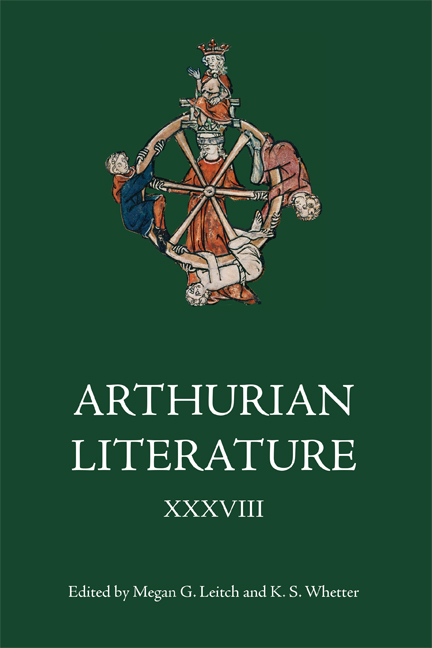
This issue offers stimulating studies of a wide range of Arthurian texts and authors, from the Middle Ages to the nineteenth century, among which is the first winner of the Derek Brewer Essay Prize, awarded to a fascinating exploration of Ragnelle's strangeness in 'The Weddyng of Syr Gawen and Dame Ragnelle'. It includes an exploration of Irish and Welsh cognates and possible sources for Merlin; Bakhtinian analysis of Geoffrey of Monmouth's playful discourse; and an account of the transmission of Geoffrey's text into Old Icelandic. In the Middle English tradition, there is an investigation of material Arthuriana in 'Sir Gawain and the Green Knight', followed by explorations of shame in Malory's 'Morte Darthur'. The post-medieval articles see one paper devoted to the paratexts of sixteenth-century French Arthurian publishers; one to eighteenth-century Arthuriana; and one to a range of nineteenth-century rewritings of the virginity of Galahad and Percival's Sister. Two Notes close this volume: one on Geoffrey's 'Vita Merlini' and a possible Irish source, and one on a likely source for Malory's linking of Trystram with the Book of Hunting and Hawking in an early form of 'The Book of St Albans'.
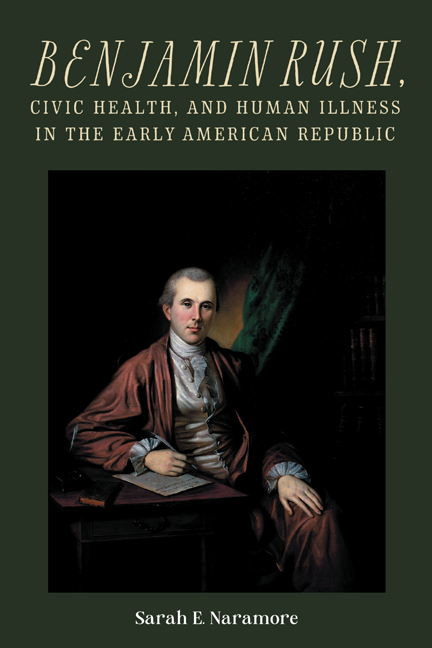
A close look at the medical and social theories of prominent Philadelphia physician Benjamin Rush and how they influenced American medicine in the years following the Revolutionary War.
A history of the nineteenth-century poetry of slavery and freedom framed as an argument about the nature of poetry itself: why we write it, why we read it, how it interacts with history.
The convocation records of the Churches of England and Ireland are the principal source of our information about the administration of those churches from middle ages until modern times. They contain the minutes of clergy synods, the legislation passed by them, tax assessments imposed by the king on the clergy, and accounts of the great debates about religious reformation; they also include records of heresy trials in the fifteenth and sixteenth centuries, many of them connected with the spread of Lollardy. However, they have never before been edited or published in full, and their publication as a complete set of documents provides a valuable resource for scholarship.
This volume contains the details of the many convocations summoned during a time when they were not allowed to transact business. Included are the names of those who were summoned to attend, the loyal addresses which they invariably offered to the reigning monarch and some fascinating details of disputed elections, particularly that in Exeter in 1818-20. The petitions presented to the government for the revival of convocation after 1837 are also printed, and the volume includes a complete list of convocation sermons and prolocutors from the middle ages to the present day.
A timely and important examination of the environmental crises, investigating their biophysical, political, economic, and socio-cultural aspects, that reveals why previous conservation efforts failed.
Using pedagogy as a lens through which to explore issues of gender, social class, power and hegemony, Cohen's study makes a major new contribution to the study of education in eighteenth-century England.
This study takes the sword beyond its functional role as a tool for killing, considering it as a cultural artifact , and the broader meaning and significance it had to its bearer.
Documents recording the interrogation of sixteen women and the nature of their unusual spiritual practices, now available in a full edition and, for the first time, a full English translation.
The first comprehensive study of this war helps us understand how England and Scotland defended their frontier, and how political issues drove the wars.
Medieval manorial records provide a unique insight into the economic and social life of local communities, as well as the different approaches adopted by lords in managing their estates.