To save content items to your account,
please confirm that you agree to abide by our usage policies.
If this is the first time you use this feature, you will be asked to authorise Cambridge Core to connect with your account.
Find out more about saving content to .
To save content items to your Kindle, first ensure no-reply@cambridge.org
is added to your Approved Personal Document E-mail List under your Personal Document Settings
on the Manage Your Content and Devices page of your Amazon account. Then enter the ‘name’ part
of your Kindle email address below.
Find out more about saving to your Kindle.
Note you can select to save to either the @free.kindle.com or @kindle.com variations.
‘@free.kindle.com’ emails are free but can only be saved to your device when it is connected to wi-fi.
‘@kindle.com’ emails can be delivered even when you are not connected to wi-fi, but note that service fees apply.
New essays examining the intellectual allegiances of Coetzee, arguably the most decorated and critically acclaimed writer of fiction in English today and a deeply intellectual and philosophical writer.
An invigorating annual for those who are interested in medieval textual cultures and open to ways in which diverse post-modern methodologies may be applied to them." Alcuin Blamires Review of English Studies"
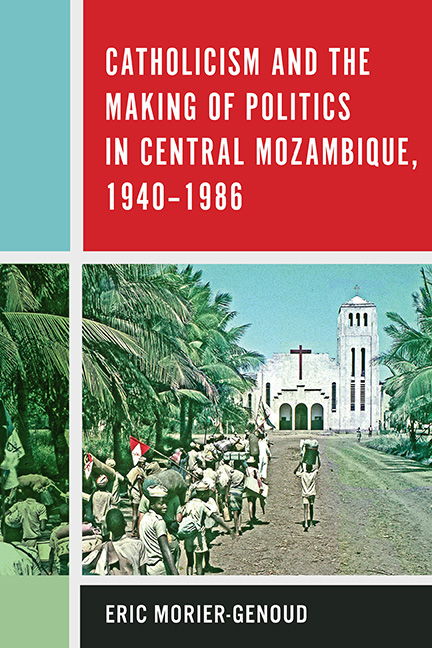
In 1986, at the end of the period under study, the Catholic Church in central Mozambique was an institution facing difficult times. The government stood in a tense relation with it, and the civil war that had started in 1976 now engulfed state, society, and economy across the whole territory. By 1986, the church had completed its transition from an imperial institution into a fully national church and, even more importantly, had finished its transformation from an institution that engaged directly with the state, whether in alliance with or opposition to it, to an institution and moral force that stood above the Mozambican state and society. This was a typical neo-Thomist position, fully supported by the Vatican, which allowed the institution not only to advise all sides of the war to negotiate a political settlement but also to offer itself as an impartial and independent mediator in such negotiations. It attempted this, unsuccessfully, in 1985–86, and successfully in 1989 when talks between the Mozambican government and the armed guerrillas opened in Rome. The mediators during the negotiations, which were to last until 1992, were the Catholic community of Sant'Egidio, the Italian state, and the Catholic Church of Mozambique.
The man who represented the Mozambican Catholic Church as mediator was, surprisingly, not the highest cleric of the country, Cardinal Dom Alexandre dos Santos of Maputo, but Archbishop Jaime Gonçalves of Beira. The latter was chosen because apparently the guerrillas saw the cardinal as too favorable to the government and the archbishop as more impartial. Dom Jaime talked to both the government and the guerrillas, and traveled to the bush in 1988 to visit RENAMO's leadership, before the talks started. The difference between these two postcolonial episcopal figures was one of personality, but it echoed colonial times when Dom Sebastião Soares de Resende of Beira stood in contrast to the prelates of Lourenço Marques. Dom Sebastião ran an open, internally diverse, and decentralized institution whereas the prelates in the southernmost diocese administered the church in a top-down fashion, and possibly even had a regal view of their role, with the cardinal of Lourenço Marques being chauffeured around his diocese in a Rolls-Royce.
When Dom Sebastião Soares de Resende arrived in Beira in 1943, there were only four religious orders working in his diocese, alongside some secular priests. By 1960, there were fifteen congregations in the diocese (see table 2.1 for the distribution of the congregations) and by 1974 yet another three, bringing the total to eighteen missionary organizations by the time of independence. This increase was the result of the bishop's energetic national and international recruitment drive to attract more religious orders and missionaries to Beira. For Dom Sebastião, their enlistment was a way to strengthen the church and build Christendom in Beira, by opening up and staffing mission stations, occupying the extent of the diocese, and converting the population. Yet, while the arrival of these congregations did indeed lead to significant results—the rate of Catholics in the population increased fivefold between 1944 and 1964—the multiplication of religious congregations also fostered intra-Catholic diversity. The congregations came with their own traditions, histories, and charismas, with distinct types of personnel from a range of countries, and with various training, sent to Mozambique for disparate aims and for different lengths of time. While the diversity of the church in Beira might have been rather unique (most dioceses only had a few congregations), it is representative of the church worldwide and makes for a perfect case to study the church's internal diversity and dynamics.
To explore the dynamics and internal diversities of the church in central Mozambique—imperial in nature since there was no local clergy until the 1960s—this chapter looks at the origins of the different congregations, compares them with each other, and investigates how the bishop managed this diversity. As we saw in the introduction, in theory, things are relatively clear and regulated by canon law: the bishop rules over all clergy in his diocese while the heads of the congregations rule over the internal affairs of their congregations. In practice, however, things are more complicated as both authorities rule over the same individuals, the affairs of the diocese and those of a congregation overlap, and the distinction between them is uncertain.
The years 1967 and 1968 constituted another turning point in central Mozambique. First, after a long illness the bishop of Beira, Dom Sebastião Soares de Resende, passed away in January 1967, which significantly destabilized the church. His successor, nominated the same year, struggled to impose his rule on the diocese. Because the clergy disagreed over the way in which the diocese should be run, “mistakes” on the part of the bishop led to more conflict among the priests and a situation that subsequent bishops struggled to surmount. Second, in 1967 Frelimo successfully relaunched its liberation war in the province of Tete, leading to armed conflict in the region. It directly affected the Catholic Church in central Mozambique and added to the sense of crisis among Catholics in the area. Third, in August 1968 Salazar suffered a heart attack, and Marcelo Caetano took over the position as ruler of the Estado Novo. In the ensuing “Marcellist spring” the new prime minister introduced some reforms, but they were neither as extensive as expected nor sufficient to change the course of the regime and the liberation struggle. The war continued and expanded, increasing the sense of crisis in the state, society, and church of central Mozambique—until the Estado Novo regime fell in 1974.
The crisis that the Diocese of Beira (and the new Diocese of Tete, after it was founded in 1962) faced after 1967 was unprecedented. During it missionaries fought each other, the bishop of Beira fled his diocese and stepped down, and some clergy engaged directly in politics on both sides of the divide. It is important to analyze this historical moment for itself as well as for what it reveals about the inner workings and evolution of the Catholic Church, including the relationship between the church hierarchy and the religious orders. Through these crises, various internal documents from this period were made public or ended up in the hands of outsiders.
The Vatican established the Diocese of Beira in 1940. Its founding marked a rupture in the way the church had been organized in the area until then and opened up a new era of Catholic development. It was the direct result of the signing of a Concordat and a Missionary Accord between the Vatican and the Portuguese government that same year. These international agreements aimed at establishing a harmonious relationship between church and state, both in the metropole and in the colonies. They set up a framework that allowed the church to expand but also controlled the way it could operate. Among others, they stipulated that the Catholic Church had to be structured into dioceses (and not vicariates) in the Portuguese colonies and that all bishops had to be Portuguese.
The coming pages aim to explicate the context and structuring of the Diocese of Beira as well as reveal the personality and orientation of the bishop of Beira beyond the “political paradigm.” Rather than investigate who benefited most from the alliance between church and state, the chapter analyzes the nature of the alliance between the two and investigates what the Catholic Church did thanks to (or in spite of) it. It looks at the the history and unfolding of the post-1940 church–state alliance, it investigates the training, personality, and inclinations of the first bishop of Beira, and it analyzes the overall achievements of the Catholic institution in Central Mozambique in terms of occupation, infrastructure, and personnel.
The Vatican, Portugal, and Beira
The history of the Catholic Church in Mozambique is one of grandeur in the sixteenth and seventeenth centuries, decline in the eighteenth century, and collapse by the mid-nineteenth century. The church set foot in southeast Africa in 1498 when a priest accompanying Vasco de Gama on his way to India disembarked on the Island of Mozambique. As the Portuguese proceeded to build forts in the region in the following decades, the Catholic institution built churches next to these fortresses and sent clergymen to serve there. Soon Jesuits and Dominican friars engaged in a broader evangelization drive.
In 1971 the war of liberation in Mozambique entered its seventh year. It had not reached the Diocese of Beira yet, but the church there was facing a deep crisis all the same. The clergy was profoundly divided over theology and politics. An increasing number of religious and lay individuals condemned the alliance between the Vatican and the Portuguese colonial state (an alliance formalized in 1940 by a concordat and a Missionary Accord) and favored African nationalism and the independence of Mozambique. Some missionaries were even helping Africans join the liberation struggle and fight the war in the neighboring Diocese of Tete. At the same time, other missionaries in Beira diocese, mostly of Portuguese nationality, opposed African nationalism and remained faithful to the Portuguese colonial state and project. They believed in the Portuguese Empire, or its reform, and supported its fight to keep “terrorism” and “communism” at bay. When the war finally reached the Diocese of Beira in 1973, these missionaries increased their collaboration with the authorities, and some of them went on to actively support the army and the state security police.
The division of the clergy in Beira in the 1970s was not just political in nature. It was theological too, with heated debates about what kind of pastoral approach the Catholic Church and its clergy should adopt, which church model it should favor, and to whose benefit. Most of the Portuguese missionaries (primarily Jesuits and Franciscans) were in favor of a pastoral approach that focused on converting Africans to a Portuguese-centered Catholicism. They wished for a religious and cultural conversion, and their means remained classic, focused on infrastructure and schooling. In contrast, many foreign missionaries, particularly the White Fathers and the Picpus fathers, as well as some secular Portuguese priests and some sisters, tried to build a locally centered Mozambican church, linked to the Vatican, relying on the laity, and using African forms of liturgy—following the lead of the Second Vatican Council. A few missionaries from the Instituto Español de Misiones Extranjeras (Spanish Institute of Foreign Missions, also called “Burgos fathers”) went further. They promoted a theology of liberation, inspired by the work of their institute in Latin America. They wanted small base communities and not a hierarchical administration or Vaticancentered institutions.
The decolonization process in Mozambique began with a coup d’état in Lisbon on April 25, 1974. Military captains involved in the “colonial wars,” tired of a conflict that they felt could not be won militarily, seized power in Lisbon and put an end to the Estado Novo. Decolonization did not follow immediately. The first transitional government was ambiguous about the empire, some factions, including the new president, showing an interest in an “imperial federation of states.” After a few months and several transitional governments, the new regime eventually committed to a negotiated handover of power. Because Frelimo was the main nationalist movement in Mozambique and had not stopped fighting after the coup d’état, the Portuguese government agreed to enter negotiations on independence with it exclusively. Talks took place in Zambia, leading to an agreement in September 1974. Independence was to be formally granted in June 1975; until then, there was to be a period of transition during which Frelimo and the Portuguese army would together administer the territory. On June 25, 1975, power was duly transferred to Frelimo, and national independence ensued. A period of massive change followed as Portuguese settlers left the country en masse and Frelimo engaged the country on the path of a socialist revolution.
After 1975, all key institutions in Mozambique underwent massive change—the state, the churches, and society more broadly. This happened in a tense regional context, with two white settler regimes, Rhodesia and southern Africa, at its borders, allied to each other and opposed to African independence and socialism. This chapter investigates these radical changes in Mozambique in order to understand how the Catholic Church changed with independence, how it related to the new Frelimo government and its socialist project, and how it reacted to the eruption of a new war, launched by Rhodesia and the Resistência Nacional Moçambicana (Mozambican National Resistance, RENAMO) guerrilla movement. While the period is different, historical works often continue to operate under a “political paradigm” (see the introduction). Trying to break from it, the coming pages aim not to figure out whether the church supported the Revolution or the Counter-Revolution, but to understand how, within the limits of “possibility and constraint,” the church carried on working, reorganized itself, and gave itself a new mission.