To save content items to your account,
please confirm that you agree to abide by our usage policies.
If this is the first time you use this feature, you will be asked to authorise Cambridge Core to connect with your account.
Find out more about saving content to .
To save content items to your Kindle, first ensure no-reply@cambridge.org
is added to your Approved Personal Document E-mail List under your Personal Document Settings
on the Manage Your Content and Devices page of your Amazon account. Then enter the ‘name’ part
of your Kindle email address below.
Find out more about saving to your Kindle.
Note you can select to save to either the @free.kindle.com or @kindle.com variations.
‘@free.kindle.com’ emails are free but can only be saved to your device when it is connected to wi-fi.
‘@kindle.com’ emails can be delivered even when you are not connected to wi-fi, but note that service fees apply.
When I get out in the world and I’m giving talks to zoos and aquariums and science centers who are not, who don't think of the arts as their main thing, I get to teach them that you know why this works? Because art is an important language and you have to know how to use it.
Angela Hazeltine Pozzi
Angela Hazeltine Pozzi grew up visiting her grandparents each summer in Bandon or what was called at that time as Bandon by the Sea. Each visit included hours spent wandering the beaches, investigating the many tide pools that existed among the rocks and watching the waves as they pounded the shore. Prior to the mid-nineteenth century, Bandon and its surrounds that Angela walked through had been inhabited by the Coquille people for thousands of years. They established small villages of planked homes along the estuary of the Coquille River and later traded furs with representatives of the Hudson Bay Company. In 1850, gold was discovered at Whiskey Run Creek just north of Bandon and hundreds of gold-seekers left the fields of southern Oregon to look for gold. Eventually, this led to miners attacking the Na-So-Mah village at the mouth of the Coquille River. Hoping to prevent more attacks, the Coquille signed a treaty in 1854 with the United States government. The treaty did not protect them. Instead, the government moved the Coquille north from their native lands to the Siletz reservation that included other Indigenous groups from along Oregon's Coast. An Act of Congress in 1996 gave the Coquille Tribe a reservation area totaling 6,512 acres which is located in numerous non-contiguous parcels in parts of the communities of Bandon, Barview, Coos Bay and North Bend. “In 2015, 3,200 acres of the Coquille people's ancestral homeland in Curry County was restored to the Tribe, through a partnership with Ecotrust Forest Management, an Oregon-based organization working to transform conventional forest management paradigms.”
Bandon: A Brief History
In the latter half of the eighteenth century, settlers from the Willamette Valley moved into the area and established farms some of which began to grow cranberries. In 1873, George Bennett arrived from Bandon, Ireland, and organized a community of 12 voting members to form an election precinct and to adopt the name of Bandon.
The 362 miles of the Oregon Coast and Coast Range are the most recent additions to Oregon's landmass. Approximately 60 million years ago, an exotic terrane, referred to as the Siletz Terrane, moved by action of plate movement and subduction crashed into Oregon's landmass to create the foundation of the Coast Range. Over millions of years, volcanoes related to the terrane erupted and eroded. Over time, some sediments from the ocean were compressed into thick stacks of sedimentary rocks. Today, many of the older rocks remain beneath the water offshore, but uplift, folding and faulting associated with the subduction zone have pushed up others to add to the Coast Range. With the exception of the slower moving Columbia River, the rivers filled will rain from the Pacific coast storms, race down the tree-filled canyons to the ocean carrying sediment into the ocean which piled up off the coast, covering virtually all of the Oregon seafloor and building unique estuaries at the mouth of rivers. On the northern coast, these rivers include the Nehalem, Nescutta, Siletz and the Yaquina. The rivers on the central and south coast are the Siuslaw, Umpqua, Coos and the Rogue.
The coastline is in general relatively straight which has meant it has been pummeled by unimpeded ocean waves and thus is in a constant state of change due to the erosion caused by the impact of tides, high energy waves and associated landslides. The coastal headlands are particularly harsh environments and the evergreen plants that endure are often less than 6 feet tall and display a variety of wind stresses. The result of the erosion of the Coast Range sandstone hills culminate in inlets of sandy beaches and the giant wind-shaped sand dunes and pocket forest that spread along Oregon's central coast.
The Coast Range is covered in tall coniferous forests of Sitka Spruce, Douglas Fir and Western Hemlock. There are also a range of shrubs including Rhododendron, Salmonberry and Wax Myrtle. Coastal forests are filled with different ferns, lichens and mosses. The southern portion of the Oregon Coast is a more mountainous combination of sea cliffs and is heavily forested with Port Orford Cedar, Coast Redwoods, Douglas Fir and Oregon Myrtle.
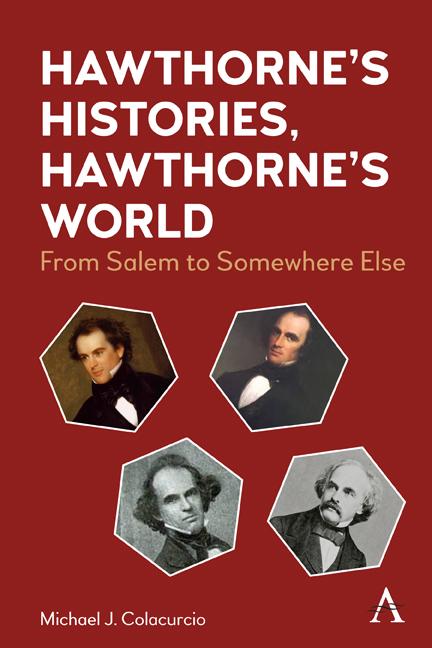
A collection of essays rather than a single, continuously argued monograph, this book collects together the essays Professor Colacurcio has written on Hawthorne since the publication of his ground-breaking Province of Piety, elaborating and refining his analyses of how Hawthorne’s most memorable early tales 'do history,' but proceeding then to explore the later productions of that author’s distinguished career. The result, in Colacurcio’s patient analysis, is something like Hawthorne’s history of his own times.
To be sure, The Scarlet Letter returns to the rich theme we know as 'the matter of the Puritans,' but rides up from a moment, and clearly implies the vibrant but troubled women’s movement; and, imagining the world Hester Prynne as good as predicted, The Blithedale Romance deepens the sensitive but cautious inquiry. Contemporaneous too is the subject of The House of the Seven Gables which, stopping just short of discovering that property is theft, dares to inquire into the murky sources of aristocratic wealth and privilege in his present New England. From the moment between the early tales and the three American romances, the tales and sketches written at the Old Manse in Concord reveal Hawthorne’s fascinated and troubled response to that swirl of contemporary reform movements which historians know as 'Freedom’s Ferment'; several encounter Emerson explicitly, and even more question the life-implications of 'idealism as it appears in 1842,' as Emerson had defined his Transcendentalism.
The Unspoken Morality of Childhood: reflects the thoughts of a senior ethicist. Each essay begins with a homey essay about the kind of everyday event that happens to everyone and then proceeds to discuss the ethical issues raised by such an event. The manuscript is interdisciplinary, located at the intersection of ethics, political psychology, moral psychology, philosophy, and political science/political theory. It uses stories to teach ethics and falls in the virtue ethics approach to ethics, making it perfect as a supplementary text for introductory courses to philosophy, moral psychology and political theory.
The manuscript discusses complex ethical concepts such as identity, agency, self-esteem, forgiveness, relations with our parents, dealing with loss, the moral imagination, and a wide range of other issues that people confront every day.
One of the essays, Walnut, tells a story about the author’s visiting her grandparents in a small, Midwestern town. This is turned into a discussion of the need for roots, how children formulate their sense of self, and how politicians like Donald Trump can turn the love of family and nostalgia for the past into a vicious tool in politics in which clever politicians exploit fears of foreigners and people who are 'not like us'. The essay uses this prompt to discuss the importance of the moral imagination and the ability some have to conceptualize their way out of a dilemma that can plague others.
Good governance and anti-corruption efforts were expected to enhance soft power overseas. The party-state successfully governed China for decades relying on its controversial governance approaches. The country has visibly demonstrated economic and social development. However, China's growing influence has failed to be recognised as soft power, being viewed rather as sharp power most times. The monograph investigates whether China is mindful of exporting its political ideas and whether it considers its governance model to be the pillar of its soft power portfolio. Through framing analysis of media coverage and in-depth interviews with Australian public diplomacy experts, the monograph presents how Australia, a western country with close economic ties with China, interprets China's intended narrative regarding its governance model and development. Examining the congruity between China's projection and Australia's mediation sheds a new light on the relationship between domestic governance, soft power, and sharp power. By sketching out Beijing’s ambitions and attempts, the monograph draws implications about China's public diplomacy and the future global order.
Through six articles written at intervals of about a decade between 1960 and 2020, this book provides an account of the author’s developing political awareness during the period in the context of political events and changes. In this way the book illustrates the social origins of political attitudes, while, at the same time, the articles raise questions about the increasing dominance of political discourse in society. The book suggests that politics is now excessively managed by political professionals and that the challenge for reviving democratic participation is to restore the social dimension of state membership.
Man, it has been said, is the rational animal. Our doings need not be determined by automaticity or instinct, but can result from deliberative thought. Deliberative thought based on beliefs and evaluations regarding ends can be the determining of actions. Accordingly the full exercise of our human rationality calls for trying to do the best we can manage under the circumstances to meet our genuine needs and our appropriate wants—that is, to realize our best interests.
Does Rationality Have Different Forms or Versions?
Rationality has three different modes, cognitive, evaluative, and practical, depending on whether the issue at hand relates to matter of beliefs, evaluation, or action. And accordingly rationality has three departments concerned, respectively, with its cognitive (epistemic), evaluative (normative), and procedural (practical) dimensions. In each case, we look to the best estimate we can make of
the actual truth of belief
the actual worth of things
the actual efficacy of actions
Accordingly, rationality consists on doing the best we can in the circumstances to realize these objectives.
Some theorists distinguish between rationality as it functions in purely inferential proceedings of deriving proper conclusions from given and unevaluated premisses, and a reasonableness for which the acceptability of premisses is a coordinately crucial consideration. Only because he adopts this conception of reason is David Hume able to say that “It is not contrary to reason to prefer the destruction of the whole world to the scratching of my finger.
Hume's rationality confines itself to inferential relationships among accepted contentions, wholly putting aside the issues of evaluation and assessment of merit. But clearly this is in the final analysis incoherent, there being no good reason for dismissing substance in the interests of form evaluative reason is no contradiction in terms. Most sensible people, moreover, would likely see the reasonableness of a belief or action as an essential aspect of its rationality.
Consider addressing the following problems:
Question: What sorts of considerations are good reasons for a belief? Answer: Those that provide cogent supportive grounds (that is, good evidence) for its acceptance.
Question: What sorts of considerations provide good reasons for our evaluations?
Kurt Gödel's 1930s demonstration of the provability incompleteness of axiomatic arithmetic was a monumental achievement in mathematical logic and marked him as “one of the most significant logicians in history.” In the mid-1940s, Kurt Gödel embarked on a systematic study of Leibniz's logic which continued for at least another decade. During this time, I myself was writing my Princeton doctoral dissertation on Leibniz's Cosmology, and we had something of a tug-of-war over the Leibniz material in Firestone Library—each recalling for his own needs material out on loan to the other. (Unfortunately for me, we never made any direct contact.)
Gödel described himself as, unlike Einstein, “following Leibniz rather than Spinoza.” As Gödel studied Leibniz via Louis Couturat's classic La logique de leibniz, he became convinced that resistance to the logico-mathematical Platonic realism of his own position was prefigured in a conspiracy of suppression and silence that had kept Leibniz's similar insights from being properly understood and appreciated. And the more Gödel studied Leibniz, the more keenly he suspected that Leibniz might have anticipated parts of his own work—and especially his demonstration of arithmetic's provabilityincompleteness. Gödel came to this view because he saw Leibniz as a precursor and a kindred spirit whose problematic reception was a foreshadowing of his own difficulties.
But while there is little doubt that Gödel saw Leibniz as a precursor engaged in a kindred inquiry, there remained in his mind questions about the extent of anticipation about findings. Moreover, the matter of motivation remains somewhat obscure. Was he worried that he might have been fully anticipated? (After all, in mathematics all the credit goes to whoever gets there first.) Or was he hopeful of finding that he had succeeded where the great Leibniz had tried and failed? Perhaps we will never know. But either way, Leibniz's work on matters of provability and demonstrative systematization in mathematics was of deep concern to Gödel.
Curiously, Gödel saw Leibniz as a precursor not only in logic and the foundations and epistemology of mathematics but also in metaphysics, the general theory of reality.
The Network for Young Entrepreneurs (NJO) had its origins in the frustrations of a student at the Delft University of Technology, who in the early 1990s had invented a new design of a fuel cell. But he had no idea how to bring his invention to market. In the last year of his studies at the University, he had noted that there was very little, if any, education in how ventures were set up and run. For lack of a better option, he then joined a consulting firm, Arthur D. Little. Together with a few colleagues, he suggested that the consulting firm organize a course on how own businesses are started.
The first step of the team was to visit the deans of the different faculties of Delft University to elicit their support. After all, a good connect to the University and its curriculums was an important factor in determining the success of the course. The first signs were not very encouraging. A few faculties and departments were considering their own academic courses in entrepreneurship. Others considered the proposed curriculum to have insufficient theory to be part of a university program. And for some, the proposal simply was not a topic of interest. Fortunately, there was one professor in the faculty of “Science, Technology and Society” (nowadays called Technology Policy and Management) who understood what NJO was about.
Driving Principles
The proposed venture had five basic principles:
1. Driving objectives were twofold: to help students who sooner or later wanted to be involved in venturing to understand what it takes to set up a successful business, and where possible to help them actually set up their new firms. In that sense, the course differed fundamentally from the average business course that teaches how to run a business, not how to start it.
2. For entrepreneurs by entrepreneurs: to the extent possible, the participants would work together to explore and develop the different skills needed to start their company. Furthermore, instruction would be given as much as possible by alumni and external experts in the field of areas like accounting, employment law, finance and so on.
The Second-Generation Universities (2GU; see Chapter 1) have had two functions: education, aiming at conveying existing knowledge and skills to new generations of students; and research, generating new knowledge for society. Through these traditional functions, the university has provided benefits to society since the Middle Ages. Now it is clear that there is a need for change toward the 3GU (Wissema 2009); a third function is warranted: a more direct contribution to economic development, and an active involvement of the university in addressing society’s developmental challenges.
The university is part of the modern public education system, which had been initiated in response to economic and social dynamics that led to the Industrial Revolution in the eighteenth century. This could also be called the “Educational Revolution” akin to other revolutions such as the agricultural (around 10,000 BC), the European “Commercial Revolution” of the tenth century (Lopez and Lopez 1976, 950–1350) and the “Industrial Revolution” (Gordon and Schultz 2020). The university is also expected to engage in scientific research, potentially spurring technological advancement and innovation. Commercialized research is potentially one of the key drivers of economic growth and development in wide-ranging areas of the economy from agriculture to industrial high-technology areas. Thus, the university can continue to contribute to society through its second traditional function.
Current higher educational practices clearly reveal that there is a significant gap to be filled between the university and the society. It is questionable that such nice bridges as the triple helix idea can close that rift. Rather, calls for a full reform of the structure of the public education including universities are mounting in the society (Buenstorf and Koenig 2020, Vol. 49; Baglieri, Baldi and Tucci 2018, 51–63; Liefner, Si and Schafer 2019, 3–14; Degl’Innocenti, Matousek and Tzeremes 2019, Vol. 48; Zhang, Chen and Fu 2019, 33–47; Rajalo and Vadi 2017, 42–54); and the design of new university sub-types is also necessary to address both education and research aspects.
The Origins of Pre-university Public and Technical Education
Free compulsory public education developed in response to changing economic circumstances (Roberts 1957; Becker, Hornung and Woesmann 2011, 92–126; Carl 2009, 503–518).
Rainer Werner Fassbinder (1945–82), a leading figure in the New German Cinema, plays an important role in this story for two reasons. First, the films of his middle period show how traces of the Hollywood melodrama were incorporated into the European auteur male psychological drama. Second, a number of Fassbinder’s key films attest to his importance in the emergence of queer-themed cinema, even though his contribution in this regard has tended to be overlooked. Fassbinder, like his Italian counterpart, Pier Paolo Pasolini, was strongly motivated by political concerns, affirming, “I don’t make any films which aren’t political.” Accordingly, his films deliver a scathing indictment of class pretensions, divisions, and prejudices, and it is upon this dimension that most scholarship has concentrated. Fassbinder’s films are nevertheless also deeply personal, reflecting his belief that people need “to find their own opportunities for change.” For that to happen, he said, a filmmaker needs “to translate everything into something that relate[s] to himself and his own reality.” This chapter will explore the personal dimension of Fassbinder’s by analyzing three films from his middle period.
Fassbinder’s personality is marked by paradoxes: on one hand, he sought love and respect ceaselessly; on the other, he destroyed the possibility of achieving a lasting relationship by subjecting his lovers to outrageous cruelty. He was also highly self-destructive—a masochist who could be as cruel to himself as he was to others, damaging his body with an excessive cocktail of drugs and alcohol in a way that would ultimately result in his premature death at the age of 37. At the same time as he sank into ever-deeper self-loathing, he became a cult figure for leftist radicals and members of the counterculture who rejoiced in his contestatory politics and his provocative flouting of social norms. During his short career, he made forty-four films in a mere 14 years, not to mention his writing of numerous stage plays, his essays, or his videos. In both his personal and professional life, he was driven by a need to protect himself against fears that had been generated by a traumatizing upbringing. Melodrama was the genre he chose as the vehicle for his most penetrating fictional investigations of the forces that drove him.
Since the inauguration of philosophy among the ancient Greeks, the definitive mission of the enterprise has been to address the “big questions” regarding mankind, the world, and our place in the human and natural scheme of things. The task has been to elucidate how we should understand these matters and what we can and should do to implement this understanding in action.
These issues set the philosophical agenda as cultivated in Greek antiquity, and give rise to a tripartite division of the discipline into logic (the theory of thought), metaphysics (the theory of existence), and ethics (the theory of human conduct). It equipped the agenda of Greek philosophy with such topics as truth, knowledge, mathematics, justice, novelty, reality, and analogous key issues of enduring human concern.
But these fundamental issues were only the starting point. Questions always have presuppositions and these raise further questions. Over time the range of issues or the question-agenda grows substantially larger and becomes changed in matters of emphasis and orientation. Later questions were given out of attempts to grapple with earlier ones. The problem-agenda of a particular thinker or era is bound to reflect the state of knowledge of the day, the climate of opinion of the culture, and the specific connections of individuals. It is bound to be diverse and variable.
The individual philosopher is of course free in the choice of problems, unfettered in his work, and unhampered by any need for agenda balance. With individuals this does not matter. But at the communal level it does. But the wider community bears an obligation to the discipline as a whole and neglects major areas of thematic orientation at its own peril.
The definitive task of the philosophical enterprise is systematic in its constituting mission to provide a comprehensively integrated account of the salient problems. The situation of medicine is not dissimilar here. The individual physical may coordinate in the eye but the medical professor cannot afford to leave the ear out of it. And essentially the same thing holds with regard to philosophy. If the enterprise is to succeed, then somehow the collective spirit of the discipline must put its hidden hand to the task of overall correlative integration and systematization.
The Expressive Sufficiency of Language in the Tractatus
The unifying framework of Ludwig Wittgenstein's intellectual life was provided by a project of vast and monumental ambition. Its ground plan was laid out in his earliest work, the Tractus Logico-Philosophicus, with its grandiose vision of a perfect language, a symbolic manifold able to provide the means for accurate and complete characterization of reality.
The crux of the Tractatus lies in its commitment to the problematic idea that language—not exactly as we have it but as we can get it with some logical repairs—is capable of a complete and adequate descriptive presentation of the world's facts. But there is good reason to think that this idea of the ontological adequacy of available language is not only problematic but also illusory—that linguistic completeness and accuracy are an unrealizable mirage, not because they are so difficult to achieve, but because the very idea of their realization is ultimately as incoherent as it the idea of a complete and detailedly accurate mapping of terrain. All in all, the Tractarian position betrays a yearning for an impracticable absolute.
The Tractatus gets off to a peculiar and problematic start by riding roughshod over the crucial distinction between fact and fiction, stating true and actual facts and unrealized possibilities. As it represents the situation: “Logic deals with every possibility and all possibilities are its facts” (2.0131). For logic all possibilities exist, and the distinction between actually and merely possible states of affairs is abolished. In logical rigor, nothing whatsoever is accidental or contingent: “In der Logic ist nichts zufallig” (2.012), and the world (1.2) is throughout a web of necessitation. The Tractatus thus becomes a logical revision to Spinoza's Ethics and on its principles, language and its inherent logic become means for the exposition of whatever can meaningfully be said.
Building Blocks of the Tractarian Position
On this basis, the position of Ludwig Wittgenstein's Tractatus Logico- Philosophicus regarding the relation of language to reality is predicated on his pivotal contentions regarding five crucial concepts. They stand as follows:
I. World. The world (reality as he also calls it) is the totality of facts about what is actual and possible. (1-1.21)
II. Facts. Facts are possible states of affairs. They comprise the world. (1.21- 2; 2.04)