To save content items to your account,
please confirm that you agree to abide by our usage policies.
If this is the first time you use this feature, you will be asked to authorise Cambridge Core to connect with your account.
Find out more about saving content to .
To save content items to your Kindle, first ensure no-reply@cambridge.org
is added to your Approved Personal Document E-mail List under your Personal Document Settings
on the Manage Your Content and Devices page of your Amazon account. Then enter the ‘name’ part
of your Kindle email address below.
Find out more about saving to your Kindle.
Note you can select to save to either the @free.kindle.com or @kindle.com variations.
‘@free.kindle.com’ emails are free but can only be saved to your device when it is connected to wi-fi.
‘@kindle.com’ emails can be delivered even when you are not connected to wi-fi, but note that service fees apply.
In Book One of the Orlando Innamorato, King Galafone of Cathay sent his daughter Angelica to Paris in a scheme to capture the international array of knights gathered at Carlo's court, King Gradasso of Sericana crossed the globe in order to attain a famous horse and sword, and King Agricane of Tartaria waged a large-scale war back in Cathay to possess none other than Angelica. As we have seen in the previous chapters, all three undertakings ended in failure. At the opening canto of Book Two, King Agramante of Biserta (Bizerte, in today's Tunisia) has a more grandiose and openly territorial goal: the conquest of Carlo's entire Frankish realm. Yet no earthly kingdom can contain his ambition since he boasts that after subjugating France he intends to assault the heavens themselves (OI 2.1.64). His ally Rodamonte, king of Sarza (Chercel, in today's Algeria), aims to surpass him in his vertical extension, declaring that he is ready to follow—or lead—Agramante equally into the heavens or the inferno (OI 2.1.65). Agramante's most trusted advisors, however, are against such a foolhardy undertaking, thus setting the stage for a heated debate at the pan-African council held in Biserta.
As this impending threat to Carlo's realm arises from the south, newsworthy occurrences continue in various other regions of the globe. Agricane's son Mandricardo leaves Tartaria to invade Circassia (Caucasia), where he will wreak havoc in the region in the absence of its ruler Sacripante who is off fighting in Cathay on behalf of Angelica. The war in Albraca, in fact, rages on despite Agricane's death as though it had taken on a life of its own. Orlando is absent, however, because Angelica has sent him to the fairy Falerina's enchanted garden in Orgagna in order to prevent him from killing the recently arrived Ranaldo. Along the way, Orlando meets an even more deceitful damsel, named Origille, who beguiles him. If earlier Orlando's subjection to Dragontina was the result of a magic beverage, the paladin has no such excuse when he is smitten with the perfidious but fully human Origille and (temporarily, at least) forgets all about Angelica.
The books collects Daniel T. O'Hara's half century of essays and review-essays on Yeats and his major poetry an drama and how leading critics and theorists have sought to revise their reception for their periods of time and indeed for the future. Its aim is to trace a critical history of the last fifty years, even as it opens the prospects for the future of critical reading of Yeats and modern poetry.
Narrative medicine is a growing field of research and teaching. It arises from an interdisciplinary interest in person-centered medicine and is regarded as a major innovation in the medical humanities. This anthology is the first of its kind which integrates chapters on legitimizing narrative medicine in education, practice and research on analyzing types of patient narratives and on studying interventions applying vulnerable or shared reading, creative writing, or Socratic dialogue as a means of rehabilitation and mental care. In her foreword, Rita Charon, who originally coined the term 'narrative medicine' recognizes this expansion of the field and name it 'system narrative medicine'.
Why do people queue up and break the bank to watch fantasy movies? Why do some fictional characters and mythical creatures strangely arrest our mind and senses? Why do some images and tales affect us so deeply? From mystical heroic journeys to uncanny images and invincible goddesses, Symbols and Myth-Making in Modernity investigates the metaphoric power of symbols in human imagination today and in the past. The book traces how ever-present symbols in cultures and rituals across the world, as well as in masterpieces of Renaissance, Sufi poetry and Finnish 'Kalevala' myths, erupt in popular culture today, including in cinema, books, visual art, music and politics. The authors develop a phenomenological theory of deep culture that nourishes human perception of reality through multivalent symbols and myths, in which art and rituals occur as liminal spaces of symbol-making. Drawing on examples from the Hobbit and Avengers, street art, politics, and work of acclaimed modern artists, the book describes how deep culture can be seen as a symbolic map of modern mythology. Dismantling literalism and disturbing our view of the world, at each step the book unpacks how symbols play out in the modern world and the work they do in transforming the self.
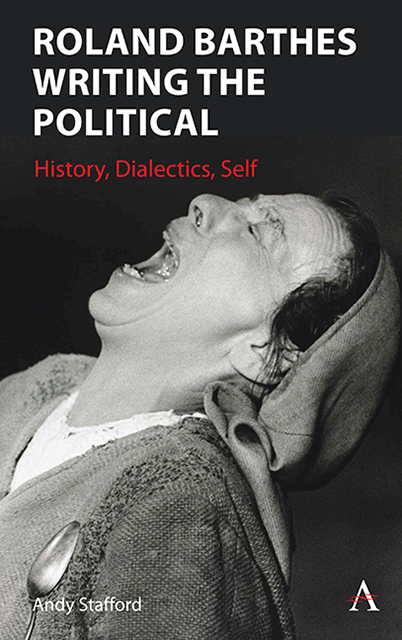
With typical rhetorical flourish and beholden to paradox, Roland Barthes defines his work on 'myth' as an attempt to 'define things'; and yet he is known foremost for his work on language. The aim of this book is to take 'things' here as social relations, objects and other human beings with which the self interacts. It does so via language. Language in Barthes's conception is double: alienating, alienated on the one side; liberating, inspiring on the other. It is this double that we investigate in this book: a spectre is haunting Barthes studies, the spectre of dialectics; and the spectral presence of dialectics is what we will define in this book as the Barthesian 'spirit', in both senses of the word, that is, haunting his analyses and, at once, providing us with a double approach. 'I have tried to define things, not words' (Barthes 2009, 131n1).
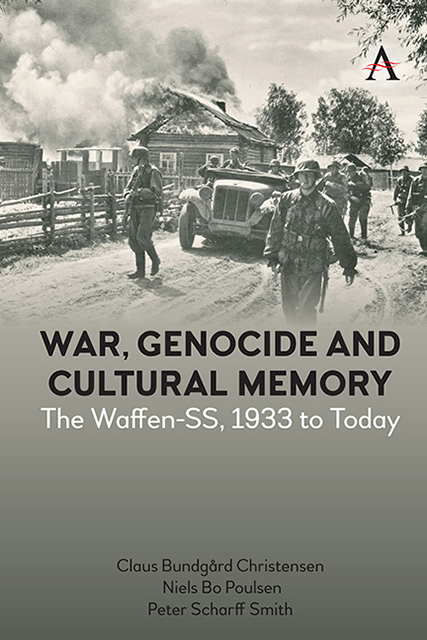
This book presents the most comprehensive study of the Waffen-SS until this date. Based on archival studies done in more than twenty archives in thirteen different countries over a period of five years the book covers the entire history of the Waffen-SS and follows the post-war fate of the SS-veterans as well. The evolution of the Waffen-SS is analysed with special emphasis on the role of Nazi ideology, war crimes and atrocities, as well as the unique multi-ethnic and transnational character of the organization.
Every American is a descendant of either a Native American, and enslaved person, an immigrant, or a refugee. This book is devoted to the fourth category. The essays in this volume will study the concept of refuge as well as historical forced displacement and statelessness, trying to provide potential lasting solutions to the many problems associated with this situation. This volume is not only timely but expansive, as it moves from the pressing crisis of refugees to the crisis of humanity that seeks to find refuge.
From refugees to asylum seekers, from climate change to war, from historical uprootedness and displacement to today's crisis of refugeeism, these topics are mobilizing humanities scholars to think about refugees with a new sense of urgency. This book demonstrates how interdisciplinary cultural approaches grounded in the humanities can transform refugee conversations so often dominated by political science, economics, and other disciplines. In doing so, the collection sets up far more inclusive refugee discussions and urges humanities thinkers to respond by taking the lead in the face of environmental and sociopolitical uncertainties.
This work analyses the impact of the publications written by the economist, jurist, administrator and historian José da Silva Lisboa, the future Viscount of Cairu, from 1821 to 1822, on the events that led to the Independence of Brazil in 1822. It reassesses the many interpretations of his role throughout the period, repositioning him among those who are part of the broad reformist Catholic Enlightenment. Although a supporter of Brazilian autonomy, a fierce critic of the Cortes of Lisbon and an important figure in the events that unfolded after the departure of Dom João VI from Rio de Janeiro in 1821, he would not openly embrace the Independence from the United Kingdom with Portugal and would instead work towards a solution that would encompass Brazil's autonomy within a Portuguese Empire, which did not take place.
Seminal sociological work has described the world today as a 'local-global nexus' that is defined by localized, often conflictual responses to a series of 'global flows'. Building on this, this book traces the workings and dynamics of today's globalization, and of the different reactions it spurs, across a range of social domains: that is, in localities affected by rapid infrastructural change; in the economic realm and through consumerism; in experiences of migration; in urban settings; in cultural practices such as street art that negotiate both global and local events and phenomena; and in digital technology. Crucially, the book formulates and critically explores the methodological challenges created by such social and political developments. Rather than treating the fundamental question as to how and why sociologists can claim to know more about the social world than the people 'living it' as an abstract issue, this book tackles this through a careful engagement with existing research on globalization, glocalization and neo-nationalism. The result is two-fold: first, the book demonstrates that sociology confronts some profound challenges today; second, the author argues that an increasingly inter-disciplinary sociology is already making vital contributions to our understanding of - and responses to - today's multiple crises.
The book explores the Gothic tradition in Swedish literature. It aims to give an overview of the development of Swedish Gothic from the Romantic age until today and to highlight the characteristic features of the Swedish tradition of Gothic in relation to transnational developments, in particular in relation to the Anglo-American tradition. By using a contextualising comparative perspective, it highlights the most prevalent and prominent feature of Swedish Gothic, the significance of the Nordic landscape, the wilderness and local folklore. In Swedish fiction, the terror is not pointing to the medieval period but is located in pre-Christian, pagan times. Especially in today's Gothic narratives, the presence of mythical creatures and nature beings, such as trolls, tomtes or vittras enhances the Gothic atmosphere. Other domestic trends are Gothic crime stories, where supernatural creatures and powers constantly obstruct the modern crime investigation, and the use of gendered and female monsters.
Gulf Gothic examines haunted, secret-laden narratives that emerge from the gulfs between peoples all along the Gulf of Mexico and on both sides of the Rio Grande. The Gulf is presented as a single transnational region and as dynamic ground zero of North American (and global) cross-culturality and trauma. Responding to the long history of Mesoamerican writing, plantation systems, and racialized divides across the region, this study argues that gothic - with all its affect, undead figures, heavy weather, and hauntings - provides a powerful lens through which to awaken the kinds of gulf-traversing vision so necessary to us here and now.
The Enemy, the Cabildo and the Defence of the City
On 27 June 1806, Porteños awoke to the news that they were no longer Spanish subjects but part of the British Empire. The political consequences of the assault and seizure of the capital of the viceroyalty have been studied by many as the spark that started the Wars of Independence in the River Plate. The aim here is to contribute to these studies through the perspective of space and power and show how the control of the city and its urban development achieved by the Cabildo and the Porteños soon became political control.
As seen in the first chapter, the creation of the viceroyalty of the River Plate and the tightening of the commercial regulations by the Bourbons drastically reduced the area's contraband trade in the late eighteenth century. This left Britain looking for other ways to keep and expand its commercial activities in this profitable area. Trade with the Americas was favoured by the then prime minister William Pitt (1759–1806) who had the support of Francisco de Miranda (1750–1816). Miranda was a Creole and a main instigator of the revolution against Spain; he intended to cooperate with the British as long as the freedom from Spain was guaranteed to the colonies. Miranda had travelled the world in support for the colonies’ freedom but had received little help from the United States and France, turning therefore to Britain, where he met members of a South American lobby group that had been working for the British government to back an expedition to Buenos Aires since the late 1790s. Pitt, Miranda and Commodore Home Popham (1762–1820) met in London in 1803 and discussed possibilities. Popham and Miranda have both been described as a pair of opportunistic mavericks, so after the successful capture of Cape Town for the British Empire in 1806, it is no surprise that Popham immediately saw the chance to sail from here to Buenos Aires and capture this city as well. He was acting also on some intelligence received from Thomas Wayne, an American merchant-ship captain, who described the defenceless state of Buenos Aires with less than one thousand troops, adding on a more personal note that Porteños would welcome freedom from Spain.
“The major problems in the world are the result of the difference between how nature works and the way people think.”
—Anthropologist Gregory Bateson
World leaders have made a forceful statement that climate change is the greatest challenge facing humanity in the twenty-first century. While the majority of people are worried by climate change, most are unwilling to follow the call from the United Nations for “rapid, far-reaching and unprecedented changes in all aspects of society.” Further, many of the technologies needed to effectively transition the world's economy away from fossil fuels are not ready for large-scale deployment. As a result, there is acrimonious worldwide political debate on implementing climate policies, which even if successful, have little chance of improving the climate or human well-being in the twenty-first century.
How did we come to be between a rock and hard place on the issue of climate change? This book shows how the narrow and politicized framing of the climate debate has resulted in an oversimplification of both the scientific problem and its solutions. My personal journey in navigating the climate debate provides insights into the problem and ways forward for finding solutions.
Prior to about 2003, it was fashionable in academic circles to be skeptical about the highly confident conclusions being issued in the Intergovernmental Panel on Climate Change (IPCC) assessment reports on human-caused climate change. I became concerned about the way these assessment reports were treating uncertainty and confidence levels in their conclusions. Apart from reading the IPCC Reports, I was mostly oblivious to the public debate and controversies surrounding climate change.
I inadvertently entered the public debate on climate change on September 14, 2005. The American Association for the Advancement of Science organized a press conference for a paper I co-authored that described a substantial increase in the global proportion of category 4 and 5 hurricanes. The unplanned and uncanny timing of publication of this paper was three weeks after Hurricane Katrina had devastated New Orleans. Our “15 minutes” stretched into days, weeks, and months, as Hurricane Katrina became a major focusing event for the global warming debate. I was treated like a rock star by the environmental movement.
“The future will be neither a nirvana nor a hell on earth, but an evolution of the past, a combination of our best endeavours hindered by obstacles and aided by serendipity.”
—Physicist and engineer Michael J. Kelly
Climate change is a risk because it may affect prosperity and security, and because its consequences are uncertain. The way we understand and describe a risk strongly influences the way in which it is analyzed, with implications for risk management and decision-making. By characterizing climate change as a well-understood problem with a strong consensus, traditional risk management approaches assume that climate change can and ought to be rationally managed, or at the very least contained, and preferably eliminated. However, the diversity of climate-related impact drivers and their complex linkages, various inherent and irreducible uncertainties, ambiguities about the consequences of climate change, and the unequal distribution of exposure and effects across geography and time, confound any simple or uncontested application of traditional risk management approaches.
Characterization of climate change as a simple, tame hazard risk of dose-response (such as regulation of food additives or use of antibiotics in feedstocks) to be controlled via the Precautionary Principle has torqued both the science and the policy process in misleading directions. As a result, the policy process that has evolved over the past several decades is not only inadequate to deal with the risks associated with climate change, but has fueled societal controversies around climate risk.
Human-caused climate change has become a topic of contested politics, with great economic stakes associated with both the problem and its proposed solutions. Guided by the analyses in Parts One and Two on the nature of the climate change problem and scenarios of future climate outcomes, Part Three presents a framework for analyzing climate risks in all of their complexity and ambiguity, toward formulating pragmatic and adaptable policies. Integrative thinking in the context of the tension associated with different perspectives, best practices from risk science and decision-making under deep uncertainty, and focusing on resilience and antifragility can lead to broader risk management frameworks that are politically viable and support human well-being, both now and in the future.
“[A]ll of our knowledge is about the past, and all our decisions are about the future.”
—Ian Wilson, author of From Scenario Thinking to Strategic Action
Climate policy discussions are framed by the IPCC Assessment Reports. At the center of the IPCC approach to climate policy analysis are scenarios of the future climate. The IPCC uses global climate models, driven by scenarios of future emissions, as the basis for generating climate futures.
Scenarios refer to “a plausible, comprehensive, integrated and consistent description of how the future might unfold while refraining from a concrete statement on probability.” Scenarios of climate futures play a fundamental role in characterizing societal risks and policy response options.
This chapter examines the IPCC's scenarios of future climate change.
Emissions Scenarios
“There isn’t, you know, like a Mad Max scenario among the SSPs [emissions scenarios], we’re generally in the climate-change field not talking about futures that are worse than today.” (Brian O’Neill, one of the lead architects of the Shared Socioeconomic Pathways developed for the IPCC Sixth Assessment Report)
The IPCC projections of future climate change are driven by changes to radiative forcing arising from changes to concentrations of greenhouse gases and aerosols associated with human activity—primarily from emissions associated with fossil fuels. One approach to generating scenarios is simply to specify different levels of radiative forcing, which are referred to as “pathways.” Another approach is to develop socioeconomic and emission scenarios to provide plausible descriptions of how future emissions and their radiative forcing may evolve. To capture a range of possible future emissions scenarios, energy system modelers use Integrated Assessment Models (IAMs) that simulate both future energy technologies and emissions, and also incorporate assumptions about population, land use, socioeconomic development and policy assumptions.
The most recent set of scenarios used by the IPCC are the Representative Concentration Pathways (RCP) and scenarios developed from the Shared Socioeconomic Pathways (SSP).
The RCPs are a set of four climate scenarios for the end of the twenty-first century. The RCPs were formulated for use in the IPCC Fifth Assessment Report, to reflect different potential climate outcomes (RCP2.6, RCP4.5, RCP6.0, and RCP8.5). The number (e.g., 8.5) reflects the additional radiative forcing (in Watts per square meter, W/m2, which is a measure of energy per unit time and per unit area) in 2100 at the top of the atmosphere from greenhouse gas emissions and other factors, relative to pre-industrial times.
Colonialism is a system in which a country controls another country or area, a definition that acquires complexity when considering the different disciplines that research this field, not to mention the evolving narratives and interests of both, authors and audiences. The focus in this volume is on colonialism and human geography, involving cities, architecture and the actors concerned with designing, developing and inhabiting the urban space in colonial Latin America. Within this focus, there are issues related to identity – which is central to spatial conceptualisations of colonial domination that cover private buildings, the public space as well as the inhabitants and users of these spaces. Identity in turn is understood here as a fluid and yet constrained concept affected by culture and politics but also, as this volume shows, by architecture and the urban context. The demographic explosion of the eighteenth century increased the demand for property while the financial gains made by entrepreneurs of the expanding trade created the necessary surplus for investment in real estate assets. No other urban centre exemplifies this phenomenon better than Buenos Aires, the fastest growing city in the Spanish world at the time of the establishment of the viceroyalty of the River Plate in 1776. Since then and until the end of the viceroyalty in 1810, the reduction of contraband trade, the opening of commerce and the regulation of land titles and urban planning helped the local economy and consolidated the basis for a flourishing real estate market.
Although these were spatial and economic measures brought by the Bourbon dynasty in Spain, the century was also characterised by a new way of thinking known as the Enlightenment. The movement was exemplified by freedom in thinking, where science and reason guided humanity. Nevertheless, an all-encompassing definition remains a challenge, as some countries used the concept to support absolutism while for others it represented republican ideas. Furthermore, studies have also shown the importance of geography particularly in colonial societies where the Enlightenment was more revolutionary than the independence movements themselves.
Notwithstanding, politics is not the only contradiction posed by the Enlightenment. By 1750, the power of the church in Europe had begun to decline favouring the ‘disenchantment of the world’ or the search for a more rational explanation of the world and the working of its natural forces.
The Geo-Administrative Division of the Colonial Territories in the Americas
The sixteenth century consolidated the geographical expansion of European powers over territories populated by indigenous people by means of a strategy that guaranteed the dual objective of subjugation as well as the economic exploitation of the colonies. From this common baseline, colonialism adopted different forms depending on several factors including the dominant socio-political ideas of each European power, as well as the physical environment encountered and the particularities of the local indigenous population, including their responses to foreign strategies. Colonialism was thus not uniform all over the territories, not even within those under the same colonial power.
In the case of Spain, the geographical colonial system consisted of administrative units, each with its own office that was dependant on an immediately higher office in a hierarchical order that culminated with the Spanish king. Administrative offices often lacked clearly defined functions, which generated disputes that only peninsular authorities could solve, albeit after a long bureaucratic process of communication. This long chain of letters and reports from the colonies to the Crown was deliberate and aimed to guarantee that ultimate decisions were taken by the state. The blurring of incumbencies also ensured that officials themselves watched their peers, immediately informing superiors when someone was encroaching another officer's incumbencies. The effect was a bottom-up surveillance system to prevent excesses of power and thus supervise the vast dominions with scant resources. Furthermore, as colonial officials were located far from the state's close control, European rulers often opposed the appointment of the nobility to high offices in the colonies, fearing that they could challenge the ruler's authority. During the earlier time of the colonies, Spain and Portugal, in particular, aimed to prevent the establishment of powerful nobilities overseas.
Modern European empires had separate colonial authorities in the metropolis to supervise the administration of the colonies. Initially, in Spain, the Royal Council of Castile dealt with matters related to the Indies, but the increase of business (and bureaucracy) forced the creation of a separate council exclusive for the colonies. This was known as the Real y Supremo Consejo de las Indias, created by Charles V on 1 August 1524 and although it ranked below that of Castile within the Spanish imperial system, it had undisputed powers in overseas territories.