Refine search
Actions for selected content:
158537 results in Cambridge Library Collection
Table V - Route of the Supply from Fort Jackson to Lord Howe Island, and from thence to Port Jackson
- from CONTENTS OF THE APPENDIX
-
- Book:
- The Voyage of Governor Phillip to Botany Bay
- Published online:
- 05 September 2015
- Print publication:
- 27 April 2015, pp 316-318
-
- Chapter
- Export citation
INDEX
-
- Book:
- A Voyage to Cochinchina, in the Years 1792 and 1793
- Published online:
- 05 June 2016
- Print publication:
- 27 April 2015, pp 439-447
-
- Chapter
- Export citation
List of the Convicts sent to New South Wales
- from CONTENTS OF THE APPENDIX
-
- Book:
- The Voyage of Governor Phillip to Botany Bay
- Published online:
- 05 September 2015
- Print publication:
- 27 April 2015, pp 353-372
-
- Chapter
- Export citation
PART III - CEPHALOPODA
-
- Book:
- Description of the Fossil Remains of Mollusca Found in the Chalk of England
- Published online:
- 05 June 2016
- Print publication:
- 27 April 2015, pp 37-68
-
- Chapter
- Export citation
ADVERTISEMENT
-
- Book:
- The Voyage of Governor Phillip to Botany Bay
- Published online:
- 05 September 2015
- Print publication:
- 27 April 2015, pp xvii-xix
-
- Chapter
- Export citation
Colophon
-
- Book:
- Illustrations of the Viscous Theory of Glacier Motion
- Published online:
- 05 June 2016
- Print publication:
- 27 April 2015, pp v-vi
-
- Chapter
- Export citation
PRIVATIONS OF THE SLAVES
-
- Book:
- American Slavery As It Is
- Published online:
- 05 September 2015
- Print publication:
- 27 April 2015, pp 27-45
-
- Chapter
- Export citation
CHAP. VII - THE STRAIT OF SUNDA AND ISLAND OF JAVA
-
- Book:
- A Voyage to Cochinchina, in the Years 1792 and 1793
- Published online:
- 05 June 2016
- Print publication:
- 27 April 2015, pp 158-201
-
- Chapter
- Export citation
PERSONAL NARRATIVES, PART II
-
- Book:
- American Slavery As It Is
- Published online:
- 05 September 2015
- Print publication:
- 27 April 2015, pp 45-94
-
- Chapter
- Export citation
AN ACCOUNT OF A JOURNEY TO THE BOOSHUANAS
- from AN ACCOUNT OF A JOURNEY TO LEETAKOO
-
- Book:
- A Voyage to Cochinchina, in the Years 1792 and 1793
- Published online:
- 05 June 2016
- Print publication:
- 27 April 2015, pp 363-438
-
- Chapter
- Export citation
Frontmatter
-
- Book:
- A Voyage to Cochinchina, in the Years 1792 and 1793
- Published online:
- 05 June 2016
- Print publication:
- 27 April 2015, pp i-i
-
- Chapter
- Export citation
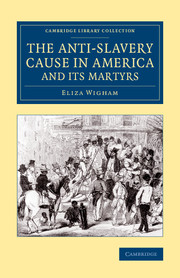
The Anti-Slavery Cause in America and its Martyrs
-
- Published online:
- 05 April 2015
- Print publication:
- 04 December 2014
- First published in:
- 1863
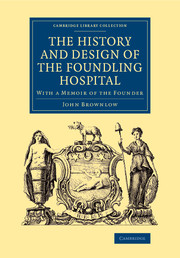
The History and Design of the Foundling Hospital
- With a Memoir of the Founder
-
- Published online:
- 05 April 2015
- Print publication:
- 19 February 2015
- First published in:
- 1858
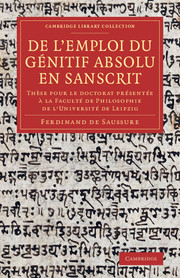
De l'emploi du génitif absolu en Sanscrit
- Thèse pour le doctorat présentée à la Faculté de Philosophie de l'Université de Leipzig
-
- Published online:
- 05 April 2015
- Print publication:
- 04 December 2014
- First published in:
- 1881
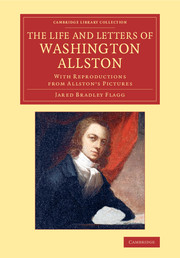
The Life and Letters of Washington Allston
- With Reproductions from Allston's Pictures
-
- Published online:
- 05 April 2015
- Print publication:
- 11 December 2014
- First published in:
- 1893
Contents
-
- Book:
- Travels in Upper and Lower Egypt
- Published online:
- 05 September 2015
- Print publication:
- 02 April 2015, pp 299-312
-
- Chapter
- Export citation
CHAPTER III
- from TRAVELS IN UPPER AND LOWER EGYPT
-
- Book:
- Travels in Upper and Lower Egypt
- Published online:
- 05 September 2015
- Print publication:
- 02 April 2015, pp 84-113
-
- Chapter
- Export citation
CHAPTER XX
-
- Book:
- Travels in Upper and Lower Egypt
- Published online:
- 05 September 2015
- Print publication:
- 02 April 2015, pp 41-88
-
- Chapter
- Export citation
CHAPTER XII
-
- Book:
- Travels in Upper and Lower Egypt
- Published online:
- 05 September 2015
- Print publication:
- 02 April 2015, pp 80-116
-
- Chapter
- Export citation
Frontispiece
-
- Book:
- Travels in Upper and Lower Egypt
- Published online:
- 05 September 2015
- Print publication:
- 02 April 2015, pp vi-vi
-
- Chapter
- Export citation
