Refine search
Actions for selected content:
4480 results in Cambridge Editions
Appendix 1 - The Epistula Ad Gregorium
-
- Book:
- Venantius Fortunatus: <I>Vita Sancti Martini</I>Prologue and Books I–II
- Published online:
- 04 February 2020
- Print publication:
- 13 February 2020, pp 491-493
-
- Chapter
- Export citation
Indexes
-
- Book:
- Venantius Fortunatus: <I>Vita Sancti Martini</I>Prologue and Books I–II
- Published online:
- 04 February 2020
- Print publication:
- 13 February 2020, pp 573-580
-
- Chapter
- Export citation
Prologvs Ad Agnem Et Radegvndem De Vita Sancti Martini
- from Text And Translation
-
- Book:
- Venantius Fortunatus: <I>Vita Sancti Martini</I>Prologue and Books I–II
- Published online:
- 04 February 2020
- Print publication:
- 13 February 2020, pp 42-116
-
- Chapter
- Export citation
Contents
-
- Book:
- Venantius Fortunatus: <I>Vita Sancti Martini</I>Prologue and Books I–II
- Published online:
- 04 February 2020
- Print publication:
- 13 February 2020, pp v-vi
-
- Chapter
- Export citation
Bibliography
-
- Book:
- Venantius Fortunatus: <I>Vita Sancti Martini</I>Prologue and Books I–II
- Published online:
- 04 February 2020
- Print publication:
- 13 February 2020, pp 562-572
-
- Chapter
- Export citation
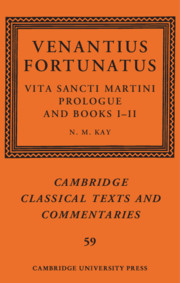
Venantius Fortunatus: Vita Sancti MartiniPrologue and Books I–II
-
- Published online:
- 04 February 2020
- Print publication:
- 13 February 2020
Aditional Poems Cheifly Upon Subjects Devine and Moral
-
- Book:
- The Cambridge Edition of Works of Anne Finch, Countess of Winchilsea
- Published online:
- 15 June 2021
- Print publication:
- 19 December 2019, pp 287-398
-
- Chapter
- Export citation
Miscellany Poems with Two Plays by Ardelia
-
- Book:
- The Cambridge Edition of Works of Anne Finch, Countess of Winchilsea
- Published online:
- 15 June 2021
- Print publication:
- 19 December 2019, pp 21-110
-
- Chapter
- Export citation
List of Illustrations
-
- Book:
- The Cambridge Edition of Works of Anne Finch, Countess of Winchilsea
- Published online:
- 15 June 2021
- Print publication:
- 19 December 2019, pp xv-xvi
-
- Chapter
- Export citation
Chronology
-
- Book:
- The Cambridge Edition of Works of Anne Finch, Countess of Winchilsea
- Published online:
- 15 June 2021
- Print publication:
- 19 December 2019, pp xxv-xl
-
- Chapter
- Export citation
Explanatory and Textual Notes
-
- Book:
- The Cambridge Edition of Works of Anne Finch, Countess of Winchilsea
- Published online:
- 15 June 2021
- Print publication:
- 19 December 2019, pp 399-749
-
- Chapter
- Export citation
The Triumphs of Love and Innocence: A Tragecomedy
-
- Book:
- The Cambridge Edition of Works of Anne Finch, Countess of Winchilsea
- Published online:
- 15 June 2021
- Print publication:
- 19 December 2019, pp 111-192
-
- Chapter
- Export citation
Index of Titles
-
- Book:
- The Cambridge Edition of Works of Anne Finch, Countess of Winchilsea
- Published online:
- 15 June 2021
- Print publication:
- 19 December 2019, pp 815-820
-
- Chapter
- Export citation
List of Source Copies
-
- Book:
- The Cambridge Edition of Works of Anne Finch, Countess of Winchilsea
- Published online:
- 15 June 2021
- Print publication:
- 19 December 2019, pp 750-757
-
- Chapter
- Export citation
List of Abbreviations
-
- Book:
- The Cambridge Edition of Works of Anne Finch, Countess of Winchilsea
- Published online:
- 15 June 2021
- Print publication:
- 19 December 2019, pp xli-xlv
-
- Chapter
- Export citation
Aristomenes or the Royal Shepheard A Tragedy
-
- Book:
- The Cambridge Edition of Works of Anne Finch, Countess of Winchilsea
- Published online:
- 15 June 2021
- Print publication:
- 19 December 2019, pp 193-286
-
- Chapter
- Export citation
Index of First Lines
-
- Book:
- The Cambridge Edition of Works of Anne Finch, Countess of Winchilsea
- Published online:
- 15 June 2021
- Print publication:
- 19 December 2019, pp 811-814
-
- Chapter
- Export citation
Selected Bibliography
-
- Book:
- The Cambridge Edition of Works of Anne Finch, Countess of Winchilsea
- Published online:
- 15 June 2021
- Print publication:
- 19 December 2019, pp 758-810
-
- Chapter
- Export citation
General Introduction
-
- Book:
- The Cambridge Edition of Works of Anne Finch, Countess of Winchilsea
- Published online:
- 15 June 2021
- Print publication:
- 19 December 2019, pp xlvii-cxii
-
- Chapter
- Export citation
Contents
-
- Book:
- The Cambridge Edition of Works of Anne Finch, Countess of Winchilsea
- Published online:
- 15 June 2021
- Print publication:
- 19 December 2019, pp vii-xiv
-
- Chapter
- Export citation
