To save content items to your account,
please confirm that you agree to abide by our usage policies.
If this is the first time you use this feature, you will be asked to authorise Cambridge Core to connect with your account.
Find out more about saving content to .
To save content items to your Kindle, first ensure no-reply@cambridge.org
is added to your Approved Personal Document E-mail List under your Personal Document Settings
on the Manage Your Content and Devices page of your Amazon account. Then enter the ‘name’ part
of your Kindle email address below.
Find out more about saving to your Kindle.
Note you can select to save to either the @free.kindle.com or @kindle.com variations.
‘@free.kindle.com’ emails are free but can only be saved to your device when it is connected to wi-fi.
‘@kindle.com’ emails can be delivered even when you are not connected to wi-fi, but note that service fees apply.
Man Mohan, Emeritus Professor, Department of Physics and Astrophysics, University of Delhi, Delhi,Anil Kumar Maini, Former Director, Laser Science and Technology Centre, Delhi,Aranya B. Bhattacherjee, Associate Professor, Department of Physics, ARSD College, University of Delhi, Delhi
COIL is a chemical laser in which the required pumping energy for population inversion is released via a chemical reaction. This property makes the COIL attractive for defence application because it eliminates the need for electrical power supply at remote locations. Among other chemical lasers, COIL has the advantages of power scalability, short wavelength (1.315 μm) compatible with fiber (Grunewald et al.) for remote operation and also better laser material interaction.
In COIL, a gas−liquid phase reaction between basic hydrogen peroxide and chlorine gas at sub-atmospheric pressure (Azyazov et al.) produces the pumping source, singlet oxygen. This is diluted with sufficient nitrogen buffer gas to reduce the various loss mechanisms. Part of the pump energy contained in the singlet oxygen is used in the dissociation of iodine molecules into iodine atoms and the rest is used to excite these iodine atoms by near resonant energy transfer reaction. The interaction of singlet oxygen with atomic iodine at appropriate flow conditions results in the generation of laser gain medium inside the laser cavity from where the laser output power is extracted using an optical resonator.
To develop a high power COIL, it is important to study the gain characteristics, i.e., the small signal gain and the saturation intensity of the active medium under different flow conditions and to evaluate the optimum cavity coupling for achieving maximum output power. In this chapter, different COIL input parameters required for optimal gain medium formation in the laser cavity have been analyzed and gain characteristics using simplified saturation model (SSM) (Hager et al.) for the development of high power COIL have been estimated. The resonator parameters and output mirror coupling are evaluated keeping in view the resonator stability, diffraction loss, utilization of mode volume and laser beam divergence. On the basis of these parameters, the laser cavity and optical resonator for high power COIL have been developed and tested.
Man Mohan, Emeritus Professor, Department of Physics and Astrophysics, University of Delhi, Delhi,Anil Kumar Maini, Former Director, Laser Science and Technology Centre, Delhi,Aranya B. Bhattacherjee, Associate Professor, Department of Physics, ARSD College, University of Delhi, Delhi
A low intensity conflict is the most common form of warfare today and is likely to be so in foreseeable future. Data suggests thatmore than 75%of the armed conflicts sinceWorldWar II have been of low intensity variety. Low intensity conflict operation is a military term used to refer to the deployment and use of troops and/or assets in situations other than conventional war. As compared to a conventional war; in the case of low intensity conflict operations, armed forces engaged in the conflict operate at a greatly reduced tempo, perhaps with fewer soldiers, reduced range of tactical equipment and limited scope to operate in a military manner. Moreover, use of artillery is avoided in the case of conflicts in urban territories and use of air power is often restricted to surveillance and transportation of personnel and equipment. Low intensity conflicts pose an alarming threat to national security and is an area of concern for the whole of the international community today. Its scope extends from emergency preparedness and response to domestic intelligence activities to riot and mob control, from combating illegal drug trafficking to protection of critical infrastructure, fromhandling counter-insurgency and anti-terrorist operations to detection of nuclear and biological agents, from detection and identification of chemical, biological warfare and explosive agents to detection of concealed weapons. Laser and opto-electronics technologies play an important role in handling low intensity conflict situations. The key advantages of the use of laser technology in such applications are near zero collateral damage, speed of light delivery and potential for building non-lethal weapons. Some of the well established laser devices in low intensity conflict (LIC) applications include laser dazzlers for close combat operations, mob/riot control and protection of critical infrastructures from aerial threats; lidar sensors for detection of chemical, biological and explosive agents; Femto second lasers for imaging of concealed weapons; lasers for sniper and gun fire location identification and so on. Use of laser vibrometry and electron speckle interferometry techniques for detection of buriedmines and high power lasers for disposal of unexploded ordnances are emerging applications of laser technology for homeland security. This chapter briefly describes both established and emerging applications of laser and opto-electronics technologies in homeland security in terms of salient features, potential usage and international developments.
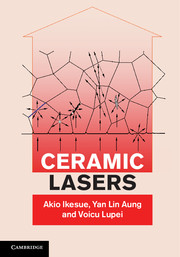
Until recently, ceramic materials were considered unsuitable for optics due to the numerous scattering sources, such as grain boundaries and residual pores. However, in the 1990s the technology to generate a coherent beam from ceramic materials was developed, and a highly efficient laser oscillation was realized. In the future, the technology derived from the development of the ceramic laser could be used to develop new functional passive and active optics. Co-authored by one of the pioneers of this field, the book describes the fabrication technology and theoretical characterization of ceramic material properties. It describes novel types of solid lasers and other optics using ceramic materials to demonstrate the application of ceramic gain media in the generation of coherent beams and light amplification. This is an invaluable guide for physicists, materials scientists and engineers working on laser ceramics.
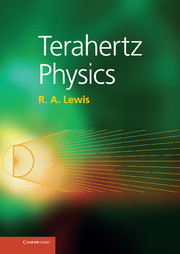
Terahertz physics covers one of the least explored but richest regions of the electromagnetic spectrum. Designed for independent learning, this is the first book to open up this exciting new field to students of science and engineering. Written in a clear and consistent style, the textbook focuses on an understanding of fundamental physical principles at terahertz frequencies and their applications. Part I outlines the foundations of terahertz science, starting with the mathematical representation of oscillations before exploring terahertz-frequency light, terahertz phenomena in matter and the terahertz interactions between light and matter. Part II covers components of terahertz technology, from sources of terahertz frequency radiation, through the manipulation of the radiation, to its detection. Part III deals with applications, including time-domain spectroscopy. Highlighting modern developments and concepts, the book is ideal for self-study. It features precise definitions, clear explanations, instructive illustrations, fully worked examples, numerous exercises and a comprehensive glossary.
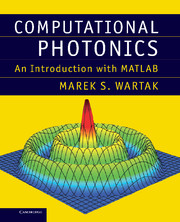
A comprehensive manual on the efficient modeling and analysis of photonic devices through building numerical codes, this book provides graduate students and researchers with the theoretical background and MATLAB programs necessary for them to start their own numerical experiments. Beginning by summarizing topics in optics and electromagnetism, the book discusses optical planar waveguides, linear optical fiber, the propagation of linear pulses, laser diodes, optical amplifiers, optical receivers, finite-difference time-domain method, beam propagation method and some wavelength division devices, solitons, solar cells and metamaterials. Assuming only a basic knowledge of physics and numerical methods, the book is ideal for engineers, physicists and practising scientists. It concentrates on the operating principles of optical devices, as well as the models and numerical methods used to describe them.