To save content items to your account,
please confirm that you agree to abide by our usage policies.
If this is the first time you use this feature, you will be asked to authorise Cambridge Core to connect with your account.
Find out more about saving content to .
To save content items to your Kindle, first ensure no-reply@cambridge.org
is added to your Approved Personal Document E-mail List under your Personal Document Settings
on the Manage Your Content and Devices page of your Amazon account. Then enter the ‘name’ part
of your Kindle email address below.
Find out more about saving to your Kindle.
Note you can select to save to either the @free.kindle.com or @kindle.com variations.
‘@free.kindle.com’ emails are free but can only be saved to your device when it is connected to wi-fi.
‘@kindle.com’ emails can be delivered even when you are not connected to wi-fi, but note that service fees apply.
The previous edition of this text was the first to provide a quantitative introduction to chaos and nonlinear dynamics at undergraduate level. It was widely praised for the clarity of the writing and for the unique and effective way in which the authors presented the basic ideas. These same qualities characterise this revised and expanded second edition. Interest in chaotic dynamics has grown explosively in recent years. Applications to practically every scientific field have had far-reaching impact. As in the first edition, the authors present all the main features of chaotic dynamics using the damped, driven pendulum as the primary model. This second edition includes additional material on the analysis and characterisation of chaotic data, and applications of chaos. This new edition of Chaotic Dynamics can be used as a text for courses on chaos for physics and engineering students at the second and third year level.
This is a self-contained, concise, rigorous book introducing the reader to the basics of atmospheric thermodynamics. This new edition has been brought completely up to date and reorganized to improve the quality and flow of the material. The introductory chapters provide definitions and useful mathematical and physical notes to help readers understand the basics. The book then describes the topics relevant to atmospheric processes, including the properties of moist air and atmospheric stability. It concludes with a brief introduction to the problem of weather forecasting and the relevance of thermodynamics. Each chapter contains worked examples and student exercises, with solutions available to instructors on a password protected website at www.cambridge.org/9780521796767. The author has taught atmospheric thermodynamics for over 20 years and is a highly respected researcher. This book is an ideal text for short undergraduate courses taken as part of an atmospheric science, meteorology, physics or natural science program.
'Chemical engineering is the field of applied science that employs physical, chemical, and biological rate processes for the betterment of humanity'. This opening sentence of Chapter 1 has been the underlying paradigm of chemical engineering. Chemical Engineering: An Introduction is designed to enable the student to explore the activities in which a modern chemical engineer is involved by focusing on mass and energy balances in liquid-phase processes. Problems explored include the design of a feedback level controller, membrane separation, hemodialysis, optimal design of a process with chemical reaction and separation, washout in a bioreactor, kinetic and mass transfer limits in a two-phase reactor, and the use of the membrane reactor to overcome equilibrium limits on conversion. Mathematics is employed as a language at the most elementary level. Professor Morton M. Denn incorporates design meaningfully; the design and analysis problems are realistic in format and scope.
This is a graduate text on turbulent flows, an important topic in fluid dynamics. It is up-to-date, comprehensive, designed for teaching, and is based on a course taught by the author at Cornell University for a number of years. The book consists of two parts followed by a number of appendices. Part I provides a general introduction to turbulent flows, how they behave, how they can be described quantitatively, and the fundamental physical processes involved. Part II is concerned with different approaches for modelling or simulating turbulent flows. The necessary mathematical techniques are presented in the appendices. This book is primarily intended as a graduate level text in turbulent flows for engineering students, but it may also be valuable to students in applied mathematics, physics, oceanography and atmospheric sciences, as well as researchers and practising engineers.
In the past few decades we have come to understand that even motions in simple systems can have complex and surprising properties. Chaotic Dynamics provides a clear introduction to these chaotic phenomena, based on geometrical interpretations and simple arguments, without the need for prior in-depth scientific and mathematical knowledge. Richly illustrated throughout, examples are taken from classical mechanics whose elementary laws are familiar to the reader. In order to emphasize the general features of chaos, the most important relations are also given in simple mathematical forms, independent of any mechanical interpretation. A broad range of potential applications are presented, ranging from everyday phenomena through engineering and environmental problems to astronomical aspects. Chaos occurs in a variety of scientific disciplines, and proves to be the rule, not the exception. This book is primarily intended for undergraduate students in science, engineering, and mathematics.
Understanding the behaviour of particles suspended in a fluid has many important applications across a range of fields, including engineering and geophysics. Comprising two main parts, this book begins with the well-developed theory of particles in viscous fluids, i.e. microhydrodynamics, particularly for single- and pair-body dynamics. Part II considers many-body dynamics, covering shear flows and sedimentation, bulk flow properties and collective phenomena. An interlude between the two parts provides the basic statistical techniques needed to employ the results of the first (microscopic) in the second (macroscopic). The authors introduce theoretical, mathematical concepts through concrete examples, making the material accessible to non-mathematicians. They also include some of the many open questions in the field to encourage further study. Consequently, this is an ideal introduction for students and researchers from other disciplines who are approaching suspension dynamics for the first time.
The aim of this book is to develop a unified approach to nonlinear science, which does justice to its multiple facets and to the diversity and richness of the concepts and tools developed in this field over the years. Nonlinear science emerged in its present form following a series of closely related and decisive analytic, numerical and experimental developments that took place over the past three decades. It appeals to an extremely large variety of subject areas, but, at the same time, introduces into science a new way of thinking based on a subtle interplay between qualitative and quantitative techniques, topological and metric considerations and deterministic and statistical views. Special effort has been made throughout the book to illustrate both the development of the subject and the mathematical techniques, by reference to simple models. Each chapter concludes with a set of problems. This book will be of great value to graduate students in physics, applied mathematics, chemistry, engineering and biology taking courses in nonlinear science and its applications.
Turbulence pervades our world, from weather patterns to the air entering our lungs. This book describes methods that reveal its structures and dynamics. Building on the existence of coherent structures – recurrent patterns – in turbulent flows, it describes mathematical methods that reduce the governing (Navier–Stokes) equations to simpler forms that can be understood more easily. This second edition contains a new chapter on the balanced proper orthogonal decomposition: a method derived from control theory that is especially useful for flows equipped with sensors and actuators. It also reviews relevant work carried out since 1995. The book is ideal for engineering, physical science and mathematics researchers working in fluid dynamics and other areas in which coherent patterns emerge.
Advanced Transport Phenomena is ideal as a graduate textbook. It contains a detailed discussion of modern analytic methods for the solution of fluid mechanics and heat and mass transfer problems, focusing on approximations based on scaling and asymptotic methods, beginning with the derivation of basic equations and boundary conditions and concluding with linear stability theory. Also covered are unidirectional flows, lubrication and thin-film theory, creeping flows, boundary layer theory, and convective heat and mass transport at high and low Reynolds numbers. The emphasis is on basic physics, scaling and nondimensionalization, and approximations that can be used to obtain solutions that are due either to geometric simplifications, or large or small values of dimensionless parameters. The author emphasizes setting up problems and extracting as much information as possible short of obtaining detailed solutions of differential equations. The book also focuses on the solutions of representative problems. This reflects the book's goal of teaching readers to think about the solution of transport problems.
Over the past two decades scientists, mathematicians, and engineers have come to understand that a large variety of systems exhibit complicated evolution with time. This complicated behavior is known as chaos. In the new edition of this classic textbook Edward Ott has added much new material and has significantly increased the number of homework problems. The most important change is the addition of a completely new chapter on control and synchronization of chaos. Other changes include new material on riddled basins of attraction, phase locking of globally coupled oscillators, fractal aspects of fluid advection by Lagrangian chaotic flows, magnetic dynamos, and strange nonchaotic attractors. This new edition will be of interest to advanced undergraduates and graduate students in science, engineering, and mathematics taking courses in chaotic dynamics, as well as to researchers in the subject.
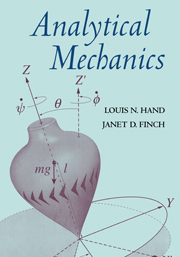
Analytical Mechanics, first published in 1999, provides a detailed introduction to the key analytical techniques of classical mechanics, one of the cornerstones of physics. It deals with all the important subjects encountered in an undergraduate course and prepares the reader thoroughly for further study at graduate level. The authors set out the fundamentals of Lagrangian and Hamiltonian mechanics early on in the book and go on to cover such topics as linear oscillators, planetary orbits, rigid-body motion, small vibrations, nonlinear dynamics, chaos, and special relativity. A special feature is the inclusion of many 'e-mail questions', which are intended to facilitate dialogue between the student and instructor. Many worked examples are given, and there are 250 homework exercises to help students gain confidence and proficiency in problem-solving. It is an ideal textbook for undergraduate courses in classical mechanics, and provides a sound foundation for graduate study.
This is a textbook for a first course in mechanical vibrations. There are many books in this area that try to include everything, thus they have become exhaustive compendiums, overwhelming for the undergraduate. In this book, all the basic concepts in mechanical vibrations are clearly identified and presented in a concise and simple manner with illustrative and practical examples. Vibration concepts include a review of selected topics in mechanics; a description of single-degree-of-freedom (SDOF) systems in terms of equivalent mass, equivalent stiffness, and equivalent damping; a unified treatment of various forced response problems (base excitation and rotating balance); an introduction to systems thinking, highlighting the fact that SDOF analysis is a building block for multi-degree-of-freedom (MDOF) and continuous system analyses via modal analysis; and a simple introduction to finite element analysis to connect continuous system and MDOF analyses. There are more than sixty exercise problems, and a complete solutions manual. The use of MATLAB® software is emphasized.
Classical dynamics is one of the cornerstones of advanced education in physics and applied mathematics, with applications across engineering, chemistry and biology. In this book, the author uses a concise and pedagogical style to cover all the topics necessary for a graduate-level course in dynamics based on Hamiltonian methods. Readers are introduced to the impressive advances in the field during the second half of the twentieth century, including KAM theory and deterministic chaos. Essential to these developments are some exciting ideas from modern mathematics, which are introduced carefully and selectively. Core concepts and techniques are discussed, together with numerous concrete examples to illustrate key principles. A special feature of the book is the use of computer software to investigate complex dynamical systems, both analytically and numerically. This text is ideal for graduate students and advanced undergraduates who are already familiar with the Newtonian and Lagrangian treatments of classical mechanics. The book is well suited to a one-semester course, but is easily adapted to a more concentrated format of one-quarter or a trimester. A solutions manual and introduction to Mathematica® are available online at www.cambridge.org/Lowenstein.
Shock wave-boundary-layer interaction (SBLI) is a fundamental phenomenon in gas dynamics that is observed in many practical situations, ranging from transonic aircraft wings to hypersonic vehicles and engines. SBLIs have the potential to pose serious problems in a flowfield; hence they often prove to be a critical - or even design limiting - issue for many aerospace applications. This is the first book devoted solely to a comprehensive, state-of-the-art explanation of this phenomenon. It includes a description of the basic fluid mechanics of SBLIs plus contributions from leading international experts who share their insight into their physics and the impact they have in practical flow situations. This book is for practitioners and graduate students in aerodynamics who wish to familiarize themselves with all aspects of SBLI flows. It is a valuable resource for specialists because it compiles experimental, computational and theoretical knowledge in one place.
This textbook is written for graduate students and researchers in meteorology and related sciences. While most meteorological textbooks only present equilibrium thermodynamics, this book also introduces the linear theory of non-equilibrium and provides the necessary background for more advanced studies. The authors start by introducing the equations that describe the basic laws of thermodynamics and entropy and go on to discuss the thermodynamics of blackbody radiation, thermodynamic potentials, and the constitutive equations of irreversible fluxes. Later chapters look at the state functions of ideal gases, thermodynamics of cloud air, heat equations for special adiabatic systems, atmospheric statics, stability, and atmospheric energetics of hydrostatic equilibrium. Each chapter ends with a set of exercises that are designed to help the reader develop a deeper understanding of the subject. Answers to all the exercises are given at the end of the book.
This revised and updated second edition of a highly successful book is the only text at this level to embrace a universal approach to three major developments in classical physics; namely nonlinear waves, solitons and chaos. The authors now include new material on biology and laser theory, and go on to discuss important recent developments such as soliton metamorphosis. A comprehensive treatment of basic plasma and fluid configurations and instabilities is followed by a study of the relevant nonlinear structures. Each chapter concludes with a set of problems. This text will be particularly valuable for students taking courses in nonlinear aspects of physics. In general, it will be of value to final year undergraduates and beginning graduate students studying fluid dynamics, plasma physics and applied mathematics.
The methods developed in this book can be applied rather generally to model the dynamics of coherent structures in spatially extended systems. They are gaining acceptance in many areas in addition to fluid mechanics, including mechanical vibrations, laser dynamics, nonlinear optics, and chemical processes. They are even being applied to studies of neural activity in the human brain. Numerous studies of closed flow systems have been done using empirical eigenfunctions, some of which were discussed in Section 3.7. A considerable amount of work has also been done on model PDEs for weakly nonlinear waves, such as the Ginzburg–Landau and Kuramoto–Sivashinsky equations, but this work falls largely outside the scope of this book. We do not have the abilities (or space) to provide a survey of these multifarious applications, but we do wish to draw the reader's attention to some of the other recent work on open fluid flows.
We restrict ourselves to studies in which empirical eigenfunctions are used to construct low-dimensional models and some attempt is made to analyze their dynamical behavior. There is an enormous amount of work in which the POD is applied and its results assessed in a “static,” averaged fashion. Some of this we have reviewed in Section 3.7. Yet even thus restricted, our survey cannot pretend to be complete: new applications to fluid flows are appearing at an increasing rate. We have selected five problems on which a reasonable amount of work has been done, the first of which (the jet) is a “strongly” turbulent flow.