To save content items to your account,
please confirm that you agree to abide by our usage policies.
If this is the first time you use this feature, you will be asked to authorise Cambridge Core to connect with your account.
Find out more about saving content to .
To save content items to your Kindle, first ensure no-reply@cambridge.org
is added to your Approved Personal Document E-mail List under your Personal Document Settings
on the Manage Your Content and Devices page of your Amazon account. Then enter the ‘name’ part
of your Kindle email address below.
Find out more about saving to your Kindle.
Note you can select to save to either the @free.kindle.com or @kindle.com variations.
‘@free.kindle.com’ emails are free but can only be saved to your device when it is connected to wi-fi.
‘@kindle.com’ emails can be delivered even when you are not connected to wi-fi, but note that service fees apply.
How pianistic is this music, how “well-written for the piano”? This is an important question, since it is commonly the first one asked by someone considering learning an unfamiliar piece by a contemporary composer. In Adler’s piano music, there are no physical challenges that cannot be conquered through traditional practice techniques intelligently applied. In the very few cases when you need to play inside the piano or nontraditionally on the keys (in Canto VIII, the Duo Sonata, once in the Sonatina, and occasionally in Gradus), the instructions in the score are clear and the notated symbols are ones that have become standard.
Adler’s approach to the piano is generally more oriented toward touch than to sound. The things we pianists think of as being tactile concerns—clarity, precisely defined articulations, getting to the right place at the right time, and, above all, rhythm, the most physical element of music—are trademarks of Adler’s compositional language. We experience them on the keyboard as tactile events. The layout of his music under the hand shares more with the incisive attacks of Bartok and Copland, the contrapuntal demands of Hindemith, the marcato finger-work of Rodion Shchedrin, and the clarity of George Perle than it does with Romantic piano idioms that never quite disappeared but have continued to be used, sometimes masterfully, by such composers as Barber, the lyrical Prokofieff, Akira Miyoshi, and Judith Zaimont.
A potential learning hurdle, though not a technical problem, is that of visual and tactile location. The less familiar you are with a composer’s language, the longer it may take to grasp the notes and their groupings, and the harder it will be to keep track of locations on the page and on the keyboard. The initial stage of learning almost any contemporary piece that is new to you will necessarily take longer than with a piece in a familiar style, but you can look forward to the big payoff that will come when you are memorizing. This stage will go unexpectedly quickly because of the extreme care you were forced to take in the beginning. Another visual-physical consideration in Adler’s music is that since he tends to place notes on the staves according to where the musical idea is located (as in an open score, for instance), you can expect to find places where taking some notes with the hand opposite to the one they are notated for will loosen you physically and increase your security.
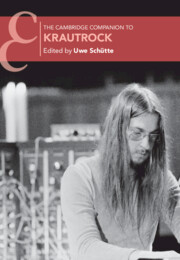
This Companion is the first academic introduction to the 1960s/70s 'Krautrock' movement of German experimental music that has long attracted the attention of the music press and fans in Britain and abroad. It offers a structured approach to this exceptionally heterogeneous and decentralized movement, combining overviews with detailed analysis and close readings. The volume first analyzes the cultural, historical and economic contexts of Krautrock's emergence. It then features expert chapters discussing all the key bands of the era including Can, Kraftwerk, Tangerine Dream, Neu!, Faust, Ash Ra Tempel, Cluster and Amon Düül II. The volume concludes with essays that trace the varied, wide-ranging legacy of Krautrock from a variety of perspectives, exploring in particular the impact of German experimental music in the Anglosphere, including British post-punk and Detroit Techno. A final chapter examining the current bands that continue the Krautrock sound closes this comprehensive overview of the Krautrock phenomenon.
The most striking example I can show of a man being wrong about the performance of his own work is actually Vaughan Williams and the Pastoral Symphony. Each movement had to be faster than I had imagined it.
Before conducting the first performance of A Pastoral Symphony with the orchestra of the Royal Philharmonic Society on 26 January 1922, Boult also rehearsed the new symphony with the student orchestra at the Royal College of Music. These rehearsals at the RCM provided a valuable opportunity for Vaughan Williams to decide on the speeds he wanted and any other adjustments he felt were needed. In 1966, Boult related some of the work’s prehistory to Robert Layton: ‘When the Pastoral Symphony was first brewing, Vaughan Williams used to say “Well, I’ve got a new tune” – he always called his works tunes – “I’ve got a new tune and it’s in four movements and they’re all slow. I don’t think anybody will like it much.” Well that was all we heard of the Pastoral Symphony for some time and finally we were allowed to see it. And we had the luck to be allowed to have the use of the parts and rehearse it two or three times with the Royal College of Music orchestra before the first professional performance – the first public performance. And all the time we were rehearsing it – and of course I’d had a bit of time with the score studying it – I’d been on what he felt was very much on the slow side. And the composer was continually at my elbow saying “You must take it faster, faster”.’
At first, before Boult took over, the RCM orchestra had played through the symphony under the college’s director, Charles Villiers Stanford. When illness forced Boult to withdraw from a concert to celebrate Vaughan Wil-liams’s eighty-fifth birthday in October 1957 (including the Pastoral and Job), the composer wrote on 1 October 1957 with some recollections of that time: ‘I still have fragrant memories of early rehearsals of Pastoral – when you were so wonderful & C.V.S[tanford] came & rehearsed & was very kind but rather a nuisance – & told somebody afterwards that it was fluff (I think that was the word).
Boult spent 1912–13 at the Conservatory in Leipzig where he also attended rehearsals of the Gewandhaus Orchestra conducted by Arthur Nikisch, whose technique and rehearsal methods were to have a lasting influence. On return to England, he conducted his first professional orchestral con-cert at West Kirby on 27 February 1914, with members of the Liverpool Philharmonic and Hallé orchestras. As well as works by Bach (Branden-burg Concerto No. 2), Wagner (Siegfried Idyll), Wolf (Italian Serenade) and vocal items sung by Agnes Nicholls, the programme also included the first performance of The Banks of Green Willow by George Butterworth, a friend from Boult’s Oxford days. Butterworth was also close to Vaughan Williams who composed A London Symphony at his suggestion, completing it by the end of 1913. After Butterworth was killed in action at the Somme in 1916, Vaughan Williams dedicated it ‘To the memory of George Butterworth’.
Boult worked for a few months as an assistant on the music staff at Covent Garden, but with the outbreak of war in August 1914 he was back at his parents’ home in West Kirby, intending to sign up. His health was pre-carious, however, and he was graded to be fit only for clerical work. When he learned of the financial plight of orchestral players in the Hallé and the Liverpool Philharmonic, he persuaded his father to subsidise a series of concerts with an orchestra made up of thirty players drawn from both orchestras. On 4 December 1914, at the Sun Hall in Liverpool’s Kensington district, the programme included The Wasps overture: it was the first time Boult conducted any orchestral music by Vaughan Williams in public and (as he noted on his score) the first performance of the overture in Liver-pool. A brief notice in the Liverpool Daily Post reported that ‘the fourth of a series of patriotic concerts conducted by Mr Adrian C. Boult was held at the Sun Hall, Kensington, last evening, when again an excellent musical programme was rendered … a special item being the overture The Wasps by Ralph Vaughan Williams, performed for the first time in Liverpool’
Composed in 1944–47, Vaughan Williams first planned a piano play-through of his E Minor Symphony on 10 March 1947, but this was postponed until 5 June when Michael Mullinar played the work at the Royal College of Music to a small group of friends including Finzi and Howells. On 30 July 1947, Vaughan Williams asked Boult about arranging a play-through with orchestra: ‘I welcome with great gratitude your idea of run-ning through the Symphony when the parts are ready, which ought to be before Christmas. Then I shall be able to find out whether any or all of it wants rewriting. The O.U.P., quite rightly, I think, do not want to make copies of the score till I am quite sure that it is correct and I cannot do that until I have heard it. So they are refusing all bookings for the present. Therefore, the sooner we get this trial trip through the better.’
The private rehearsal with Boult and BBCSO was duly fixed for 16 December 1947, from 10:30 a.m. to 1:30 p.m. at Maida Vale studio. Though Vaughan Williams may have shown Boult the score at an earlier stage, it was only on 20 November 1947 that he wrote to Guthrie Foote at OUP: ‘Could you get into touch with Sir Adrian Boult and ask him when he would like the score?’ The play-through went ahead as planned on 16 December and Ursula Vaughan Williams described how when the composer ‘took the second run-through himself, he found it very hard to conduct. When Adrian followed him for a third play-through, Ralph started marking his score where he wanted to make changes.’
The next day Gwen Beckett wrote to Vaughan Williams about the recording that had been made of the play-through: ‘We sent off to you yesterday afternoon the recording of the Symphony. We enclosed a couple of trailer needles which will be much more suitable for these records than the ordinary steel ones … I do hope you were pleased with the rehearsal. It was a wonderful thrill to be allowed to hear it.’
Vaughan Williams thanked Mrs Beckett for the records on 27 December, but explained that he couldn’t play them: ‘Alas! They are 14” records and my gramophone will only take 12”.
Vaughan Williams gave a copy of the printed full score of the Fantasia on a Theme by Thomas Tallis to Boult in January 1922, but it was another ten years before he conducted it. The reasons for this are unclear: perhaps Boult was initially doubtful of the work’s effectiveness in a concert hall, as opposed to a cathedral or large church where the spatial separation of the strings would make a stronger impact; or perhaps he felt that of all Vaughan Williams’s pieces, it was the one that least needed his advocacy: in the 1920s it was performed in New York by Damrosch and Mengelberg, in Philadelphia by Stokowski, in Amsterdam by Monteux, and in Leipzig by Furtwängler. This was an international success that none of his other works enjoyed at the time, and it continued in the 1930s and 40s when it was taken up by Bruno Walter, Koussevitzky and Toscanini. In spite of numerous live performances, the Tallis Fantasia was something of a rarity on the BBC during the 1920s: there was only one nationally broadcast performance as part of an all-Vaughan Williams concert with the Wireless Orchestra conducted by the composer on 19 December 1926.
Boult gave his first performance of the Tallis Fantasia on 6 May 1931 in a Queen’s Hall concert by the BBCSO. The next day The Times printed a review that began with an assessment of what Boult and his orchestra had achieved in their first season:
When Mr Boult came on to conduct the last of the series of the BBC symphony concerts, which have made the last season so memora-ble, he was greeted with determined applause, which was more than doubled at the end of the concert. It was a grateful recognition on the part of the public that orchestral playing of the highest class is now to be heard regularly in London, and a recognition in the stricter sense of the plain fact that of all the conductors who have handled the new orchestra Mr Boult most consistently obtains the best playing … Vaughan Williams’s Fantasia on a Theme of Tallis is a noble work of a fine mind, and it was played by the strings of the orchestra with a combination of subtlety and breadth.
Vaughan Williams’s closest musical friend for four decades was Gustav Holst: over the years they spent many ‘field days’ together going through their new pieces, criticising them and making suggestions about improvements. It was a remarkable friendship and Vaughan Williams came to rely on Holst, trusting him completely. ‘Field days’ on Job were particularly intensive, and Vaughan Williams must have been delighted that Holst considered it to be his friend’s finest work to date. Holst wrote to his daughter Imogen on 16 February 1931 (after hearing the broadcast premiere on 13 February conducted by Vaughan Williams in a concert that also included Boult’s performance of Sāvitri): ‘I had two rehearsals and performance of RVW’s Job on Friday. It’s one of his best things.’ A year later (4 January 1932), Holst wrote to Fritz Hart, an old friend and former classmate at the RCM who moved to Australia in 1908, enclosing a copy of the piano score of ‘the most important work of any composer I know in the last 18 months – Job. It is probably his masterpiece.’ In his ‘Musical Autobiography’ Vaughan Williams emphasised how valuable Holst’s advice had been:
I should like to place on record all that he did for me when I wrote Job. I should be alarmed to say how many ‘field days’ we spent over it. Then he came to all the orchestral rehearsals, including a special journey to Norwich, and finally he insisted on the Camargo Society’s performing it. Thus I owe the life of Job to Holst … I remember after the first orchestral rehearsal of Job his almost going on his knees to beg me to cut out some of the percussion with which my inferiority complex had led me to overload the score.
The first performance of Job was conducted by Vaughan Williams at the Norwich Festival on 23 October 1930 (as part of a concert that began with the British premiere of Janáček’s Glagolitic Mass, conducted by Henry Wood), given by the Queen’s Hall Orchestra in St Andrew’s Hall, Norwich. On that occasion Job was described in the programme as ‘a pageant for dancing’, and the end of the note stated that ‘Job was originally intended for stage representation.
John Bunyan’s The Pilgrim’s Progress was a book that fired Vaughan Wil-liams’s imagination for half a century. His fascination with it began in 1906 when he composed the incidental music for a dramatisation performed at Reigate Priory in December 1906 (repeated in London in March 1907). He returned to it in 1922 for the short ‘pastoral episode’, The Shepherds of the Delectable Mountains, then for Edward Sackville-West’s 1943 radio play, as an inspiration for the Fifth Symphony, and finally for his great operatic ‘morality’, The Pilgrim’s Progress, first staged at Covent Garden in 1951 – a work that has increasingly come to be seen as one of Vaughan Williams’s crowning achievements.
Boult was involved in preparations for the first performance of The Shepherds of the Delectable Mountains and conducted it on a number of occasions in the 1920s; he also conducted the incidental music for Sackville-West’s radio version and, of course, gave many performances of the Fifth Symphony. He made a BBC recording of The Pilgrim’s Progress in 1959 and, following a concert performance at the Royal Festival Hall, he recorded it for EMI in 1971.
Vaughan Williams’s agnostic perspective on Pilgrim’s Progress led him to make some changes to Bunyan for the operatic ‘morality’, altering the central character’s name from ‘Christian’ to ‘Pilgrim’. He gave his reason for this in a letter to Rutland Boughton, just after the work’s premiere in May 1951: ‘I, on purpose, did not call the Pilgrim “Christian” because I want the work to be universal and apply to anybody who aims at the spiritual life whether he is Xtian Jew, Buddhist, Shintoist or 5th [!] day Adventist.’
Boughton had suggested a performance of Pilgrim’s Progress at the Three Choirs Festival, to be given by the Covent Garden company in Worcester Cathedral. In the same letter Vaughan Williams explained why he would resist this: ‘As regards the Cathedral – it is, to my mind essentially a stage piece & I said I wd not allow it in a hall or church till it was fully established on the stage.’
Bunyan’s Pilgrim’s Progress also had lifelong significance for Boult.
Germany invaded Poland on 1 September 1939 and Britain declared war on Germany two days later. Inevitably, serious music broadcasting was considered by the BBC’s senior management to be a lesser priority during the first weeks of the war: they believed lighter classics would be more likely to lift the spirits of listeners. Vaughan Williams was quick to pounce on this, and to make compelling arguments for presenting ‘the very greatest music’. He sent a blunt letter to Boult on 15 October 1939:
Dear Adrian
I want to say a word about the BBC programmes – I admit that after the deplorable start things got a little better – But this week they are almost as bad – second rate serious music is (in present circumstances) useless (Saint-Saëns, Goldmark etc.)
You have a great opportunity of putting the very greatest music (doubtless familiar) before an eager but undiscriminating public. The best music grips everyone – some really bad music grips certain people – This halfway house stuff grips nobody (I include among great music anything from Bach to a splendid marching tune)
Don’t say it’s not your department – It is your department – the country looks up to you as the leader of Broadcast music
Refuse to conduct or let your subordinates conduct anything that is not first rate
If they won’t listen to you threaten to resign – They would not dare to face such a scandal as that … The result is that the discriminating are tuning to Germany for their music and the undiscriminating are perforce thrown back on the loathsome noises of Mr Sandy MacPherson.
P.S. I have it in my mind to write to [Frederick] Ogilvie & the Times about this – but wd rather write to you first.
Vaughan Williams was as good as his word, sending a long letter to the Director-General of the BBC, Frederick Ogilvie, on 18 October 1939, enlarging on the points he had made in his letter to Boult, and stressing the BBC’s responsibility ‘for the cultural well-being of the country’. He continued:
It appears to me that one of the things we are fighting for is a free as opposed to a regimented culture. In that case we must prove that we have a culture worth fighting for.
After the E Minor Symphony, Boult gave no more premieres of Vaughan Williams’s symphonies. Their friendship remained strong, as did Boult’s unswerving devotion to Vaughan Williams’s music, but circum-stances were changing. The early months of 1949 were a precarious time in Boult’s career as rumours circulated about him being forced to retire from the BBCSO when he reached its statutory retirement age of 60. The first conductor floated as a potential replacement (late in 1948) was John Barbirolli. An article in the Manchester Guardian on 17 February 1949 had the headline ‘Sir Adrian Boult staying on as BBC Conductor’, which quoted a statement from Boult’s sister Olive: ‘The BBC asked [Boult] last summer if he would stay. He said he was perfectly well and would be more than willing to stay. The question of Mr Barbirolli’s coming was simply a feeler put out to find out if in, say, four or five years’ time, he would be prepared to come.’
But there were machinations afoot inside the BBC. When Steuart Wilson was installed as Head of Music in April 1948, he told the Director-General that his first priority was ‘to plan for the future of the Symphony Orchestra, gradually replacing Boult’. It is hard to escape the thought that Wilson’s enthusiasm to replace Boult was motivated, at least in part, by the animosity that existed between them since Boult’s marriage to Ann Bowles, Wilson’s former wife. Whatever the reasons, Barbirolli was offered the post, but his ties to the Hallé in Manchester were stronger than Wilson had imagined, and Barbirolli declined on 28 December 1948. There followed much agitated discussion about possible replacements (including approaches to Rafael Kubelík and even to Bruno Walter, who enjoyed a warm friendship with Boult). As Nicholas Kenyon has pointed out, the murky plots being hatched in smoke-filled rooms at the BBC completely overlooked Boult’s own circumstances:
In all this hectic discussion, Boult’s position was disgracefully ignored by the BBC. His formal retiring date was just three months away, on 8 April 1949, when he became sixty, and no definite proposal had yet been put to him.
In his tribute to Vaughan Williams published in Musical Times, Adrian Boult recalled his first experience of the composer and his music:
We are often told that early memories are specially vivid, and I can certainly agree that my early memories of Ralph Vaughan Williams are as fresh as anything I can think of. Rather strictly brought up as I had been on a diet mainly of Bach, Beethoven and Brahms, it was a great experience as a youngster to be thrown into a chorus, directed by Hugh Allen, singing [Toward] the Unknown Region and, soon after, the Sea Symphony. The impact of Vaughan Williams, this magnificent-looking young man, and his fresh and vital music were unforgettable.
After five years at Westminster School, where Boult had taken every opportunity to experience the riches of London’s musical life, he arrived at Christ Church, Oxford, in the autumn of 1908 (initially to read History). As he wrote in My Own Trumpet, his first priority was to get involved in the city’s musical life, and to make contact with Hugh Allen, conductor of the Oxford Bach Choir:
After hearing some of the Bach Choir performances in London under Dr H. P. Allen’s direction, I had decided that my first action in Oxford must be to join the Oxford Bach Choir. This was all very well, but I discovered that their first fixture was a performance of the B minor Mass in Reading in the second week of term; no new members would be accepted until after this date … This wouldn’t do for me at all. I knew the Mass well though I had never sung it (or anything else for that matter), and I was determined to sing at Reading. So I bearded the lion in his den, and without a test or question, he booked me in, out of pure kindness of heart.
Hugh Allen (1869–1946) had been appointed organist of New College, Oxford in 1901, and quickly revived the musical life of the whole university: as The Times put it in its obituary, ‘His arrival there wrought an immediate change for the better in the musical outlook of Oxford University.
On 4 January 1932, Vaughan Williams wrote to Gerald Finzi, inviting him to a play-through of a new symphony, to be given in Holst’s music room at St Paul’s Girls’ School on two pianos, by Helen Bidder and Vally Lasker: ‘We are trying through the sketch for my new symph (2 pfts) at St Paul’s G.S. next Wednesday (Jan 6th) at 2.0 p.m. Do come if you can – go to the side entrance (48 Rowan Road) & ask for Gustav or me.’
Four months later (15 April 1932), Holst sent a long letter to Vaughan Williams from Harvard University where he was lecturing. He asked for a progress report: ‘How’s the New Sym? When I get home in July I want a 2 piano field day of both old and new versions’, adding at the end of the letter: ‘Get on with the Symphony.’ Vaughan Williams continued to make revisions and in an undated letter from December 1933 wrote to Holst: ‘The “nice” tunes in the Finale have already been replaced by better ones (at all events they are real ones). What I mean is that I knew the others were made-up stuff and these are not. So there we are!’
Vaughan Williams’s oldest and closest musical confidant was never to hear the finished result: Gustav Holst died on 25 May 1934. Vaughan Williams and Boult were both involved in a broadcast Memorial Concert for their friend on 22 June. Given by the Wireless Singers and the BBC Orchestra (Section B) conducted by Boult, the programme was intended to cover the range of Holst’s creative output, while avoiding familiar pieces: there was no Planets, Hymn of Jesus or Perfect Fool, but instead the following:
Danse rustique, Scène de nuit and Carnival from Suite de Ballet, Op. 10
Three Hymns from the Rig Veda for Female Voice, Harp and Orchestra, Op. 26
A Dirge for Two Veterans
Egdon Heath
Ode to Death
Chorus: Turn Back O Man
couple of weeks before the concert, Vaughan Williams reported that Holst’s daughter Imogen was unhappy with one of the pieces chosen: ‘she was much distressed at the idea that an early & immature work like the Ballet Suite shd be included in the programme of June 22nd.
Boult conducted most of Vaughan Williams’s choral-orchestral works but only a few of the full scores are to be found in his library: for many years, works such as Sancta civitas, Five Tudor Portraits, the Five Mystical Songs, the Magnificat, the Benedicite and Thanksgiving for Victory were only available on hire, and Boult was always scrupulous about returning those scores to the publisher. He made commercial recordings of Dona nobis pacem, Flos campi, the Serenade to Music, Thanksgiving for Victory and Toward the Unknown Region but only broadcast performances survive of major works such as Sancta civitas, Five Tudor Portraits and the orchestral version of On Wenlock Edge. While the evidence for how Boult performed these pieces is sometimes limited, this chapter aims to present such information as it has been possible to assemble about his involvement with some of Vaughan Williams’s major choral and vocal works.
Benedicite
The Benedicite was composed for the twenty-fifth anniversary celebrations of the Leith Hill Festival in 1930 and first performed in Dorking on 2 May 1930, conducted by the composer. One of Vaughan Williams’s most jubilant shorter choral works (particularly in its outer sections), it was soon taken up by Boult, starting with the Petersfield Musical Festival in April 1931 and then, on 28 July 1931, at the Ninth Annual ISCM Festival held that year in Oxford and London. It was the final item in the closing concert at Queen’s Hall and Vaughan Williams wrote beforehand: ‘I believe you are kindly conducting my Benedicite at the Freak Festival on the 28th. Could you spare me a few minutes before the date to discuss tempi?’2 Boult went on to conduct it several more times, including performances at Gregynog and the Proms, as well as a broadcast to celebrate Vaughan Williams’s seventieth birthday. Boult’s last known performance of the Benedicite was in 1950 and no recording by him is known to survive. There is no full score in Boult’s library (it was published for the first time in 1970).
Performances
Dona Nobis Pacem
Boult considered Dona nobis pacem to be underrated, though he gave very few performances of it. In his 1966 interview with Robert Layton, he said: ‘I know that there are certain works which I should like to hear more: Dona nobis pacem is one. It’s very much neglected, I think. ‘