To save content items to your account,
please confirm that you agree to abide by our usage policies.
If this is the first time you use this feature, you will be asked to authorise Cambridge Core to connect with your account.
Find out more about saving content to .
To save content items to your Kindle, first ensure no-reply@cambridge.org
is added to your Approved Personal Document E-mail List under your Personal Document Settings
on the Manage Your Content and Devices page of your Amazon account. Then enter the ‘name’ part
of your Kindle email address below.
Find out more about saving to your Kindle.
Note you can select to save to either the @free.kindle.com or @kindle.com variations.
‘@free.kindle.com’ emails are free but can only be saved to your device when it is connected to wi-fi.
‘@kindle.com’ emails can be delivered even when you are not connected to wi-fi, but note that service fees apply.
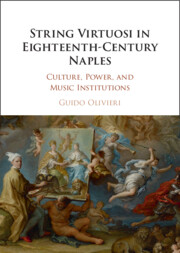
Drawing on extensive archival work, this book examines the crucial contribution of Neapolitan string virtuosi to the dissemination of instrumental music and to the development of string practices and musical culture in Europe. It presents a fresh look at the central place of instrumental music in early modern Naples and considers aspects of music pedagogy, performance practices, patronage, and musicians' social mobility. Music examples, paintings, and lists of personnel of major music institutions inform the discussion and illustrate the opportunities for social mobility afforded by the music profession. Music production and consumption are considered within their cultural, political, and economic contexts and in connection with the rapid political changes of eighteenth-century Naples. This substantial contribution to the understanding of a previously under-studied repertory places the cultivation of Neapolitan instrumental music at the centre of aesthetic and cultural developments across eighteenth-century Europe.
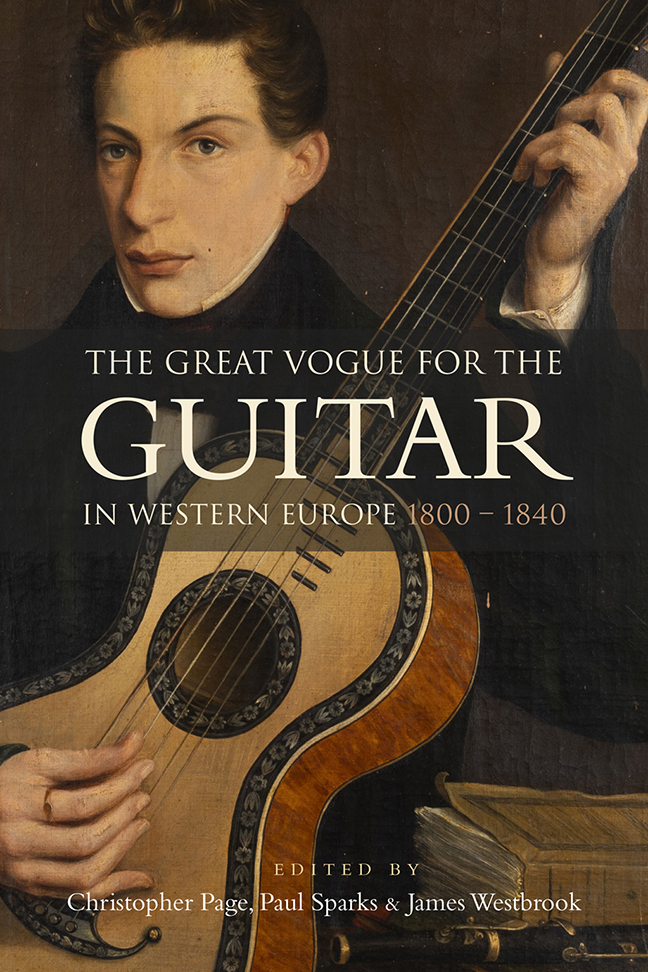
The first book devoted to the composers, instrument makers and amateur players who advanced the great guitar vogue throughout Western Europe during the early decades of the nineteenth century.
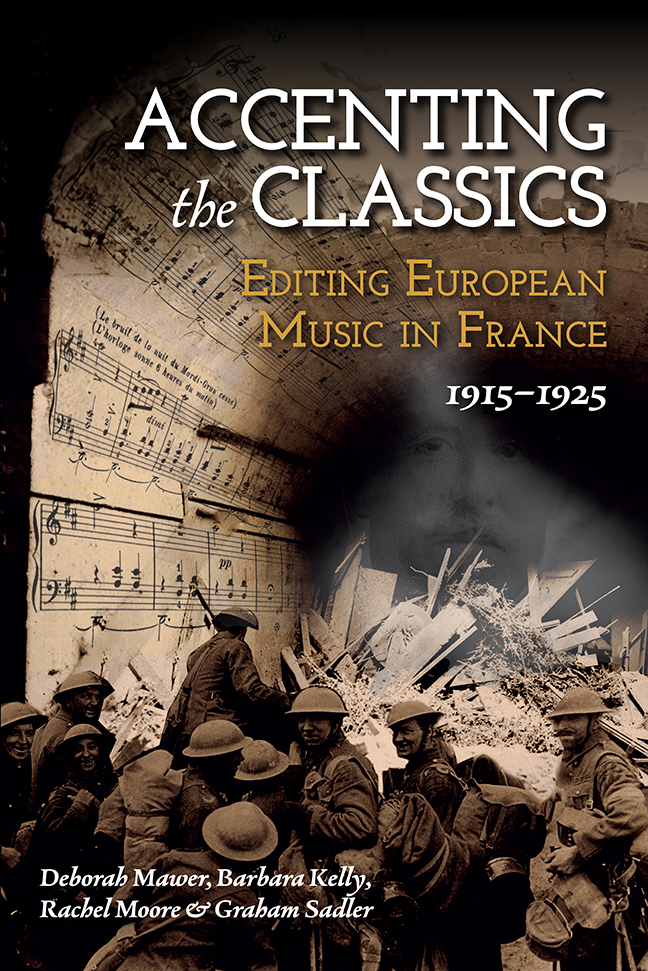
Brings new insights to the music of well-known European composers by telling a fascinating, little-known story about French music publishing, specifically through the lens of Jacques Durand's Édition Classique.
This long-awaited study explores the creation of NBC-TV's landmark 1952-53 WWII documentary series, with particular attention to its evocative Rodgers-Bennett score.
Presents a first analytical study that looks at the overarching designs of Benjamin Britten's John Donne, Thomas Hardy and William Blake solo song cycles.
This book examines the reputation of the Hungarian composer Béla Bartók (1881-1945) as an antifascist hero and beacon of freedom. Following Bartok's reception in Italy from the early twentieth century, through Mussolini's fascist regime, and into the early Cold War, Palazzetti explores the connections between music, politics and diplomacy. The wider context of this study also offers glimpses into broader themes such as fascist cultural policies, cultural resistance, and the ambivalent political usage of modernist music.
The book argues that the 'Bartókian Wave' occurring in Italy after the Second World War was the result of the fusion of the Bartók myth as the 'musician of freedom' and the Cold War narrative of an Italian national regeneration. Italian-Hungarian diplomatic cooperation during the interwar period had supported Bartok's success in Italy. But, in spite of their political alliance, the cultural policies by Europe's leading fascist regimes started to diverge over the years: many composers proscribed in Nazi Germany were increasingly performed in fascist Italy. In the early 1940s, the now exiled composer came to represent one of the symbols of the anti-Nazi cultural resistance in Italy and was canonised as 'the musician of freedom'. Exile and death had transformed Bartók into a martyr, just as the 'Resistenza' and the catastrophe of war had redeemed post-war Italy.
Two forgotten manuscript sources provide new insights on the early history of cello repertory and performance practice in Naples. The first collection, held by the library of the Montecassino Abbey, dates from around 1699 and contains the only two cello sonatas attributed to Giovanni Bononcini, together with the largest set of passacaglias for cello by the Neapolitan virtuoso Gaetano Francone, and the twenty-eight sonatas for two “violas” and elaborations over antiphons by Rocco Greco, a prominent string performer and teacher. This remarkable source presents significant insights on the history, nomenclature, and function of bass violins in Naples and offers new evidence on the practice of continuo realization at the cello. The second source contains the earliest Italian cello method, written around the 1740s by the Neapolitan cellist Francesco Paolo Supriani, and presents examples of elaborate improvisations at the cello. Both sources demonstrate the technical advancement of the Neapolitan cello virtuosi and connect the cello repertory to the partimento practice. The chapter provides entirely new perspectives on the early history of the violoncello and illustrates the emergence of a celebrated generation of Neapolitan cello virtuosi of international repute, such as Francesco Alborea, in the early years of the eighteenth century.
The rapidly changing political landscape of the Neapolitan Viceregno had a significant impact on the professional path of artists and musicians. Driven by a growing awareness of their central place in artistic culture, the Neapolitan string virtuosi became in many cases cultural agents who played an active role in endorsing and shaping the political and cultural programs of dynastic powers. The career of violinist Angelo Ragazzi is emblematic of the close cultural and artistic networks established between the Neapolitan and Viennese courts and illustrates the musicians’ negotiations with political powers. Ragazzi’s sonatas offer a privileged viewpoint from which to investigate the blending of “old” contrapuntal and “modern” concertante styles. In the first quarter of the eighteenth century, the proliferation in Naples of sonatas for three violins and continuo, characterized by marked contrapuntal language, derives in part from the influence of the Viennese contrapuntal style. The sonatas for three violins published by Giuseppe Antonio Avitrano appears as a unique case of printed instrumental music in Naples, realized thanks to influential aristocratic patronage, in a market that suffered from the absence of a significant middle-class amateur performers.
With the passage of the Viceregno under the control of the Habsburgs in 1707, cultural and artistic exchanges between Naples and Vienna intensified. Sources related to the makeup of the Cappella Reale show two significant trends: the growth of the string section and the introduction and increasing relevance of wind instruments. New documents record the early career in Naples of Francesco Geminiani in connection with the beginnings of the operatic season at the Teatro de’ Fiorentini, where the virtuoso is employed as first violin. Following the outset of the War of the Spanish Succession, Neapolitan musicians were summoned to the Real Capilla of Barcelona, the splendid music chapel established by Archduke Charles of Habsburg to assert his claims to the Spanish throne. When Charles became emperor in 1711 some of these musicians joined the Imperial Chapel in Vienna. The lists of personnel of the Hofmusikkapelle show that a number of virtuosi from Naples formed the core of the string section and contributed to the cosmopolitanism of that ensemble. The prestige of the Neapolitan string school is confirmed by the appointment of Giovanni Antonio Piani, who moved from Paris to Vienna in 1721, at the helm of the Imperial Chapel.
Neapolitan instrumental music has been sidelined by modern scholarship. A focus on opera has for a long time completely obscured the existence of local instrumental traditions in Naples, usually considered peripheral to the main developments of the string repertory. The review of documentary evidence and discovery of new sources brings the reassessment of the central role that the string virtuosi had in the construction of the myth of Naples as music capital. The methodological approaches and criteria used in this study invite a reconsideration of the concepts of center and periphery and of the definition of Neapolitan instrumental “school.” Most of the composers considered were born in the provinces of the kingdom but were trained in the Neapolitan conservatories and thus participated in shared common pedagogical approaches and stylistic trends. A detail from a painting by Paolo de Matteis, which shows the mythical founder of the city, the siren Parthenope, rising from the ocean and accompanying her singing with a violin, is used as a metaphor for the emergence of string music in the early eighteenth century. The development of a distinct string tradition spans from the early career in Naples of virtuosi, such as Lonati and Matteis, after the catastrophic plague of 1656, to the appointment of Alessandro Scarlatti at the helm of the Cappella Reale in 1684.
Through the study of lists of personnel and records of appointments, the chapter looks at Neapolitan music institutions and illustrates in details the central place of the Cappella Reale, the ensemble that participated in all the official ceremonies and represented the sonic embodiment of the Neapolitan royal power. A remarkable example of the court’s representational culture, the Cappella was impacted by the rulers’ shifting political agendas. The chapter traces the evolution of this ensemble, considering in particular the expansion of the string section during the early eighteenth century. The career of violinist Pietro Marchitelli, leader of the ensemble for about thirty years, is emblematic of the opportunities for social mobility available to some string virtuosi. The ascending trajectory of Marchitelli’s professional path – from his birth in a small village in the province of the Neapolitan kingdom, to his training at the Pietà dei Turchini Conservatory, and finally to his appointment in royal ensemble – is retraced through documentary evidence, such as bank accounts and notary contracts, and demonstrates the social status and wealth attained by musicians, with the support of powerful patronage and of cultural and artistic networks.
The chapter describes the central place of the four Neapolitan conservatories in the development of string pedagogy. New archival evidence and a reassessment of known documents allow the analysis of the financial and administrative structure of these educational institutions, the reconstruction of the artistic networks, and the admission process and daily teaching schedule of students. While the conservatories could guarantee a professional future to the children enrolled, the figlioli in turn constituted the main economic resource for these institutions. The pedagogical methods applied in these institutes were based on years of absolute dedication that exploited child labor. This systematic, if arduous, approach to music education played a crucial part in the professional training of the Neapolitan musicians and fostered the emergence of virtuosi whose fame became widespread in Europe. The details of the career of Giovanni Carlo Cailò, a Roman violinist who moved to Naples with Scarlatti and became the most influential string teacher in two of the four conservatories, explain the role and influence of a famed string maestro. A generation of eighteenth-century violin and cello virtuosi formed under Cailò contributed to disseminate the fame of the excellence of the string school established in the Neapolitan conservatories.