To save content items to your account,
please confirm that you agree to abide by our usage policies.
If this is the first time you use this feature, you will be asked to authorise Cambridge Core to connect with your account.
Find out more about saving content to .
To save content items to your Kindle, first ensure no-reply@cambridge.org
is added to your Approved Personal Document E-mail List under your Personal Document Settings
on the Manage Your Content and Devices page of your Amazon account. Then enter the ‘name’ part
of your Kindle email address below.
Find out more about saving to your Kindle.
Note you can select to save to either the @free.kindle.com or @kindle.com variations.
‘@free.kindle.com’ emails are free but can only be saved to your device when it is connected to wi-fi.
‘@kindle.com’ emails can be delivered even when you are not connected to wi-fi, but note that service fees apply.
This introduction to the Cambridge Companion to the Electric Guitar offers a concise synopsis of the dominant narrative surrounding the instrument, and establishes the ways in which the current collection seeks to expand the existing framework for considering the electric guitar’s history and cultural impact. It also discusses the provisional development of “guitar studies” as an academic field, highlighting trends in conferences, journalistic and special interest publications, and discussions surrounding music technology, the electric guitar industry, and socio-demographic issues such as gender, race, and age. While electric guitar scholarship has made significant progress, it has not fully established itself as a distinct field. Currently, there is no dedicated journal or professional organization for researchers in this area. “Guitar studies” may not yet have come to fruition, but its foundation is being laid, to which this Cambridge Companion intends to contribute.
Schubert was fond of writing four-hand music to be played by two pianists sitting on the same piano bench. His thirty-four compositions in this medium range from the earliest extant composition in his hand (a Fantasy penned in 1810) to his Rondo in A Major finished in the summer of 1828. No composer ever approached the piano duet with the seriousness Schubert did, and his corpus of four-hand pieces stands as the apex of the genre. The four-hand configuration seemed ideally suited to his temperament, as it was a congenial form of music-making that was emblematic in Biedermeier culture as an activity of friendship and sociability. It is thus not surprising that these works were a staple in his Schubertiads and ranked among his most successful publications during his lifetime. But the four-handed configuration was also a critical medium for the transmission and reception of much of his orchestral and chamber music. The many piano transcriptions of Schubert’s instrumental music arranged for four-hands issued by publishers over the course of the nineteenth century allowed any two decently practised amateur pianists a chance to get to know his music by reproducing it in the domestic space of the bourgeois parlour.
Schubert’s piano music and songs contain several examples where triplets are notated alongside dotted rhythms. Editors, writers and performers disagree about the performance of these rhythms, which exist in keyboard music from at least the late Baroque to the early twentieth century. This chapter surveys evidence from the long nineteenth century, drawing on previous literature and introducing new lines of enquiry. It situates the problem as it applies to Schubert within a broader view of the meaning of notation through the eighteenth and nineteenth centuries, suggesting that many aspects of rhythmic notation remained unfixed during the period.A broader range of evidence than previously considered is documented, including contradictory passages from performance tutors and other literature, anomalous notation in the music of several composers, different versions of Schubert’s works and rhythmic alignment in a range of sources. A study of engraving practice offers insight into the rhythmic presentation of published sources. Finally, early recordings demonstrate that rhythmic performance continued to be controversial into the twentieth century.Because of the scant and sometimes contradictory nature of the evidence, it is not possible to arrive at definitive solutions to the performance problems. Nevertheless, this chapter draws some distinctive conclusions from the sources.
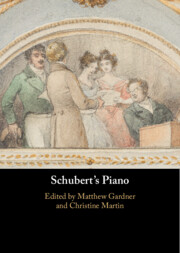
The piano features prominently in Schubert's musical output throughout his career, not only as an instrument for solo piano pieces (for two and four hands), but also in Lieder and chamber music as an equal partner to the voice or other instruments. His preference for the instrument is reflected in contemporary reports by his friends and colleagues as well as in iconography, where he is frequently depicted at the piano. In early nineteenth-century Vienna the piano underwent a rapid period of development, allowing composers to experiment with expanded ranges, sonorities and effects that differ substantially from modern concert grands. Schubert's Piano considers the composer's engagement with this instrument in terms of social history, performance and performance practices, aesthetics, sonority and musical imagery, and his approaches to composition across several musical genres, stimulating new insights into the creative interplay among Schubert's piano compositions.
A landmark in Sibelius scholarship, this is the first book that presents all of Sibelius's solo art songs in their musical and aesthetic context. Indispensable for scholars and performers alike.
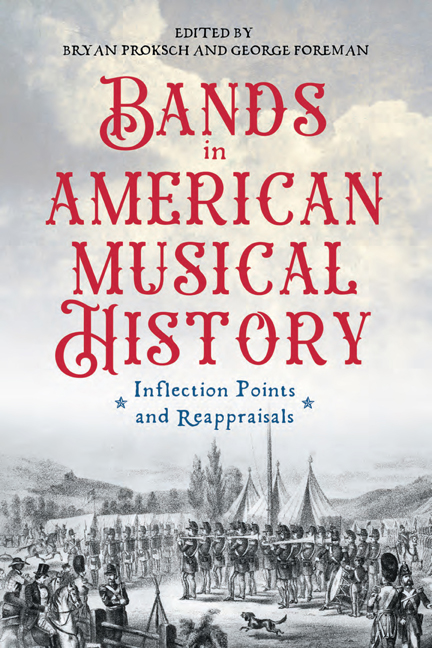
Essays on the history of bands in America from circa 1820 to 1930, offering new insights on a major sphere of music making that brought diverse repertories to wide audiences.
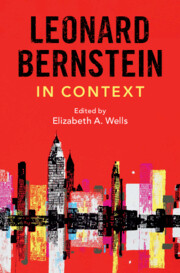
Designed for students, aficionados of classical music, and historians, this volume offers a wide-ranging, multi-disciplinary and comprehensive view of one of the most important musicians of the twentieth century at his 100th anniversary. Scholars from diverse backgrounds and fields have contributed rich insights into Bernstein's life and work in an approachable style, shedding light on Bernstein's social, professional and ideological contexts including his contemporaries and rivals on Broadway, his artistic collaborations, his celebrity status as a conductor on the international concert circuit, and his involvement in music education via broadcasting. From his early education, through his conducting and composing careers, to his fame as musical and cultural ambassador to the world, this book views Bernstein the man and the artist and provides a fascinating overview of American classical music culture during Bernstein's long career in the public spotlight.
On the Waterfront (1954) offers a particularly interesting case study of both film and music in the 1950s. Elia Kazan’s iconic depiction of waterfront corruption in Hoboken, New Jersey is revered for its neorealist cinematic techniques, masterclass in method acting, and concern for the collective plight of blue-collar longshoremen, but is perhaps best remembered as a classic story of one man’s tragic fall and ultimate redemption through the love of a woman. Concerned that the film lacked sufficient ‘star power’ for success at the box office, independent film producer Sam Spiegel eventually convinced Leonard Bernstein to compose what would be his first and only film score. This chapter argues that Bernstein’s music interacts with the film’s narrative in a way that is not only remarkable for one’s first score, but also represents an important contribution to 1950s cinema, employing textures and influencing composers who are still with us today.
Bernstein, perhaps more than any other conductor in the last century, seemed to dance on the podium. This chapter explores the reception of Bernstein’s dancelike conducting by both critics and musicians. When describing Bernstein’s conducting, whether praising or panning it, critics have regularly described it as ‘choreography’, with the word almost always used pejoratively. For some, Bernstein’s shameless bodily movements enhanced their appreciation of the music; for others, it was a distraction approaching desecration. What has been overlooked is that Bernstein’s conducting was surprisingly consistent – not only in the general movement vocabulary he employs (his infamous leaps, for an obvious example) but also in set patterns of specific movements that he employs from performance to performance of the same work across years. The chapter suggests that we understand Bernstein’s conducting not as spontaneous and random, but as planned, iterative, and locked in his muscle memory: that is, as choreography.
Bernstein was a larger-than-life figure on stage as conductor, composer, pianist, and media persona, and off stage, too, in his physicality, sociality, charisma, and sensuous engagement with the world. His artistic and celebrity status granted wide berth to Bernstein’s ‘bohemian’ sexual and relationship practices, but he was not exempt from contemporary social expectations and anxieties. Indeed, Bernstein’s life and career illustrate the pivotal effects of twentieth-century sociosexual norms and homophobia on US musical modernism. A gay man in a heterosexual marriage, Bernstein was both a victim and beneficiary, and a sometime agent, of homophobia. In Bernstein the forces of twentieth-century homophobia converged with talent, ambition, and repression, yielding momentous results for his family, intimates, colleagues, and rivals, and for US and international arts and culture. Bernstein’s life and career were fatefully shaped by prevailing social forms and mores, and ultimately his social and cultural influence would contribute to their reshaping.
Leonard Bernstein’s career-long involvement with the New York Philharmonic Orchestra intersected with the Cold War, the Civil Rights movement, and the growth of television. He first conducted the Philharmonic in 1943, at age twenty-five, and his term as music director (1958−69) is remembered as a particularly vibrant period in the orchestra’s history. On taking over that role, Bernstein embarked on an ambitious agenda both for thematic programming, including focuses on American music and the symphonies of Gustav Mahler, and for public-facing initiatives, such as the televised Young People’s Concerts and touring. In addition, Bernstein used his position to highlight the work of solo performers who were members of minority groups, and he oversaw the orchestra during its period of racial integration.
In working with Stephen Sondheim as lyricist on West Side Story, Bernstein seemed to have forged an important new collaboration with an edgy young writer to contrast with his previous musicals with musical comedy writers Comden and Green. Yet the young Sondheim saw himself as a composer-lyricist, perhaps even with more of an emphasis on the music than the words, so the success of the team was short-lived. This chapter examines primary source accounts of their work together, considering how they met, what they thought of each other, and how productive their creative tensions were. The chapter also briefly addresses their other short-lived projects, including the abandoned The Exception and the Rule.
The growth of Bernstein’s career coincided with the growth of television, so many knew him through his broadcasts. His fifty-three hour-long award-winning Young People’s Concerts (1958−72) are among his most significant television work and were seen at their height by nearly ten million in the USA and in over forty countries. In each show, the maestro would expound on some musical principle, with clarity and appeal, accompanied by demonstrations by him and the New York Philharmonic. While the series clearly shows Bernstein’s brilliant pedagogy, a deeper story lies beneath. No other musician in the late twentieth century so fully addressed the issues of the day as did Bernstein, and no other classical musician has ever been so widely seen. Through his Young People’s Concerts, the maestro not only spread his love of music but also raised his artistic voice from this bully pulpit to work for a better world.