To save content items to your account,
please confirm that you agree to abide by our usage policies.
If this is the first time you use this feature, you will be asked to authorise Cambridge Core to connect with your account.
Find out more about saving content to .
To save content items to your Kindle, first ensure no-reply@cambridge.org
is added to your Approved Personal Document E-mail List under your Personal Document Settings
on the Manage Your Content and Devices page of your Amazon account. Then enter the ‘name’ part
of your Kindle email address below.
Find out more about saving to your Kindle.
Note you can select to save to either the @free.kindle.com or @kindle.com variations.
‘@free.kindle.com’ emails are free but can only be saved to your device when it is connected to wi-fi.
‘@kindle.com’ emails can be delivered even when you are not connected to wi-fi, but note that service fees apply.
Realising that I could no longer leave my financial survival to fate, and persuaded by my good friend, John Denison, of the Arts Council, I allowed my name to be put forward for the post of Music Director and Conductor of the City of Birmingham Symphony Orchestra (CBSO). After an enjoyable and very well received trial concert I was offered the job. It was a daunting prospect: fifty concerts a year, a huge number of rehearsals, much travelling around the countryside for out-of-town performances, heavy administrative duties, including the engagement of soloists and orchestral players, and social appearances as well. To take on this catalogue of responsibilities I would again have to say goodbye to my manuscript paper. A London orchestra would have been less demanding and the London Symphony Orchestra had indeed made tentative enquiries, but this was too remote a prospect. If I could not soon show myself solvent, I might fail to qualify for British naturalisation.
My eventual acceptance of the Birmingham offer resolved my pecuniary problems, but was the death knell for my marriage. Scarlett, after her glamorous life in London, was repelled by the idea of living in what she described as a ‘dull provincial Midland city’. She refused to come to Birmingham with me, even for a single concert. Grateful as I was for Scarlett's courageous participation in my escape, she had contributed to many of the problems that were keeping me away from composition and had never outgrown her hunger for admiring words and constant attention. Her desire for my success did not arise from any belief in what I was trying to do, but because it would provide the social position she felt she needed to shine at her brightest. If she was an unsuitable sort of wife for a tunnel-visioned, dedicated composer, I was equally the most ill-fitted sort of husband to assist her in her social ambitions. Even if I would be lonely, it would be a major relief to escape from our endless quarrels.
The management of the CBSO wanted me to sign a contract for three years, but I explained to them how little I had been able to compose since I had come to Britain, and they most mercifully agreed to two years with an option to renew.
I almost failed to reach Berlin in time. Arriving punctually to catch the night train, laden down with bulky scores and orchestral material for my unconventional programme, as well as a hefty suitcase containing my conductor's ‘uniform’, I waited three hours, the only passenger on a deserted platform, shivering in a temperature several degrees below zero. When the Moscow-Berlin train finally lumbered in, I jumped towards a carriage door with my luggage, but the handle would not budge. I tried several more doors but they were all locked. I ran after the guard, seeing that he was about to blow the whistle for departure. Breathing vodka fumes all over me, he barked that the train was full. Furious, I grabbed his arm just in time to prevent him waving his green flag, and thrust under his nose my ticket and sleeper reservation issued by the Ministry of Culture, ordering him, with what I hoped was the voice of authority, to show me to my place. Suddenly alarmed, he muttered that my booking was indeed valid, and let me into my compartment, where a Soviet army officer was already tucking himself into the lower bunk.
My problems were not over. Longing to warm my frozen limbs under the blankets, I found that my mattress was bare; there was not so much as a pillow or sheet. The Russian officer sent me to the attendant, a tiny Mongolian girl, who was sleeping on an upright seat, her head against the corridor wall. She woke up fast enough at my approach and insisted on payment for the bedclothes in German marks (presumably for black-market use), of which I had none. My Russian companion not only saved me from being frozen all night, but was so friendly that he refused repayment. So I could hardly complain when he consumed a stinking garlic sausage which later would not allow itself to be forgotten. Like most of our fellow passengers, he was en route to Berlin on an army posting. Never having been abroad before, he was envious of my wider travels to the rest of Europe. He had a lot to say about his life, his wife and his vodka. Sleep was impossible. His night-long conversation was interspersed at regular intervals by the sounds and fumes provoked by the battle between the garlic sausage and his digestive system.
In June 1928, De Nieuwe Gids published an article on Diepenbrock by his wife Elisabeth, written in response to two 1926 surveys by J. C. Hol and Willem Pijper. Five years after Diepenbrock's death, both Pijper and Hol made more in-depth analyses of both his character and his work, at the same time also attempting to fathom the man behind the composer. Pijper regarded Diepenbrock as a prism with three faces: the philologist, the musician and the Catholic. Hol essentially took the same approach, but also felt that a personal and psychological analysis of Diepenbrock was necessary. In his view, Diepenbrock was seriously held back by his work teaching classics – even though teaching, being his main source of income, did not ‘occupy the same position’ in his life as music or Catholicism. ‘Both of the latter were primary, philology was secondary’, in Hol's opinion; ‘Philology is not an innate quality in and of itself. It is a profession’. Thus it was all the more regrettable, Hol contested, that Diepenbrock's special qualities as a philologist and classicist stood in the way of his ability and willingness to accept a position in music, his true calling.
Elisabeth Diepenbrock pointed out the futility of viewing her husband as a ‘composite’, saying that ‘the fundamental unity within any conception of life should remain intact’. For it is precisely the interplay between these elements – the Catholic, the classicist and the musician – that made Diepenbrock who he was. She even took this notion further, since she believed it was his life (all the facets of his life, both the positive and the negative) that led jointly and inextricably to the creation of his art. The lack of a formal musical education, for example, was precisely what led him to write the music that he wrote, and was the reason why he ‘scraped and sighed’ as he did. A survey of Diepenbrock's correspondence suggests that his music was born from a kind of spontaneous inspiration, which then needed to be conquered through toil and persistence, before arriving at a score that represented the sound he had envisaged.
As with every other composer, Diepenbrock's music is also a reflection of his psyche, of his education and of the time in which he lived. His career as a composer is marked by various major developments.
Christ Church cathedral is an Anglican cathedral in a catholic country. Musical and archival sources (the most extensive for any Irish cathedral) provide a unique perspective on the history of music in Ireland.
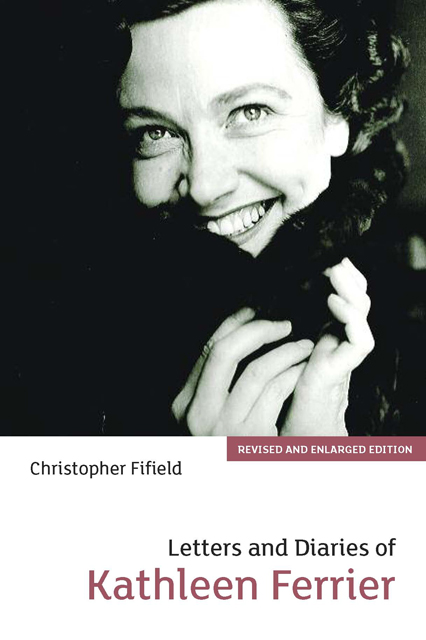
Until now, Kathleen Ferrier has been a glorious voice, but through the pages of these fascinating letters and diaries, never previously published, we get to the real person.
This monograph investigates the promotion and consumption of high musical culture among leisured society in Victorian London, by focusing on the activities of the concert manager John Ella and his Musical Union.
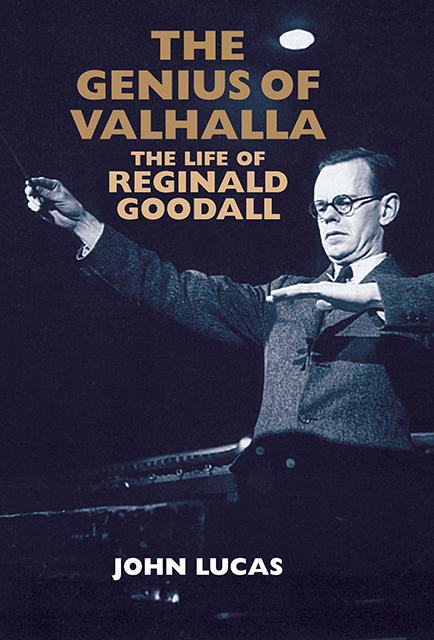
The life of enigmatic Wagner conductor, Reginald Goodall, by the author of the acclaimed Thomas Beecham: An Obsession with Music, newly available in paperback.
An essay collection which examines Britten's juvenilia, influences such as Shostakovich and Verdi, his opera Owen Wingrave and a libretto written by Australian novelist Patrick White with the hope of a future collaboration.
This book examines the progress of the British musical in the twentieth century as it struggled to find an identity, stepping out of the shadow of its American counterpart. With a wealth of contemporary photographs and memorabilia, it looks at the contribution of key figures - from Ivor Novello to Lionel - in lively and engaging prose.
Essays highlight the interplay between opera, art and ideology across three centuries, uncovering three broad themes from a variety of approaches: nationalism, cosmopolitanism and national opera; opera, class and the politics of enlightenment; and opera and otherness.