To save content items to your account,
please confirm that you agree to abide by our usage policies.
If this is the first time you use this feature, you will be asked to authorise Cambridge Core to connect with your account.
Find out more about saving content to .
To save content items to your Kindle, first ensure no-reply@cambridge.org
is added to your Approved Personal Document E-mail List under your Personal Document Settings
on the Manage Your Content and Devices page of your Amazon account. Then enter the ‘name’ part
of your Kindle email address below.
Find out more about saving to your Kindle.
Note you can select to save to either the @free.kindle.com or @kindle.com variations.
‘@free.kindle.com’ emails are free but can only be saved to your device when it is connected to wi-fi.
‘@kindle.com’ emails can be delivered even when you are not connected to wi-fi, but note that service fees apply.
A viva examination is like playing a game. The candidate should know the subject well, have a game plan and more importantly should know the opponent. A candidate who manages to answer the higher-order thinking/judgement questions at the end of the viva will make it a rewarding 5 minutes (for both the examiner and candidate) and more importantly will score a 7/8. An examiner relishes a candidate who takes control and makes their life easy.
Again, we must stress the importance of time management in the viva, as you have got only 5 minutes to score either eight or four and time is money! It is important to understand the scenario quickly and progress in the correct direction rather than using guess work. Avoid talking generally about the shoulder conditions to fill the time if your aim is to score well. Wherever possible support your answer by evidence (quoting literature) as this will get you past a basic pass and on to a higher score.
The radiograph is inadequate because it does not show the full pelvis and hips. Otherwise the radiograph shows a displaced subcapital intracapsular neck of femur fracture. I would obtain radiographs in orthogonal views to assess this fracture and consider requesting a CT scan to more fully understand the fracture pattern if necessary.
Spine questions can feature at any station for viva. They are frequently asked in adult pathology, but can pop up in basic science (structure of intervertebral disc), trauma (thoracolumbar fractures and their management) or paediatrics (adolescent scoliosis).
For many candidates learning spine for the exam is a daunting task. But with smart preparation, these questions are actually gifts. There is a set methodology to answer them. Also, spine is like maths – neurology and level of pathology should add up. Besides, indications for surgery are specific and usually encompass neurology or instability.
There are several areas of pelvis/acetabulum that candidates need to be familiar with and other areas that are within a subspecialty interest.
Acetabular/pelvic radiology is usually discussed at the beginning of a viva and should be slickly and quickly answered so as to move on and to get onto the main testing area of the viva.
A basic appreciation of the various surgical approaches to fix an acetabular fracture is reasonable, but it is unlikely candidates will need to know this in great detail. Management of the open-book pelvis and the resuscitation around this is an A-list topic.
This diagram is a representation of the lateral aspect of the ankle showing the bony and ligamentous structures. Structure 2 is the anterior talofibular ligament, structure 3 is the calcaneofibular ligament and structure 5 is the posterior distal tibiofibular ligament.
The mechanism is usually a rotational injury with sequential failure of the ligaments from front to back, hence the anterior talofibular ligament or ATFL is most commonly injured followed by the calcaneofibular ligament or CFL and the posterior talofibular ligament is the least frequently injured.
This is a hyperextension injury in ulnar deviation: a Mayfield stage 4. Lower-energy hyperextension injuries might result in scapholunate ligament injury. In order to dislocate the lunate, this patient must have torn the scapholunate ligament, dislocated the lunocapitate joint, torn the lunotriquetral ligament and the dorsal radiolunate ligament. The only remaining ligamentous attachments are the strong volar radiocarpal ligaments.
In the FRCS (Tr & Orth) structured oral exam, most candidates will have anticipated the possibility of being asked a radiology topic and would have (wisely) prepared for this. While candidates will be asked bits and pieces of radiology during a topic discussion the assumption that a stand-alone 5-minute radiology topic is probably too much detailed knowledge for the average candidate (and examiner) to stretch out discussion for is wrong. We know candidates who have had very detailed questioning on the principles of either bone scans or MRI scanners lasting the full 5 minutes of a viva. Bone and MRI scanners would seem to be the most obvious questions that candidates would be asked, although a discussion about X-rays is also fair game. Sometimes, the examiner may put all of them in front of you (X-ray/ultrasound/CT/MRI/bone scan images) and give you a choice to speak on any one of them. A candidate scoring 6 would start to run out of steam at 3 minutes or struggle if they are seriously probed about the topic in detail. A bit depends on the examiner themselves on how much they really do understand the subject in depth, but you are gambling a bit with this one.
Practise viva technique in a timed manner and adapt your technique to illustrate your strengths.
The following are viva examples of common clinical scenarios. The suggested reading references are all available to access free online. They provide useful supplementary information to the topic of the viva.
Make a list of conditions causing pain, locking, stiffness, flail and unstable elbow. Painful elbow pathology could be best remembered by its anatomical position – anterior, medial, posterior and lateral.
Firstly, I would establish what are the symptoms the patient is suffering from. I would focus on pain, loss of function and severity of symptoms. I would like to know the exact location of the pain, alleviating and relieving factors, and where the pain is radiating to. How the pain is affecting activities of daily living such as cutting toenails, putting shoes and socks on, how easy it is to go up and down stairs are all questions I would ask. Treatment to date is also important; has the patient had any physiotherapy/rehabilitation, trialled any analgesics? Previous surgical procedures need to be established. Assessment of the effect of osteoarthritis on the patient’s function, quality of life, occupation, mood, relationships and leisure activities is also important. Clinical examination findings such as assessment of the soft tissue envelope is also important. Severity of the deformity in the coronal plane will need to be established. A fixed flexion deformity should also be noted. The competency of the knee collateral ligaments and degree of deformity correction should be assessed in order to plan the type of implants.
There has been a change in emphasis in the oral questions in the last 2 years to higher-order thinking and judgement. Exam revision should be less book reading and more being practical and adept at managing complex clinical conditions. Examiners would argue if you have been well trained in the basics it isn’t too difficult to apply these basic principles to various clinical situations that you may be tested on in the oral exam. If you haven’t managed periprosthetic joint infection (PJI) then it’s going to be doubly difficult to answer the real-life practical questions that are related to managing a patient with this condition.
We have aimed the candidates’ answers for a 7–8 score, so they are significantly more detailed than what would be required for a bare pass. Aiming for the minimum to pass will generally be unsuccessful and is not recommended.
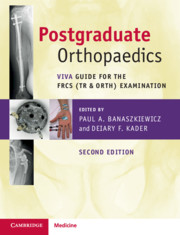
Develop an aptitude for defining key topics, features and processes, vital for your FRCS (Tr&Orth) Viva exam success, with this newly updated and detailed guide. This new edition expertly delivers invaluable insights into tactics and planning, for candidates to sharpen exam skills, and gain confidence. Thoroughly updated to include an expanded basic science section, to answer all of your viva questions, this guide also supplies candidates with new illustrations and exam-specific diagrams; adapting to meet the expectations of a constantly changing syllabus. Vital for orthopaedic surgeons in training, this forward-looking text includes a drawing chapter, for candidates to practise creating succinct, exam-style illustrations, before the exam itself. Proactive in its approach, this book addresses the balance between trauma, general orthopaedics and basic science; by editors with extensive national and international experience of preparing candidates for the FRCS(Tr & Orth).
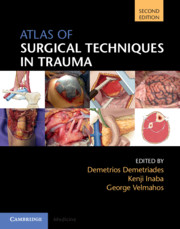
As surgical specialization becomes more focused, there is a growing lack of expertise amongst surgeons in life-preserving management of severely injured patients. This comprehensively updated second edition provides an in-depth, visual guide to both commonly and uncommonly performed trauma procedures. It includes over 900 high-quality color photographs and illustrations of step-by-step procedures on fresh, perfused and ventilated cadavers. Practical surgical anatomy, procedural sequencing, and common technical pitfalls are all clearly outlined. A number of new techniques have been introduced since the first edition, from REBOA (resuscitative endovascular balloon occlusion of the aortic), to ribplating for flail chest and skin grafting. Informed by the editors' experience in some of the busiest trauma centres in the world, the text has been updated throughout and includes additional photographs. This Atlas is an essential resource for trainee and operating trauma surgeons, and general surgeons distant from academic centres, as well as emergency medicine and critical care personnel.