To save content items to your account,
please confirm that you agree to abide by our usage policies.
If this is the first time you use this feature, you will be asked to authorise Cambridge Core to connect with your account.
Find out more about saving content to .
To save content items to your Kindle, first ensure no-reply@cambridge.org
is added to your Approved Personal Document E-mail List under your Personal Document Settings
on the Manage Your Content and Devices page of your Amazon account. Then enter the ‘name’ part
of your Kindle email address below.
Find out more about saving to your Kindle.
Note you can select to save to either the @free.kindle.com or @kindle.com variations.
‘@free.kindle.com’ emails are free but can only be saved to your device when it is connected to wi-fi.
‘@kindle.com’ emails can be delivered even when you are not connected to wi-fi, but note that service fees apply.
The clinician often refers to the total and the differential leucocyte count when evaluating patients with fever or infection. Therefore, a complete blood count (CBC) and review of blood smear remain the most commonly ordered tests in these situations. In addition to the quantitative review of CBC, morphological analysis including inclusion bodies is often undertaken during this exercise. We review common infections and related characterized changes noted on their blood smear.
Lymphadenopathy (LAD) refers to the enlargement and/or abnormal consistency of lymph nodes and may be localized or diffuse. It reflects the results of immune responses to different insulants such as infection, autoimmunity, or malignancy [1]. Children with LAD are much more likely to have benign etiologies than adults, and most commonly present with a cervical mass [2]. While most benign LADs in children have no identifiable cause and are defined as nonspecific reactive LAD, some cases are found to be of infectious origin, including bacteria, yeast, parasite, or virus, often referred to as lymphadenitis [3].
Blastic plasmacytoid dendritic cell neoplasm (BPDCN) is a rare, aggressive malignancy that is notable for frequently presenting with skin lesions and for its unfavorable prognosis. The revised fourth edition of the World Health Organization classification places BPDCN in a separate, stand-alone chapter between acute myeloid leukemia and acute leukemias of ambiguous lineage in recognition of its distinct lineage and aggressive clinical behavior. [1]. Knowledge of the cell of origin and the increasing availability of markers specific for plasmacytoid dendritic cells has recently allowed the recognition of heterogeneity in the clinical presentation and immunophenotype of BPDCN [2].
Despite all the advances in laboratory medicine, microscopic review of the peripheral blood smear is still highly informative and clinically relevant and remains an indispensable diagnostic tool. In a pediatric hospital, a common and challenging request is the evaluation of a newborn blood smear. This chapter provides an overview of some of the characteristics of a newborn smear and common reactive conditions.
Blood smear evaluation is often performed for three essential reasons: first, to clarify a flagged result such as immature cells or a low platelet count to rule out pseudo-thrombocytopenia from platelet clumping; second, to evaluate the morphology of red blood cells, white blood cells, and platelets; and, third, to confirm morphologic findings identified by lab staff or an instrument [1]. The latter may be requested by a physician due to a clinical suspicion or by members of the laboratory staff for review of an abnormal finding.
Myelodysplastic syndrome (MDS) is a heterogeneous group of clonal disorders characterized by ineffective hematopoiesis causing cytopenias, dysplastic morphology, and risk for progression to acute myeloid leukemia (AML) [1]. Sporadic MDS is typically a disease of the elderly, whereas, in the pediatric population, the annual incidence is very low with one to two cases per million [2]. Pediatric MDS constitutes less than 5% of childhood hematologic malignancies [3].
In this chapter, we illustrate a wide variety of conditions affecting the bone marrow not described in other chapters of this book. These include inherited or acquired anemias, bone marrow failure syndromes not described in the germline disorders, therapy-related changes, metastatic malignancy, and storage disorders.
While the number of germline mutations known to confer predisposition to myeloid malignancy has gained broad recognition, there is also increasing awareness of genes predisposing to lymphoid neoplasia. This chapter addresses select genes associated with germline predisposition to lymphoid neoplasms. Genes covered in this chapter are associated with familial B-lymphoblastic leukemia (B-ALL) [1], general cancer predisposition syndromes, and primary immunodeficiency syndromes (PID) (Table 20.1). Individuals with PID are predisposed to lymphoproliferations as a result of complex interactions between germline genetic defects, viral oncogenes, impaired immunosurveillance, and chronic antigen stimulation [2]. Of note, many of the B-cell lymphoproliferations that occur in the setting of a PID show frequent Epstein-Barr virus (EBV) positivity and tendency to involve extranodal sites.
Immunodeficiency-associated lymphoproliferative disorders (IA-LPDs) encompass a heterogeneous group of disorders that stem from diverse clinical settings and underlying disorders. These disorders may be benign lymphoproliferations to aggressive lymphomas. The World Health Organization (WHO) broadly classifies IA-LPDs into four groups: posttransplant lymphoproliferative disorders (PTLDs), lymphomas associated with HIV, lymphoproliferations associated with primary immune disorders, and other iatrogenic lymphoproliferative disorders. This chapter focuses on IA-LPDs of primary immune deficiencies seen commonly in the pediatric population, HIV-associated lymphoma, and iatrogenic lymphoproliferations.
Congenital nonimmune hemolytic anemias are disorders of the red blood cells (RBCs) that occur infrequently in children and adults. These disorders can be divided into three categories: disorders affecting RBC metabolism, the RBC membrane, and hemoglobin synthesis. In this chapter, we briefly describe these conditions and the blood smear morphology. Increasing use of ektacytometry, flow cytometry, or the less sensitive osmotic fragility test can help in analyzing RBC membrane disorders. In addition to morphology of RBCs, RBC enzyme and/or genetic testing can be confirmatory for diagnosis.
Myelodysplastic/myeloproliferative neoplasm (MDS/MPNs) constitute a group of clonal hematopoietic disorders with hybrid features; those of a myeloproliferative neoplasm (MPN) include bone marrow hypercellularity due to proliferation of one or more of the myeloid (as opposed to lymphoid) lineages with effective hematopoiesis, leading to a peripheral “cytosis” or “cytoses.” At the same time, these disorders show variable morphologic or functional dysplasia with ineffective hematopoiesis, resulting in cytopenia(s), findings more characteristic of myelodysplastic syndrome (MDS). The blast percentage is always less than 20, though sometimes transformation to acute myeloid leukemia (AML) occurs.
Posttransplant lymphoproliferative disorders (PTLDs) comprise a heterogeneous category of lymphoid and plasmacytic proliferations occurring as a result of immunosuppression following solid organ or hematopoietic stem cell transplant [1–5]. PTLDs constitute a spectrum ranging from Epstein-Barr virus (EBV)-driven polyclonal proliferations to monoclonal EBV-positive or EBV-negative proliferations indistinguishable from a subset of B-cell lymphomas, T/natural killer (NK)-cell (less often) lymphomas, or classical Hodgkin lymphoma (cHL) (less often) that occur in immunocompetent individuals [1].
Histiocytic disorders consist of many rare related and unrelated wide-ranging proliferations of cells supposedly derived from or sharing common immunophenotypes with macrophages (such as hemophagocytic lymphohistiocytosis) and dendritic cells (such as juvenile xanthogranulomas). These lesions can involve virtually any organ, resulting in an assortment of clinical presentations and prognostic outcomes that vary from localized incidental self-limiting lesions to multisystemic potentially fatal conditions that require chemotherapy or other aggressive treatments. Recent advances in our understanding of histiocytic lesions have shed new light on the pathophysiology of histiocytic disorders, revealing that many distinct entities have overlapping mutations of BRAF or other genes in the MAPK pathway [1]. In 2016, the Histiocyte Society proposed a revised classification system in which histiocytic disorders are sorted into five groups (summarized in Table 22.1) based on clinical, radiologic, histopathologic, immunophenotypic, and genetic/molecular characteristics [2].
Neutrophils are known as the first responders at the sites of infection and injury, but their role in thrombosis is also being recognized. Platelets are known to be an important component in maintaining hemostasis and controlling the bleeding at the site of trauma, as well as in immune modulation [1]. Although some conditions are classified as neutrophilic disorders, they also show clinical manifestations associated with platelet dysfunction, or vice versa. For example, Chediak-Higachi disease is commonly known as neutrophil function disorder; however, it has bleeding history due to abnormal lysosome-like structures inside platelets. Similarly, MYH9-related disorders and Hemansky-Pudlak syndrome are associated with macrothrombocytopenia and storage pool defect but also characterized by neutropenia with recurrent infection and impaired cytotoxic activity.
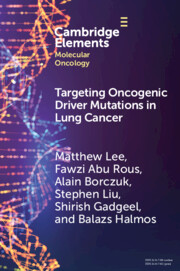
The recent advances in the field of molecular diagnostic techniques have led to the identification of targetable alterations prompting a paradigm shift in the management of non-small cell lung cancer (NSCLC) and an era of precision oncology. This Element highlights the most clinically relevant oncogenic drivers other than EGFR, their management and current advancements in treatment. It also examines the different challenges in resistance to targeted therapies and diagnostic dilemmas for each oncogenic driver and the future direction of NSCLC management.
Epidermal growth factor receptor (EGFR)-mutant non-small cell lung cancer (NSCLC) is a clinically important driver alteration affecting approximately one-third of lung cancer patients. Treatments for EGFR-exon 19 deletion and exon 21 L858R NSCLC have evolved over the last decade from first-generation reversible tyrosine kinase inhibitors (TKI) to third-generation irreversible TKIs, of which osimertinib has been the widely accepted as first-line therapy. Despite survival improvement seen with osimertinib and its efficacy against acquired T790M mutation, resistance through on-target and off-target pathways eventually develop. This Element describes the structural biology and pathophysiology of EGFR-mutant NSCLC and discusses past, current, and future treatment options in the metastatic, neoadjuvant, and adjuvant settings. It describes the biology and recently approved treatment for EGFR-exon 20 insertion mutation and the treatment for the uncommon exon 18 (G719X), 20 (S768I), and 21 (L861Q) mutations. It also outlines the promising clinical applications of circulating tumor DNA (ctDNA).
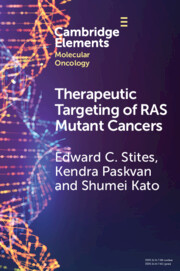
The KRAS oncogene is believed to be the most common single nucleotide variant oncogene in human cancer. Historically, efforts to target KRAS and the other RAS GTPases have struggled. More recently, efforts have focused on identifying and exploiting features unique to specific oncogenic mutations. This has led to the first FDA approval for a RAS targeted therapy. This new agent is a covalent inhibitor that reacts with the cysteine residue created by a codon 12 glycine to cysteine (G12C) mutation within KRAS. Mutant-specific strategies may also exist for other KRAS single nucleotide variants, and recent studies provide examples and mechanisms.