To save content items to your account,
please confirm that you agree to abide by our usage policies.
If this is the first time you use this feature, you will be asked to authorise Cambridge Core to connect with your account.
Find out more about saving content to .
To save content items to your Kindle, first ensure no-reply@cambridge.org
is added to your Approved Personal Document E-mail List under your Personal Document Settings
on the Manage Your Content and Devices page of your Amazon account. Then enter the ‘name’ part
of your Kindle email address below.
Find out more about saving to your Kindle.
Note you can select to save to either the @free.kindle.com or @kindle.com variations.
‘@free.kindle.com’ emails are free but can only be saved to your device when it is connected to wi-fi.
‘@kindle.com’ emails can be delivered even when you are not connected to wi-fi, but note that service fees apply.
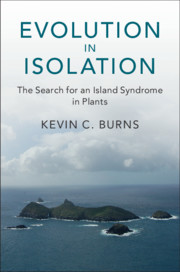
Oceanic islands are storehouses for unique creatures. Zoologists have long been fascinated by island animals because they break all the rules. Speedy, nervous, little birds repeatedly evolve to become plump, tame and flightless on islands. Equally strange and wonderful plants have evolved on islands. However, plants are very poorly understood relative to animals. Do plants repeatedly evolve similar patterns in dispersal ability, size and defence on islands? This volume answers this question for the first time using a modern quantitative approach. It not only reviews the literature on differences in defence, loss of dispersal, changes in size, alterations to breeding systems and the loss of fire adaptations, but also brings new data into focus to fill gaps in current understanding. By firmly establishing what is currently known about repeated patterns in the evolution of island plants, this book provides a roadmap for future research.
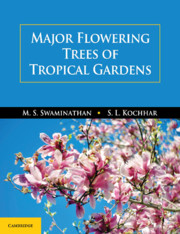
This comprehensive text on flowering trees of tropical gardens discusses some new species of trees, including Adansonia digitata, Monodora myristica, Flacourtia montana, Balanites aegyptiaca, Bursera serrata, Commiphora wightii and Semecarpus anacardium. The text covers more than 200 of the most striking and widespread trees alongside closely related genera and species (both native and exotic) commonly encountered in the tropical climate. It includes more than 700 high resolution coloured photographs, depicting different facets including growth habit, morphological details of stem, leaves, flowers and fruits. The different tree species are organized according to Bentham and Hooker's system of classification of seed plants. The book discusses many aspects of trees including common and botanical names together with synonyms, taxonomic families, etymology (how trees have derived their names), phenology, their native place, geographical distribution, mythological notes, religious significance and economic importance. The text is useful for graduate students and academic researchers in the field of life sciences.
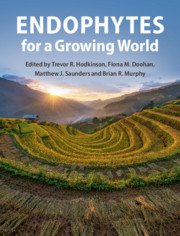
The book brings together papers covering the most recent scientific research from the top endophyte researchers in the world. It presents the state of the art in our knowledge and technical capacity and explores future directions of this work. It is highly relevant and timely because of the need to improve global food security and its sustainability, and also to provide novel bioactive molecules for medicine. There is also a need to protect forestry in a changing and growing world. Endophytes offer a huge potential to reduce environmentally damaging agricultural inputs such as fertilisers and pesticides. They are also a largely overlooked group of organisms where much basic science remains to be undertaken. For example, new molecular tools of DNA profiling using high throughput environmental sequencing are allowing the exploration of a previously largely unknown resource. There is a pressing need to convert scientific research on endophytes into practical application. This book describes how that will be achieved.
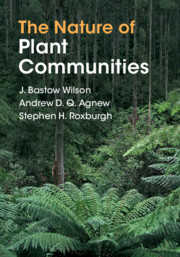
Most people can readily identify a forest, or a grassland, or a wetland - these are the simple labels we give different plant communities. The aim of this book is to move beyond these simple descriptions to investigate the 'hidden' structure of vegetation, asking questions such as how do species in a community persist over time? What prevents the strongest species from taking over? And, are there rules that confer stability and produce repeatable patterns? Answers to these questions are fundamental to community ecology, and for the successful management of the world's varied ecosystems, many of which are currently under threat. In addition to reviewing and synthesising our current knowledge of species interactions and community assembly, this book also seeks to offer a different viewpoint - to challenge the reader, and to stimulate ecologists to think differently about plant communities and the processes that shape them.
A study to detect the diversity of endophytic Actinobacteria from Australian rice was conducted using culture-dependent and culture-independent methods. Rice samples were collected from the rice growing area near Yanco, New South Wales, Australia. Isolation of the endophytic Actinobacteria was done over two consecutive growing seasons. The results demonstrated that most isolates were obtained from plants 10 weeks and older, and only a few were found in younger plants. Microbispora spp. were the most commonly isolated endophytic Actinobacteria (94%) with Streptomyces spp. and other genera present at lower numbers (6%). The culture-dependent method findings were confirmed by T-RFLP profile analysis. Restriction digests using HhaI and RsaI also showed an abundance of terminal restriction fragments (TRFs) profiles related to the genus Microbispora. Furthermore, other biological properties of the endophytic Actinobacteria isolates were also determined. Four isolates, Saccharothrix OSH21, Saccharopolyspora OSR26, Streptomyces OSR46 and Microbispora OSR61, were found to suppress the growth of the pathogenic fungus Rhizoctonia solani. Moreover, these isolates might be able to promote plant growth by producing indole acetic acid or to solubilise phosphate making this nutrient available for plant uptake.
There are increasing efforts aiming to utilise endophytes as biological control agents (BCAs) to improve crop production. However, reliability remains a major practical constraint for the development of novel BCAs. Many organisms are adapted to their specific habitat; it is optimistic to expect that a new organism added can find a niche or even out-compete those adapted and already present. Our approach for isolating novel BCAs for specific plant diseases is therefore to look in healthy plants in a habitat where disease is a problem, since we predict that it is more likely to find competitive strains among those present and adapted. In vitro inhibitory activities often do not correlate with in planta efficacy, especially since endophytes rely on intimate plant contact. They can, however, be useful to indicate modes of action. We therefore screen for in planta biological activity as early as possible in the process in order to minimise the risk of discarding valuable strains. Finally, some fungi are endophytic in one situation and pathogenic in another (the mutualism–parasitism continuum). This depends on their biology, environmental conditions, the formulation of inoculum, the health, developmental stage and cultivar of the host plant, and the structure of the plant microbiome.
In recent years, research into novel plant protection strategies with endophytic entomopathogenic fungi has increased markedly. However, current applications of these fungi are mostly not supported by targeted formulation strategies which should enhance fungal establishment in close proximity to plant tissue and promote endophytism. Further drawbacks are low stability of fungal propagules during drying and storage, difficult handling as well as high dosages and costs per hectare. Formulation has the potential to substantially improve all of these characteristics to come closer to implementation of these fungi in integrated pest management. This chapter reviews the currently available literature on application of formulated endophytic entomopathogenic fungi via sprays, seed treatments, and sowing of granules and beads. It further addresses future trends in formulation science to overcome current challenges of endophytic entomopathogenic fungi regarding consistent efficacy particularly under field conditions.