To save content items to your account,
please confirm that you agree to abide by our usage policies.
If this is the first time you use this feature, you will be asked to authorise Cambridge Core to connect with your account.
Find out more about saving content to .
To save content items to your Kindle, first ensure no-reply@cambridge.org
is added to your Approved Personal Document E-mail List under your Personal Document Settings
on the Manage Your Content and Devices page of your Amazon account. Then enter the ‘name’ part
of your Kindle email address below.
Find out more about saving to your Kindle.
Note you can select to save to either the @free.kindle.com or @kindle.com variations.
‘@free.kindle.com’ emails are free but can only be saved to your device when it is connected to wi-fi.
‘@kindle.com’ emails can be delivered even when you are not connected to wi-fi, but note that service fees apply.
Historical concepts of consciousness will be presented. Consciousness has often been seen as synonymous with soul or mind. Soul and mind can be embedded in dualistic or monistic world views.
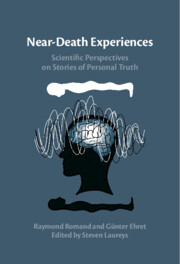
The phenomenon of near-death experiences (NDEs) has fascinated humanity for centuries but remains famously difficult to define and study. This book presents a unique source, integrating historical, clinical, psychological, and neuroscientific approaches toward a modern scientific understanding of NDEs. Featuring exciting clinical and experimental details about processes in dying brains, it examines the physiological and psychological underpinnings of this extraordinary phenomenon. Chapters offer science-based accounts of NDEs as a natural part of the human condition informed by our biology and the remarkable capacities of the brain. By proposing that the origin of NDEs can be found in the physiology-dependent mental processes of the experiencer as expressed in altered states of consciousness, this book provides up-to-date insights for psychologists, psychiatrists, neuroscientists, and philosophers alike.
As we all know from our daily experience of waking and sleeping, consciousness exists on a graded scale. Generally, both too much or too little activation of the cerebral cortex prevents conscious awareness. Objective measurements, for example via electroencephalography, of ongoing or stimulus-evoked or internally initiated neural activities in the cerebral cortex are possible. These neural activities can be related to the actual presence or absence or levels of consciousness in a person even when a person appears to be unconscious, for example after cardiac arrest or during the process of dying. Brain-wave activity during clinical death and resuscitation can be measured and compared with brain-wave activity in altered states of consciousness and normal conscious wakefulness.
NDEs and OBEs reflect altered states of consciousness (ASCs) that can experimentally be studied via modern brain scanning and electroencephalographic methods. Scientific literature presents convincing evidence for brain-based explanations of NDEs and OBEs. The disturbance of normal multisensory integration in the temporo-parietal junction (TPJ) of the cerebral cortex via over- or under-excitation or via misalignment of sensory inputs is the most plausible and experimentally confirmed origin of OBEs. NDE generation seems to be based on information exchange in various neural networks of the brain involving different sets of brain areas for different NDE themes. When NDE themes explicitly refer to a first-person perspective, the TPJ is an excellent candidate for a major contribution to NDE occurrence. When visual phenomena are part of the NDE theme, the occipital cortex can be assumed to be strongly involved. There is a clear connection of NDEs with ASCs and the TPJ as a brain center that significantly contributes via brain-wave activity to the regulation of states of consciousness.
For many philosophers, the mind-body problem has to be solved in order to explain consciousness. Consciousness can be described by levels of awareness and wakefulness. The evolution of consciousness in animals shows in which taxa of animals awareness and wakefulness have been reached at levels from absence of consciousness to levels similar to humans. The ontogeny of consciousness in human babies reproduces the evolution of consciousness in animals. Brain injury and disorders in humans can throw back consciousness to animal levels.
Substantial differences in the incidence of NDEs in the literature indicate that this field of research is developing and has not yet reached a state of generally accepted standards. Many anecdotal reports about NDE-like phenomena contrast with few observations under controlled conditions with a minimum of scientific scrutiny. Because the incidence of NDEs depends on so many factors (intrinsic and extrinsic to the affected person), and because the access to the topic may touch the dignity of a person’s last phase of life, NDE-related research mainly remained observational with only few quantitative and/or experimental approaches. Against this background there is ample room for those who wish to come out with fanciful speculations about the genesis of NDEs.
A survey of several neuroscience models of consciousness shows, supported by numerous measurements and experimental data, that consciousness and brain processes are intimately connected. Quantum physical approaches to consciousness are purely speculative and experimentally unsubstantiated.
From a phenomenological point of view, ELDVs, DRSEs, and NDEs show many similarities. The terms ELDVs, DRSEs, and NDEs have been used interchangeably in a large spectrum of contexts involving medicine, psychology, neurosciences, philosophy, theology, metaphysics, and paranormal and mystical accounts.
Raymond Moody’s book Life after Life (1975, latest version 2015) introduced the term “near-death experience.” into modern and widely circulated English-language literature.Right from the beginning, the term NDE was closely linked to the belief in an afterlife. The academic career of Moody and the perception of Moody’s book in the USA show that reported near-death experiences may have expressed personal truth, but without persuasive attempts to explain NDEs scientifically.
The phenomenon of near-death experiences (NDEs) has fascinated humanity for centuries but remains famously difficult to define and study. This book presents a unique source, integrating historical, clinical, psychological, and neuroscientific approaches toward a modern scientific understanding of NDEs. Featuring exciting clinical and experimental details about processes in dying brains, it examines the physiological and psychological underpinnings of this extraordinary phenomenon. Chapters offer science-based accounts of NDEs as a natural part of the human condition informed by our biology and the remarkable capacities of the brain. By proposing that the origin of NDEs can be found in the physiology-dependent mental processes of the experiencer as expressed in altered states of consciousness, this book provides up-to-date insights for psychologists, psychiatrists, neuroscientists, and philosophers alike.
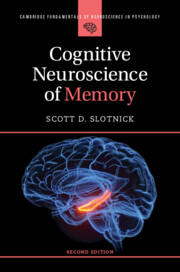
Fully updated for the second edition, this text remains a comprehensive and current treatment of the cognitive neuroscience of memory. Featuring a new chapter on group differences in long-term memory, areas covered also include cognitive neuroscience methods, human brain mechanisms underlying long-term memory success, long-term memory failure, implicit memory, working memory, memory and disease, memory in animals, and recent developments in the field. Both spatial and temporal aspects of brain processing during different types of memory are emphasized. Each chapter includes numerous pedagogical tools, including learning objectives, background information, further reading, review questions, and figures. Slotnick also explores current debates in the field and critiques of popular views, portraying the scientific process as a constantly changing, iterative, and collaborative endeavor.
This chapter focuses on the effects of attention, including when and where in the brain these effects occur. It begins with studies of visual-spatial attention, expands to different varieties of visual attention (e.g., feature-based attention), and concludes with the effects of attention across sensory modalities. Evidence is presented from ERP studies showing the effects of attention on the P1, N1, and P3 components. The controversy regarding if attention can affect the earliest stage of cortical visual processing (indexed by the C1 component) is highlighted. Neuroimaging evidence for attention effects in striate and extrastriate cortex (e.g., area V3 and the fusiform gyrus) are presented. The controversy about whether attention effects in the thalamus, observed in some fMRI research, represent modulation of feedforward or feedback processing is discussed. Evidence is presented from single-unit recordings that supports the view that spatial attention affects early stages of cortical processing. An intriguing new theory of attention – the rhythmic theory of attention – is presented, along with supporting evidence from human and non-human studies. New evidence for suppressive mechanisms that contribute to selective attention are introduced, and the effects of visual-spatial attention are compared to the effects of feature attention, object attention, and cross-modal attention.
This chapter provides examples of how attention plays an important role in our everyday lives. Real-world examples are used to explain the motivations behind cutting-edge attention research being done in neuroscience labs. These include distracted driving, airport security screening, and radar and sonar monitoring. Vigilance and the ability to sustain attention are introduced as critical mental processes for success at certain jobs. The influence of attention on reading and memory, and the choice of whether to study in silence or with music are discussed. Lapses of attention are described, including how these can have a range of consequences, from the brief embarrassment of not knowing what someone just said to us to the potentially fatal effect of not attending to our driving. Theories of joint attention and social-gaze orienting are introduced to explain how our attention is linked to those around us. The purposeful misdirection of a person’s attention, at multiple levels, by skilled magicians is linked to core processes of attention and perception. This chapter also introduces the idea of training attention, including the effects of playing video games, and explains how proper training protocols require detailed knowledge of the mechanisms of attention.
This chapter describes the processes of attentional control and contrasts the effects of attention on perceptual processing versus the control of attentional orienting. PET, fMRI, and single-unit recordings have identified a bilateral dorsal attention network (DAN) that controls the orienting of attention and a ventral attention network (VAN) that is critical for the reorienting of attention. The intraparietal sulcus (IPS) and frontal eye fields (FEF) have been found to be core elements of the DAN, and the temporal parietal junction (TPJ) and ventral frontal regions are consistently found to be part of the VAN. Internally generated attention, or willed attention, is contrasted to exogenous attention and externally triggered endogenous attention. New methods of analyzing patterns of brain connectivity that hold promise for helping understand individual and group differences in attentional control are described. Neurostimulation studies (e.g., tACS; cTBS; TMS) that are providing evidence for the causal involvement of DAN and VAN to attentional control are discussed, and ERP indices of attention control processes (such as the EDAN, ADAN, and LDAP components) and of executive monitoring (such as the ERN and FRN components) are described. Finally, this chapter discusses the plasticity of attention and brain training techniques such as meditation, neurofeedback, and video games.