To save content items to your account,
please confirm that you agree to abide by our usage policies.
If this is the first time you use this feature, you will be asked to authorise Cambridge Core to connect with your account.
Find out more about saving content to .
To save content items to your Kindle, first ensure no-reply@cambridge.org
is added to your Approved Personal Document E-mail List under your Personal Document Settings
on the Manage Your Content and Devices page of your Amazon account. Then enter the ‘name’ part
of your Kindle email address below.
Find out more about saving to your Kindle.
Note you can select to save to either the @free.kindle.com or @kindle.com variations.
‘@free.kindle.com’ emails are free but can only be saved to your device when it is connected to wi-fi.
‘@kindle.com’ emails can be delivered even when you are not connected to wi-fi, but note that service fees apply.
This chapter considers induction, deduction and abduction as methods of obtaining scientific knowledge. The introductory section again ends by highlighting that there is no single method, and refers to claims that scientific reasoning uses various heuristics or rules of thumb based on the specific approach and the background information we have, and that we should recognise that this can introduce various errors of reasoning: by being aware of the potential for making these errors, we are better able to guard against making them. The bulk of the chapter then looks at specific logical fallacies, using neuroscience examples to illustrate them. These include ad hoc reasoning; begging the question; confusing correlation for causation; confirmation and disconfirmation biases; false dichotomies; false metaphors; the appeal to authority, tradition and emotion; the mereological fallacy; the naturalistic fallacy; and straw man arguments.
This chapter reflects on a case involving a pediatric patient with a rare neurogenerative disease whose medical team requested an ethics consultation when his parents disagreed with the medical recommendation to remove his breathing tube, knowing that this could lead to his death. The ethics consultation explored what at first appeared to be conflicting beliefs about the facts of this patient’s condition and quality of life: his medical team believed he had an irreversible, neurodegenerative condition that would become progressively more debilitating and uncomfortable; his parents believed that he may still recover from his disease and survive. Yet on deeper analysis, we came to see that this was not a case of a medical team holding true beliefs and a family holding false beliefs about the clinical facts of the matter, but rather a difference between ways of being in and seeing the world, particularly as it relates to reasoning from a position of faith in what might be. This case shows the importance of differentiating between claims about facts and assertions of values, and how biomedical expectations of evidence can influence perceptions of relevant information during a clinical ethics consultation.
Jo was admitted to our hospital for complex pain and complications of intestinal failure. An 18-year-old with a complex medical and psychiatric history, Jo had been frequently hospitalized for suicidal ideation, chronic pain, and complications from intestinal dysmotility. Ethics was consulted during this stay because Jo requested to stop artificial nutrition and hydration and be allowed to die with support from hospice care. Throughout this case, the care team had concerns for capacity, honoring a patient’s right to refuse medical care, caring for a patient with a history of trauma, belonging to the LGBTQ+ community, with a chronic illness. This case explores the complex course of Jo’s case and identifies ethical options that fit within the narrative of this patient’s complex story.
Decision-making in oncology care is at best consequential and complex. This chapter explores a clinical ethics consultation exploring the difficult task of determining cancer directed therapy for a patient with a profound neurocognitive disability. The case highlights the ethics consultant’s and the multidisciplinary team’s missteps and failure to recognize that the true ethical question was not only “How can we ensure that this patient is treated equitably and receives the standard of care treatment,” but also “Is surgery really the right treatment option for this patient?” While disability rights activists have long proclaimed that all individuals should be granted equal access to healthcare, it is ethically permissible to tailor standards of care to meet the specific and unique needs of the patient sitting in front of you. This chapter illustrates the noble intent of clinicians and the limitations of substituted judgment in deciding for others.
Clinical ethics prides itself on communication, collaboration, interdisciplinary cooperation and mediation. But what happens when all those skills and efforts fail? This chapter describes a difficult situation fraught with clinical uncertainty and complicated by an unbridgeable cultural divide that left the clinical parties feeling as if they failed the patient. This case demonstrates that sometimes there is no real closure, no understanding, and no sense of having been helpful. These are the kinds of cases that haunt us.
How can ethics consultants weigh and balance patients’ physical and psychological needs when they are appear mutually exclusive? How might a disability-aware lens impact the way we address risk? A disconcerting clinical ethics consultation regarding "Jimmy" prompts reflection of these questions and our own complicity with ableism as consultants and providers. Jimmy, who was previously incarcerated, houseless, and facing mental status changes, spent months fighting four-point restraints to maintain a cervical collar meant to prevent disability and death.
The predominant paradigm of acute medical care has not integrated trauma-informed or disability aware lenses despite trauma prevalence among patients and the presence of disability for 25% of adults. The lack of these perspectives has hazardous ramifications in clinical decision making and beside care. The prevailing norm prioritizes physical and functional outcomes over identity and emotional well-being. There is a false assumption that people with disabilities have a worse quality of life than people without disability. This disability illiteracy undermines patient autonomy and the disability community. Medical professionals’ personal experience and relationship to disability can perhaps shift this perspective to a more inclusive and nuanced approach to ethical decision making A broader transformative approach to ethics consultation is needed to avoid complicity in moral harms.
We describe our personal and professional struggles with an organizational ethics consultation involving thoracoabdominal normothermic regional perfusion (TA-NRP), an organ procurement technique used after circulatory death. We ultimately concluded that TA-NRP is ethically permissible (with caveats), yet we are haunted. Our advice was taken seriously, but was it the right advice? Our recommendations might have let us off the hook.
Medical, cultural, and logistical barriers exist across the state of Alaska as healthcare facilities care for our people. Moral, social, and clinical norms established in metropolitan locations do not always easily transfer to rural and remote locations.Reflecting upon these challenges, this essay lives through the early days and short life of an Alaska Native infant. Exploring the assumptions of metrocentric, moralized medicine the author questions the justice of a system that is not designed for or attentive to the needs of Alaskans living in remote locations. Through his own embrace of the emotional and narrative elements of clinical ethics, the author attempts to understand the deep coping that comes through ancient stories and deep emotions.
This Element argues for the benefits of integrating the perspectives of a new historiography of paleontology in the training of upcoming paleontologists and in the paleontological community's culture more broadly. Wrestling with the complex legacy of its past, the paleontological community is facing the need to reappreciate its history to address issues of accessibility and equity affecting the field, such as gender gap, parachute science, and specimen repatriation. The ability of the paleontological community to address these issues depends partly on the nature of its engagement with the past in which they find their source. This Element provides a conceptual toolkit to help with the interpretation of the unprecedented position in which the paleontological community finds itself regarding its past. It also introduces historiographical resources and provides some suggestions to foster collaboration between paleontology and the history of paleontology.
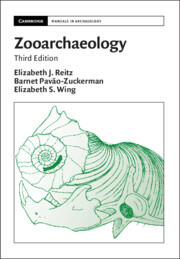
This leading textbook introduces students and practitioners to the identification and analysis of animal remains at archaeology sites. The authors use global examples from the Pleistocene era into the present to explain how zooarchaeology allows us to form insights about relationships among people and their natural and social environments, especially site-formation processes, economic strategies, domestication, and paleoenvironments. This new edition reflects the significant technological developments in zooarchaeology that have occurred in the past two decades, notably ancient DNA, proteomics, and isotope geochemistry. Substantially revised to reflect these trends, the volume also highlights novel applications, current issues in the field, the growth of international zooarchaeology, and the increased role of interdisciplinary collaborations. In view of the growing importance of legacy collections, voucher specimens, and access to research materials, it also includes a substantially revised chapter that addresses management of zooarchaeological collections and curation of data.
This prospective study investigated associations of various diet quality indices with mortality in Japan. Participants were 13,355 men and 15,724 women from the Takayama study. Eight diet quality indices were assessed using a food frequency questionnaire: the Dietary Approaches to Stop Hypertension (DASH), Alternative Mediterranean diet scores (AMED), Healthy Eating Index-2015 (HEI-2015), Alternate Healthy Eating Index-2010 (AHEI-2010), Nutrient Rich Food Score 9.3 (NRF9.3), Diet Quality Score for Japanese (DQSJ), Japanese Food Guide Spinning Top (JFGST), and 12-item Japanese Diet Index (JDI12). Cox proportional models estimated hazard ratios (HRs) and 95% confidence intervals (CIs) for all-cause and cause-specific mortality in 1 standard deviation (SD) difference for each index, with adjustment for confounders. During a mean follow-up of 14.1 years, 5,339 deaths were recorded. HRs (95% CIs) per 1 SD higher index were 0.90 (0.87 to 0.93) for AHEI-2010, 0.92 (0.89 to 0.95) for DQSJ, 0.93 (0.91 to 0.96) for NRF9.3, 0.94 (0.92 to 0.97) for AMED and DASH, 0.94 (0.91 to 0.97) for JFGST, 0.94 (0.91 to 0.98) for JDI12, and 0.97 (0.94 to 0.996) for HEI-2015. Similar protective associations were observed for cardiovascular disease mortality, but not for cancer mortality. These findings suggest that all eight indices are associated with lower mortality and that the strength of associations varies across indices; AHEI-2010 showed relatively strong associations, followed by the DQSJ, whereas the associations of HEI-2015 appeared relatively weaker in this Japanese population.